

Yogurt, fruit, low fat,9 g protein/8 oz
Whole food · Dairy and Egg Products
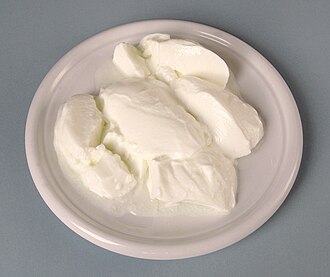
Photo: Wikipedia
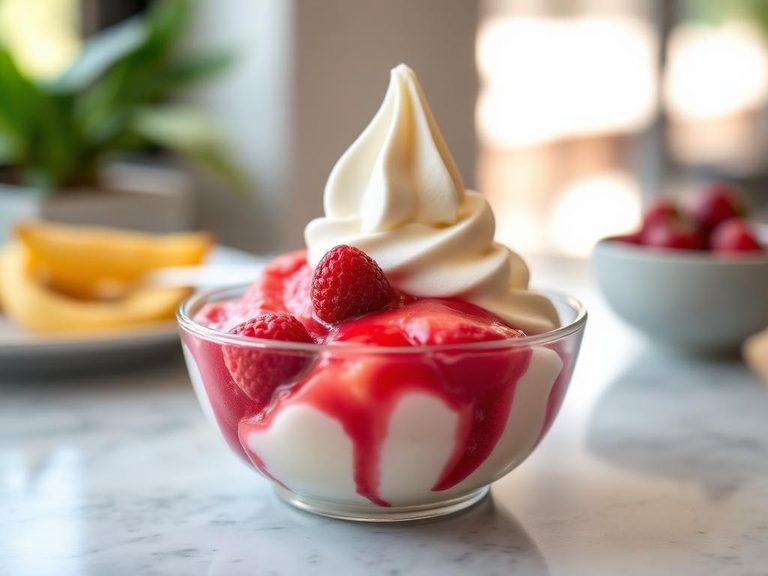
This is a smooth, creamy, low-fat yogurt swirled with fruit, offering a sweet-tart flavor and a light, spoonable texture. It packs a notable 9 grams of protein per 8-ounce serving into a relatively low-calorie package, making it a satisfying snack or breakfast component. The nutrition is defined by its high protein and carbohydrate content, primarily from added sugars.
Calorie split: 16% protein · 74% carbs · 10% fat
↓ Full nutrition💚 Why it's loved
People love it for the perfect balance of creamy tang from the yogurt and sweet, juicy bursts of fruit, making it feel like an indulgent treat. Its versatility shines as a quick breakfast, a post-workout snack, or a healthier dessert alternative.
⚠️ Watch-outs & how to enjoy it better
The high sugar content (often over 18g per 100g) can lead to blood-sugar spikes, especially for those with insulin sensitivity. To counteract this, pair it with a source of healthy fat and fiber, like a handful of almonds or chia seeds, to slow sugar absorption. Those monitoring sugar intake should opt for plain yogurt and add their own fruit.
Key benefits
- Excellent source of high-quality protein for muscle maintenance and satiety.
- Provides calcium and often vitamin D for bone health.
- Convenient, portable, and requires no preparation.
- Can serve as a base for adding other healthy toppings like nuts or seeds.
🍽️ Popular dishes
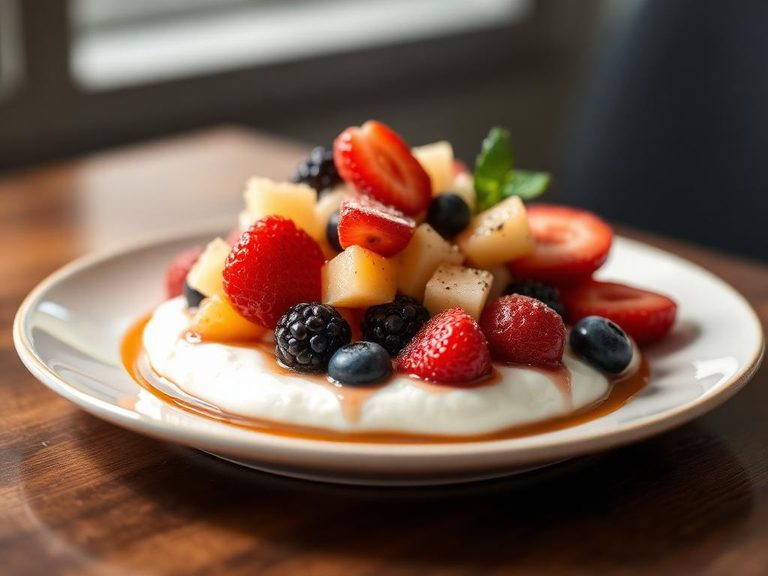
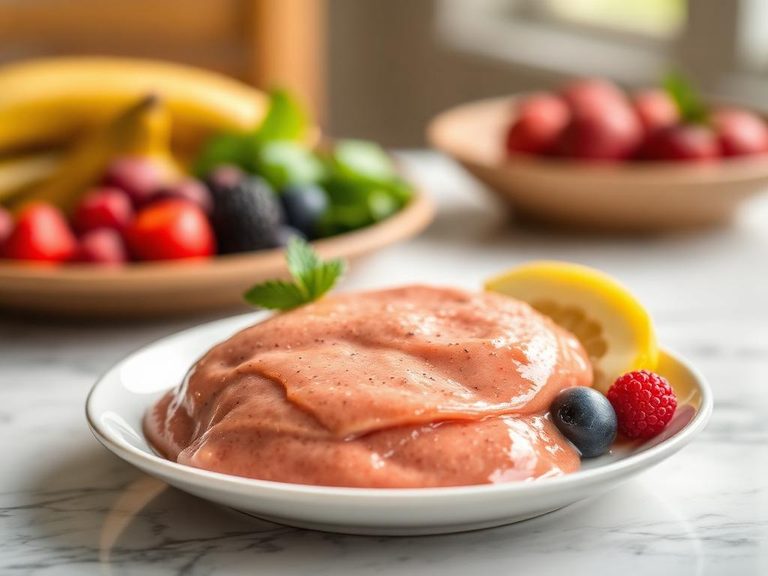
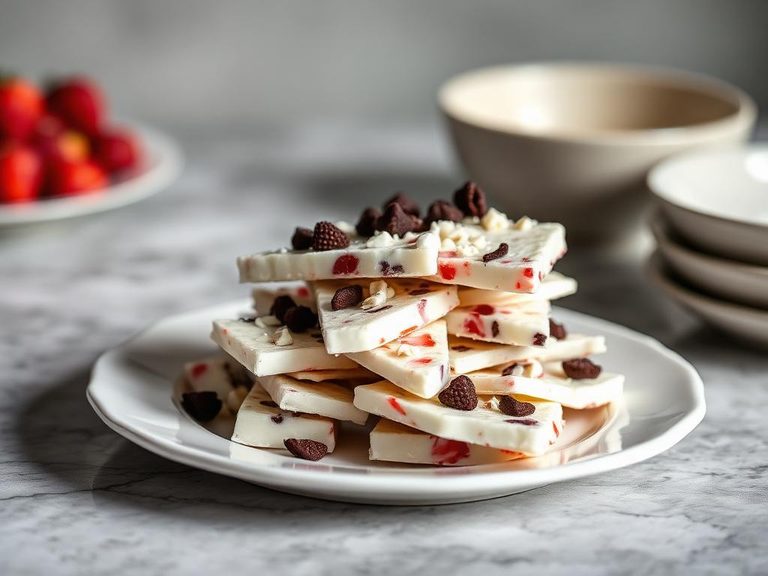

🌍 Where it's eaten
💡 Did you know?
The fruit on the bottom style was popularized in the US in the 1980s as a convenient way to keep the fruit from turning the entire yogurt container a uniform color before purchase.
Full nutrition (USDA data · scales with serving)
| Water | 75.3 g |
| Energy | 99.0 kcal |
| Energy | 415 kj |
| Protein | 4.0 g |
| Total lipid (fat) | 1.1 g |
| Ash | 0.93 g |
| Carbohydrate, by difference | 18.6 g |
| Fiber, total dietary | 0.00 g |
| Total Sugars | 18.6 g |
| Calcium, Ca | 138 mg |
| Iron, Fe | 0.06 mg |
| Magnesium, Mg | 13.0 mg |
| Phosphorus, P | 109 mg |
| Potassium, K | 177 mg |
| Sodium, Na | 53.0 mg |
| Zinc, Zn | 0.67 mg |
| Copper, Cu | 0.08 mg |
| Manganese, Mn | 0.06 mg |
| Selenium, Se | 2.8 ug |
| Fluoride, F | 9.0 ug |
| Vitamin C, total ascorbic acid | 0.60 mg |
| Thiamin | 0.03 mg |
| Riboflavin | 0.16 mg |
| Niacin | 0.09 mg |
| Pantothenic acid | 0.45 mg |
| Vitamin B-6 | 0.04 mg |
| Folate, total | 9.0 ug |
| Folic acid | 0.00 ug |
| Folate, food | 9.0 ug |
| Folate, DFE | 9.0 ug |
| Choline, total | 15.2 mg |
| Vitamin B-12 | 0.43 ug |
| Vitamin B-12, added | 0.00 ug |
| Vitamin A, RAE | 11.0 ug |
| Retinol | 11.0 ug |
| Carotene, beta | 2.0 ug |
| Carotene, alpha | 0.00 ug |
| Cryptoxanthin, beta | 0.00 ug |
| Vitamin A, IU | 40.0 iu |
| Lycopene | 0.00 ug |
| Lutein + zeaxanthin | 0.00 ug |
| Vitamin E (alpha-tocopherol) | 0.02 mg |
| Vitamin E, added | 0.00 mg |
| Vitamin D (D2 + D3), International Units | 1.0 iu |
| Vitamin D (D2 + D3) | 0.00 ug |
| Vitamin D3 (cholecalciferol) | 0.00 ug |
| Vitamin K (phylloquinone) | 0.10 ug |
| Alcohol, ethyl | 0.00 g |
| Caffeine | 0.00 mg |
| Theobromine | 0.00 mg |
Fat & fatty acid profile (per 100g)
| Fatty acids, total saturated | 0.74 g |
| SFA 4:0 | 0.03 g |
| SFA 6:0 | 0.02 g |
| SFA 8:0 | 0.01 g |
| SFA 10:0 | 0.03 g |
| SFA 12:0 | 0.04 g |
| SFA 14:0 | 0.12 g |
| SFA 16:0 | 0.31 g |
| SFA 18:0 | 0.11 g |
| Fatty acids, total monounsaturated | 0.32 g |
| MUFA 16:1 | 0.03 g |
| MUFA 18:1 | 0.26 g |
| MUFA 20:1 | 0.00 g |
| MUFA 22:1 | 0.00 g |
| Fatty acids, total polyunsaturated | 0.03 g |
| PUFA 18:2 | 0.02 g |
| PUFA 18:3 | 0.01 g |
| PUFA 18:4 | 0.00 g |
| PUFA 20:4 | 0.00 g |
| PUFA 20:5 n-3 (EPA) | 0.00 g |
| PUFA 22:5 n-3 (DPA) | 0.00 g |
| PUFA 22:6 n-3 (DHA) | 0.00 g |
| Cholesterol | 5.0 mg |
Amino acid profile (per 100g)
| Tryptophan | 0.02 g |
| Threonine | 0.16 g |
| Isoleucine | 0.22 g |
| Leucine | 0.40 g |
| Lysine | 0.36 g |
| Methionine | 0.12 g |
| Cystine | 0.04 g |
| Phenylalanine | 0.22 g |
| Tyrosine | 0.20 g |
| Valine | 0.33 g |
| Arginine | 0.12 g |
| Histidine | 0.10 g |
| Alanine | 0.17 g |
| Aspartic acid | 0.32 g |
| Glutamic acid | 0.78 g |
| Glycine | 0.10 g |
| Proline | 0.47 g |
| Serine | 0.25 g |
FAQ
Is this the same as Greek yogurt?
Not necessarily. While it can be Greek yogurt, the nutrition profile (9g protein per 8oz) is typical of standard low-fat yogurt. Greek yogurt is strained and typically has a much higher protein content (15-20g per serving).
Why is the sugar so high if it's low-fat?
In low-fat dairy products, manufacturers often add sugar to compensate for the reduced flavor and creaminess that fat provides. The 18.64g of sugar per 100g includes both natural lactose and significant added sugars.
Can I use this in cooking or baking?
Yes, it's excellent as a moistening agent in muffins, cakes, and quick breads, or as a base for creamy salad dressings and dips. Its low fat content means it won't add richness like full-fat yogurt.
Nutrient density (calculated · NRF9.3)
Nutrient Rich Foods index: beneficial nutrients (protein, fiber, vitamins, minerals) minus saturated fat, added sugar & sodium, per 100 kcal.
NRF9.3 index — Fulgoni, Keast & Drewnowski, 2009. Computed from USDA nutrients.
Weight-loss friendliness (composite index)
Energy density 0.99 kcal/g · 16% calories from protein · 0.0 g fiber · 18.6 g sugar per 100 g.
Composite of energy density (Rolls et al., 1999), protein & fiber satiety, minus sugar. A calculated heuristic — ranks satiety-per-calorie, not a clinical measure.
Dietary load (calculated from USDA values)
Potential renal acid load. Positive = acid-forming, negative = alkaline-forming.
Sodium-to-potassium ratio: 0.30 (lower is better — aim for ≤ 1)
Sodium:potassium per WHO potassium guidance. Computed from USDA nutrients.