

Yam, raw
Whole food · Vegetables and Vegetable Products

Photo: Wikipedia
Raw yam is a starchy, tuberous root vegetable with a crisp, slightly crunchy texture and a mild, earthy, subtly sweet flavor reminiscent of a potato. Nutritionally, it is a powerhouse of complex carbohydrates, providing sustained energy with minimal fat and a notable 4.1g of dietary fiber per 100g.
Calorie split: 5% protein · 94% carbs · 1% fat
↓ Full nutrition💚 Why it's loved
People love raw yam for its satisfying, crunchy texture and its ability to absorb flavors in salads or slaws, while its cultural significance as a staple food in many African and Caribbean cuisines makes it a beloved comfort ingredient.
⚠️ Watch-outs & how to enjoy it better
Raw yam contains oxalates, which can be a concern for individuals prone to kidney stones; to counteract this, it's best to cook the yam, as boiling can reduce oxalate content. Its high carbohydrate content may cause blood sugar spikes in some individuals, so pairing it with protein or healthy fats and practicing portion control is advisable.
Key benefits
- Excellent source of complex carbohydrates for steady energy.
- High in dietary fiber, supporting digestive health.
- Contains essential minerals like potassium and manganese.
- Low in fat and sugar, making it a nutrient-dense staple.
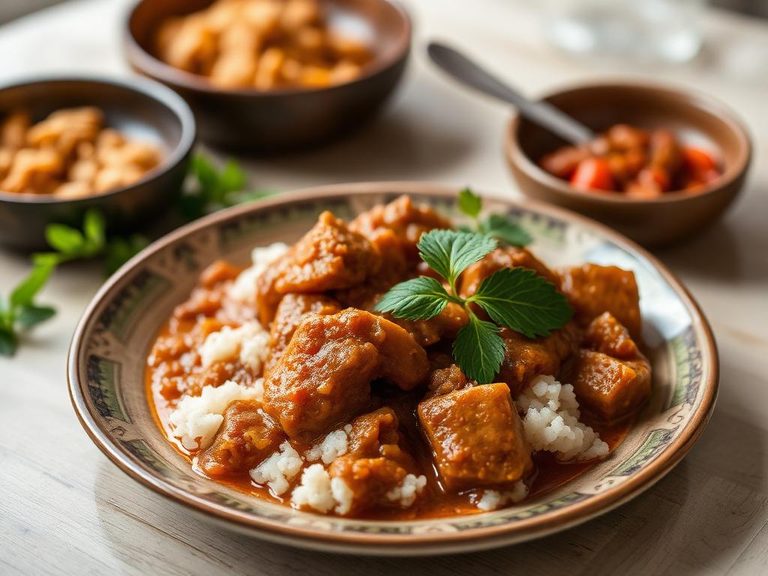
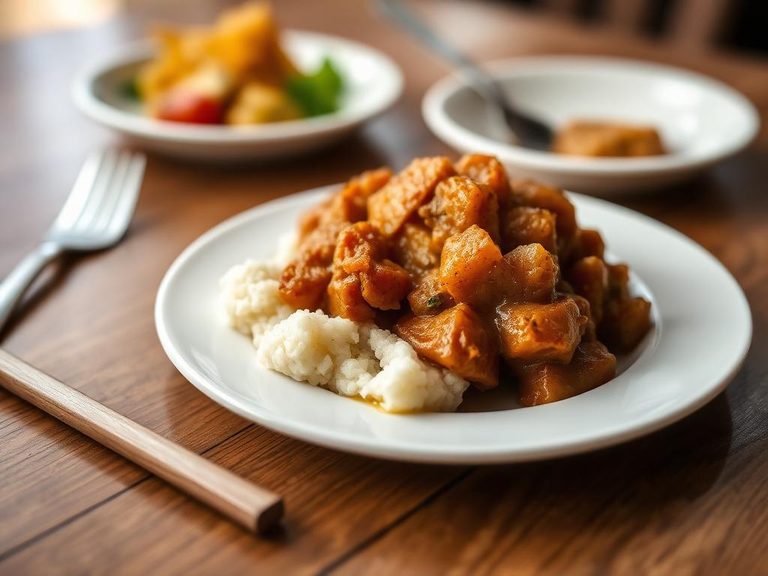
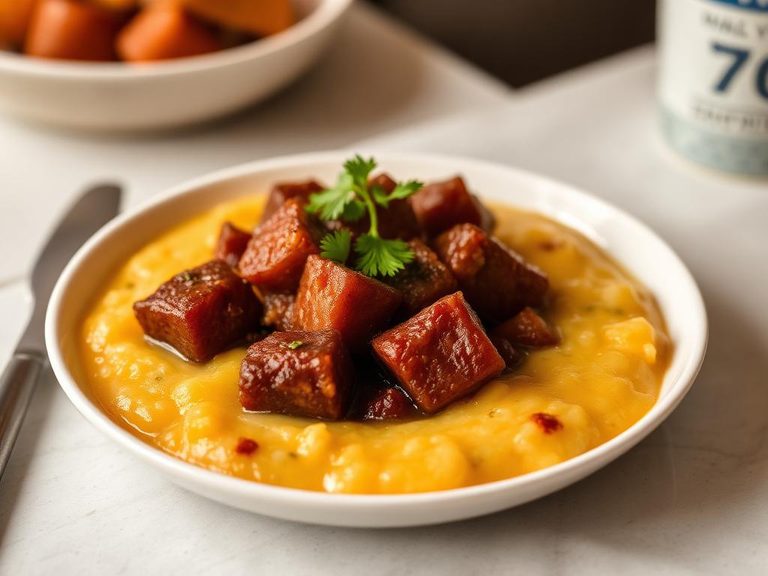
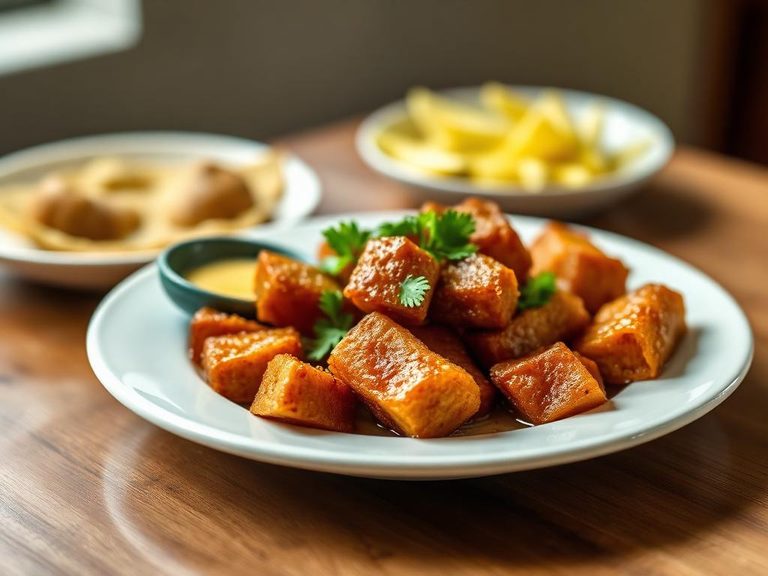
🍽️ Popular dishes
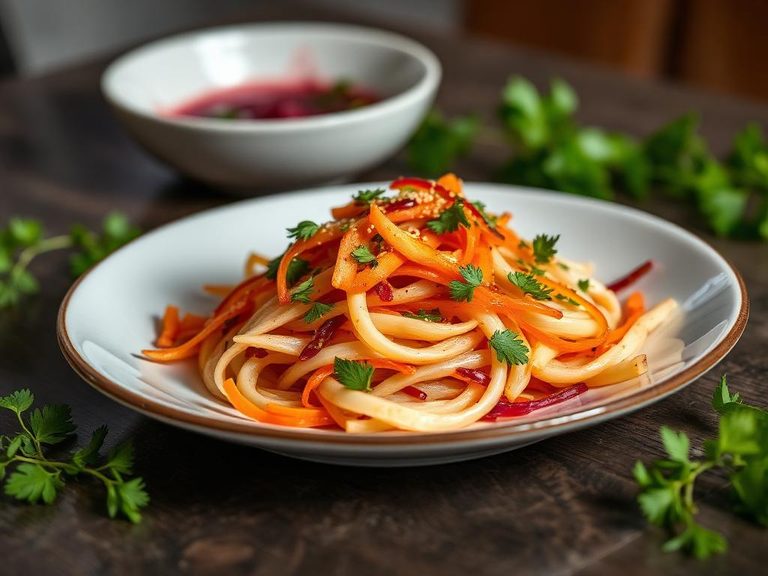
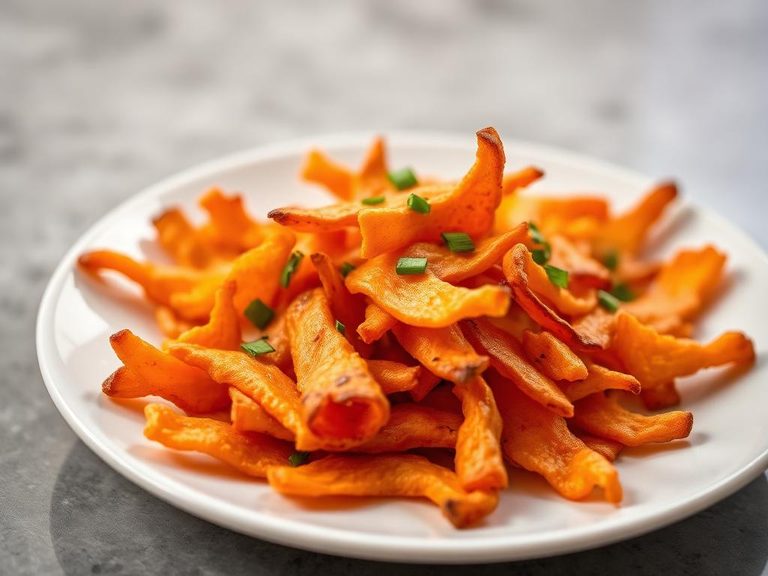
🌍 Where it's eaten
💡 Did you know?
The term 'yam' in the United States often mistakenly refers to sweet potatoes, while true yams (Dioscorea species) are a distinct, starchier tuber native to Africa and Asia.
Full nutrition (USDA data · scales with serving)
| Water | 69.6 g |
| Energy | 118 kcal |
| Energy | 494 kj |
| Protein | 1.5 g |
| Total lipid (fat) | 0.17 g |
| Ash | 0.82 g |
| Carbohydrate, by difference | 27.9 g |
| Fiber, total dietary | 4.1 g |
| Total Sugars | 0.50 g |
| Calcium, Ca | 17.0 mg |
| Iron, Fe | 0.54 mg |
| Magnesium, Mg | 21.0 mg |
| Phosphorus, P | 55.0 mg |
| Potassium, K | 816 mg |
| Sodium, Na | 9.0 mg |
| Zinc, Zn | 0.24 mg |
| Copper, Cu | 0.18 mg |
| Manganese, Mn | 0.40 mg |
| Selenium, Se | 0.70 ug |
| Vitamin C, total ascorbic acid | 17.1 mg |
| Thiamin | 0.11 mg |
| Riboflavin | 0.03 mg |
| Niacin | 0.55 mg |
| Pantothenic acid | 0.31 mg |
| Vitamin B-6 | 0.29 mg |
| Folate, total | 23.0 ug |
| Folic acid | 0.00 ug |
| Folate, food | 23.0 ug |
| Folate, DFE | 23.0 ug |
| Choline, total | 16.5 mg |
| Vitamin B-12 | 0.00 ug |
| Vitamin B-12, added | 0.00 ug |
| Vitamin A, RAE | 7.0 ug |
| Retinol | 0.00 ug |
| Carotene, beta | 83.0 ug |
| Carotene, alpha | 0.00 ug |
| Cryptoxanthin, beta | 0.00 ug |
| Vitamin A, IU | 138 iu |
| Lycopene | 0.00 ug |
| Lutein + zeaxanthin | 0.00 ug |
| Vitamin E (alpha-tocopherol) | 0.35 mg |
| Vitamin E, added | 0.00 mg |
| Vitamin D (D2 + D3), International Units | 0.00 iu |
| Vitamin D (D2 + D3) | 0.00 ug |
| Vitamin K (phylloquinone) | 2.3 ug |
| Alcohol, ethyl | 0.00 g |
| Caffeine | 0.00 mg |
| Theobromine | 0.00 mg |
Fat & fatty acid profile (per 100g)
| Fatty acids, total saturated | 0.04 g |
| SFA 4:0 | 0.00 g |
| SFA 6:0 | 0.00 g |
| SFA 8:0 | 0.00 g |
| SFA 10:0 | 0.00 g |
| SFA 12:0 | 0.00 g |
| SFA 14:0 | 0.00 g |
| SFA 16:0 | 0.03 g |
| SFA 18:0 | 0.00 g |
| Fatty acids, total monounsaturated | 0.01 g |
| MUFA 16:1 | 0.00 g |
| MUFA 18:1 | 0.01 g |
| MUFA 20:1 | 0.00 g |
| MUFA 22:1 | 0.00 g |
| Fatty acids, total polyunsaturated | 0.08 g |
| PUFA 18:2 | 0.06 g |
| PUFA 18:3 | 0.01 g |
| PUFA 18:4 | 0.00 g |
| PUFA 20:4 | 0.00 g |
| PUFA 20:5 n-3 (EPA) | 0.00 g |
| PUFA 22:5 n-3 (DPA) | 0.00 g |
| PUFA 22:6 n-3 (DHA) | 0.00 g |
| Fatty acids, total trans | 0.00 g |
| Cholesterol | 0.00 mg |
| Phytosterols | 10.0 mg |
Amino acid profile (per 100g)
| Tryptophan | 0.01 g |
| Threonine | 0.05 g |
| Isoleucine | 0.05 g |
| Leucine | 0.10 g |
| Lysine | 0.06 g |
| Methionine | 0.02 g |
| Cystine | 0.02 g |
| Phenylalanine | 0.07 g |
| Tyrosine | 0.04 g |
| Valine | 0.06 g |
| Arginine | 0.13 g |
| Histidine | 0.03 g |
| Alanine | 0.06 g |
| Aspartic acid | 0.15 g |
| Glutamic acid | 0.18 g |
| Glycine | 0.05 g |
| Proline | 0.05 g |
| Serine | 0.08 g |
FAQ
Is raw yam safe to eat?
Yes, raw yam is safe to eat, but it's often preferred cooked for better digestibility and flavor. Some varieties can be mildly toxic if eaten raw in large quantities, so it's best to consume in moderation or cook thoroughly.
How does raw yam differ from sweet potato?
Raw yam is starchier, less sweet, and has a firmer texture compared to sweet potato. True yams (Dioscorea) are not the same as sweet potatoes (Ipomoea batatas), which are often mislabeled as yams in some regions.
Can I use raw yam in salads?
Absolutely! Raw yam can be thinly sliced or julienned for a crunchy addition to salads. It pairs well with citrus dressings, nuts, and other vegetables for a refreshing, nutrient-rich dish.
Nutrient density (calculated · NRF9.3)
Nutrient Rich Foods index: beneficial nutrients (protein, fiber, vitamins, minerals) minus saturated fat, added sugar & sodium, per 100 kcal.
NRF9.3 index — Fulgoni, Keast & Drewnowski, 2009. Computed from USDA nutrients.
Weight-loss friendliness (composite index)
Energy density 1.18 kcal/g · 5% calories from protein · 4.1 g fiber · 0.5 g sugar per 100 g.
Composite of energy density (Rolls et al., 1999), protein & fiber satiety, minus sugar. A calculated heuristic — ranks satiety-per-calorie, not a clinical measure.
Dietary load (calculated from USDA values)
Potential renal acid load. Positive = acid-forming, negative = alkaline-forming.
Sodium-to-potassium ratio: 0.01 (lower is better — aim for ≤ 1)
Sodium:potassium per WHO potassium guidance. Computed from USDA nutrients.