

Watercress, raw
Whole food · Vegetables and Vegetable Products

Photo: Wikipedia
Watercress is a semi-aquatic, peppery green with small, round leaves and crisp, hollow stems. Its sharp, mustard-like bite is refreshing when raw, while cooking mellows it into a savory, slightly bitter flavor. Despite its tiny calorie count, it's a powerhouse of vitamin K, vitamin C, and antioxidants like beta-carotene.
Calorie split: 60% protein · 34% carbs · 6% fat
↓ Full nutrition💚 Why it's loved
People love watercress for its distinctive, peppery zing that adds a lively kick to salads and sandwiches. Its delicate leaves and stems are incredibly versatile, used as a base green, a garnish, or a cooked vegetable in soups and stir-fries.
⚠️ Watch-outs & how to enjoy it better
The strong, peppery flavor can be overwhelming for some palates. Watercress contains oxalates, which can contribute to kidney stones in susceptible individuals; those with a history of oxalate stones should moderate intake and consult a doctor. To counteract, pair with calcium-rich foods (like cheese or yogurt in a dressing) which can bind oxalates in the gut.
Key benefits
- Extremely low in calories (11 kcal per 100g)
- Excellent source of vitamin K (over 100% DV per 100g)
- Rich in vitamin C and beta-carotene
- Contains glucosinolates, compounds studied for health benefits
- High water content aids hydration
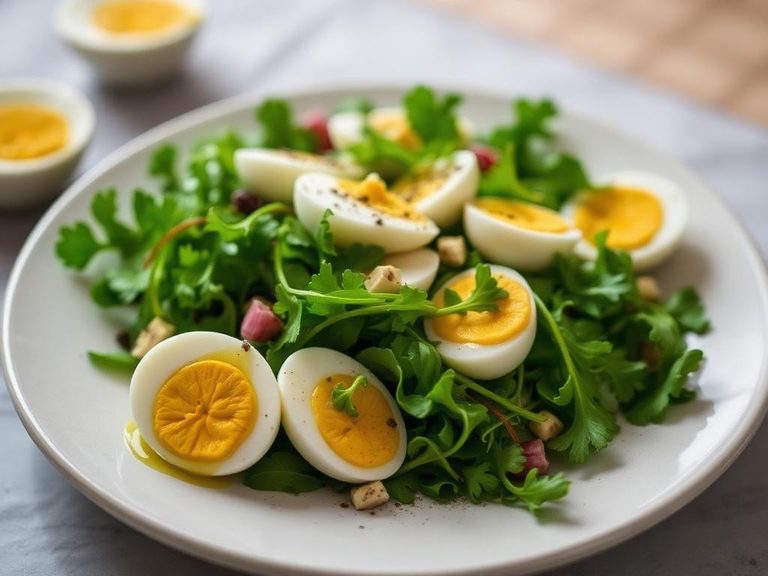
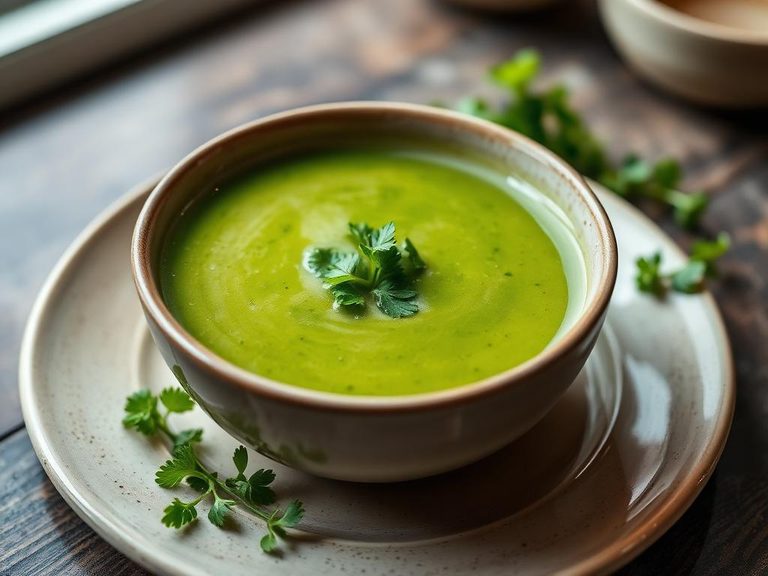
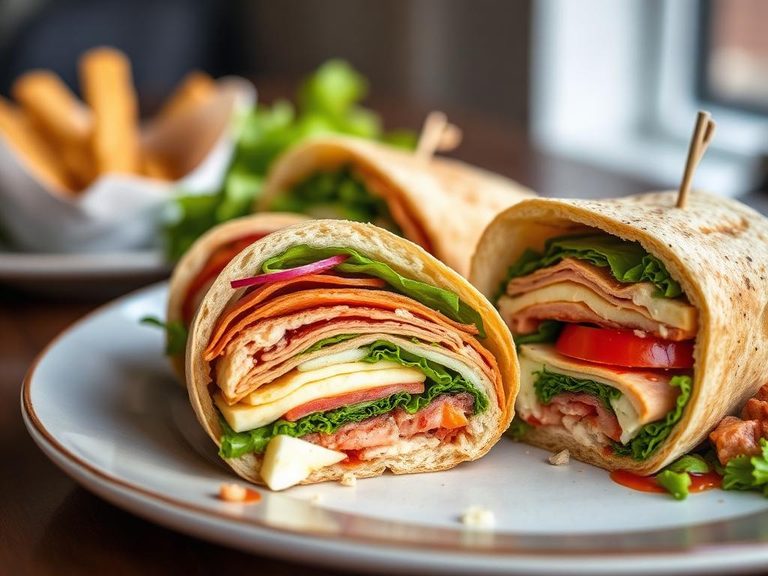
🍽️ Popular dishes
🌍 Where it's eaten
💡 Did you know?
The Guinness World Record for the largest watercress salad was set in 2017 in the UK, weighing over 2,000 kilograms (about 4,400 pounds).
Full nutrition (USDA data · scales with serving)
| Water | 95.1 g |
| Energy | 11.0 kcal |
| Energy | 46.0 kj |
| Protein | 2.3 g |
| Total lipid (fat) | 0.10 g |
| Ash | 1.2 g |
| Carbohydrate, by difference | 1.3 g |
| Fiber, total dietary | 0.50 g |
| Total Sugars | 0.20 g |
| Calcium, Ca | 120 mg |
| Iron, Fe | 0.20 mg |
| Magnesium, Mg | 21.0 mg |
| Phosphorus, P | 60.0 mg |
| Potassium, K | 330 mg |
| Sodium, Na | 41.0 mg |
| Zinc, Zn | 0.11 mg |
| Copper, Cu | 0.08 mg |
| Manganese, Mn | 0.24 mg |
| Selenium, Se | 0.90 ug |
| Vitamin C, total ascorbic acid | 43.0 mg |
| Thiamin | 0.09 mg |
| Riboflavin | 0.12 mg |
| Niacin | 0.20 mg |
| Pantothenic acid | 0.31 mg |
| Vitamin B-6 | 0.13 mg |
| Folate, total | 9.0 ug |
| Folic acid | 0.00 ug |
| Folate, food | 9.0 ug |
| Folate, DFE | 9.0 ug |
| Choline, total | 9.0 mg |
| Vitamin B-12 | 0.00 ug |
| Vitamin B-12, added | 0.00 ug |
| Vitamin A, RAE | 160 ug |
| Retinol | 0.00 ug |
| Carotene, beta | 1914 ug |
| Carotene, alpha | 0.00 ug |
| Cryptoxanthin, beta | 0.00 ug |
| Vitamin A, IU | 3191 iu |
| Lycopene | 0.00 ug |
| Lutein + zeaxanthin | 5767 ug |
| Vitamin E (alpha-tocopherol) | 1.0 mg |
| Vitamin E, added | 0.00 mg |
| Vitamin D (D2 + D3), International Units | 0.00 iu |
| Vitamin D (D2 + D3) | 0.00 ug |
| Vitamin K (phylloquinone) | 250 ug |
| Alcohol, ethyl | 0.00 g |
| Caffeine | 0.00 mg |
| Theobromine | 0.00 mg |
Fat & fatty acid profile (per 100g)
| Fatty acids, total saturated | 0.03 g |
| SFA 4:0 | 0.00 g |
| SFA 6:0 | 0.00 g |
| SFA 8:0 | 0.00 g |
| SFA 10:0 | 0.00 g |
| SFA 12:0 | 0.00 g |
| SFA 14:0 | 0.00 g |
| SFA 16:0 | 0.02 g |
| SFA 18:0 | 0.00 g |
| Fatty acids, total monounsaturated | 0.01 g |
| MUFA 16:1 | 0.00 g |
| MUFA 18:1 | 0.01 g |
| MUFA 20:1 | 0.00 g |
| MUFA 22:1 | 0.00 g |
| Fatty acids, total polyunsaturated | 0.04 g |
| PUFA 18:2 | 0.01 g |
| PUFA 18:3 | 0.02 g |
| PUFA 18:4 | 0.00 g |
| PUFA 20:4 | 0.00 g |
| PUFA 20:5 n-3 (EPA) | 0.00 g |
| PUFA 22:5 n-3 (DPA) | 0.00 g |
| PUFA 22:6 n-3 (DHA) | 0.00 g |
| Fatty acids, total trans | 0.00 g |
| Cholesterol | 0.00 mg |
Amino acid profile (per 100g)
| Tryptophan | 0.03 g |
| Threonine | 0.13 g |
| Isoleucine | 0.09 g |
| Leucine | 0.17 g |
| Lysine | 0.13 g |
| Methionine | 0.02 g |
| Cystine | 0.01 g |
| Phenylalanine | 0.11 g |
| Tyrosine | 0.06 g |
| Valine | 0.14 g |
| Arginine | 0.15 g |
| Histidine | 0.04 g |
| Alanine | 0.14 g |
| Aspartic acid | 0.19 g |
| Glutamic acid | 0.19 g |
| Glycine | 0.11 g |
| Proline | 0.10 g |
| Serine | 0.06 g |
FAQ
Is watercress the same as arugula?
No. While both are peppery greens in the Brassicaceae family, watercress (Nasturtium officinale) has round leaves and grows in water, while arugula (Eruca vesicaria) has lobed leaves and grows in soil. Their flavors are similar but distinct.
How do I wash and store watercress?
Rinse thoroughly under cold running water to remove grit, especially from the stems. Dry gently in a salad spinner or on towels. Store in a jar with a little water, covered loosely with a plastic bag, in the refrigerator for up to 5 days.
Can I cook watercress?
Yes. It wilts quickly and is great in soups, stir-fries, or wilted as a side dish. Cooking reduces its peppery bite and oxalate content slightly.
Nutrient density (calculated · NRF9.3)
Nutrient Rich Foods index: beneficial nutrients (protein, fiber, vitamins, minerals) minus saturated fat, added sugar & sodium, per 100 kcal.
NRF9.3 index — Fulgoni, Keast & Drewnowski, 2009. Computed from USDA nutrients.
Weight-loss friendliness (composite index)
Energy density 0.11 kcal/g · 84% calories from protein · 0.5 g fiber · 0.2 g sugar per 100 g.
Composite of energy density (Rolls et al., 1999), protein & fiber satiety, minus sugar. A calculated heuristic — ranks satiety-per-calorie, not a clinical measure.
Dietary load (calculated from USDA values)
Potential renal acid load. Positive = acid-forming, negative = alkaline-forming.
Sodium-to-potassium ratio: 0.12 (lower is better — aim for ≤ 1)
Sodium:potassium per WHO potassium guidance. Computed from USDA nutrients.