

Sandwiches & Wraps

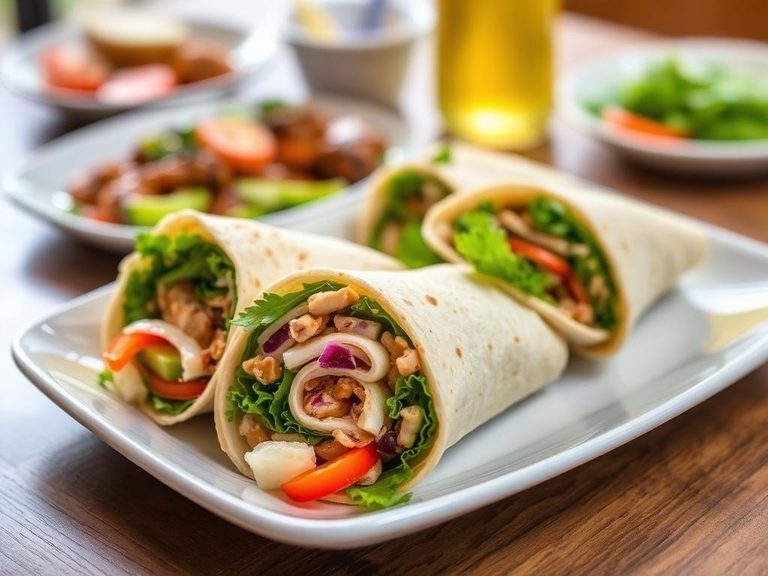
Sandwiches and wraps are versatile, handheld meals consisting of fillings placed between slices of bread or rolled inside a flatbread. They typically feature a combination of proteins like deli meats, cheese, or hummus, along with vegetables such as lettuce, tomatoes, and onions, and are often enhanced with condiments like mustard or mayonnaise. While the sandwich is a global staple with roots in 18th-century Europe, the wrap is a more modern, Tex-Mex inspired variation.
🍽️ Nutrition at a glance
Depending on the ingredients, sandwiches and wraps can range from balanced to high in carbohydrates and fats, especially with refined breads and creamy spreads. They are a good source of protein for muscle repair and can provide fiber, vitamins, and minerals from the vegetable fillings, with a typical serving containing 300-600 calories.
Nutrition breakdown
| Calories | 420 kcal |
| Protein | 25 g |
| Carbs | 42 g |
| Fat | 18 g |
| Fiber | 4 g |
| Sugar | 5 g |
| Sodium | 890 mg |
| Vitamin A | 150 mcg |
| Vitamin C | 15 mg |
| Calcium | 250 mg |
| Iron | 3 mg |
| Potassium | 350 mg |
| Vitamin B12 | 1.5 mcg |
| Niacin (B3) | 8 mg |
| Phosphorus | 280 mg |
Per 1 turkey and cheese wrap (approx. 200 g) · estimated, varies by recipe
💡 What's interesting
The sandwich is named after the 18th-century English aristocrat John Montagu, 4th Earl of Sandwich, who popularized eating meat between bread slices to avoid leaving the gambling table. Nutritionally, wraps can offer a lower-carb alternative to traditional sliced bread, especially when using whole-grain or vegetable-based flatbreads.
🍽️ Related dishes




AI estimate may be inaccurate · Terms