

Tomatoes, green, raw
Whole food · Vegetables and Vegetable Products

Photo: Wikipedia
Green tomatoes are the unripe, firm fruit of the tomato plant, prized for their tart, tangy flavor and crisp, dense texture that holds up exceptionally well to cooking. Unlike their red counterparts, they offer a unique, slightly acidic bite with a subtle, grassy undertone. Nutritionally, they are a low-calorie source of vitamin C and fiber, with a notably lower sugar content than fully ripe tomatoes.
Calorie split: 18% protein · 76% carbs · 7% fat
↓ Full nutrition💚 Why it's loved
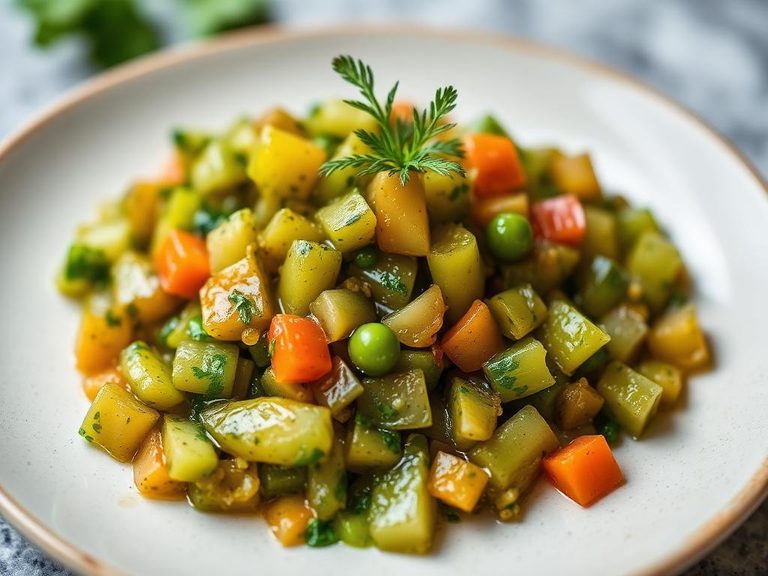
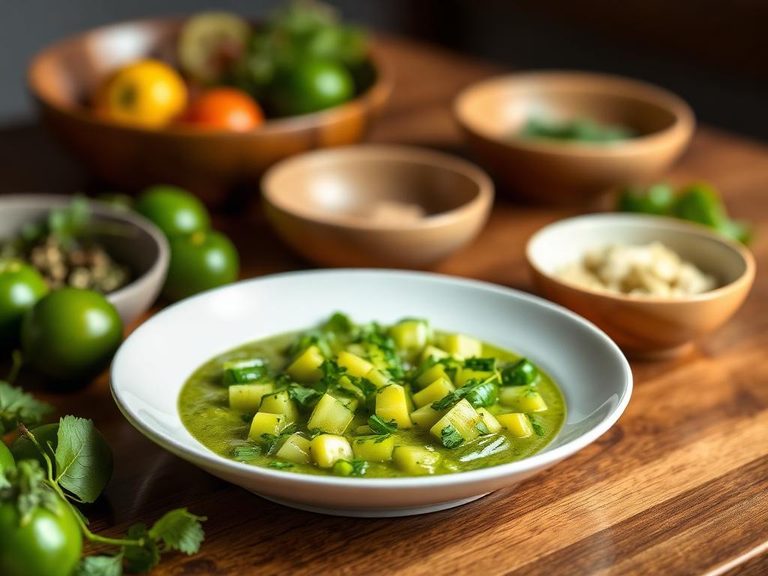
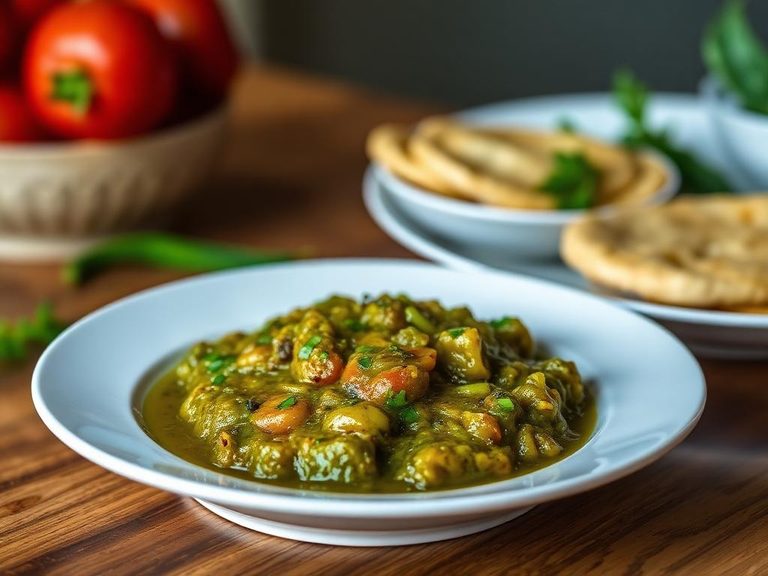
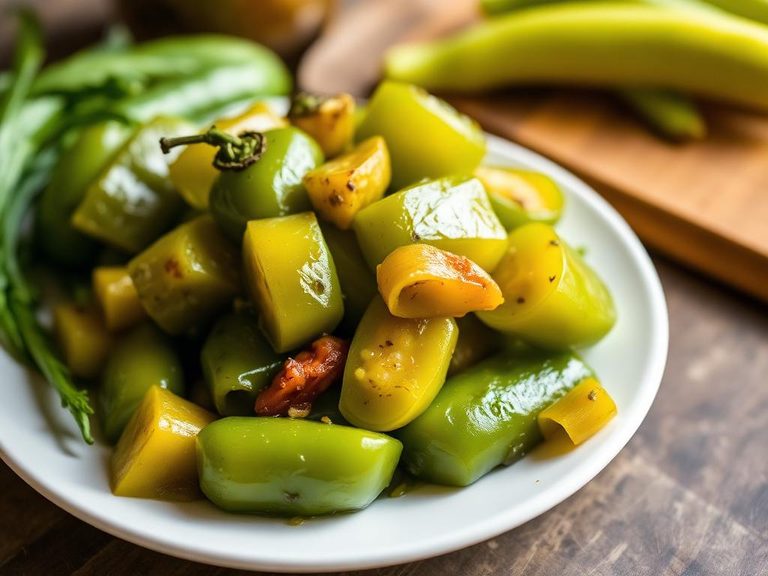
People love green tomatoes for their firm, crunchy texture that becomes delightfully crispy when fried, and for their bright, tangy flavor that cuts through rich, savory dishes. They are a beloved staple in Southern U.S. cuisine, where fried green tomatoes are a cultural icon, and they are also cherished in Mediterranean and Asian cooking for their versatility in salads, salsas, and pickles.
⚠️ Watch-outs & how to enjoy it better
Green tomatoes contain solanine, a naturally occurring compound that can cause digestive discomfort in sensitive individuals if consumed in large quantities. To mitigate this, it's best to cook them thoroughly (e.g., frying, stewing) or choose varieties bred for low solanine levels. Additionally, their tartness may not appeal to those who prefer sweeter flavors, so pairing them with a small amount of fat or sweetener can balance the taste.
Key benefits
- Rich in vitamin C, supporting immune function and skin health.
- High in dietary fiber, promoting digestive regularity.
- Contains antioxidants like chlorogenic acid, which may help combat oxidative stress.
- Low in calories and sugar, making it suitable for low-carb or weight-management diets.
- Provides a good source of potassium, which is essential for heart and muscle function.
🍽️ Popular dishes

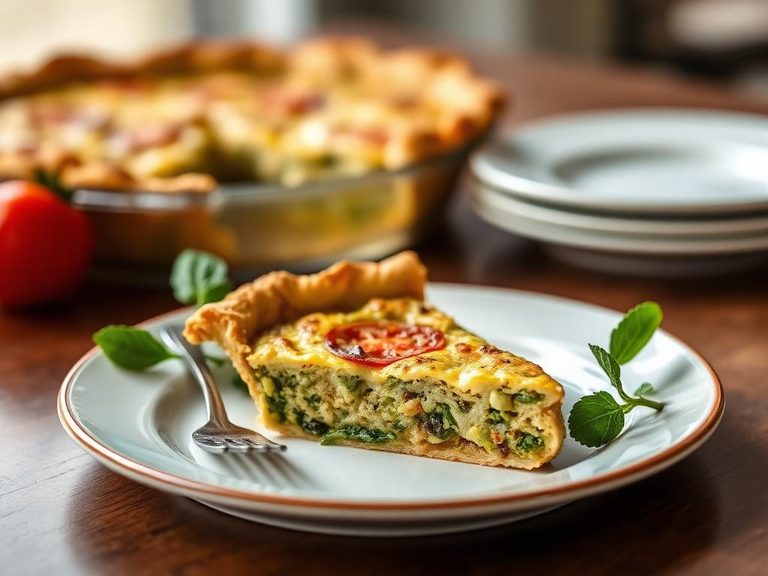
🌍 Where it's eaten
💡 Did you know?
Green tomatoes were once mistakenly believed to be poisonous in early American history, leading to their use primarily in pickles and relishes until the popularity of fried green tomatoes in the 20th century changed perceptions.
Full nutrition (USDA data · scales with serving)
| Water | 93.0 g |
| Energy | 23.0 kcal |
| Energy | 95.0 kj |
| Protein | 1.2 g |
| Total lipid (fat) | 0.20 g |
| Ash | 0.50 g |
| Carbohydrate, by difference | 5.1 g |
| Fiber, total dietary | 1.1 g |
| Total Sugars | 4.0 g |
| Calcium, Ca | 13.0 mg |
| Iron, Fe | 0.51 mg |
| Magnesium, Mg | 10.0 mg |
| Phosphorus, P | 28.0 mg |
| Potassium, K | 204 mg |
| Sodium, Na | 13.0 mg |
| Zinc, Zn | 0.07 mg |
| Copper, Cu | 0.09 mg |
| Manganese, Mn | 0.10 mg |
| Selenium, Se | 0.40 ug |
| Vitamin C, total ascorbic acid | 23.4 mg |
| Thiamin | 0.06 mg |
| Riboflavin | 0.04 mg |
| Niacin | 0.50 mg |
| Pantothenic acid | 0.50 mg |
| Vitamin B-6 | 0.08 mg |
| Folate, total | 9.0 ug |
| Folic acid | 0.00 ug |
| Folate, food | 9.0 ug |
| Folate, DFE | 9.0 ug |
| Choline, total | 8.6 mg |
| Vitamin B-12 | 0.00 ug |
| Vitamin B-12, added | 0.00 ug |
| Vitamin A, RAE | 32.0 ug |
| Retinol | 0.00 ug |
| Carotene, beta | 346 ug |
| Carotene, alpha | 78.0 ug |
| Cryptoxanthin, beta | 0.00 ug |
| Vitamin A, IU | 642 iu |
| Lycopene | 0.00 ug |
| Lutein + zeaxanthin | 0.00 ug |
| Vitamin E (alpha-tocopherol) | 0.38 mg |
| Vitamin E, added | 0.00 mg |
| Vitamin D (D2 + D3), International Units | 0.00 iu |
| Vitamin D (D2 + D3) | 0.00 ug |
| Vitamin K (phylloquinone) | 10.1 ug |
| Alcohol, ethyl | 0.00 g |
| Caffeine | 0.00 mg |
| Theobromine | 0.00 mg |
Fat & fatty acid profile (per 100g)
| Fatty acids, total saturated | 0.03 g |
| SFA 4:0 | 0.00 g |
| SFA 6:0 | 0.00 g |
| SFA 8:0 | 0.00 g |
| SFA 10:0 | 0.00 g |
| SFA 12:0 | 0.00 g |
| SFA 14:0 | 0.00 g |
| SFA 16:0 | 0.02 g |
| SFA 18:0 | 0.01 g |
| Fatty acids, total monounsaturated | 0.03 g |
| MUFA 16:1 | 0.00 g |
| MUFA 18:1 | 0.03 g |
| MUFA 20:1 | 0.00 g |
| MUFA 22:1 | 0.00 g |
| Fatty acids, total polyunsaturated | 0.08 g |
| PUFA 18:2 | 0.08 g |
| PUFA 18:3 | 0.00 g |
| PUFA 18:4 | 0.00 g |
| PUFA 20:4 | 0.00 g |
| PUFA 20:5 n-3 (EPA) | 0.00 g |
| PUFA 22:5 n-3 (DPA) | 0.00 g |
| PUFA 22:6 n-3 (DHA) | 0.00 g |
| Fatty acids, total trans | 0.00 g |
| Cholesterol | 0.00 mg |
Amino acid profile (per 100g)
| Tryptophan | 0.01 g |
| Threonine | 0.03 g |
| Isoleucine | 0.03 g |
| Leucine | 0.04 g |
| Lysine | 0.04 g |
| Methionine | 0.01 g |
| Cystine | 0.02 g |
| Phenylalanine | 0.03 g |
| Tyrosine | 0.02 g |
| Valine | 0.03 g |
| Arginine | 0.03 g |
| Histidine | 0.02 g |
| Alanine | 0.03 g |
| Aspartic acid | 0.17 g |
| Glutamic acid | 0.44 g |
| Glycine | 0.03 g |
| Proline | 0.02 g |
| Serine | 0.03 g |
FAQ
Are green tomatoes the same as tomatillos?
No, they are different. Green tomatoes are unripe tomatoes, while tomatillos are a separate species (Physalis philadelphica) with a papery husk and a tangier, more citrusy flavor.
Can I eat green tomatoes raw?
Yes, but they are very tart and firm. They are often used in salads or sliced thinly for a crunchy, tangy addition, but cooking is more common to mellow their flavor.
How do I store green tomatoes?
Store them at room temperature in a single layer, away from direct sunlight. They will ripen over time; to slow ripening, keep them in the refrigerator, though this may affect texture.
Are green tomatoes healthier than red tomatoes?
They have different nutritional profiles. Green tomatoes are lower in sugar and higher in certain antioxidants like chlorogenic acid, while red tomatoes are richer in lycopene, a potent antioxidant.
Nutrient density (calculated · NRF9.3)
Nutrient Rich Foods index: beneficial nutrients (protein, fiber, vitamins, minerals) minus saturated fat, added sugar & sodium, per 100 kcal.
NRF9.3 index — Fulgoni, Keast & Drewnowski, 2009. Computed from USDA nutrients.
Weight-loss friendliness (composite index)
Energy density 0.23 kcal/g · 21% calories from protein · 1.1 g fiber · 4.0 g sugar per 100 g.
Composite of energy density (Rolls et al., 1999), protein & fiber satiety, minus sugar. A calculated heuristic — ranks satiety-per-calorie, not a clinical measure.
Dietary load (calculated from USDA values)
Potential renal acid load. Positive = acid-forming, negative = alkaline-forming.
Sodium-to-potassium ratio: 0.06 (lower is better — aim for ≤ 1)
Sodium:potassium per WHO potassium guidance. Computed from USDA nutrients.