

Tomatoes, grape, raw
Whole food · Vegetables and Vegetable Products
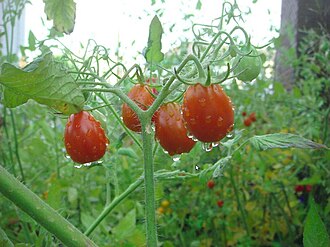
Photo: Wikipedia
Grape tomatoes are small, oval-shaped tomatoes prized for their firm, meaty texture and a sweet, concentrated flavor that bursts with a pleasant acidity. Nutritionally, they are a low-calorie powerhouse, offering a good source of fiber and vitamins A and C per 100g, with virtually no fat or sugar. Their bite-sized convenience makes them a perfect, no-prep snack or a vibrant addition to salads and cooked dishes.
Calorie split: 11% protein · 71% carbs · 18% fat
↓ Full nutrition💚 Why it's loved
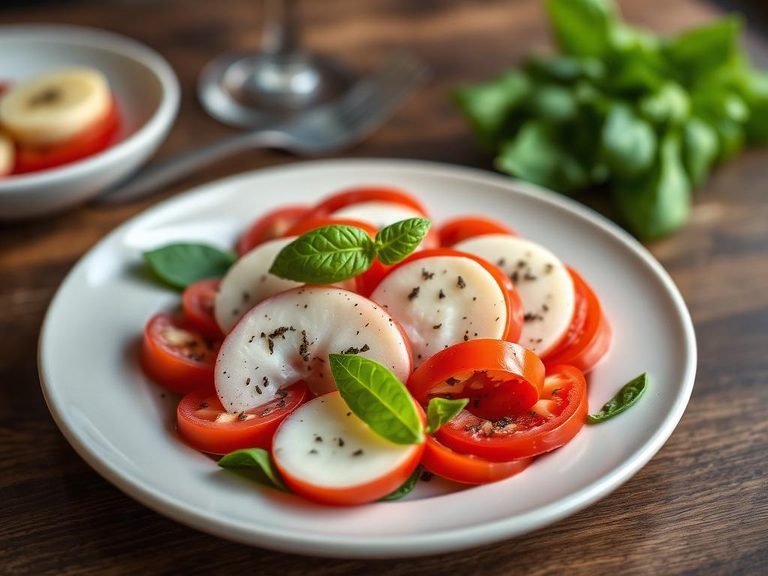
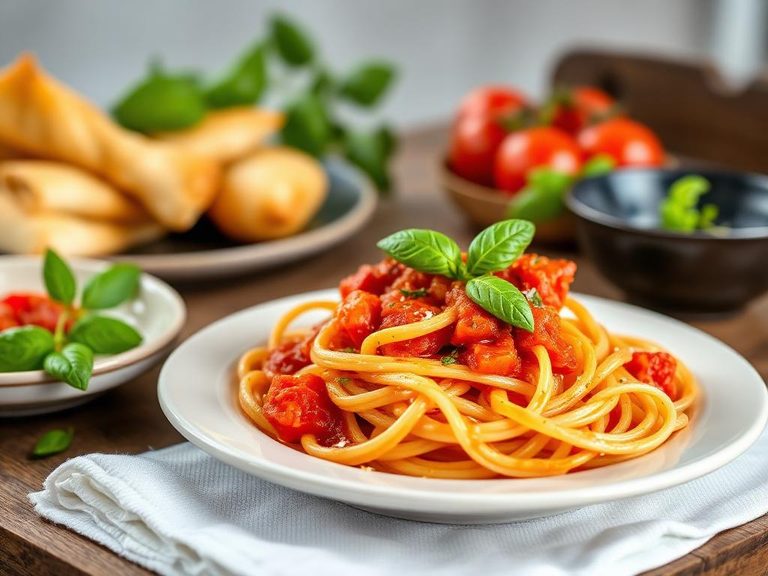
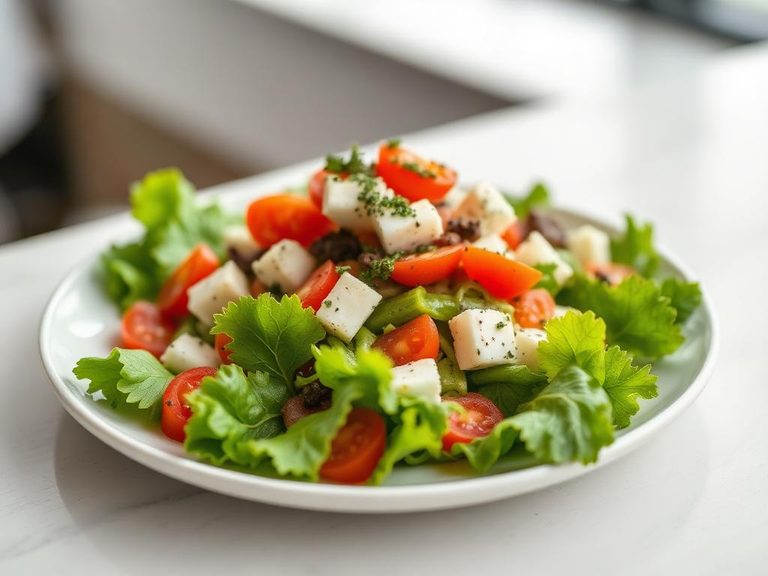
People love grape tomatoes for their perfect balance of sweetness and tang, and their satisfying pop when bitten. Their durability and uniform size make them incredibly versatile for snacking, roasting, or tossing into everything from pasta to skewers.
⚠️ Watch-outs & how to enjoy it better
Some individuals with acid reflux or sensitive stomachs may find raw tomatoes irritating due to their natural acidity. To mitigate this, consider cooking them (e.g., roasting or sautéing) to reduce acidity, or pair them with a small amount of fat or protein like cheese or nuts to buffer the effect. Those on low-potassium diets should also be mindful of portion sizes.
Key benefits
- Low in calories and carbohydrates, supporting weight management.
- Good source of dietary fiber, aiding digestion and satiriety.
- Rich in antioxidants like lycopene and vitamin C.
- Provides vitamin A, important for eye and skin health.
- Hydrating with high water content.
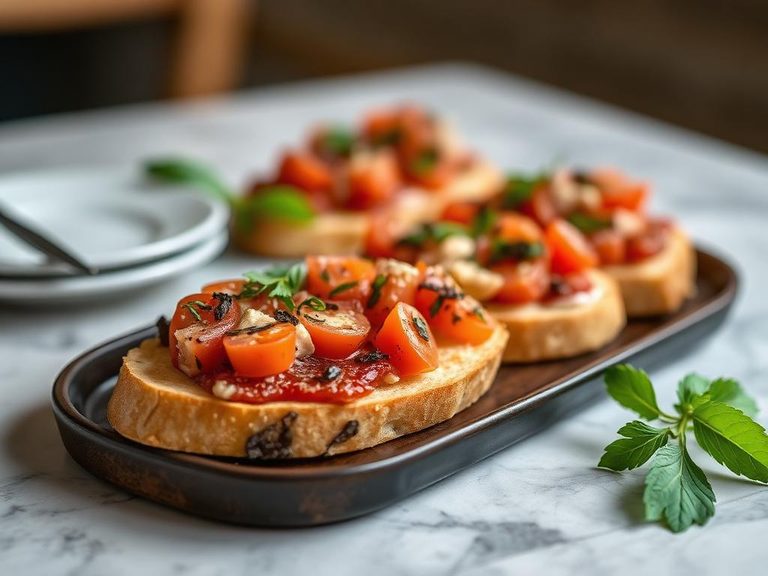
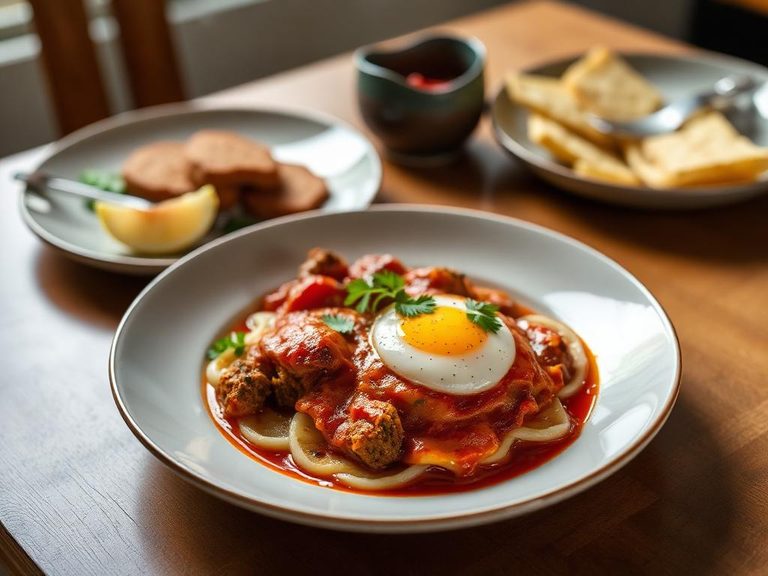
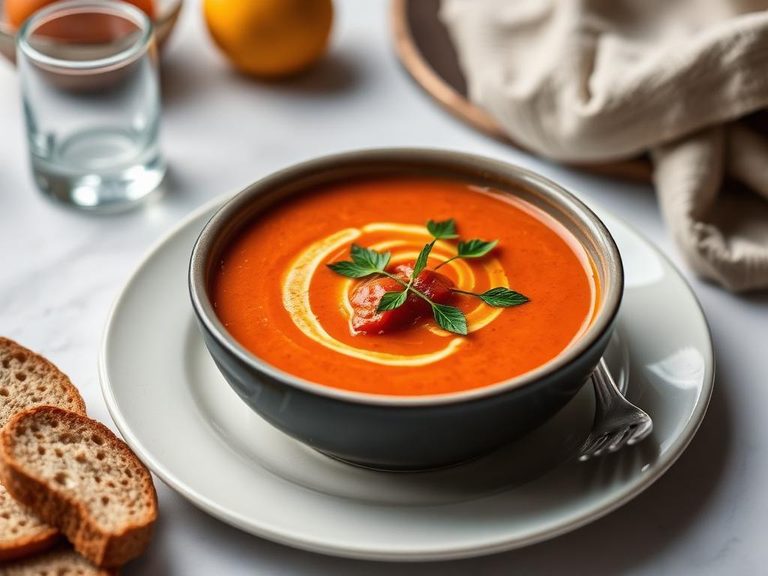
🍽️ Popular dishes
🌍 Where it's eaten
💡 Did you know?
Grape tomatoes are a hybrid variety, not a direct heirloom, and were developed in the 1990s to combine the sweetness of cherry tomatoes with the durability and shape of plum tomatoes.
Full nutrition (USDA data · scales with serving)
| Water | 92.5 g |
| Energy (Atwater General Factors) | 31.0 kcal |
| Energy (Atwater Specific Factors) | 27.0 kcal |
| Energy | 27.0 kcal |
| Energy | 113 kj |
| Nitrogen | 0.13 g |
| Protein | 0.83 g |
| Total lipid (fat) | 0.63 g |
| Ash | 0.56 g |
| Carbohydrate, by difference | 5.5 g |
| Fiber, total dietary | 2.1 g |
| Calcium, Ca | 11.0 mg |
| Iron, Fe | 0.33 mg |
| Magnesium, Mg | 11.9 mg |
| Phosphorus, P | 28.0 mg |
| Potassium, K | 260 mg |
| Sodium, Na | 6.0 mg |
| Zinc, Zn | 0.20 mg |
| Copper, Cu | 0.06 mg |
| Manganese, Mn | 0.12 mg |
| Vitamin C, total ascorbic acid | 27.2 mg |
| Thiamin | 0.07 mg |
| Riboflavin | 0.07 mg |
| Niacin | 0.81 mg |
| Vitamin B-6 | 0.06 mg |
| Folate, total | 10.0 ug |
| Choline, total | 9.8 mg |
| Choline, free | 8.0 mg |
| Choline, from phosphocholine | 0.60 mg |
| Choline, from phosphotidyl choline | 1.2 mg |
| Choline, from glycerophosphocholine | 0.00 mg |
| Choline, from sphingomyelin | 0.00 mg |
| Betaine | 0.00 mg |
| cis-beta-Carotene | 49.0 ug |
| trans-beta-Carotene | 393 ug |
| Carotene, alpha | 0.00 ug |
| Cryptoxanthin, beta | 0.00 ug |
| Cryptoxanthin, alpha | 0.00 ug |
| Lycopene | 4100 ug |
| cis-Lycopene | 554 ug |
| cis-Lutein/Zeaxanthin | 12.0 ug |
| Lutein | 95.0 ug |
| Zeaxanthin | 9.0 ug |
| Vitamin E (alpha-tocopherol) | 0.98 mg |
| Tocopherol, beta | 0.02 mg |
| Tocopherol, gamma | 0.70 mg |
| Tocopherol, delta | 0.12 mg |
| Tocotrienol, alpha | 0.00 mg |
| Tocotrienol, beta | 0.00 mg |
| Tocotrienol, gamma | 0.00 mg |
| Tocotrienol, delta | 0.00 mg |
| Vitamin K (phylloquinone) | 4.2 ug |
| Vitamin K (Dihydrophylloquinone) | 0.00 ug |
| Vitamin K (Menaquinone-4) | 0.00 ug |
Fat & fatty acid profile (per 100g)
Estimated from Tomatoes, sun-dried, packed in oil, drained — USDA does not publish this profile for Tomatoes.
| Fatty acids, total saturated | 1.9 g |
| SFA 14:0 | 0.01 g |
| SFA 16:0 | 1.5 g |
| SFA 18:0 | 0.34 g |
| Fatty acids, total monounsaturated | 8.7 g |
| MUFA 16:1 | 0.10 g |
| MUFA 18:1 | 8.5 g |
| MUFA 20:1 | 0.03 g |
| Fatty acids, total polyunsaturated | 2.1 g |
| PUFA 18:2 | 2.0 g |
| PUFA 18:3 | 0.08 g |
| Fatty acids, total trans | 0.00 g |
| Cholesterol | 0.00 mg |
Amino acid profile (per 100g)
Estimated from Tomatoes, sun-dried, packed in oil, drained — USDA does not publish this profile for Tomatoes.
| Tryptophan | 0.04 g |
| Threonine | 0.13 g |
| Isoleucine | 0.12 g |
| Leucine | 0.18 g |
| Lysine | 0.19 g |
| Methionine | 0.04 g |
| Cystine | 0.07 g |
| Phenylalanine | 0.13 g |
| Tyrosine | 0.09 g |
| Valine | 0.13 g |
| Arginine | 0.12 g |
| Histidine | 0.08 g |
| Alanine | 0.14 g |
| Aspartic acid | 0.70 g |
| Glutamic acid | 1.9 g |
| Glycine | 0.13 g |
| Proline | 0.10 g |
| Serine | 0.13 g |
FAQ
Are grape tomatoes the same as cherry tomatoes?
No, they are different. Grape tomatoes are typically more oval or oblong, with a thicker skin and meatier texture, while cherry tomatoes are rounder and often have a thinner skin and juicier interior.
How should I store grape tomatoes?
Store them at room temperature, stem-side down, and out of direct sunlight for best flavor. If you need to refrigerate them, let them come to room temperature before eating to restore their full taste and texture.
Can I eat grape tomatoes if I have a tomato allergy?
No. Tomatoes are a common allergen for some, and grape tomatoes are no exception. If you have a known tomato allergy, avoid them entirely.
Nutrient density (calculated · NRF9.3)
Nutrient Rich Foods index: beneficial nutrients (protein, fiber, vitamins, minerals) minus saturated fat, added sugar & sodium, per 100 kcal.
NRF9.3 index — Fulgoni, Keast & Drewnowski, 2009. Computed from USDA nutrients.
Weight-loss friendliness (composite index)
Energy density 0.27 kcal/g · 12% calories from protein · 2.1 g fiber · 0.0 g sugar per 100 g.
Composite of energy density (Rolls et al., 1999), protein & fiber satiety, minus sugar. A calculated heuristic — ranks satiety-per-calorie, not a clinical measure.
Dietary load (calculated from USDA values)
Potential renal acid load. Positive = acid-forming, negative = alkaline-forming.
Sodium-to-potassium ratio: 0.02 (lower is better — aim for ≤ 1)
Sodium:potassium per WHO potassium guidance. Computed from USDA nutrients.