

Sweet potato, canned, vacuum pack
Whole food · Vegetables and Vegetable Products

Photo: Wikipedia
Sweet potato, canned in a vacuum pack, offers tender, pre-cooked slices or chunks with a naturally sweet, earthy flavor and a soft, slightly fibrous texture. Its standout nutritional feature is its high fiber content (1.8g per 100g) and low fat (0.2g), making it a filling, plant-based carbohydrate source. The vacuum packing preserves its fresh taste and nutrients without added syrups or preservatives.
Calorie split: 7% protein · 91% carbs · 2% fat
↓ Full nutrition💚 Why it's loved
People love it for its comforting, naturally sweet taste and soft texture that requires minimal preparation. It's incredibly versatile, serving as a quick side dish, a base for soups, or a sweet ingredient in both savory and dessert recipes.
⚠️ Watch-outs & how to enjoy it better
The main caution is its high carbohydrate content (21.12g per 100g), which can cause blood sugar spikes if eaten alone in large portions. To counteract this, pair it with a source of protein (like beans or chicken) or healthy fat (like avocado or olive oil) to slow sugar absorption and improve satiety.
Key benefits
- High in dietary fiber for digestive health
- Very low in fat and cholesterol-free
- Good source of complex carbohydrates for sustained energy
- Contains beta-carotene, a precursor to vitamin A
- Convenient, pre-cooked, and ready to eat
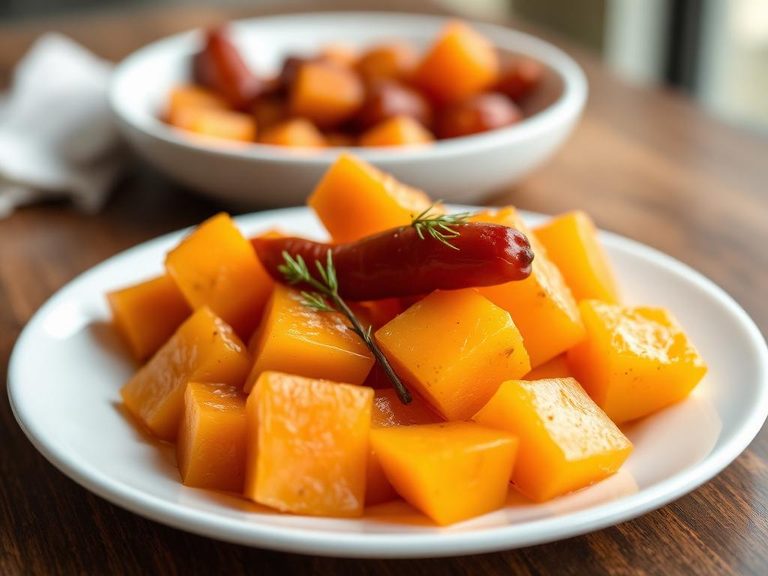
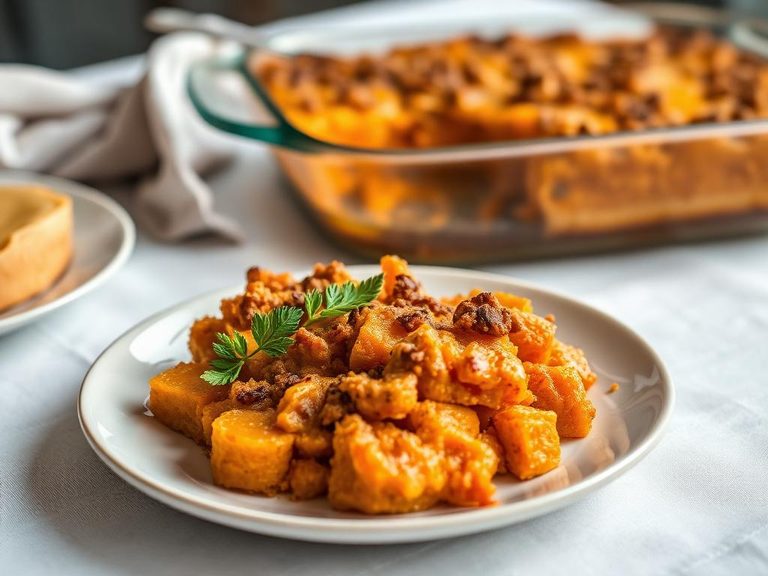
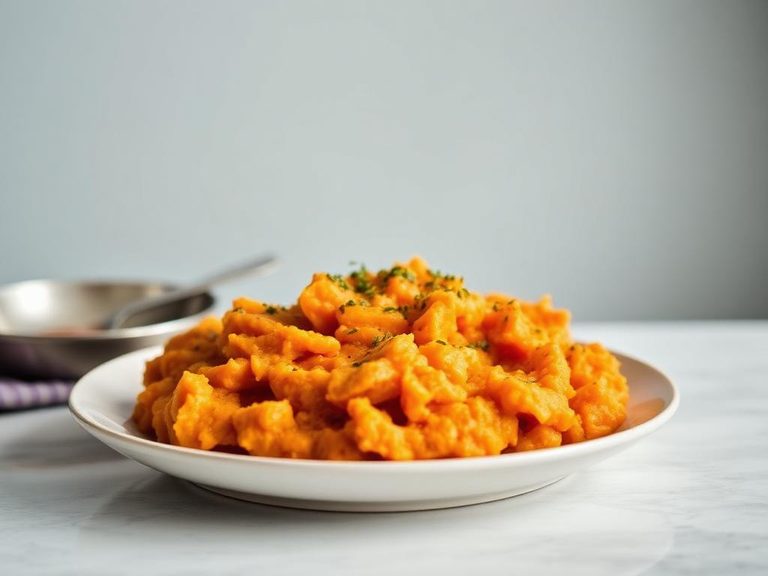
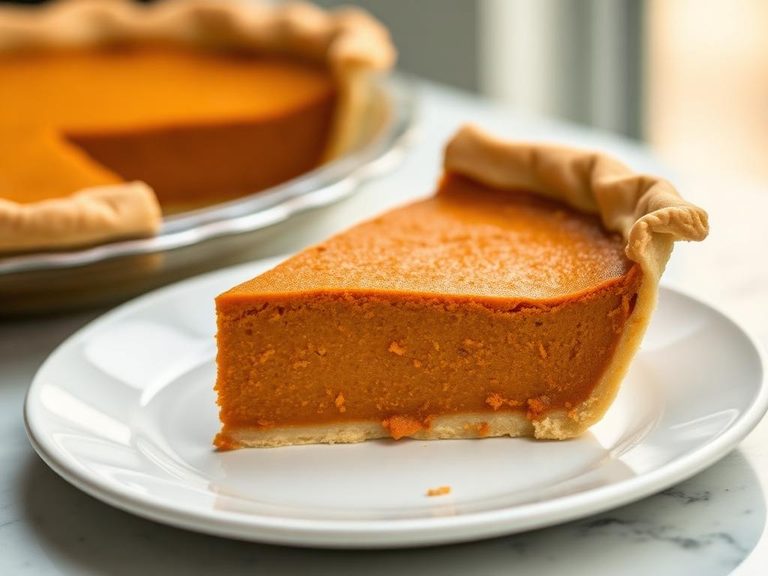
🍽️ Popular dishes
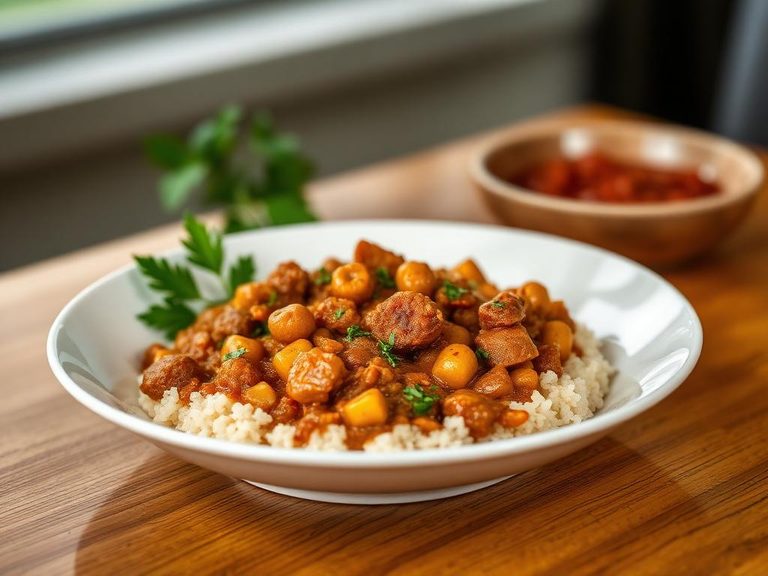
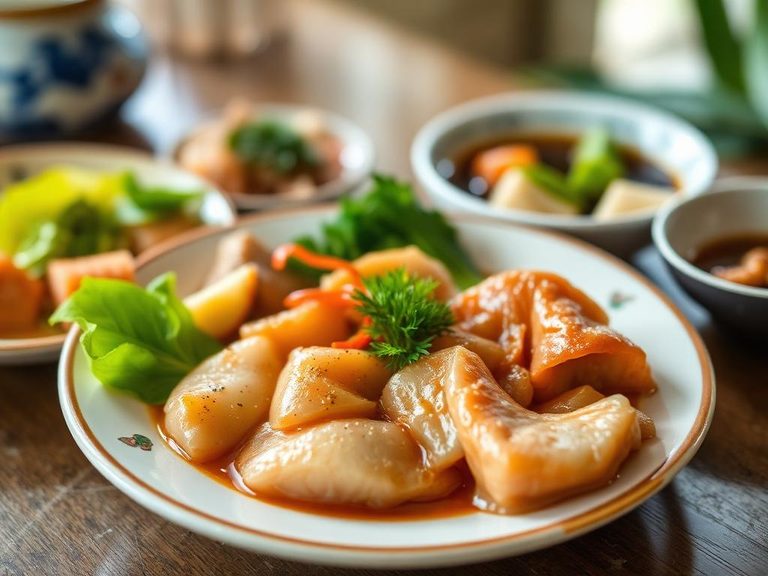
🌍 Where it's eaten
💡 Did you know?
Sweet potatoes are not botanically related to regular potatoes; they are morning glory relatives, and their vibrant orange color comes from beta-carotene, which your body converts to vitamin A.
Full nutrition (USDA data · scales with serving)
| Water | 76.0 g |
| Energy | 91.0 kcal |
| Energy | 382 kj |
| Protein | 1.6 g |
| Total lipid (fat) | 0.20 g |
| Ash | 1.0 g |
| Carbohydrate, by difference | 21.1 g |
| Fiber, total dietary | 1.8 g |
| Total Sugars | 5.0 g |
| Calcium, Ca | 22.0 mg |
| Iron, Fe | 0.89 mg |
| Magnesium, Mg | 22.0 mg |
| Phosphorus, P | 49.0 mg |
| Potassium, K | 312 mg |
| Sodium, Na | 53.0 mg |
| Zinc, Zn | 0.18 mg |
| Copper, Cu | 0.14 mg |
| Manganese, Mn | 0.46 mg |
| Selenium, Se | 0.70 ug |
| Vitamin C, total ascorbic acid | 26.4 mg |
| Thiamin | 0.04 mg |
| Riboflavin | 0.06 mg |
| Niacin | 0.74 mg |
| Pantothenic acid | 0.52 mg |
| Vitamin B-6 | 0.19 mg |
| Folate, total | 17.0 ug |
| Folic acid | 0.00 ug |
| Folate, food | 17.0 ug |
| Folate, DFE | 17.0 ug |
| Choline, total | 13.0 mg |
| Vitamin B-12 | 0.00 ug |
| Vitamin B-12, added | 0.00 ug |
| Vitamin A, RAE | 399 ug |
| Retinol | 0.00 ug |
| Carotene, beta | 4790 ug |
| Carotene, alpha | 0.00 ug |
| Cryptoxanthin, beta | 0.00 ug |
| Vitamin A, IU | 7983 iu |
| Lycopene | 0.00 ug |
| Lutein + zeaxanthin | 0.00 ug |
| Vitamin E (alpha-tocopherol) | 1.0 mg |
| Vitamin E, added | 0.00 mg |
| Vitamin D (D2 + D3), International Units | 0.00 iu |
| Vitamin D (D2 + D3) | 0.00 ug |
| Vitamin K (phylloquinone) | 2.2 ug |
| Alcohol, ethyl | 0.00 g |
| Caffeine | 0.00 mg |
| Theobromine | 0.00 mg |
Fat & fatty acid profile (per 100g)
| Fatty acids, total saturated | 0.04 g |
| SFA 4:0 | 0.00 g |
| SFA 6:0 | 0.00 g |
| SFA 8:0 | 0.00 g |
| SFA 10:0 | 0.00 g |
| SFA 12:0 | 0.00 g |
| SFA 14:0 | 0.00 g |
| SFA 16:0 | 0.04 g |
| SFA 18:0 | 0.00 g |
| Fatty acids, total monounsaturated | 0.01 g |
| MUFA 16:1 | 0.00 g |
| MUFA 18:1 | 0.01 g |
| MUFA 20:1 | 0.00 g |
| MUFA 22:1 | 0.00 g |
| Fatty acids, total polyunsaturated | 0.08 g |
| PUFA 18:2 | 0.07 g |
| PUFA 18:3 | 0.01 g |
| PUFA 18:4 | 0.00 g |
| PUFA 20:4 | 0.00 g |
| PUFA 20:5 n-3 (EPA) | 0.00 g |
| PUFA 22:5 n-3 (DPA) | 0.00 g |
| PUFA 22:6 n-3 (DHA) | 0.00 g |
| Fatty acids, total trans | 0.00 g |
| Cholesterol | 0.00 mg |
Amino acid profile (per 100g)
| Tryptophan | 0.03 g |
| Threonine | 0.09 g |
| Isoleucine | 0.06 g |
| Leucine | 0.10 g |
| Lysine | 0.07 g |
| Methionine | 0.03 g |
| Cystine | 0.02 g |
| Phenylalanine | 0.09 g |
| Tyrosine | 0.04 g |
| Valine | 0.09 g |
| Arginine | 0.06 g |
| Histidine | 0.03 g |
| Alanine | 0.08 g |
| Aspartic acid | 0.40 g |
| Glutamic acid | 0.16 g |
| Glycine | 0.07 g |
| Proline | 0.06 g |
| Serine | 0.09 g |
FAQ
Is canned sweet potato as nutritious as fresh?
Yes, vacuum-packed canned sweet potato retains most of its nutrients, including fiber, vitamins, and minerals, because it's processed quickly with minimal heat and no added syrups or preservatives.
How can I use it in savory dishes?
Drain and cube it to add to stews, curries, or grain bowls. You can also mash it with spices like cumin or paprika, or roast the slices to caramelize the edges for a side dish.
Is it suitable for a low-carb diet?
No, it's relatively high in carbohydrates (21g per 100g). For low-carb diets, consider it a moderate treat and pair it with protein and fat to manage blood sugar response.
Nutrient density (calculated · NRF9.3)
Nutrient Rich Foods index: beneficial nutrients (protein, fiber, vitamins, minerals) minus saturated fat, added sugar & sodium, per 100 kcal.
NRF9.3 index — Fulgoni, Keast & Drewnowski, 2009. Computed from USDA nutrients.
Weight-loss friendliness (composite index)
Energy density 0.91 kcal/g · 7% calories from protein · 1.8 g fiber · 5.0 g sugar per 100 g.
Composite of energy density (Rolls et al., 1999), protein & fiber satiety, minus sugar. A calculated heuristic — ranks satiety-per-calorie, not a clinical measure.
Dietary load (calculated from USDA values)
Potential renal acid load. Positive = acid-forming, negative = alkaline-forming.
Sodium-to-potassium ratio: 0.17 (lower is better — aim for ≤ 1)
Sodium:potassium per WHO potassium guidance. Computed from USDA nutrients.