

Squash, winter, all varieties, raw
Whole food · Vegetables and Vegetable Products

Photo: Wikipedia
Winter squash encompasses a diverse family of hard-shelled gourds, including butternut, acorn, and spaghetti varieties. Their raw flesh is dense, mildly sweet, and subtly nutty, with a crisp, starchy texture similar to a raw sweet potato. Nutritionally, they are a low-calorie, high-fiber carbohydrate source, providing a notable amount of vitamin A from beta-carotene.
Calorie split: 10% protein · 87% carbs · 3% fat
↓ Full nutrition💚 Why it's loved
People love winter squash for its natural, earthy sweetness that deepens with roasting, and its remarkable versatility—it can be baked, pureed, stuffed, or spiralized. It's a cornerstone of autumn and winter comfort food across many cultures, from Thanksgiving pies to savory stews.
⚠️ Watch-outs & how to enjoy it better
The dense, starchy flesh can cause a significant blood-sugar spike if eaten raw in large quantities or as a puree without balancing nutrients. To counteract this, pair it with a source of protein (like beans or nuts) or healthy fat (like olive oil or cheese) to slow digestion. Also, some varieties like acorn squash have tough skin that requires more effort to prepare.
Key benefits
- Excellent source of beta-carotene (vitamin A precursor)
- High in dietary fiber for digestive health
- Very low in fat and calories
- Provides vitamin C and potassium
- Contains antioxidants like lutein and zeaxanthin
🍽️ Popular dishes
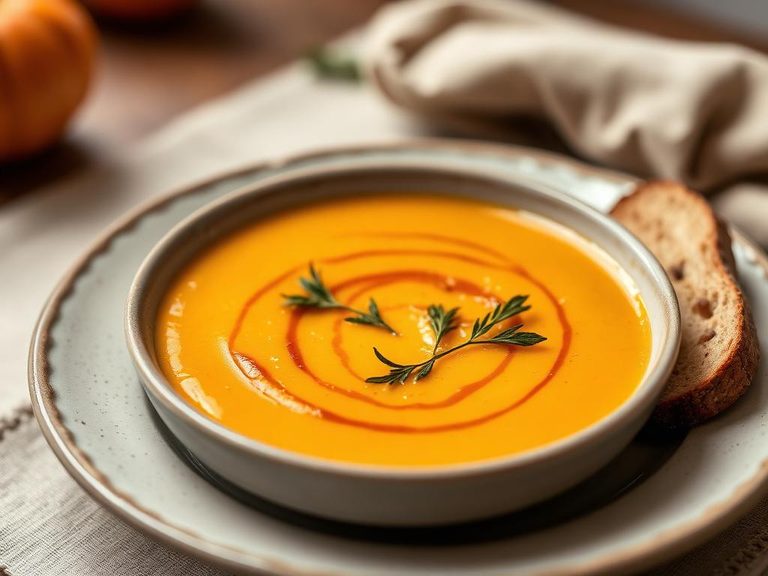
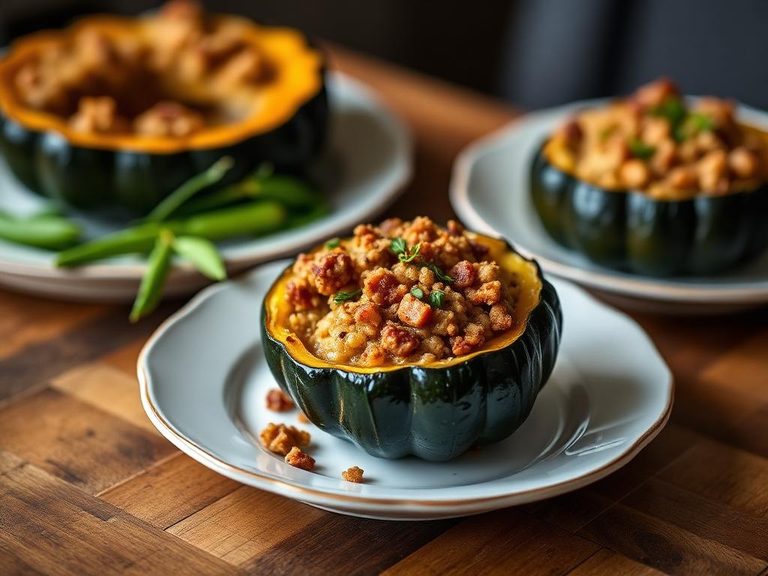
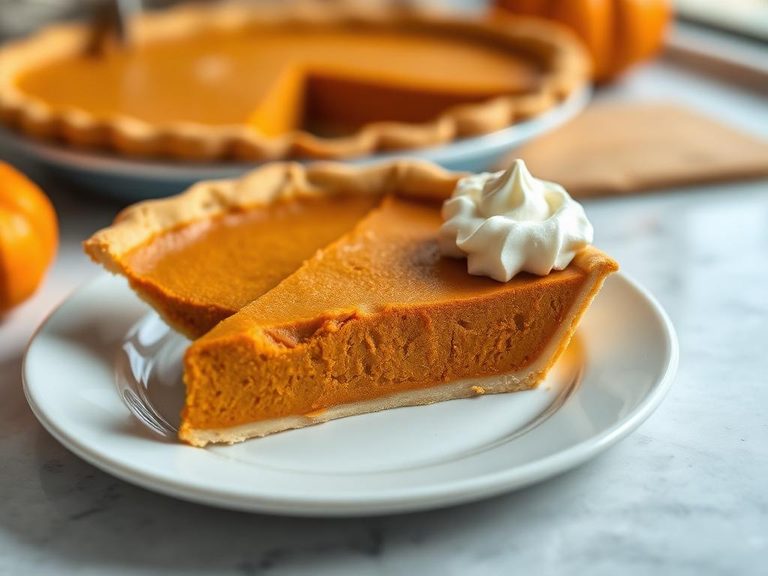
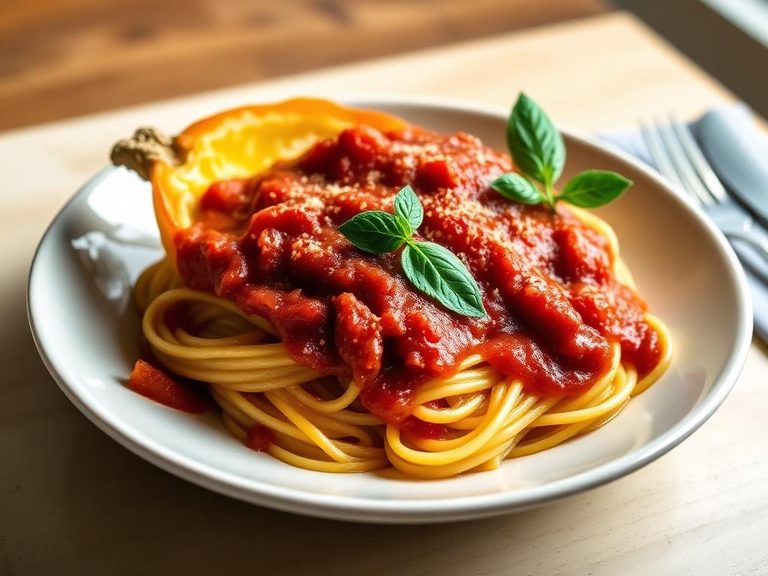
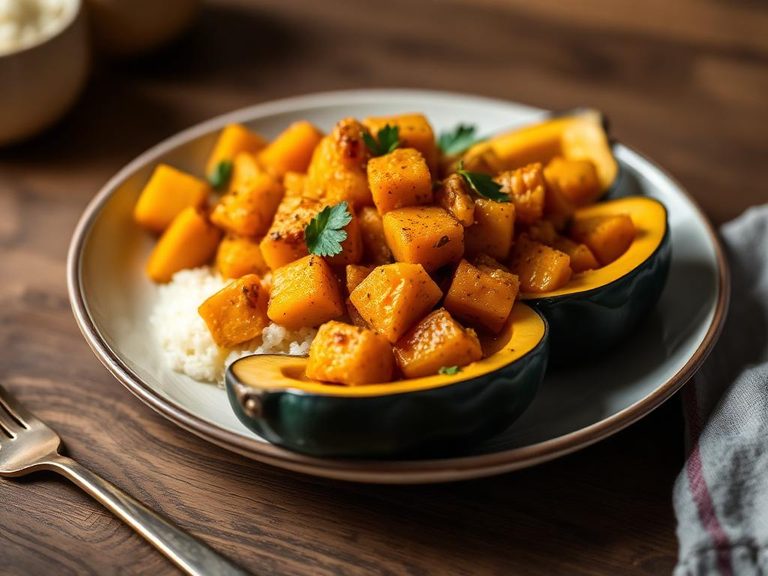
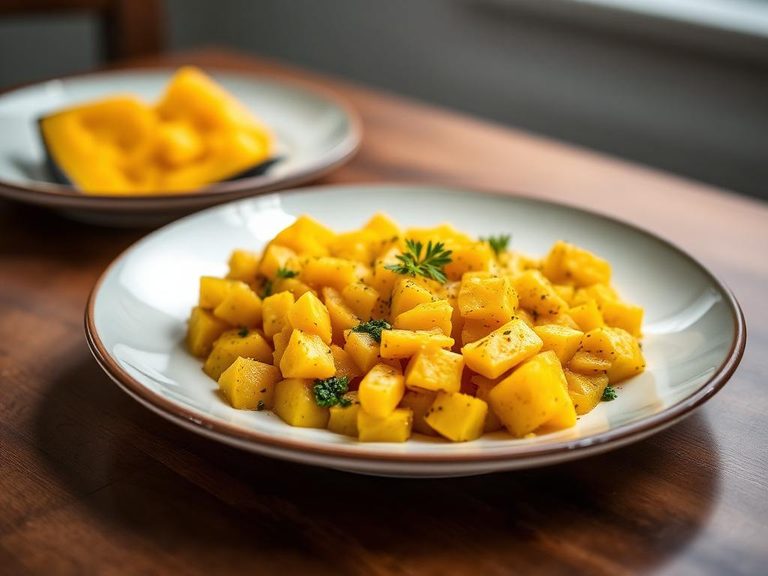
🌍 Where it's eaten
💡 Did you know?
The 'spaghetti' in spaghetti squash isn't a marketing gimmick—when cooked, the flesh naturally separates into long, translucent strands that mimic the pasta's shape and texture.
Full nutrition (USDA data · scales with serving)
| Water | 89.8 g |
| Energy | 34.0 kcal |
| Energy | 143 kj |
| Protein | 0.95 g |
| Total lipid (fat) | 0.13 g |
| Ash | 0.57 g |
| Carbohydrate, by difference | 8.6 g |
| Fiber, total dietary | 1.5 g |
| Total Sugars | 2.2 g |
| Calcium, Ca | 28.0 mg |
| Iron, Fe | 0.58 mg |
| Magnesium, Mg | 14.0 mg |
| Phosphorus, P | 23.0 mg |
| Potassium, K | 350 mg |
| Sodium, Na | 4.0 mg |
| Zinc, Zn | 0.21 mg |
| Copper, Cu | 0.07 mg |
| Manganese, Mn | 0.16 mg |
| Selenium, Se | 0.40 ug |
| Vitamin C, total ascorbic acid | 12.3 mg |
| Thiamin | 0.03 mg |
| Riboflavin | 0.06 mg |
| Niacin | 0.50 mg |
| Pantothenic acid | 0.19 mg |
| Vitamin B-6 | 0.16 mg |
| Folate, total | 24.0 ug |
| Folic acid | 0.00 ug |
| Folate, food | 24.0 ug |
| Folate, DFE | 24.0 ug |
| Choline, total | 10.0 mg |
| Vitamin B-12 | 0.00 ug |
| Vitamin B-12, added | 0.00 ug |
| Vitamin A, RAE | 68.0 ug |
| Retinol | 0.00 ug |
| Carotene, beta | 820 ug |
| Carotene, alpha | 0.00 ug |
| Cryptoxanthin, beta | 0.00 ug |
| Vitamin A, IU | 1367 iu |
| Lycopene | 0.00 ug |
| Lutein + zeaxanthin | 38.0 ug |
| Vitamin E (alpha-tocopherol) | 0.12 mg |
| Vitamin E, added | 0.00 mg |
| Vitamin D (D2 + D3), International Units | 0.00 iu |
| Vitamin D (D2 + D3) | 0.00 ug |
| Vitamin K (phylloquinone) | 1.1 ug |
| Alcohol, ethyl | 0.00 g |
| Caffeine | 0.00 mg |
| Theobromine | 0.00 mg |
Fat & fatty acid profile (per 100g)
| Fatty acids, total saturated | 0.03 g |
| SFA 4:0 | 0.00 g |
| SFA 6:0 | 0.00 g |
| SFA 8:0 | 0.00 g |
| SFA 10:0 | 0.00 g |
| SFA 12:0 | 0.00 g |
| SFA 14:0 | 0.00 g |
| SFA 16:0 | 0.02 g |
| SFA 18:0 | 0.00 g |
| Fatty acids, total monounsaturated | 0.01 g |
| MUFA 16:1 | 0.00 g |
| MUFA 18:1 | 0.01 g |
| MUFA 20:1 | 0.00 g |
| MUFA 22:1 | 0.00 g |
| Fatty acids, total polyunsaturated | 0.06 g |
| PUFA 18:2 | 0.02 g |
| PUFA 18:3 | 0.04 g |
| PUFA 18:4 | 0.00 g |
| PUFA 20:4 | 0.00 g |
| PUFA 20:5 n-3 (EPA) | 0.00 g |
| PUFA 22:5 n-3 (DPA) | 0.00 g |
| PUFA 22:6 n-3 (DHA) | 0.00 g |
| Fatty acids, total trans | 0.00 g |
| Cholesterol | 0.00 mg |
Amino acid profile (per 100g)
| Tryptophan | 0.02 g |
| Threonine | 0.04 g |
| Isoleucine | 0.06 g |
| Leucine | 0.08 g |
| Lysine | 0.05 g |
| Methionine | 0.02 g |
| Cystine | 0.01 g |
| Phenylalanine | 0.06 g |
| Tyrosine | 0.05 g |
| Valine | 0.06 g |
| Arginine | 0.08 g |
| Histidine | 0.03 g |
| Alanine | 0.06 g |
| Aspartic acid | 0.16 g |
| Glutamic acid | 0.25 g |
| Glycine | 0.05 g |
| Proline | 0.05 g |
| Serine | 0.06 g |
FAQ
Can you eat winter squash raw?
Yes, varieties like delicata and acorn can be shaved into salads, but most are quite hard and starchy raw. Cooking (roasting, steaming) softens the flesh, develops its sweetness, and makes nutrients like beta-carotene more bioavailable.
How do I pick a good one?
Look for a hard, unblemished rind that resists thumb pressure. The stem should be intact and dry. A heavy feel for its size indicates dense, moist flesh.
What's the difference between winter and summer squash?
Winter squash (like butternut, pumpkin) have hard, inedible rinds and are harvested in fall for storage. Summer squash (like zucchini, yellow squash) have soft, edible skins and are harvested immature in summer.
Nutrient density (calculated · NRF9.3)
Nutrient Rich Foods index: beneficial nutrients (protein, fiber, vitamins, minerals) minus saturated fat, added sugar & sodium, per 100 kcal.
NRF9.3 index — Fulgoni, Keast & Drewnowski, 2009. Computed from USDA nutrients.
Weight-loss friendliness (composite index)
Energy density 0.34 kcal/g · 11% calories from protein · 1.5 g fiber · 2.2 g sugar per 100 g.
Composite of energy density (Rolls et al., 1999), protein & fiber satiety, minus sugar. A calculated heuristic — ranks satiety-per-calorie, not a clinical measure.
Dietary load (calculated from USDA values)
Potential renal acid load. Positive = acid-forming, negative = alkaline-forming.
Sodium-to-potassium ratio: 0.01 (lower is better — aim for ≤ 1)
Sodium:potassium per WHO potassium guidance. Computed from USDA nutrients.