

Squash, Indian, raw (Navajo)
Whole food · American Indian/Alaska Native Foods

Photo: Wikipedia
The Navajo squash, a small, hard-skinned variety of Indian squash, offers a crisp, watery texture and a mild, slightly sweet flavor reminiscent of a cross between a cucumber and a zucchini. Its pale green flesh is dense and holds its shape well when cooked. Nutritionally, it's a low-calorie, hydrating vegetable with a notable natural sweetness from its sugar content.
Calorie split: 8% protein · 85% carbs · 7% fat
↓ Full nutrition💚 Why it's loved
People appreciate its mild, versatile flavor that readily absorbs spices and seasonings, making it a blank canvas for both savory and sweet dishes. Its cultural significance in Southwestern and Native American cuisines adds a layer of heritage to its use.
⚠️ Watch-outs & how to enjoy it better
Its high water content and natural sugars can lead to a quicker blood-sugar spike compared to lower-sugar vegetables. To mitigate this, pair it with a source of protein (like beans or meat) or healthy fat (like olive oil or avocado) to slow digestion. Overcooking can also make it mushy; aim for a tender-crisp texture.
Key benefits
- Very low in calories and fat, making it ideal for weight management.
- Provides a good source of vitamin C and potassium.
- High water content aids in hydration.
- Contains antioxidants like beta-carotene.
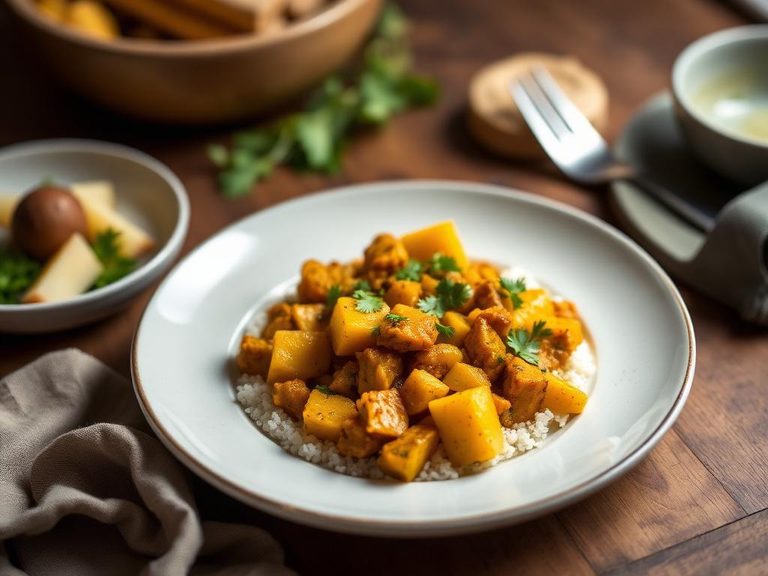
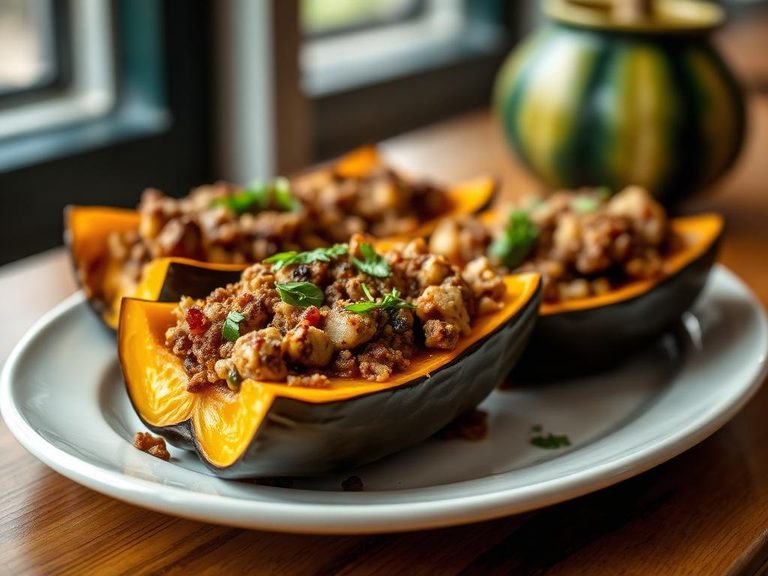
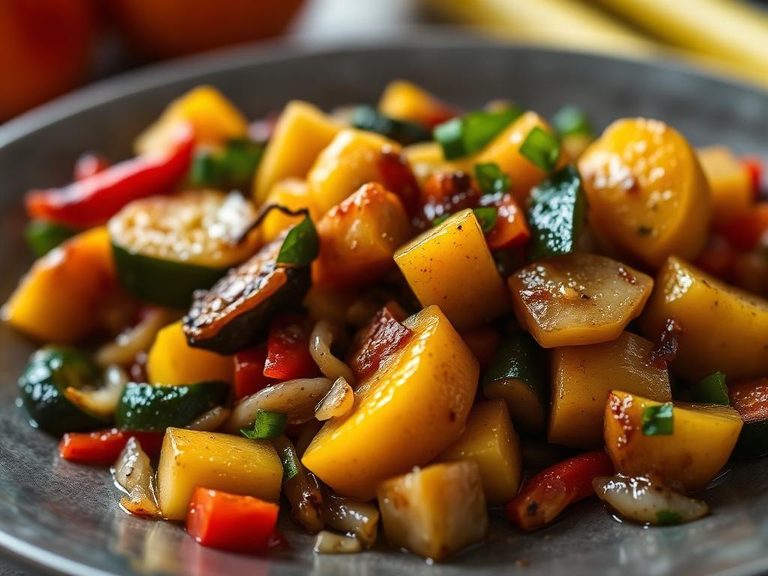
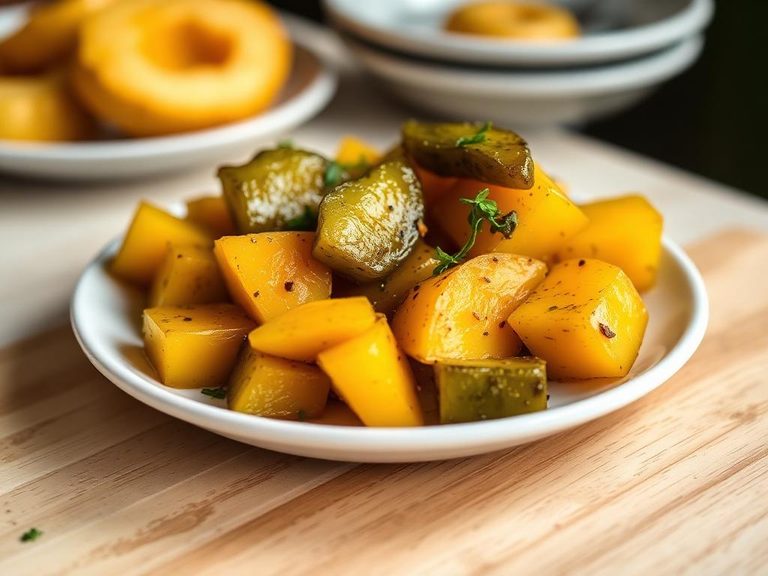
🍽️ Popular dishes

🌍 Where it's eaten
💡 Did you know?
Despite its name, the 'Indian' squash is not from India but is a variety cultivated by the Navajo people and other Native American tribes in the American Southwest for centuries.
Full nutrition (USDA data · scales with serving)
| Water | 93.3 g |
| Energy | 26.0 kcal |
| Energy | 111 kj |
| Protein | 0.52 g |
| Total lipid (fat) | 0.20 g |
| Ash | 0.29 g |
| Carbohydrate, by difference | 5.6 g |
| Total Sugars | 3.5 g |
| Sucrose | 0.77 g |
| Glucose | 1.2 g |
| Fructose | 1.6 g |
| Lactose | 0.00 g |
| Maltose | 0.00 g |
| Galactose | 0.00 g |
| Starch | 0.00 g |
| Calcium, Ca | 9.0 mg |
| Iron, Fe | 0.17 mg |
| Magnesium, Mg | 10.0 mg |
| Phosphorus, P | 12.0 mg |
| Potassium, K | 205 mg |
| Sodium, Na | 20.0 mg |
| Zinc, Zn | 0.07 mg |
| Copper, Cu | 0.02 mg |
| Manganese, Mn | 0.03 mg |
| Vitamin C, total ascorbic acid | 4.5 mg |
| Thiamin | 0.02 mg |
| Riboflavin | 0.02 mg |
| Niacin | 0.17 mg |
| Pantothenic acid | 0.11 mg |
| Vitamin B-6 | 0.06 mg |
| Folate, total | 22.0 ug |
| Folate, food | 22.0 ug |
| Vitamin E (alpha-tocopherol) | 0.00 mg |
| Tocopherol, beta | 0.00 mg |
| Tocopherol, gamma | 0.00 mg |
| Tocopherol, delta | 0.00 mg |
| Tocotrienol, alpha | 0.00 mg |
| Tocotrienol, beta | 0.00 mg |
| Tocotrienol, gamma | 0.00 mg |
| Tocotrienol, delta | 0.00 mg |
Fat & fatty acid profile (per 100g)
Estimated from Stew, mutton, corn, squash (Navajo) — USDA does not publish this profile for Squash.
| Fatty acids, total saturated | 1.7 g |
| SFA 8:0 | 0.00 g |
| SFA 10:0 | 0.00 g |
| SFA 12:0 | 0.00 g |
| SFA 14:0 | 0.08 g |
| SFA 15:0 | 0.02 g |
| SFA 16:0 | 0.87 g |
| SFA 17:0 | 0.06 g |
| SFA 18:0 | 0.69 g |
| SFA 20:0 | 0.01 g |
| SFA 22:0 | 0.01 g |
| Fatty acids, total monounsaturated | 1.7 g |
| MUFA 14:1 | 0.00 g |
| MUFA 15:1 | 0.00 g |
| MUFA 16:1 | 0.07 g |
| MUFA 17:1 | 0.03 g |
| MUFA 18:1 | 1.6 g |
| MUFA 20:1 | 0.01 g |
| Fatty acids, total polyunsaturated | 0.38 g |
| PUFA 18:2 | 0.31 g |
| PUFA 18:3 | 0.06 g |
| PUFA 18:3 n-3 c,c,c (ALA) | 0.05 g |
| PUFA 18:3 n-6 c,c,c | 0.01 g |
| PUFA 20:2 n-6 c,c | 0.00 g |
| PUFA 20:3 | 0.00 g |
| PUFA 20:4 | 0.01 g |
| Cholesterol | 43.0 mg |
Amino acid profile (per 100g)
Estimated from Stew, mutton, corn, squash (Navajo) — USDA does not publish this profile for Squash.
| Tryptophan | 0.06 g |
| Threonine | 0.31 g |
| Isoleucine | 0.34 g |
| Leucine | 0.68 g |
| Lysine | 0.56 g |
| Methionine | 0.21 g |
| Cystine | 0.09 g |
| Phenylalanine | 0.33 g |
| Tyrosine | 0.23 g |
| Valine | 0.39 g |
| Arginine | 0.47 g |
| Histidine | 0.22 g |
| Alanine | 0.55 g |
| Aspartic acid | 0.68 g |
| Glutamic acid | 1.2 g |
| Glycine | 0.55 g |
| Proline | 0.47 g |
| Serine | 0.31 g |
FAQ
Is Navajo squash the same as zucchini?
No, they are different varieties. Navajo squash is a type of Indian squash, typically smaller, rounder, and with a harder skin than the common zucchini, though their uses are similar.
How do I store it?
Store whole, uncut squash in a cool, dry place like a pantry for up to a month. Once cut, wrap tightly and refrigerate for up to 5 days.
Can I eat the skin?
Yes, the skin is edible, especially when the squash is young and tender. For older squash with tougher skin, peeling is recommended.
Nutrient density (calculated · NRF9.3)
Nutrient Rich Foods index: beneficial nutrients (protein, fiber, vitamins, minerals) minus saturated fat, added sugar & sodium, per 100 kcal.
NRF9.3 index — Fulgoni, Keast & Drewnowski, 2009. Computed from USDA nutrients.
Weight-loss friendliness (composite index)
Energy density 0.26 kcal/g · 8% calories from protein · 0.0 g fiber · 3.5 g sugar per 100 g.
Composite of energy density (Rolls et al., 1999), protein & fiber satiety, minus sugar. A calculated heuristic — ranks satiety-per-calorie, not a clinical measure.
Dietary load (calculated from USDA values)
Potential renal acid load. Positive = acid-forming, negative = alkaline-forming.
Sodium-to-potassium ratio: 0.10 (lower is better — aim for ≤ 1)
Sodium:potassium per WHO potassium guidance. Computed from USDA nutrients.