

Potatoes, gold, without skin, raw
Whole food · Vegetables and Vegetable Products
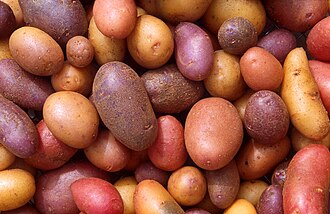
Photo: Wikipedia
Gold potatoes with their skin removed are a starchy, mildly sweet root vegetable with a smooth, waxy texture when raw and a creamy, buttery bite when cooked. Their pale yellow flesh holds a clean, earthy flavor without the sharpness of some other potato varieties. At just 73 calories per 100 grams, they deliver a substantial energy punch from nearly 16 grams of carbohydrates, with virtually no fat or fiber.
Calorie split: 10% protein · 87% carbs · 3% fat
↓ Full nutrition💚 Why it's loved
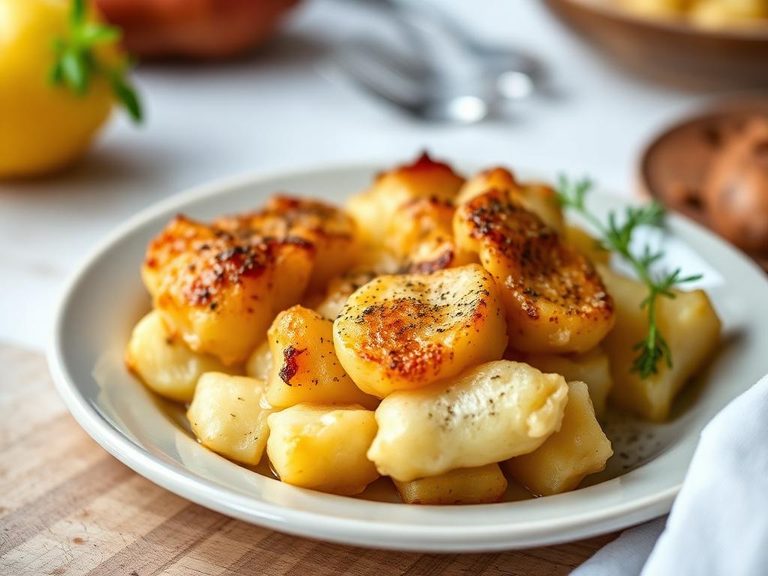
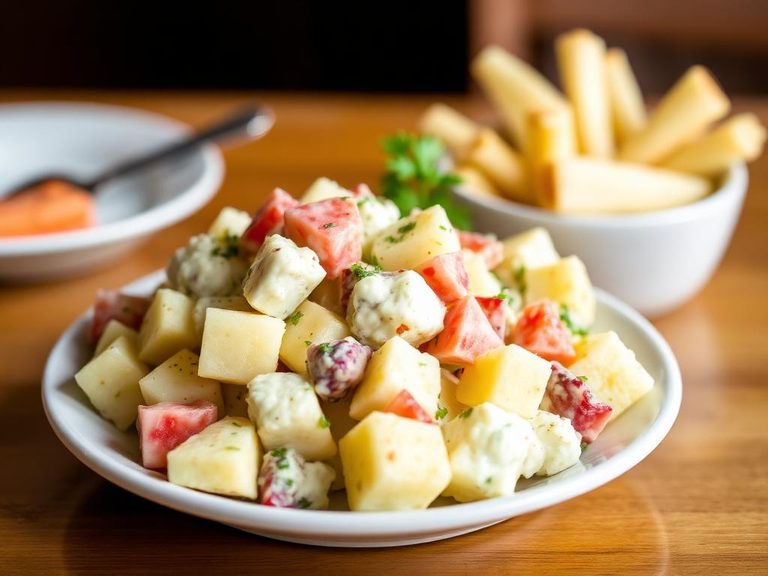
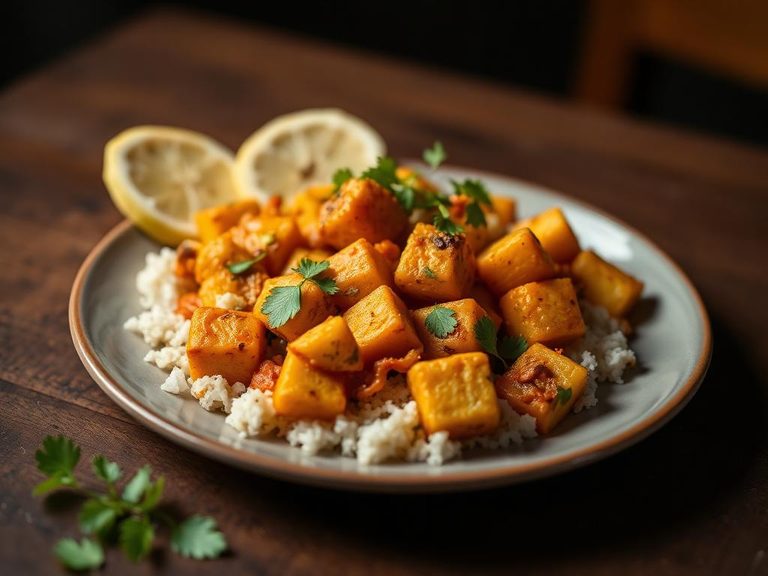
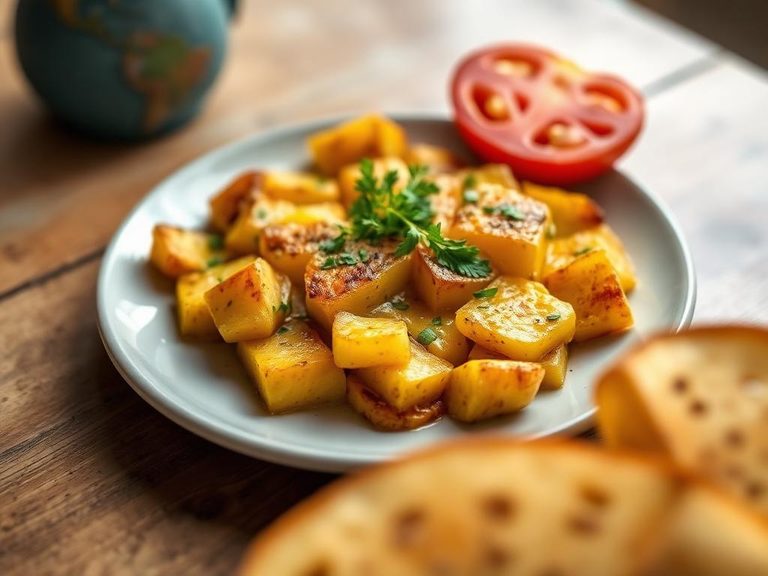
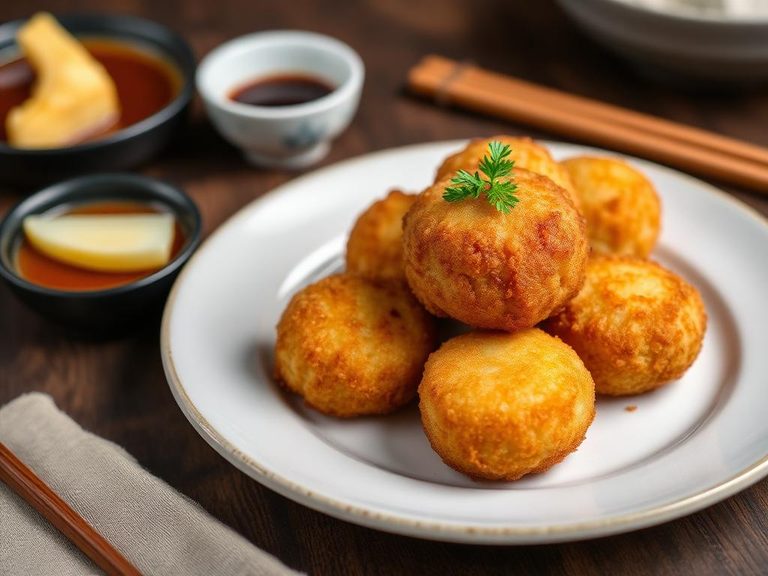
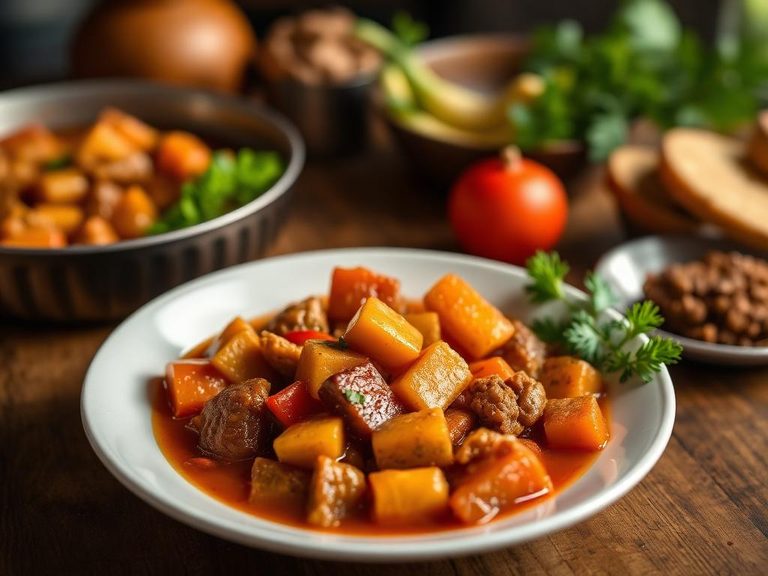
People love gold potatoes for their buttery, mild flavor and smooth, waxy texture that holds its shape beautifully in soups, salads, and roasted dishes. Their versatility makes them a staple across cultures—from creamy French gratins to spiced Indian curries—earning them a place at nearly every dinner table worldwide.
⚠️ Watch-outs & how to enjoy it better
Because they are high in simple starches with zero fiber when peeled, gold potatoes can cause rapid blood-sugar spikes, especially in people managing diabetes or insulin resistance. To counteract this, pair them with a source of protein (like grilled chicken) or healthy fat (like olive oil), choose smaller portions, or cook and cool them to increase resistant starch content.
Key benefits
- Rich in potassium and vitamin C, supporting heart and immune health
- Low in fat and cholesterol-free, making them a lean energy source
- Naturally gluten-free and suitable for most dietary restrictions
- Good source of complex carbohydrates for sustained energy
- Contains resistant starch when cooled after cooking, which may benefit gut health
🍽️ Popular dishes
🌍 Where it's eaten
💡 Did you know?
The gold potato variety, often called Yukon Gold, was developed in Canada in the 1960s by crossing a North American white potato with a wild South American yellow potato, and it was named after the Yukon River in honor of the gold rush era.
Full nutrition (USDA data · scales with serving)
| Water | 81.1 g |
| Energy (Atwater General Factors) | 73.5 kcal |
| Energy (Atwater Specific Factors) | 71.6 kcal |
| Nitrogen | 0.29 g |
| Protein | 1.8 g |
| Total lipid (fat) | 0.26 g |
| Ash | 0.89 g |
| Carbohydrate, by difference | 16.0 g |
| Total dietary fiber (AOAC 2011.25) | 13.8 g |
| High Molecular Weight Dietary Fiber (HMWDF) | 13.3 g |
| Low Molecular Weight Dietary Fiber (LMWDF) | 0.59 g |
| Sugars, Total | 0.65 g |
| Sucrose | 0.13 g |
| Glucose | 0.21 g |
| Fructose | 0.31 g |
| Lactose | 0.00 g |
| Maltose | 0.00 g |
| Calcium, Ca | 5.9 mg |
| Iron, Fe | 0.37 mg |
| Magnesium, Mg | 22.3 mg |
| Phosphorus, P | 57.0 mg |
| Potassium, K | 446 mg |
| Sodium, Na | 2.2 mg |
| Zinc, Zn | 0.37 mg |
| Copper, Cu | 0.13 mg |
| Manganese, Mn | 0.16 mg |
| Selenium, Se | 0.00 ug |
| Molybdenum, Mo | 7.8 ug |
| Vitamin C, total ascorbic acid | 23.3 mg |
| Thiamin | 0.05 mg |
| Niacin | 1.6 mg |
| Vitamin B-6 | 0.14 mg |
| Vitamin K (phylloquinone) | 0.80 ug |
| Vitamin K (Dihydrophylloquinone) | 0.00 ug |
| Vitamin K (Menaquinone-4) | 0.00 ug |
Fat & fatty acid profile (per 100g)
Estimated from Potatoes, french fried, all types, salt added in processing, frozen, unprepared — USDA does not publish this profile for Potatoes.
| Fatty acids, total saturated | 1.0 g |
| SFA 4:0 | 0.00 g |
| SFA 6:0 | 0.00 g |
| SFA 8:0 | 0.00 g |
| SFA 10:0 | 0.00 g |
| SFA 12:0 | 0.00 g |
| SFA 14:0 | 0.00 g |
| SFA 15:0 | 0.00 g |
| SFA 16:0 | 0.53 g |
| SFA 17:0 | 0.00 g |
| SFA 18:0 | 0.43 g |
| SFA 20:0 | 0.02 g |
| SFA 22:0 | 0.02 g |
| Fatty acids, total monounsaturated | 3.2 g |
| MUFA 14:1 | 0.00 g |
| MUFA 15:1 | 0.00 g |
| MUFA 16:1 | 0.01 g |
| MUFA 17:1 | 0.00 g |
| MUFA 18:1 | 3.1 g |
| MUFA 20:1 | 0.01 g |
| Fatty acids, total polyunsaturated | 0.30 g |
| PUFA 18:2 | 0.26 g |
| PUFA 18:3 | 0.02 g |
| PUFA 18:3 n-3 c,c,c (ALA) | 0.02 g |
| PUFA 18:3 n-6 c,c,c | 0.00 g |
| PUFA 18:4 | 0.00 g |
| PUFA 20:2 n-6 c,c | 0.00 g |
| PUFA 20:3 | 0.00 g |
| PUFA 20:4 | 0.00 g |
| PUFA 20:5 n-3 (EPA) | 0.00 g |
| PUFA 22:5 n-3 (DPA) | 0.00 g |
| PUFA 22:6 n-3 (DHA) | 0.00 g |
| Cholesterol | 0.00 mg |
Amino acid profile (per 100g)
Estimated from Potatoes, french fried, all types, salt added in processing, frozen, unprepared — USDA does not publish this profile for Potatoes.
| Tryptophan | 0.02 g |
| Threonine | 0.08 g |
| Isoleucine | 0.08 g |
| Leucine | 0.13 g |
| Lysine | 0.13 g |
| Methionine | 0.04 g |
| Cystine | 0.04 g |
| Phenylalanine | 0.10 g |
| Tyrosine | 0.08 g |
| Valine | 0.12 g |
| Arginine | 0.13 g |
| Histidine | 0.05 g |
| Alanine | 0.09 g |
| Aspartic acid | 0.50 g |
| Glutamic acid | 0.40 g |
| Glycine | 0.07 g |
| Proline | 0.08 g |
| Serine | 0.10 g |
FAQ
Are gold potatoes the same as Yukon Gold potatoes?
Not exactly. Yukon Gold is a specific cultivar developed in Canada, while 'gold' potatoes refer to a broader category of yellow-fleshed potatoes. They share similar traits—creamy texture and mild flavor—but Yukon Gold is the most well-known variety.
Is it safe to eat raw gold potatoes?
Raw gold potatoes are not toxic, but they contain solanine, a naturally occurring compound that can cause digestive discomfort in large quantities. Cooking significantly reduces solanine levels and makes the potato easier to digest.
How does peeling affect the nutritional value of gold potatoes?
Peeling removes a significant portion of the fiber, potassium, and vitamin C found in the skin. Without skin, the potato has 0g fiber per 100g, whereas with skin it can contain 2–3g of fiber. Keeping the skin on maximizes nutritional benefits.
What's the best way to cook gold potatoes to preserve nutrients?
Steaming or boiling with minimal water and cooking time helps retain water-soluble vitamins like vitamin C and B vitamins. Roasting at moderate temperatures also preserves nutrients while enhancing flavor.
Nutrient density (calculated · NRF9.3)
Nutrient Rich Foods index: beneficial nutrients (protein, fiber, vitamins, minerals) minus saturated fat, added sugar & sodium, per 100 kcal.
NRF9.3 index — Fulgoni, Keast & Drewnowski, 2009. Computed from USDA nutrients.
Weight-loss friendliness (composite index)
Energy density 0.73 kcal/g · 10% calories from protein · 0.0 g fiber · 0.0 g sugar per 100 g.
Composite of energy density (Rolls et al., 1999), protein & fiber satiety, minus sugar. A calculated heuristic — ranks satiety-per-calorie, not a clinical measure.
Dietary load (calculated from USDA values)
Potential renal acid load. Positive = acid-forming, negative = alkaline-forming.
Sodium-to-potassium ratio: 0.01 (lower is better — aim for ≤ 1)
Sodium:potassium per WHO potassium guidance. Computed from USDA nutrients.