

Pickles, cucumber, sweet, low sodium (includes bread and butter pickles)
Whole food · Vegetables and Vegetable Products
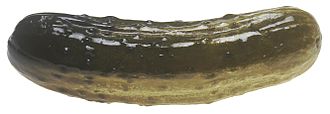
Photo: Wikipedia
These are crisp cucumber slices pickled in a sweet, tangy brine, often with mustard seed and turmeric, yielding a bright yellow hue and a signature 'bread and butter' crunch. Nutritionally, they are a low-calorie, virtually fat-free condiment, but their primary caloric contribution comes from added sugars, offering a quick energy boost without protein or fat.
Calorie split: 1% protein · 97% carbs · 2% fat
↓ Full nutrition💚 Why it's loved
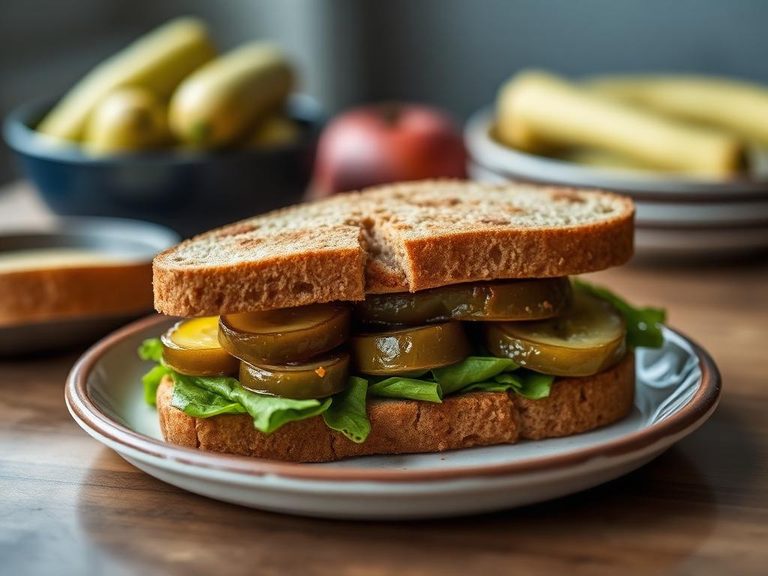
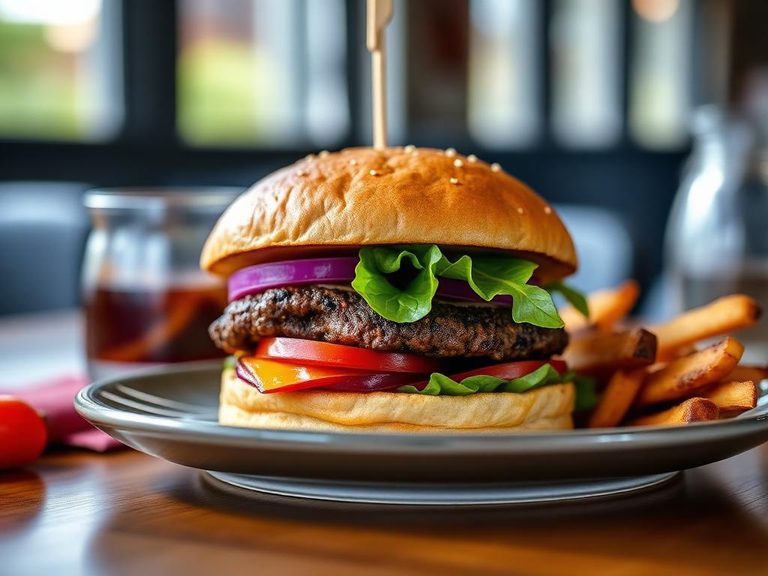
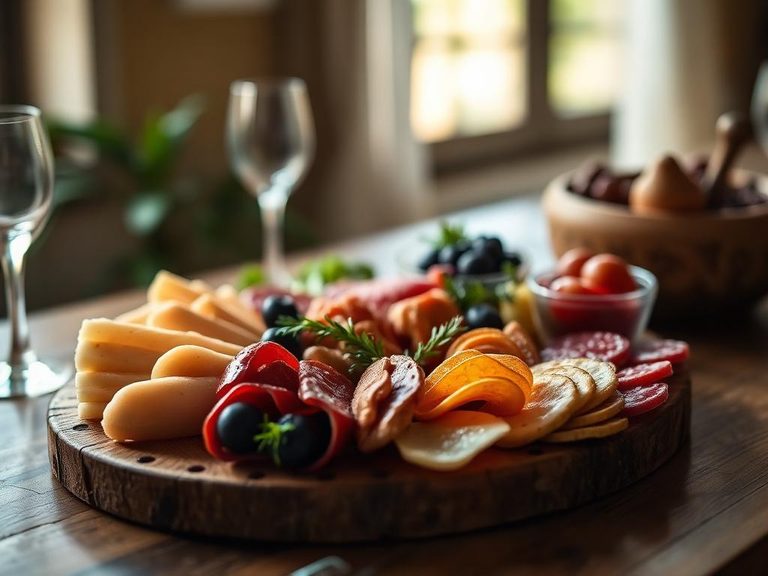
People adore the addictive sweet-and-sour zing and satisfying crunch that cuts through rich, fatty foods like burgers or fried chicken. They are a beloved, versatile condiment in American deli culture, instantly elevating sandwiches and charcuterie boards.
⚠️ Watch-outs & how to enjoy it better
The high sugar content (26.68g per 100g) can cause rapid blood sugar spikes, making them a poor choice for diabetics or those monitoring glycemic load. To counteract this, pair them with a source of protein or healthy fat (like cheese or turkey) to slow sugar absorption, or strictly limit portion size to a few slices as a garnish rather than a side.
Key benefits
- Very low in calories and fat
- Provides a small amount of dietary fiber
- Adds intense flavor and crunch to meals
- A fat-free way to enhance savory dishes
- Source of quick energy from carbohydrates
🍽️ Popular dishes
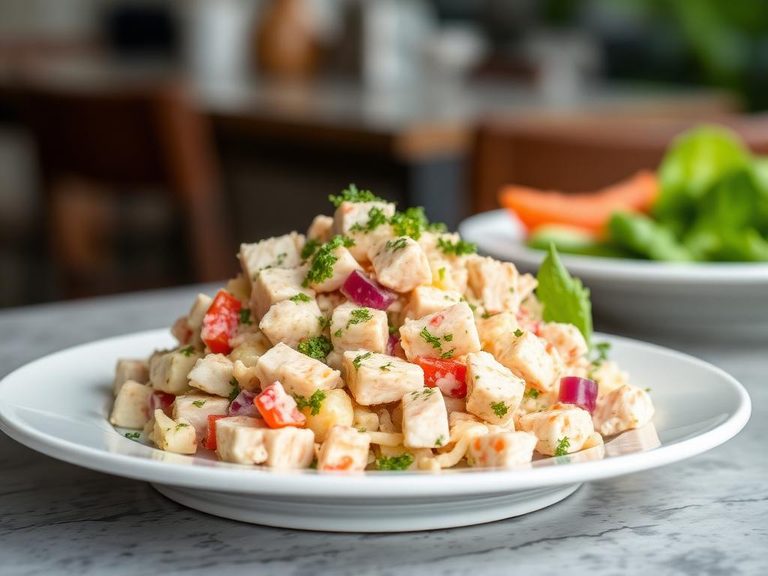
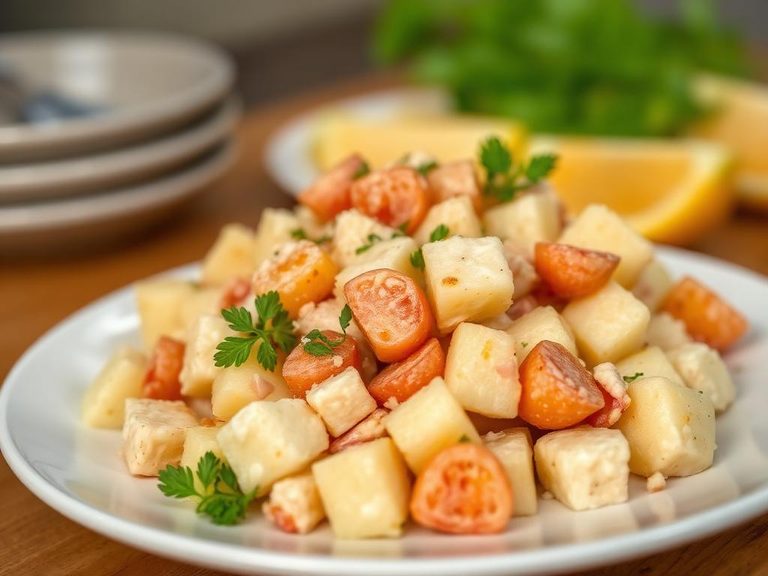
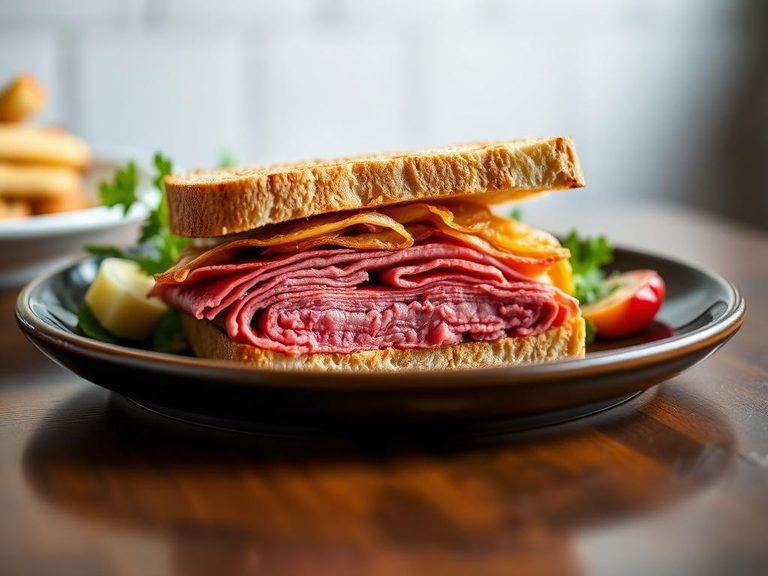
🌍 Where it's eaten
💡 Did you know?
The name 'bread and butter' pickles is said to originate from the Great Depression, when resourceful cooks would make these sweet pickles to serve alongside simple meals of bread and butter.
Full nutrition (USDA data · scales with serving)
| Water | 65.3 g |
| Energy | 122 kcal |
| Energy | 511 kj |
| Protein | 0.37 g |
| Total lipid (fat) | 0.26 g |
| Ash | 0.38 g |
| Carbohydrate, by difference | 33.7 g |
| Fiber, total dietary | 1.1 g |
| Total Sugars | 26.7 g |
| Calcium, Ca | 4.0 mg |
| Iron, Fe | 0.59 mg |
| Magnesium, Mg | 4.0 mg |
| Phosphorus, P | 12.0 mg |
| Potassium, K | 32.0 mg |
| Sodium, Na | 18.0 mg |
| Zinc, Zn | 0.08 mg |
| Copper, Cu | 0.10 mg |
| Manganese, Mn | 0.01 mg |
| Selenium, Se | 0.00 ug |
| Vitamin C, total ascorbic acid | 1.2 mg |
| Thiamin | 0.01 mg |
| Riboflavin | 0.03 mg |
| Niacin | 0.17 mg |
| Pantothenic acid | 0.12 mg |
| Vitamin B-6 | 0.01 mg |
| Folate, total | 1.0 ug |
| Folic acid | 0.00 ug |
| Folate, food | 1.0 ug |
| Folate, DFE | 1.0 ug |
| Choline, total | 4.5 mg |
| Betaine | 0.40 mg |
| Vitamin B-12 | 0.00 ug |
| Vitamin B-12, added | 0.00 ug |
| Vitamin A, RAE | 56.0 ug |
| Retinol | 0.00 ug |
| Carotene, beta | 475 ug |
| Carotene, alpha | 118 ug |
| Cryptoxanthin, beta | 271 ug |
| Vitamin A, IU | 1116 iu |
| Lycopene | 0.00 ug |
| Lutein + zeaxanthin | 248 ug |
| Vitamin E (alpha-tocopherol) | 0.53 mg |
| Vitamin E, added | 0.00 mg |
| Vitamin D (D2 + D3), International Units | 0.00 iu |
| Vitamin D (D2 + D3) | 0.00 ug |
| Vitamin K (phylloquinone) | 76.7 ug |
| Alcohol, ethyl | 0.00 g |
| Caffeine | 0.00 mg |
| Theobromine | 0.00 mg |
Fat & fatty acid profile (per 100g)
| Fatty acids, total saturated | 0.07 g |
| SFA 4:0 | 0.00 g |
| SFA 6:0 | 0.00 g |
| SFA 8:0 | 0.00 g |
| SFA 10:0 | 0.00 g |
| SFA 12:0 | 0.00 g |
| SFA 14:0 | 0.00 g |
| SFA 16:0 | 0.06 g |
| SFA 18:0 | 0.01 g |
| Fatty acids, total monounsaturated | 0.00 g |
| MUFA 16:1 | 0.00 g |
| MUFA 18:1 | 0.00 g |
| MUFA 20:1 | 0.00 g |
| MUFA 22:1 | 0.00 g |
| Fatty acids, total polyunsaturated | 0.11 g |
| PUFA 18:2 | 0.05 g |
| PUFA 18:3 | 0.06 g |
| PUFA 18:4 | 0.00 g |
| PUFA 20:4 | 0.00 g |
| PUFA 20:5 n-3 (EPA) | 0.00 g |
| PUFA 22:5 n-3 (DPA) | 0.00 g |
| PUFA 22:6 n-3 (DHA) | 0.00 g |
| Fatty acids, total trans | 0.00 g |
| Cholesterol | 0.00 mg |
| Phytosterols | 14.0 mg |
Amino acid profile (per 100g)
| Tryptophan | 0.00 g |
| Threonine | 0.01 g |
| Isoleucine | 0.01 g |
| Leucine | 0.02 g |
| Lysine | 0.01 g |
| Methionine | 0.00 g |
| Cystine | 0.00 g |
| Phenylalanine | 0.01 g |
| Tyrosine | 0.01 g |
| Valine | 0.01 g |
| Arginine | 0.02 g |
| Histidine | 0.01 g |
| Alanine | 0.01 g |
| Aspartic acid | 0.02 g |
| Glutamic acid | 0.11 g |
| Glycine | 0.01 g |
| Proline | 0.01 g |
| Serine | 0.01 g |
FAQ
Are bread and butter pickles the same as dill pickles?
No. Dill pickles are savory and herb-forward, flavored primarily with dill and garlic. Bread and butter pickles are distinctly sweet and tangy, with a sugar-heavy brine.
Why are they called 'low sodium' if they're pickles?
Traditional pickles are very high in sodium. 'Low sodium' versions use at least 25% less sodium than the standard product, making them a slightly better option for those watching salt intake, though they still contain some.
Can I use them in cooking besides as a condiment?
Absolutely! They are a key ingredient in classic dishes like bread and butter pickle dip, and their sweet-sour flavor can be chopped into relish for hot dogs or used to add a bright note to potato or pasta salads.
Nutrient density (calculated · NRF9.3)
Nutrient Rich Foods index: beneficial nutrients (protein, fiber, vitamins, minerals) minus saturated fat, added sugar & sodium, per 100 kcal.
NRF9.3 index — Fulgoni, Keast & Drewnowski, 2009. Computed from USDA nutrients.
Weight-loss friendliness (composite index)
Energy density 1.22 kcal/g · 1% calories from protein · 1.1 g fiber · 26.7 g sugar per 100 g.
Composite of energy density (Rolls et al., 1999), protein & fiber satiety, minus sugar. A calculated heuristic — ranks satiety-per-calorie, not a clinical measure.
Dietary load (calculated from USDA values)
Potential renal acid load. Positive = acid-forming, negative = alkaline-forming.
Sodium-to-potassium ratio: 0.56 (lower is better — aim for ≤ 1)
Sodium:potassium per WHO potassium guidance. Computed from USDA nutrients.