

Peppers, hot chili, red, canned, excluding seeds, solids and liquids
Whole food · Vegetables and Vegetable Products

Photo: Wikipedia
These are vibrant, fiery red chili peppers, typically jalapeños, that have been pickled or canned in a tangy brine. The texture is tender yet slightly crisp, delivering a punch of bright, acidic heat with every bite. Nutritionally, they are a low-calorie, high-fiber ingredient that adds significant flavor without adding fat.
Calorie split: 14% protein · 82% carbs · 4% fat
↓ Full nutrition💚 Why it's loved
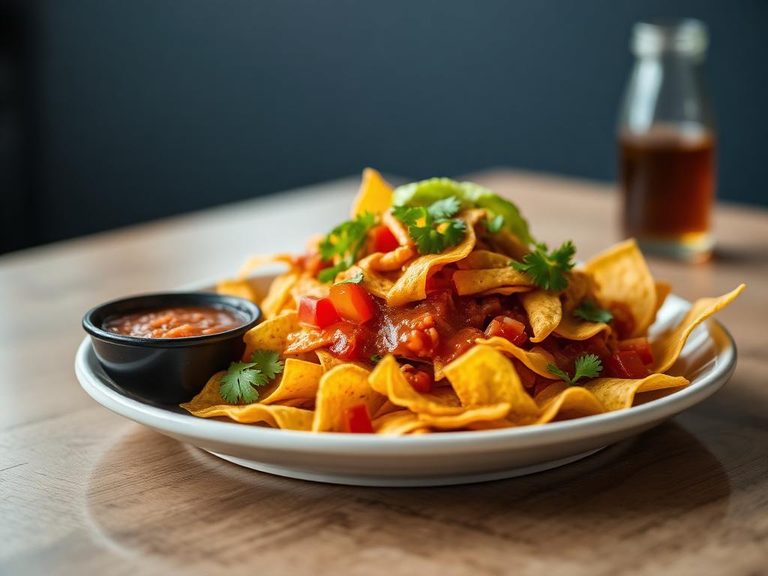
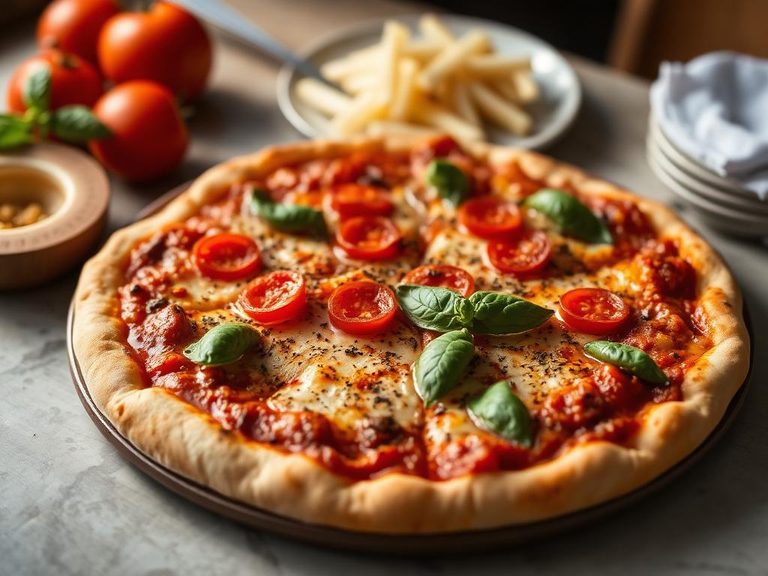
People adore them for their instant, zesty kick that can transform a bland dish. They are a pantry staple for their incredible versatility, ready to add heat and tang to everything from tacos to pizza.
⚠️ Watch-outs & how to enjoy it better
The primary downside is their intense heat, which can cause digestive discomfort for some. The pickling brine can also be high in sodium. To counteract the heat, pair them with cooling dairy like sour cream or cheese, or starchy foods like rice or bread. For sodium concerns, look for low-sodium versions or rinse them briefly before use.
Key benefits
- Excellent source of capsaicin, the compound responsible for their heat.
- Very low in calories and fat, making them a light flavor booster.
- Good source of dietary fiber, supporting digestive health.
- Contains vitamin C, an important antioxidant.
- Adds bold flavor without needing added salt or sugar.
🍽️ Popular dishes
🌍 Where it's eaten
💡 Did you know?
The heat in chili peppers, measured in Scoville units, comes from capsaicin, which binds to pain receptors in the mouth, tricking the brain into feeling a burning sensation.
Full nutrition (USDA data · scales with serving)
| Water | 92.5 g |
| Energy | 21.0 kcal |
| Energy | 88.0 kj |
| Protein | 0.90 g |
| Total lipid (fat) | 0.10 g |
| Ash | 1.4 g |
| Carbohydrate, by difference | 5.1 g |
| Fiber, total dietary | 1.3 g |
| Total Sugars | 3.3 g |
| Calcium, Ca | 7.0 mg |
| Iron, Fe | 0.50 mg |
| Magnesium, Mg | 14.0 mg |
| Phosphorus, P | 17.0 mg |
| Potassium, K | 187 mg |
| Sodium, Na | 1173 mg |
| Zinc, Zn | 0.17 mg |
| Copper, Cu | 0.10 mg |
| Manganese, Mn | 0.14 mg |
| Selenium, Se | 0.30 ug |
| Vitamin C, total ascorbic acid | 68.0 mg |
| Thiamin | 0.02 mg |
| Riboflavin | 0.05 mg |
| Niacin | 0.80 mg |
| Pantothenic acid | 0.03 mg |
| Vitamin B-6 | 0.15 mg |
| Folate, total | 10.0 ug |
| Folic acid | 0.00 ug |
| Folate, food | 10.0 ug |
| Folate, DFE | 10.0 ug |
| Choline, total | 6.8 mg |
| Vitamin B-12 | 0.00 ug |
| Vitamin B-12, added | 0.00 ug |
| Vitamin A, RAE | 595 ug |
| Retinol | 0.00 ug |
| Carotene, beta | 6664 ug |
| Carotene, alpha | 446 ug |
| Cryptoxanthin, beta | 495 ug |
| Vitamin A, IU | 11892 iu |
| Lycopene | 0.00 ug |
| Lutein + zeaxanthin | 444 ug |
| Vitamin E (alpha-tocopherol) | 0.69 mg |
| Vitamin E, added | 0.00 mg |
| Vitamin D (D2 + D3), International Units | 0.00 iu |
| Vitamin D (D2 + D3) | 0.00 ug |
| Vitamin K (phylloquinone) | 8.7 ug |
| Alcohol, ethyl | 0.00 g |
| Caffeine | 0.00 mg |
| Theobromine | 0.00 mg |
Fat & fatty acid profile (per 100g)
| Fatty acids, total saturated | 0.01 g |
| SFA 4:0 | 0.00 g |
| SFA 6:0 | 0.00 g |
| SFA 8:0 | 0.00 g |
| SFA 10:0 | 0.00 g |
| SFA 12:0 | 0.00 g |
| SFA 14:0 | 0.00 g |
| SFA 16:0 | 0.01 g |
| SFA 18:0 | 0.00 g |
| Fatty acids, total monounsaturated | 0.01 g |
| MUFA 16:1 | 0.00 g |
| MUFA 18:1 | 0.01 g |
| MUFA 20:1 | 0.00 g |
| MUFA 22:1 | 0.00 g |
| Fatty acids, total polyunsaturated | 0.06 g |
| PUFA 18:2 | 0.05 g |
| PUFA 18:3 | 0.00 g |
| PUFA 18:4 | 0.00 g |
| PUFA 20:4 | 0.00 g |
| PUFA 20:5 n-3 (EPA) | 0.00 g |
| PUFA 22:5 n-3 (DPA) | 0.00 g |
| PUFA 22:6 n-3 (DHA) | 0.00 g |
| Fatty acids, total trans | 0.00 g |
| Cholesterol | 0.00 mg |
Amino acid profile (per 100g)
| Tryptophan | 0.01 g |
| Threonine | 0.03 g |
| Isoleucine | 0.03 g |
| Leucine | 0.05 g |
| Lysine | 0.04 g |
| Methionine | 0.01 g |
| Cystine | 0.02 g |
| Phenylalanine | 0.03 g |
| Tyrosine | 0.02 g |
| Valine | 0.04 g |
| Arginine | 0.04 g |
| Histidine | 0.02 g |
| Alanine | 0.04 g |
| Aspartic acid | 0.13 g |
| Glutamic acid | 0.12 g |
| Glycine | 0.03 g |
| Proline | 0.04 g |
| Serine | 0.04 g |
FAQ
Are canned hot chilies as nutritious as fresh ones?
They retain most of their fiber, capsaicin, and minerals. However, the canning process can reduce some heat-sensitive vitamins like vitamin C. The brine may add sodium.
How can I control the heat level when cooking with them?
Remove the seeds and white membranes, which hold most of the capsaicin. You can also use fewer peppers or pair the dish with cooling ingredients like yogurt, avocado, or sugar.
What's the best way to store leftover canned chilies?
Transfer any unused peppers and brine to an airtight container in the refrigerator. They will keep for about a week. You can also freeze them for longer storage, though the texture may become softer.
Nutrient density (calculated · NRF9.3)
Nutrient Rich Foods index: beneficial nutrients (protein, fiber, vitamins, minerals) minus saturated fat, added sugar & sodium, per 100 kcal.
NRF9.3 index — Fulgoni, Keast & Drewnowski, 2009. Computed from USDA nutrients.
Weight-loss friendliness (composite index)
Energy density 0.21 kcal/g · 17% calories from protein · 1.3 g fiber · 3.3 g sugar per 100 g.
Composite of energy density (Rolls et al., 1999), protein & fiber satiety, minus sugar. A calculated heuristic — ranks satiety-per-calorie, not a clinical measure.
Dietary load (calculated from USDA values)
Potential renal acid load. Positive = acid-forming, negative = alkaline-forming.
Sodium-to-potassium ratio: 6.27 (lower is better — aim for ≤ 1)
Sodium:potassium per WHO potassium guidance. Computed from USDA nutrients.