

Pate, chicken liver, canned
Whole food · Sausages and Luncheon Meats

Photo: Wikipedia
A smooth, savory spread made from finely ground chicken livers, typically preserved in a can. It has a rich, creamy texture and a deep, earthy, slightly mineral flavor. Nutritionally, it's a dense source of protein and iron, with a moderate fat content and no carbohydrates or fiber.
Calorie split: 27% protein · 13% carbs · 60% fat
↓ Full nutrition💚 Why it's loved
People love its luxurious, umami-rich flavor and velvety spreadability, which transforms simple bread or crackers. It's a staple of French bistro culture and a beloved component of charcuterie boards worldwide.
⚠️ Watch-outs & how to enjoy it better
It can be high in sodium and purines, which may concern those with hypertension or gout. The strong, mineral taste is also an acquired one. To mitigate, pair it with unsalted crackers or fresh fruit, and enjoy it in controlled portions as part of a varied diet.
Key benefits
- Excellent source of high-quality protein for muscle maintenance.
- Rich in heme iron, which is easily absorbed by the body.
- Provides significant amounts of vitamin B12 and folate.
- Convenient, shelf-stable source of animal-based nutrients.
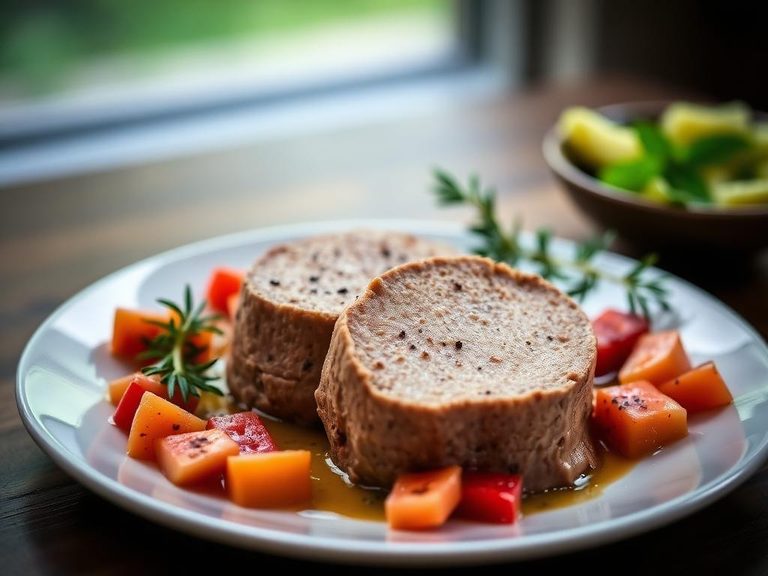
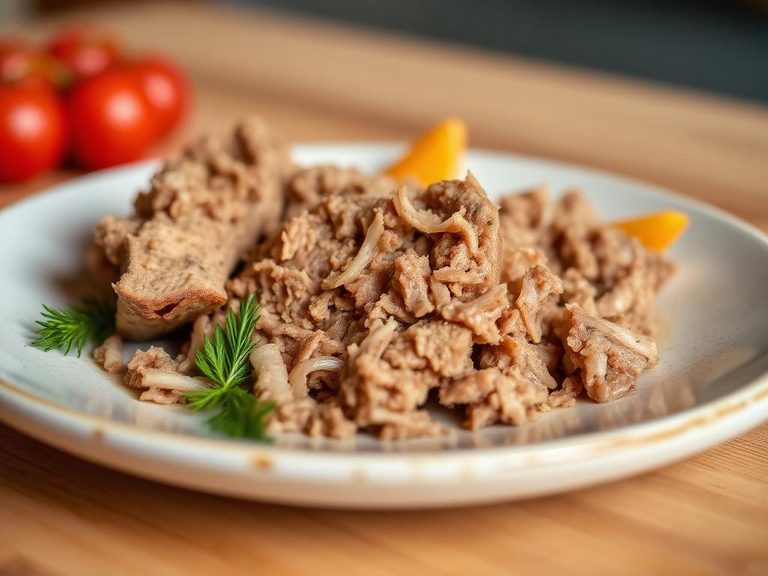
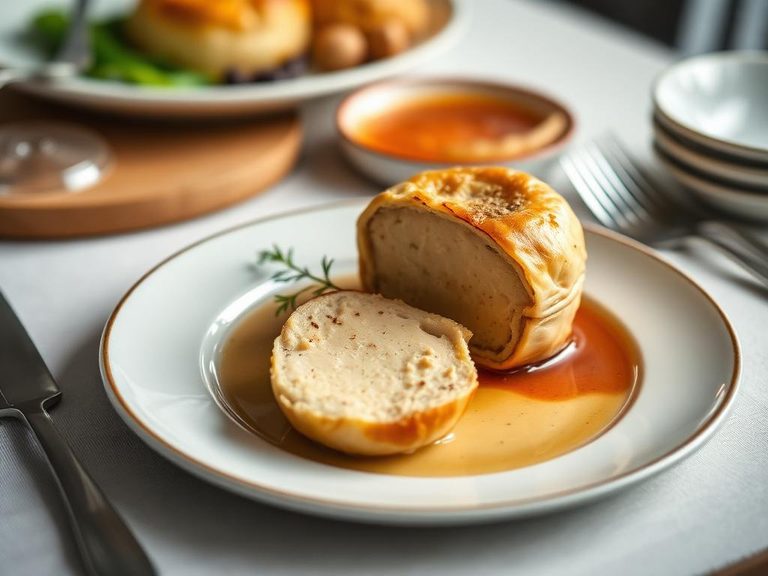
🍽️ Popular dishes

🌍 Where it's eaten
💡 Did you know?
Traditional French chicken liver pâté is often 'deglazed' with a splash of Cognac or brandy during cooking, which adds complexity and helps cut through the richness.
Full nutrition (USDA data · scales with serving)
| Water | 65.6 g |
| Energy | 201 kcal |
| Energy | 841 kj |
| Protein | 13.4 g |
| Total lipid (fat) | 13.1 g |
| Ash | 1.3 g |
| Carbohydrate, by difference | 6.5 g |
| Fiber, total dietary | 0.00 g |
| Total Sugars | 0.00 g |
| Calcium, Ca | 10.0 mg |
| Iron, Fe | 9.2 mg |
| Magnesium, Mg | 13.0 mg |
| Phosphorus, P | 175 mg |
| Potassium, K | 95.0 mg |
| Sodium, Na | 386 mg |
| Zinc, Zn | 2.1 mg |
| Copper, Cu | 0.18 mg |
| Manganese, Mn | 0.16 mg |
| Selenium, Se | 46.1 ug |
| Vitamin C, total ascorbic acid | 10.0 mg |
| Thiamin | 0.05 mg |
| Riboflavin | 1.4 mg |
| Niacin | 7.5 mg |
| Pantothenic acid | 2.6 mg |
| Vitamin B-6 | 0.26 mg |
| Folate, total | 321 ug |
| Folic acid | 0.00 ug |
| Folate, food | 321 ug |
| Folate, DFE | 321 ug |
| Choline, total | 229 mg |
| Betaine | 14.0 mg |
| Vitamin B-12 | 8.1 ug |
| Vitamin B-12, added | 0.00 ug |
| Vitamin A, RAE | 217 ug |
| Retinol | 217 ug |
| Carotene, beta | 0.00 ug |
| Carotene, alpha | 0.00 ug |
| Cryptoxanthin, beta | 0.00 ug |
| Vitamin A, IU | 724 iu |
| Lycopene | 0.00 ug |
| Lutein + zeaxanthin | 0.00 ug |
| Vitamin E (alpha-tocopherol) | 0.98 mg |
| Vitamin E, added | 0.00 mg |
| Vitamin D (D2 + D3), International Units | 0.00 iu |
| Vitamin D (D2 + D3) | 0.00 ug |
| Vitamin K (phylloquinone) | 0.00 ug |
| Alcohol, ethyl | 0.00 g |
| Caffeine | 0.00 mg |
| Theobromine | 0.00 mg |
Fat & fatty acid profile (per 100g)
| Fatty acids, total saturated | 4.0 g |
| SFA 4:0 | 0.00 g |
| SFA 6:0 | 0.00 g |
| SFA 8:0 | 0.00 g |
| SFA 10:0 | 0.00 g |
| SFA 12:0 | 0.00 g |
| SFA 14:0 | 0.09 g |
| SFA 16:0 | 2.8 g |
| SFA 18:0 | 1.0 g |
| Fatty acids, total monounsaturated | 5.3 g |
| MUFA 16:1 | 0.62 g |
| MUFA 18:1 | 4.5 g |
| MUFA 20:1 | 0.00 g |
| MUFA 22:1 | 0.00 g |
| Fatty acids, total polyunsaturated | 2.5 g |
| PUFA 18:2 | 2.2 g |
| PUFA 18:3 | 0.10 g |
| PUFA 18:4 | 0.00 g |
| PUFA 20:4 | 0.10 g |
| PUFA 20:5 n-3 (EPA) | 0.00 g |
| PUFA 22:5 n-3 (DPA) | 0.00 g |
| PUFA 22:6 n-3 (DHA) | 0.00 g |
| Cholesterol | 391 mg |
| Phytosterols | 0.00 mg |
Amino acid profile (per 100g)
| Tryptophan | 0.20 g |
| Threonine | 0.60 g |
| Isoleucine | 0.73 g |
| Leucine | 1.2 g |
| Lysine | 0.95 g |
| Methionine | 0.34 g |
| Cystine | 0.22 g |
| Phenylalanine | 0.69 g |
| Tyrosine | 0.49 g |
| Valine | 0.86 g |
| Arginine | 0.82 g |
| Histidine | 0.35 g |
| Alanine | 0.76 g |
| Aspartic acid | 1.3 g |
| Glutamic acid | 1.9 g |
| Glycine | 0.69 g |
| Proline | 0.70 g |
| Serine | 0.69 g |
FAQ
Is canned pâté the same as fresh pâté?
Canned pâté is fully cooked and preserved for shelf stability, often with a smoother, more uniform texture. Fresh pâté is made to order, refrigerated, and typically has a more complex, fresher flavor and coarser texture.
How long does it last after opening?
Once opened, transfer it to an airtight container and consume within 3-4 days. It should be kept refrigerated at all times.
Can I freeze it?
Yes, you can freeze canned pâté for up to 2-3 months. Thaw it in the refrigerator overnight; the texture may become slightly grainy but the flavor will remain.
Nutrient density (calculated · NRF9.3)
Nutrient Rich Foods index: beneficial nutrients (protein, fiber, vitamins, minerals) minus saturated fat, added sugar & sodium, per 100 kcal.
NRF9.3 index — Fulgoni, Keast & Drewnowski, 2009. Computed from USDA nutrients.
Weight-loss friendliness (composite index)
Energy density 2.01 kcal/g · 27% calories from protein · 0.0 g fiber · 0.0 g sugar per 100 g.
Composite of energy density (Rolls et al., 1999), protein & fiber satiety, minus sugar. A calculated heuristic — ranks satiety-per-calorie, not a clinical measure.
Dietary load (calculated from USDA values)
Potential renal acid load. Positive = acid-forming, negative = alkaline-forming.
Sodium-to-potassium ratio: 4.06 (lower is better — aim for ≤ 1)
Sodium:potassium per WHO potassium guidance. Computed from USDA nutrients.