

Pastrami, turkey
Whole food · Sausages and Luncheon Meats

Photo: Wikipedia
Pastrami-style turkey is a lean, smoky deli meat that marries the robust, peppery spice profile of traditional pastrami with the lighter, milder base of turkey breast. It offers a tender, slightly chewy texture with a satisfying, savory bite, often featuring a dark, spice-rubbed crust. Nutritionally, it's a high-protein, low-fat option, providing over 16 grams of protein with just over 6 grams of fat per 100-gram serving.
Calorie split: 48% protein · 10% carbs · 42% fat
↓ Full nutrition💚 Why it's loved
People love it for its unique flavor twist, offering the bold, spiced, and smoky experience of pastrami in a lighter, more versatile package. It's a cultural favorite in delis and sandwich shops, especially for those seeking a healthier alternative without sacrificing taste or texture.
⚠️ Watch-outs & how to enjoy it better
The primary concern is its high sodium content, common in cured deli meats, which can be problematic for those monitoring blood pressure. To counteract this, pair it with potassium-rich foods like avocado or leafy greens, and practice portion control by using it as a flavorful accent rather than the main bulk of a meal.
Key benefits
- Excellent source of lean protein for muscle maintenance and satiety.
- Significantly lower in fat and calories than traditional beef pastrami.
- Rich in B vitamins, particularly niacin and B6, from the turkey.
- Provides a flavorful, low-carb option for sandwiches and salads.
- Offers a satisfying, smoky flavor without the heaviness of red meat.
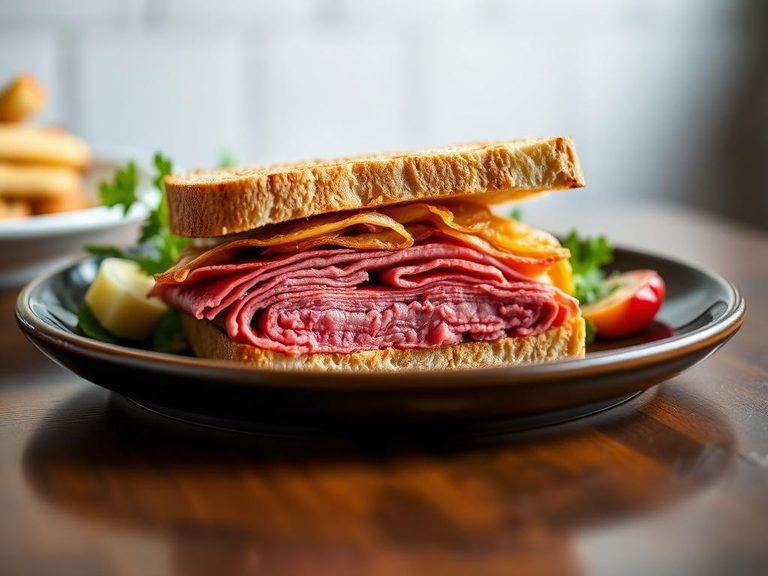
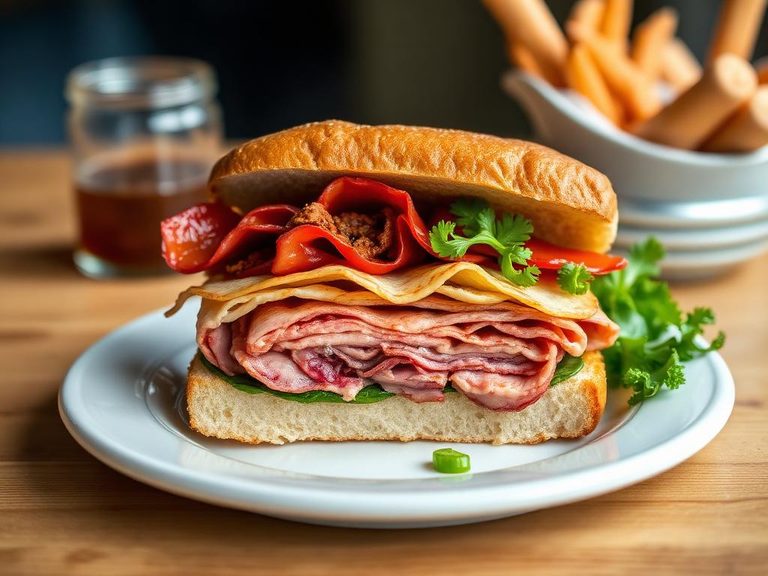
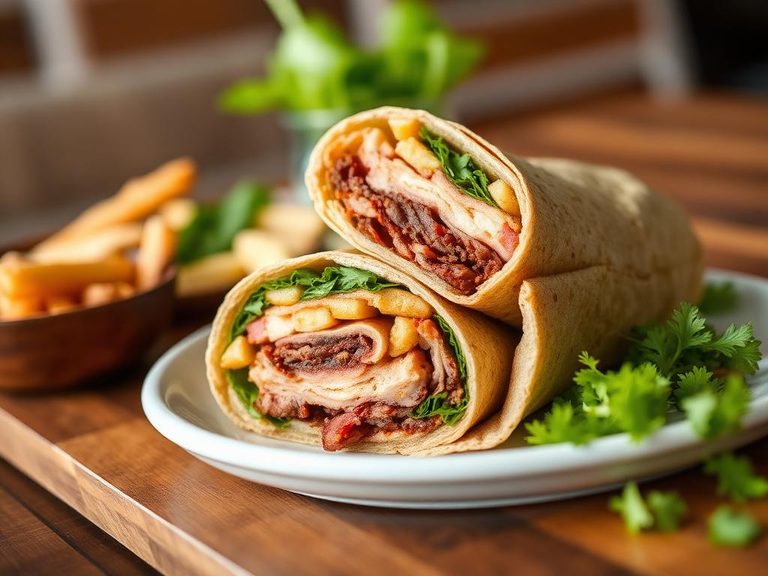
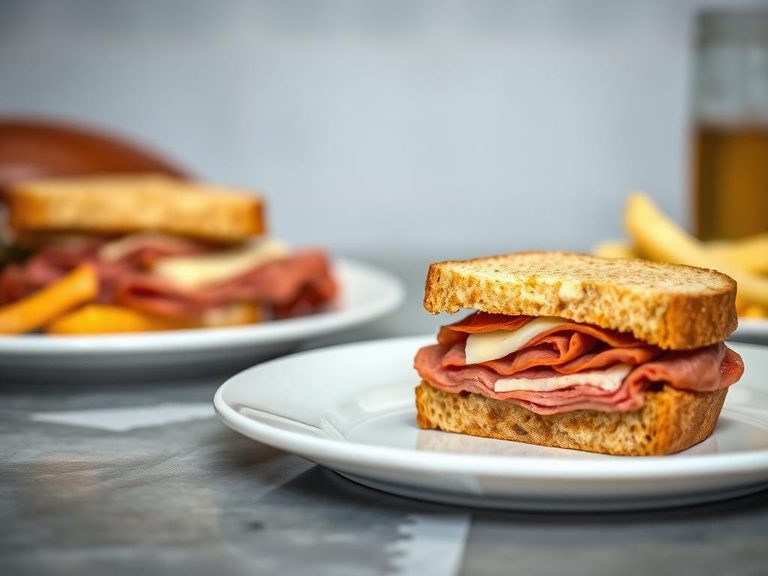
🍽️ Popular dishes
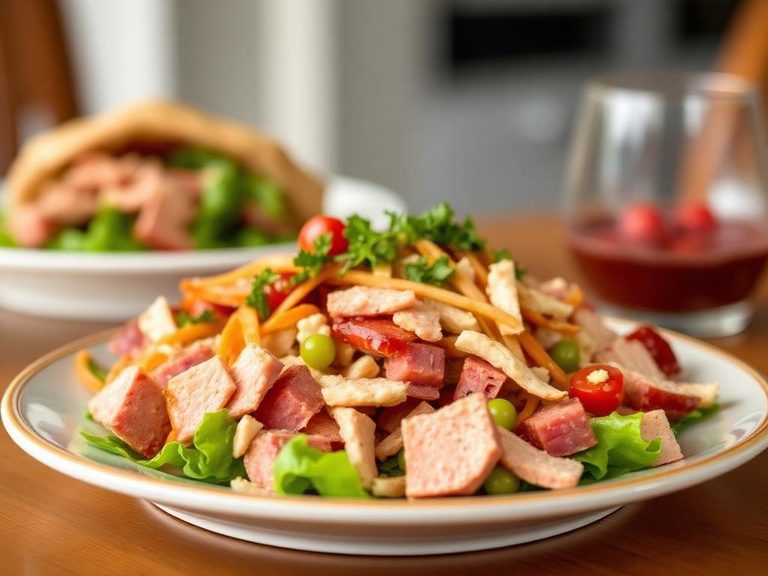
🌍 Where it's eaten
💡 Did you know?
The process of making pastrami-style turkey involves curing the meat, then smoking it with a blend of spices like black pepper, coriander, and garlic, mimicking the traditional beef pastrami method but with a poultry base.
Full nutrition (USDA data · scales with serving)
| Water | 71.7 g |
| Energy | 139 kcal |
| Energy | 580 kj |
| Protein | 16.3 g |
| Total lipid (fat) | 6.2 g |
| Ash | 4.0 g |
| Carbohydrate, by difference | 3.3 g |
| Fiber, total dietary | 0.10 g |
| Total Sugars | 3.3 g |
| Calcium, Ca | 11.0 mg |
| Iron, Fe | 4.2 mg |
| Magnesium, Mg | 14.0 mg |
| Phosphorus, P | 200 mg |
| Potassium, K | 345 mg |
| Sodium, Na | 1123 mg |
| Zinc, Zn | 2.2 mg |
| Copper, Cu | 0.05 mg |
| Manganese, Mn | 0.01 mg |
| Selenium, Se | 16.1 ug |
| Vitamin C, total ascorbic acid | 8.1 mg |
| Thiamin | 0.06 mg |
| Riboflavin | 0.25 mg |
| Niacin | 3.5 mg |
| Pantothenic acid | 0.58 mg |
| Vitamin B-6 | 0.27 mg |
| Folate, total | 5.0 ug |
| Folic acid | 0.00 ug |
| Folate, food | 5.0 ug |
| Folate, DFE | 5.0 ug |
| Choline, total | 66.7 mg |
| Betaine | 5.9 mg |
| Vitamin B-12 | 0.24 ug |
| Vitamin B-12, added | 0.00 ug |
| Vitamin A, RAE | 4.0 ug |
| Retinol | 4.0 ug |
| Carotene, beta | 7.0 ug |
| Carotene, alpha | 0.00 ug |
| Cryptoxanthin, beta | 0.00 ug |
| Vitamin A, IU | 12.0 iu |
| Lycopene | 0.00 ug |
| Lutein + zeaxanthin | 0.00 ug |
| Vitamin E (alpha-tocopherol) | 0.22 mg |
| Vitamin E, added | 0.00 mg |
| Vitamin D (D2 + D3), International Units | 10.0 iu |
| Vitamin D (D2 + D3) | 0.20 ug |
| Vitamin D3 (cholecalciferol) | 0.20 ug |
| Vitamin K (phylloquinone) | 0.00 ug |
| Alcohol, ethyl | 0.00 g |
| Caffeine | 0.00 mg |
| Theobromine | 0.00 mg |
Fat & fatty acid profile (per 100g)
| Fatty acids, total saturated | 1.4 g |
| SFA 4:0 | 0.00 g |
| SFA 6:0 | 0.00 g |
| SFA 8:0 | 0.00 g |
| SFA 10:0 | 0.00 g |
| SFA 12:0 | 0.01 g |
| SFA 14:0 | 0.04 g |
| SFA 16:0 | 1.1 g |
| SFA 18:0 | 0.45 g |
| Fatty acids, total monounsaturated | 1.9 g |
| MUFA 16:1 | 0.34 g |
| MUFA 18:1 | 1.7 g |
| MUFA 20:1 | 0.01 g |
| MUFA 22:1 | 0.01 g |
| Fatty acids, total polyunsaturated | 1.4 g |
| PUFA 18:2 | 1.3 g |
| PUFA 18:3 | 0.07 g |
| PUFA 18:4 | 0.00 g |
| PUFA 20:4 | 0.12 g |
| PUFA 20:5 n-3 (EPA) | 0.00 g |
| PUFA 22:5 n-3 (DPA) | 0.02 g |
| PUFA 22:6 n-3 (DHA) | 0.02 g |
| Cholesterol | 68.0 mg |
Amino acid profile (per 100g)
| Tryptophan | 0.20 g |
| Threonine | 0.80 g |
| Isoleucine | 0.92 g |
| Leucine | 1.4 g |
| Lysine | 1.7 g |
| Methionine | 0.51 g |
| Cystine | 0.21 g |
| Phenylalanine | 0.71 g |
| Tyrosine | 0.69 g |
| Valine | 0.95 g |
| Arginine | 1.3 g |
| Histidine | 0.55 g |
| Alanine | 1.2 g |
| Aspartic acid | 1.8 g |
| Glutamic acid | 2.9 g |
| Glycine | 1.1 g |
| Proline | 0.85 g |
| Serine | 0.81 g |
FAQ
Is pastrami turkey healthier than regular turkey deli meat?
It can be, as it's often lower in fat than some other deli meats, but its sodium content is typically high due to the curing process. It's best enjoyed in moderation as part of a balanced diet.
How does the taste of pastrami turkey differ from beef pastrami?
Pastrami turkey has a milder, leaner base flavor compared to the richer, fattier beef. However, it shares the same bold, smoky, and peppery spice profile, making it a flavorful alternative.
Can I use pastrami turkey in a Reuben sandwich?
Yes, a turkey Reuben is a popular variation. It uses pastrami turkey instead of beef, often with Swiss cheese, sauerkraut, and Russian dressing on rye bread, offering a lighter take on the classic.
Nutrient density (calculated · NRF9.3)
Nutrient Rich Foods index: beneficial nutrients (protein, fiber, vitamins, minerals) minus saturated fat, added sugar & sodium, per 100 kcal.
NRF9.3 index — Fulgoni, Keast & Drewnowski, 2009. Computed from USDA nutrients.
Weight-loss friendliness (composite index)
Energy density 1.39 kcal/g · 47% calories from protein · 0.1 g fiber · 3.3 g sugar per 100 g.
Composite of energy density (Rolls et al., 1999), protein & fiber satiety, minus sugar. A calculated heuristic — ranks satiety-per-calorie, not a clinical measure.
Dietary load (calculated from USDA values)
Potential renal acid load. Positive = acid-forming, negative = alkaline-forming.
Sodium-to-potassium ratio: 3.26 (lower is better — aim for ≤ 1)
Sodium:potassium per WHO potassium guidance. Computed from USDA nutrients.