

Oranges, raw, navels
Whole food · Fruits and Fruit Juices
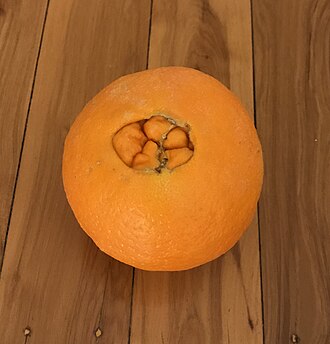
Photo: Wikipedia
The navel orange is a seedless, easy-to-peel citrus fruit prized for its bright, sweet-tart flavor and juicy, tender segments. Its iconic 'navel' at the blossom end is actually a small, undeveloped secondary fruit. Nutritionally, it's a standout source of vitamin C and a good provider of dietary fiber.
Calorie split: 7% protein · 90% carbs · 3% fat
↓ Full nutrition💚 Why it's loved
People adore navel oranges for their perfect balance of sweetness and acidity, their refreshing juiciness, and the sheer convenience of peeling and eating them out of hand. They are a universal symbol of sunshine and health, deeply embedded in cultures from the Mediterranean to California.
⚠️ Watch-outs & how to enjoy it better
While nutritious, their natural fruit sugars can cause blood sugar spikes if eaten in large quantities, especially for those with diabetes. The acidic juice can also erode tooth enamel. To mitigate, eat them as part of a meal with protein or healthy fats (like nuts) to slow sugar absorption, and rinse your mouth with water afterward.
Key benefits
- Excellent source of immune-supporting vitamin C.
- Good source of dietary fiber for digestive health.
- Low in calories and contains no fat.
- Provides potassium for heart and muscle function.
- Contains flavonoids with antioxidant properties.
🍽️ Popular dishes
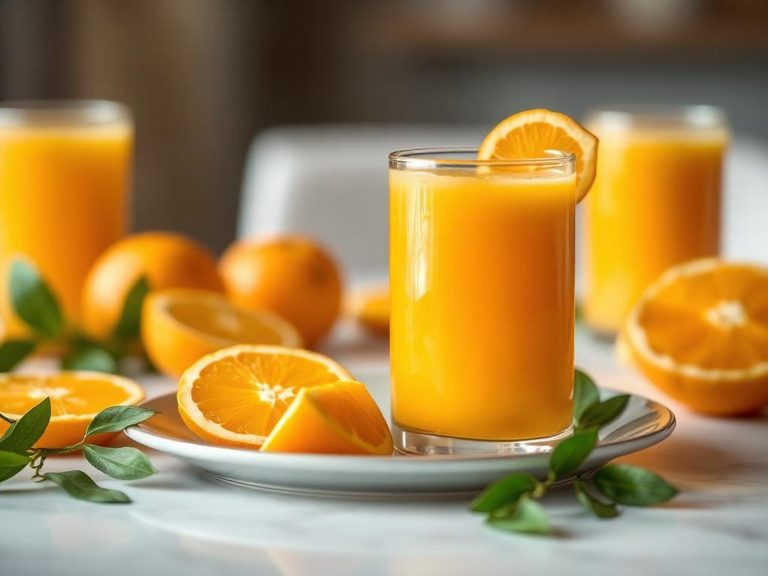
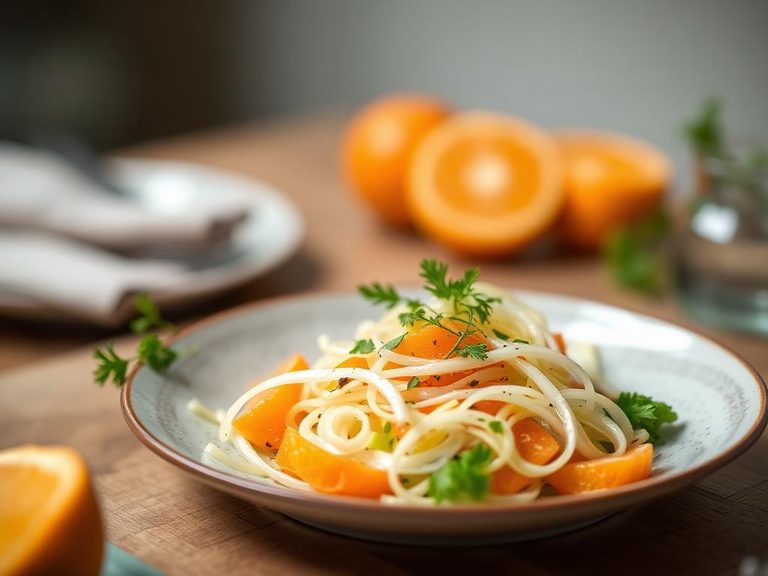

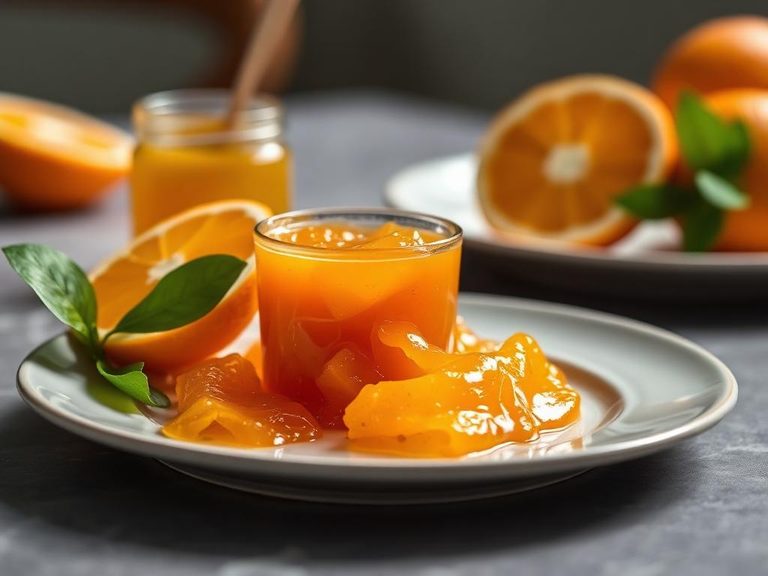

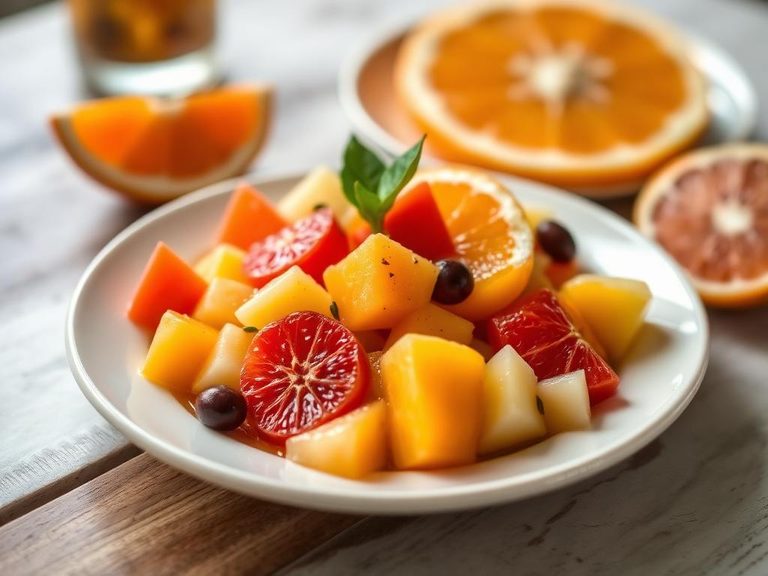
🌍 Where it's eaten
💡 Did you know?
The navel orange is a natural mutation; every single navel orange in the world is a genetic clone of a single tree discovered in a Brazilian monastery in the early 19th century.
Full nutrition (USDA data · scales with serving)
| Water | 86.7 g |
| Energy (Atwater General Factors) | 52.0 kcal |
| Energy (Atwater Specific Factors) | 47.0 kcal |
| Energy | 47.0 kcal |
| Energy | 196 kj |
| Nitrogen | 0.14 g |
| Protein | 0.91 g |
| Total lipid (fat) | 0.15 g |
| Ash | 0.43 g |
| Carbohydrate, by difference | 11.8 g |
| Carbohydrate, by summation | 10.6 g |
| Fiber, total dietary | 2.0 g |
| Fiber, soluble | 0.20 g |
| Fiber, insoluble | 1.8 g |
| Sugars, Total | 8.6 g |
| Sucrose | 4.2 g |
| Glucose | 2.0 g |
| Fructose | 2.4 g |
| Lactose | 0.00 g |
| Maltose | 0.00 g |
| Galactose | 0.00 g |
| Starch | 0.00 g |
| Calcium, Ca | 43.0 mg |
| Iron, Fe | 0.33 mg |
| Magnesium, Mg | 10.7 mg |
| Phosphorus, P | 23.0 mg |
| Potassium, K | 166 mg |
| Sodium, Na | 9.0 mg |
| Zinc, Zn | 0.11 mg |
| Copper, Cu | 0.06 mg |
| Manganese, Mn | 0.03 mg |
| Selenium, Se | 0.00 ug |
| Vitamin C, total ascorbic acid | 59.1 mg |
| Thiamin | 0.07 mg |
| Riboflavin | 0.05 mg |
| Niacin | 0.42 mg |
| Pantothenic acid | 0.26 mg |
| Vitamin B-6 | 0.08 mg |
| Folate, total | 25.0 ug |
| Vitamin K (phylloquinone) | 0.00 ug |
| Vitamin K (Dihydrophylloquinone) | 0.00 ug |
Fat & fatty acid profile (per 100g)
Estimated from Oranges, raw, all commercial varieties — USDA does not publish this profile for Oranges.
| Fatty acids, total saturated | 0.01 g |
| SFA 4:0 | 0.00 g |
| SFA 6:0 | 0.00 g |
| SFA 8:0 | 0.00 g |
| SFA 10:0 | 0.00 g |
| SFA 12:0 | 0.00 g |
| SFA 14:0 | 0.00 g |
| SFA 16:0 | 0.01 g |
| SFA 18:0 | 0.00 g |
| Fatty acids, total monounsaturated | 0.02 g |
| MUFA 16:1 | 0.00 g |
| MUFA 18:1 | 0.02 g |
| MUFA 20:1 | 0.00 g |
| MUFA 22:1 | 0.00 g |
| Fatty acids, total polyunsaturated | 0.03 g |
| PUFA 18:2 | 0.02 g |
| PUFA 18:3 | 0.01 g |
| PUFA 18:4 | 0.00 g |
| PUFA 20:4 | 0.00 g |
| PUFA 20:5 n-3 (EPA) | 0.00 g |
| PUFA 22:5 n-3 (DPA) | 0.00 g |
| PUFA 22:6 n-3 (DHA) | 0.00 g |
| Fatty acids, total trans | 0.00 g |
| Cholesterol | 0.00 mg |
Amino acid profile (per 100g)
| Tryptophan | 0.01 g |
| Threonine | 0.02 g |
| Isoleucine | 0.01 g |
| Leucine | 0.03 g |
| Lysine | 0.03 g |
| Methionine | 0.01 g |
| Cystine | 0.01 g |
| Phenylalanine | 0.05 g |
| Tyrosine | 0.01 g |
| Valine | 0.02 g |
| Arginine | 0.10 g |
| Histidine | 0.01 g |
| Alanine | 0.03 g |
| Aspartic acid | 0.12 g |
| Glutamic acid | 0.24 g |
| Glycine | 0.02 g |
| Proline | 0.15 g |
| Serine | 0.03 g |
FAQ
Why are navel oranges seedless?
They are a result of a natural mutation where the flower's reproductive parts are replaced by a second, small fruit (the 'navel'), making them unable to produce seeds.
Can I use navel oranges for juicing?
While you can, they are not ideal. Their juice contains a compound called limonin that turns bitter upon exposure to air. Valencia oranges are preferred for juice.
How should I store them?
For short-term use (a week), keep them at room temperature. For longer storage (up to 3 weeks), refrigerate them in the crisper drawer to maintain freshness and juiciness.
Nutrient density (calculated · NRF9.3)
Nutrient Rich Foods index: beneficial nutrients (protein, fiber, vitamins, minerals) minus saturated fat, added sugar & sodium, per 100 kcal.
NRF9.3 index — Fulgoni, Keast & Drewnowski, 2009. Computed from USDA nutrients.
Weight-loss friendliness (composite index)
Energy density 0.47 kcal/g · 8% calories from protein · 2.0 g fiber · 0.0 g sugar per 100 g.
Composite of energy density (Rolls et al., 1999), protein & fiber satiety, minus sugar. A calculated heuristic — ranks satiety-per-calorie, not a clinical measure.
Dietary load (calculated from USDA values)
Potential renal acid load. Positive = acid-forming, negative = alkaline-forming.
Sodium-to-potassium ratio: 0.05 (lower is better — aim for ≤ 1)
Sodium:potassium per WHO potassium guidance. Computed from USDA nutrients.