

Fresh orange juice
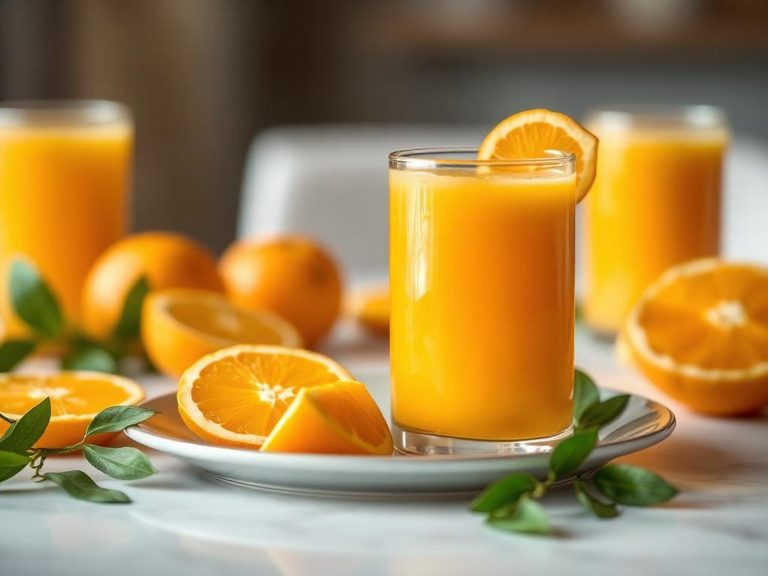
Fresh orange juice is a popular beverage made by extracting the liquid from fresh oranges, typically using a juicer or by hand-squeezing. Its primary ingredient is simply ripe oranges, though some variations may include a touch of pulp or a splash of water. While enjoyed worldwide, its modern commercialization and breakfast association are strongly linked to the United States.
🍳 View the full Fresh orange juice recipe →
🍽️ Nutrition at a glance
This beverage is a significant source of carbohydrates, primarily from natural fruit sugars, and is virtually fat-free and very low in protein. It is exceptionally high in vitamin C and also provides potassium and some folate. A typical 8-ounce (240ml) serving contains roughly 110-120 calories.
Nutrition breakdown
| Calories | 112 kcal |
| Protein | 1.7 g |
| Carbs | 25.8 g |
| Fat | 0.5 g |
| Fiber | 0.5 g |
| Sugar | 20.8 g |
| Sodium | 2 mg |
| Vitamin C | 124 mg |
| Folate | 74 mcg |
| Potassium | 496 mg |
| Thiamin (Vitamin B1) | 0.2 mg |
| Vitamin A | 22 mcg RAE |
| Calcium | 27 mg |
| Magnesium | 27 mg |
| Phosphorus | 43 mg |
Per 1 cup (240 g) · estimated, varies by recipe
💡 What's interesting
Culturally, fresh orange juice is a quintessential symbol of a healthy breakfast in many Western countries, a status largely cemented by 20th-century marketing. Nutritionally, while it provides a concentrated dose of vitamins, it lacks the beneficial fiber of a whole orange, which affects how the body processes its natural sugars.
🍽️ Related dishes






AI estimate may be inaccurate · Terms