

Orange juice, raw (Includes foods for USDA's Food Distribution Program)
Whole food · Fruits and Fruit Juices
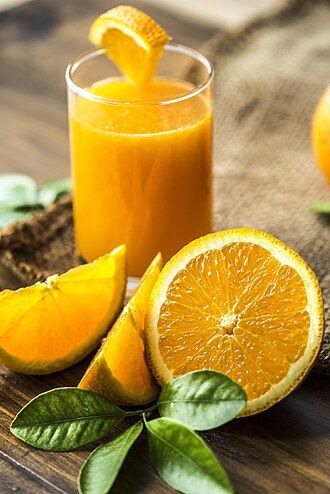
Photo: Wikipedia
Raw orange juice is the freshly squeezed, unprocessed liquid from whole oranges, offering a bright, tangy-sweet flavor and a smooth, pulpy texture. Nutritionally, it's a concentrated source of quick-energy carbohydrates, primarily from natural sugars, and is famously rich in vitamin C, though this specific data point highlights its low calorie and sugar content per 100g compared to many commercial blends.
Calorie split: 6% protein · 90% carbs · 4% fat
↓ Full nutrition💚 Why it's loved
People adore its vibrant, refreshing taste that instantly evokes sunshine and breakfast. It's incredibly versatile, enjoyed alone, as a base for smoothies and cocktails, or as a key ingredient in marinades and dressings.
⚠️ Watch-outs & how to enjoy it better
The high natural sugar content can cause rapid blood-sugar spikes, especially when consumed without other macronutrients. To counteract this, pair it with a source of protein (like eggs or yogurt) or healthy fat (like nuts) to slow absorption. Those monitoring calorie or sugar intake should practice portion control.
Key benefits
- Excellent source of vitamin C for immune support
- Provides potassium for heart and muscle function
- Contains natural sugars for a quick energy boost
- Offers some folate and thiamine (vitamin B1)
- Hydrating and low in fat and sodium
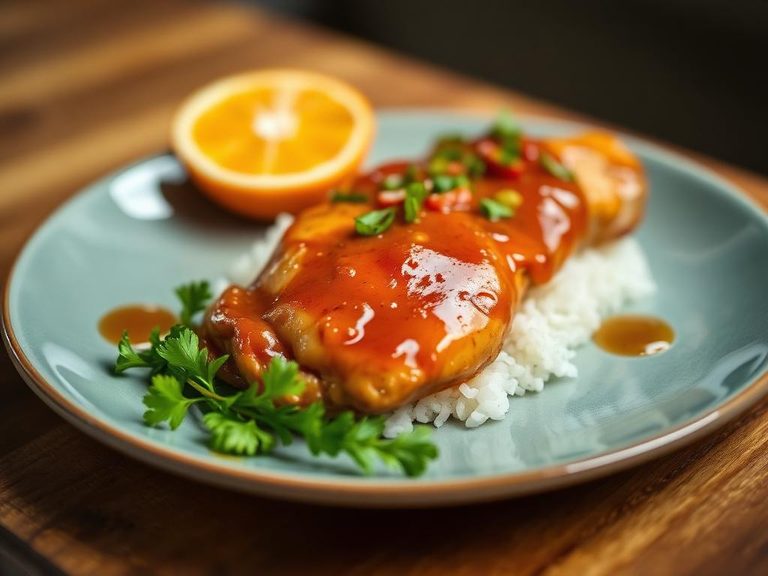
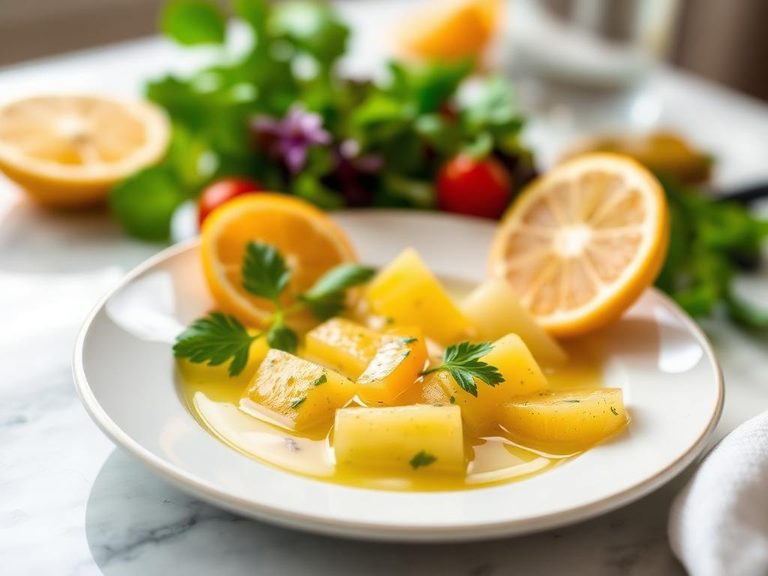
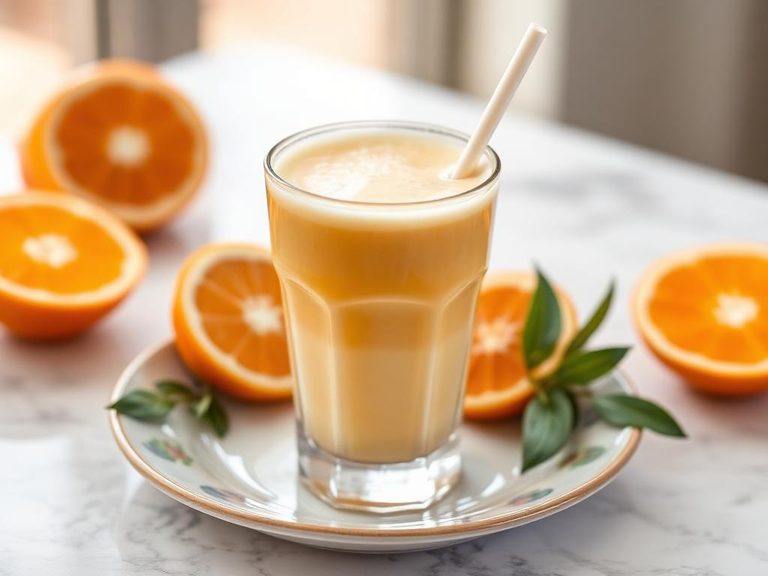
🍽️ Popular dishes


🌍 Where it's eaten
💡 Did you know?
A single medium orange yields only about 2-3 tablespoons (30-45ml) of juice, meaning a full cup requires squeezing 4-6 oranges.
Full nutrition (USDA data · scales with serving)
| Water | 88.3 g |
| Energy | 45.0 kcal |
| Energy | 188 kj |
| Protein | 0.70 g |
| Total lipid (fat) | 0.20 g |
| Ash | 0.40 g |
| Carbohydrate, by difference | 10.4 g |
| Fiber, total dietary | 0.20 g |
| Total Sugars | 8.4 g |
| Calcium, Ca | 11.0 mg |
| Iron, Fe | 0.20 mg |
| Magnesium, Mg | 11.0 mg |
| Phosphorus, P | 17.0 mg |
| Potassium, K | 200 mg |
| Sodium, Na | 1.0 mg |
| Zinc, Zn | 0.05 mg |
| Copper, Cu | 0.04 mg |
| Manganese, Mn | 0.01 mg |
| Selenium, Se | 0.10 ug |
| Vitamin C, total ascorbic acid | 50.0 mg |
| Thiamin | 0.09 mg |
| Riboflavin | 0.03 mg |
| Niacin | 0.40 mg |
| Pantothenic acid | 0.19 mg |
| Vitamin B-6 | 0.04 mg |
| Folate, total | 30.0 ug |
| Folic acid | 0.00 ug |
| Folate, food | 30.0 ug |
| Folate, DFE | 30.0 ug |
| Choline, total | 6.2 mg |
| Vitamin B-12 | 0.00 ug |
| Vitamin B-12, added | 0.00 ug |
| Vitamin A, RAE | 10.0 ug |
| Retinol | 0.00 ug |
| Carotene, beta | 33.0 ug |
| Carotene, alpha | 6.0 ug |
| Cryptoxanthin, beta | 169 ug |
| Vitamin A, IU | 200 iu |
| Lycopene | 0.00 ug |
| Lutein + zeaxanthin | 115 ug |
| Vitamin E (alpha-tocopherol) | 0.04 mg |
| Vitamin E, added | 0.00 mg |
| Vitamin D (D2 + D3), International Units | 0.00 iu |
| Vitamin D (D2 + D3) | 0.00 ug |
| Vitamin K (phylloquinone) | 0.10 ug |
| Alcohol, ethyl | 0.00 g |
| Caffeine | 0.00 mg |
| Theobromine | 0.00 mg |
Fat & fatty acid profile (per 100g)
| Fatty acids, total saturated | 0.02 g |
| SFA 4:0 | 0.00 g |
| SFA 6:0 | 0.00 g |
| SFA 8:0 | 0.00 g |
| SFA 10:0 | 0.00 g |
| SFA 12:0 | 0.00 g |
| SFA 14:0 | 0.00 g |
| SFA 16:0 | 0.02 g |
| SFA 18:0 | 0.00 g |
| Fatty acids, total monounsaturated | 0.04 g |
| MUFA 16:1 | 0.01 g |
| MUFA 18:1 | 0.03 g |
| MUFA 20:1 | 0.00 g |
| MUFA 22:1 | 0.00 g |
| Fatty acids, total polyunsaturated | 0.04 g |
| PUFA 18:2 | 0.03 g |
| PUFA 18:3 | 0.01 g |
| PUFA 18:4 | 0.00 g |
| PUFA 20:4 | 0.00 g |
| PUFA 20:5 n-3 (EPA) | 0.00 g |
| PUFA 22:5 n-3 (DPA) | 0.00 g |
| PUFA 22:6 n-3 (DHA) | 0.00 g |
| Fatty acids, total trans | 0.00 g |
| Cholesterol | 0.00 mg |
Amino acid profile (per 100g)
| Tryptophan | 0.00 g |
| Threonine | 0.01 g |
| Isoleucine | 0.01 g |
| Leucine | 0.01 g |
| Lysine | 0.01 g |
| Methionine | 0.00 g |
| Cystine | 0.01 g |
| Phenylalanine | 0.01 g |
| Tyrosine | 0.00 g |
| Valine | 0.01 g |
| Arginine | 0.05 g |
| Histidine | 0.00 g |
| Alanine | 0.01 g |
| Aspartic acid | 0.07 g |
| Glutamic acid | 0.03 g |
| Glycine | 0.01 g |
| Proline | 0.04 g |
| Serine | 0.01 g |
FAQ
Is raw orange juice healthier than pasteurized store-bought juice?
Raw juice retains more heat-sensitive nutrients like vitamin C and certain enzymes, but pasteurization makes juice safer by killing harmful bacteria and extends its shelf life. Nutritionally, they are very similar if no sugar is added.
Does the fiber in raw orange juice help with the sugar content?
While raw juice contains some pulp and fiber, the amount is significantly less than eating a whole orange. The fiber helps slightly, but the sugar is still rapidly absorbed compared to the whole fruit.
Why does my fresh-squeezed juice taste different from bottled?
Bottled juice is often pasteurized and may be made from concentrate or a blend of orange varieties for consistent flavor. Fresh-squeezed juice's taste varies with the orange variety, ripeness, and season, offering a more variable and often brighter flavor.
Nutrient density (calculated · NRF9.3)
Nutrient Rich Foods index: beneficial nutrients (protein, fiber, vitamins, minerals) minus saturated fat, added sugar & sodium, per 100 kcal.
NRF9.3 index — Fulgoni, Keast & Drewnowski, 2009. Computed from USDA nutrients.
Weight-loss friendliness (composite index)
Energy density 0.45 kcal/g · 6% calories from protein · 0.2 g fiber · 8.4 g sugar per 100 g.
Composite of energy density (Rolls et al., 1999), protein & fiber satiety, minus sugar. A calculated heuristic — ranks satiety-per-calorie, not a clinical measure.
Dietary load (calculated from USDA values)
Potential renal acid load. Positive = acid-forming, negative = alkaline-forming.
Sodium-to-potassium ratio: 0.01 (lower is better — aim for ≤ 1)
Sodium:potassium per WHO potassium guidance. Computed from USDA nutrients.