

Oat milk, unsweetened, plain, refrigerated
Whole food · Beverages

Photo: Wikipedia
Unsweetened, plain oat milk is a creamy, plant-based beverage made by blending oats with water and straining the mixture. It has a mild, slightly sweet, oaty flavor and a smooth, velvety texture that closely mimics dairy milk. Nutritionally, it's a low-calorie option, providing about 48 kcal per 100g, with a modest amount of fat and carbohydrates.
Calorie split: 7% protein · 42% carbs · 51% fat
↓ Full nutrition💚 Why it's loved
People love oat milk for its exceptionally creamy texture and naturally sweet, comforting flavor that froths well for coffee and lattes. Its versatility allows it to be used seamlessly in everything from morning cereal to creamy soups and baked goods.
⚠️ Watch-outs & how to enjoy it better
The primary caution is its relatively high carbohydrate content compared to other plant milks, which can affect blood sugar levels if consumed in large quantities without pairing. To counteract this, pair it with protein (like nuts or seeds) or healthy fats (like nut butter) to slow digestion. Also, check labels for added oils or gums if you have sensitivities.
Key benefits
- Naturally cholesterol-free and low in saturated fat.
- A good source of beta-glucans, a soluble fiber linked to heart health.
- Lactose-free and dairy-free, suitable for vegans and those with lactose intolerance.
- Often fortified with calcium and vitamins D and B12, similar to dairy milk.
- Its neutral flavor makes it a versatile base for both sweet and savory recipes.
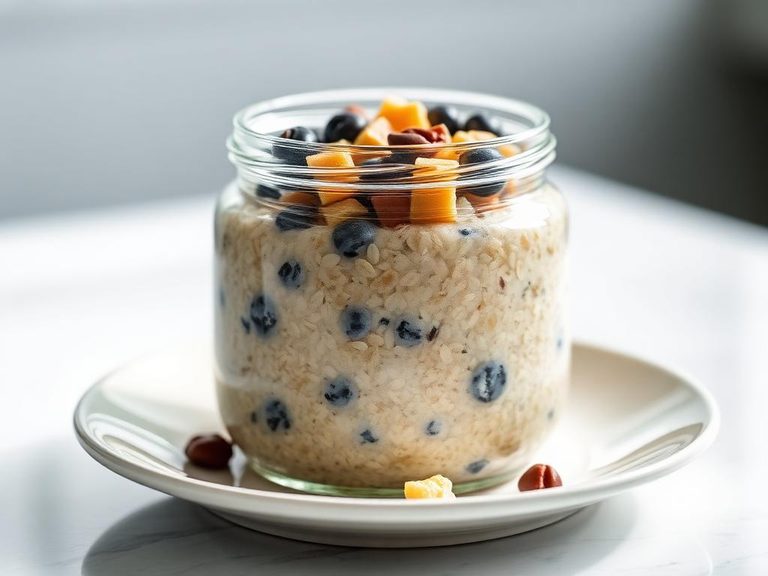
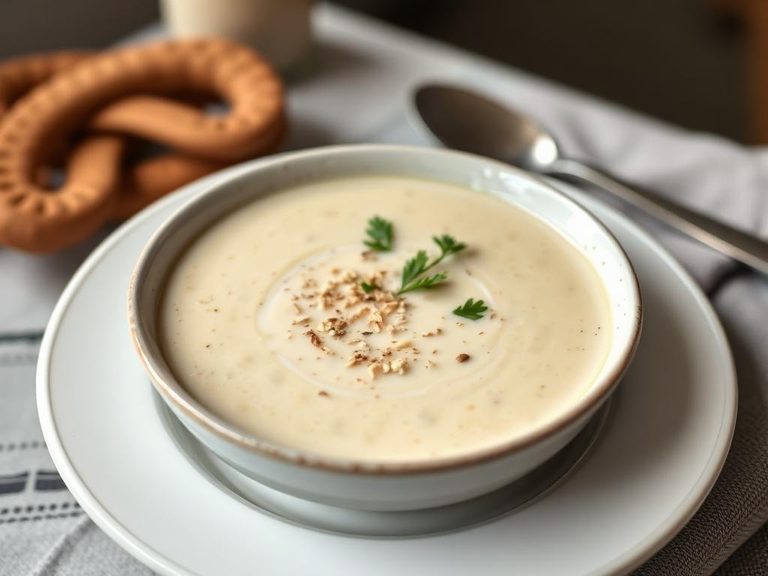
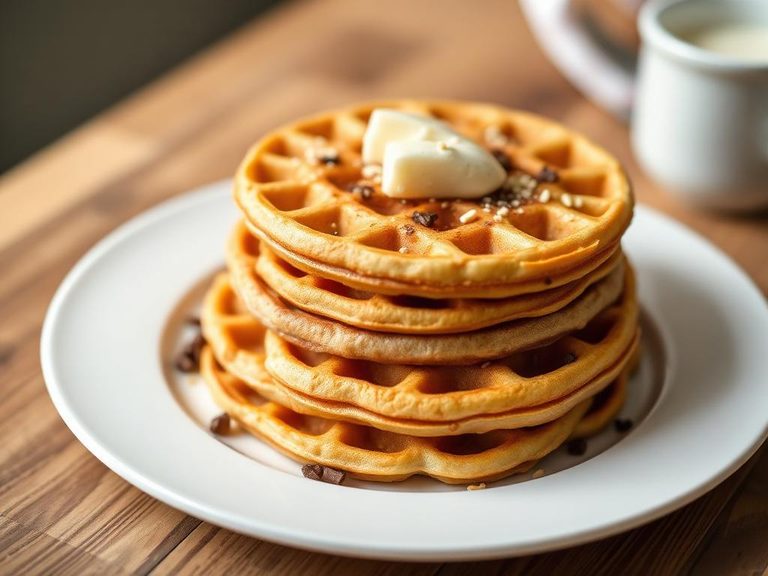
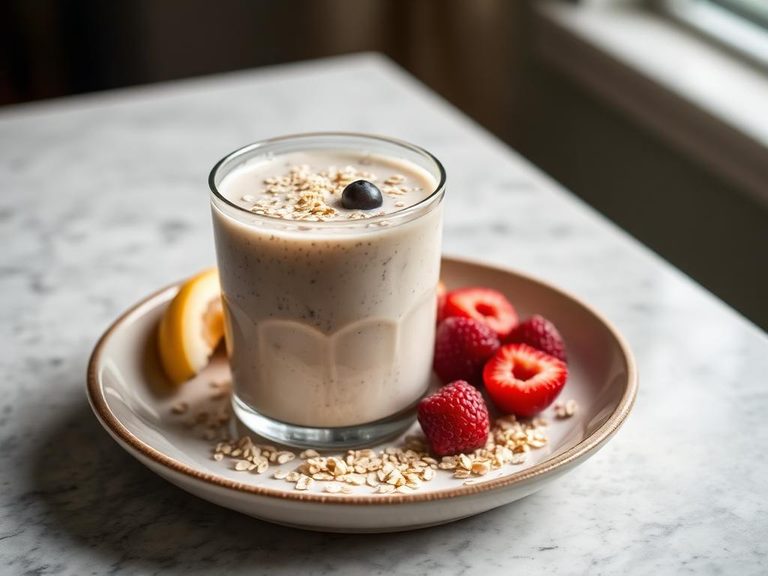
🍽️ Popular dishes

🌍 Where it's eaten
💡 Did you know?
The commercial oat milk craze was largely sparked by a Swedish farmer in the 1990s who invented a method to create a stable, drinkable oat beverage.
Full nutrition (USDA data · scales with serving)
| Water | 90.6 g |
| Energy (Atwater General Factors) | 48.3 kcal |
| Nitrogen | 0.13 g |
| Protein | 0.80 g |
| Total lipid (fat) | 2.7 g |
| Ash | 0.79 g |
| Carbohydrate, by difference | 5.1 g |
| Fiber, total dietary | 0.00 g |
| Sugars, Total | 2.3 g |
| Sucrose | 0.00 g |
| Glucose | 0.77 g |
| Fructose | 0.00 g |
| Lactose | 0.00 g |
| Maltose | 1.6 g |
| Galactose | 0.00 g |
| Calcium, Ca | 149 mg |
| Iron, Fe | 0.26 mg |
| Magnesium, Mg | 5.9 mg |
| Phosphorus, P | 89.2 mg |
| Potassium, K | 148 mg |
| Sodium, Na | 42.0 mg |
| Zinc, Zn | 0.09 mg |
| Copper, Cu | 0.03 mg |
| Manganese, Mn | 0.13 mg |
| Selenium, Se | 0.00 ug |
| Molybdenum, Mo | 10.1 ug |
| Thiamin | 0.04 mg |
| Riboflavin | 0.28 mg |
| Niacin | 0.10 mg |
| Vitamin B-6 | 0.01 mg |
| Biotin | 1.4 ug |
| Folate, total | 0.00 ug |
| Vitamin B-12 | 0.51 ug |
| Retinol | 84.7 ug |
| Vitamin D (D2 + D3), International Units | 68.0 iu |
| Vitamin D (D2 + D3) | 1.7 ug |
| Vitamin D2 (ergocalciferol) | 1.7 ug |
| Vitamin D3 (cholecalciferol) | 0.01 ug |
| Vitamin K (phylloquinone) | 0.40 ug |
| Vitamin K (Dihydrophylloquinone) | 0.00 ug |
| Vitamin K (Menaquinone-4) | 0.00 ug |
Fat & fatty acid profile (per 100g)
Estimated from Babyfood, cereal, oatmeal, with bananas, prepared with whole milk — USDA does not publish this profile for Oat milk.
| Fatty acids, total saturated | 1.8 g |
| SFA 4:0 | 0.07 g |
| SFA 6:0 | 0.07 g |
| SFA 8:0 | 0.07 g |
| SFA 10:0 | 0.07 g |
| SFA 12:0 | 0.07 g |
| SFA 13:0 | 0.00 g |
| SFA 14:0 | 0.28 g |
| SFA 15:0 | 0.00 g |
| SFA 16:0 | 0.84 g |
| SFA 17:0 | 0.00 g |
| SFA 18:0 | 0.34 g |
| SFA 20:0 | 0.00 g |
| SFA 22:0 | 0.00 g |
| SFA 24:0 | 0.00 g |
| Fatty acids, total monounsaturated | 0.86 g |
| MUFA 14:1 | 0.00 g |
| MUFA 16:1 | 0.00 g |
| MUFA 18:1 | 0.86 g |
| MUFA 20:1 | 0.00 g |
| MUFA 22:1 | 0.00 g |
| Fatty acids, total polyunsaturated | 0.34 g |
| PUFA 18:2 | 0.26 g |
| PUFA 18:3 | 0.08 g |
| PUFA 18:4 | 0.00 g |
| PUFA 20:4 | 0.00 g |
| PUFA 20:5 n-3 (EPA) | 0.00 g |
| PUFA 22:5 n-3 (DPA) | 0.00 g |
| PUFA 22:6 n-3 (DHA) | 0.00 g |
| Cholesterol | 10.0 mg |
Amino acid profile (per 100g)
| Tryptophan | 0.01 g |
| Threonine | 0.02 g |
| Isoleucine | 0.03 g |
| Leucine | 0.08 g |
| Lysine | 0.06 g |
| Methionine | 0.01 g |
| Phenylalanine | 0.07 g |
| Tyrosine | 0.04 g |
| Valine | 0.03 g |
| Arginine | 0.08 g |
| Histidine | 0.02 g |
| Alanine | 0.04 g |
| Aspartic acid | 0.08 g |
| Glutamic acid | 0.15 g |
| Glycine | 0.06 g |
| Proline | 0.07 g |
| Serine | 0.06 g |
| Hydroxyproline | 0.00 g |
| Cysteine | 0.03 g |
FAQ
Is oat milk gluten-free?
Pure oats are naturally gluten-free, but they are often processed in facilities that handle wheat, leading to cross-contamination. For a certified gluten-free option, look for oat milk specifically labeled as such.
Why does my oat milk separate in hot coffee?
The acidity and heat of coffee can cause the proteins and starches in oat milk to curdle. Using a barista-style oat milk (formulated with stabilizers) or adding the milk to the cup first before pouring in the coffee can help prevent this.
Can I use oat milk for baking?
Yes, unsweetened plain oat milk is an excellent 1:1 substitute for dairy milk in most baking recipes, adding moisture and a subtle, sweet flavor.
Nutrient density (calculated · NRF9.3)
Nutrient Rich Foods index: beneficial nutrients (protein, fiber, vitamins, minerals) minus saturated fat, added sugar & sodium, per 100 kcal.
NRF9.3 index — Fulgoni, Keast & Drewnowski, 2009. Computed from USDA nutrients.
Weight-loss friendliness (composite index)
Energy density 0.48 kcal/g · 7% calories from protein · 0.0 g fiber · 0.0 g sugar per 100 g.
Composite of energy density (Rolls et al., 1999), protein & fiber satiety, minus sugar. A calculated heuristic — ranks satiety-per-calorie, not a clinical measure.
Dietary load (calculated from USDA values)
Potential renal acid load. Positive = acid-forming, negative = alkaline-forming.
Sodium-to-potassium ratio: 0.28 (lower is better — aim for ≤ 1)
Sodium:potassium per WHO potassium guidance. Computed from USDA nutrients.