

Noodles, egg, cooked, unenriched, with added salt
Whole food · Cereal Grains and Pasta
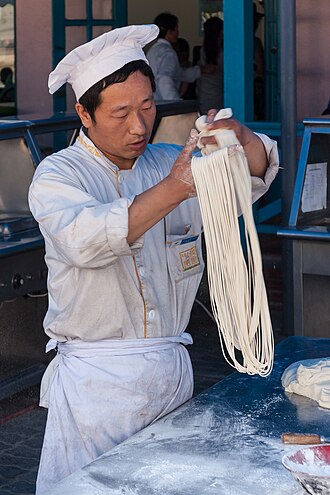
Photo: Wikipedia
These are simple, pale-yellow egg noodles cooked to a soft, springy bite, with a mild wheat-and-egg flavor that acts as a blank canvas for sauces. Nutritionally, they're a solid source of carbohydrates for energy, with a modest protein boost from the egg. The added salt enhances their savory profile but also bumps up the sodium content.
Calorie split: 13% protein · 73% carbs · 14% fat
↓ Full nutrition💚 Why it's loved
People love these noodles for their comforting, chewy texture and neutral flavor that perfectly soaks up everything from a rich gravy to a light broth. They are a beloved staple in countless home-cooked meals, representing simplicity and comfort across many cultures.
⚠️ Watch-outs & how to enjoy it better
The added salt can contribute to high sodium intake, and the refined carbs may cause blood-sugar spikes for some. To counteract this, pair them with plenty of non-starchy vegetables and a lean protein (like chicken or tofu) to slow digestion, and consider rinsing them briefly after cooking to reduce surface sodium. Those with gluten or egg allergies must avoid them.
Key benefits
- Provides quick-release energy from complex carbs
- Contains a moderate amount of protein for a pasta
- Low in fat, making it a lean carbohydrate base
- Versatile base that absorbs sauces and broths well
- Simple ingredient list with no added vitamins
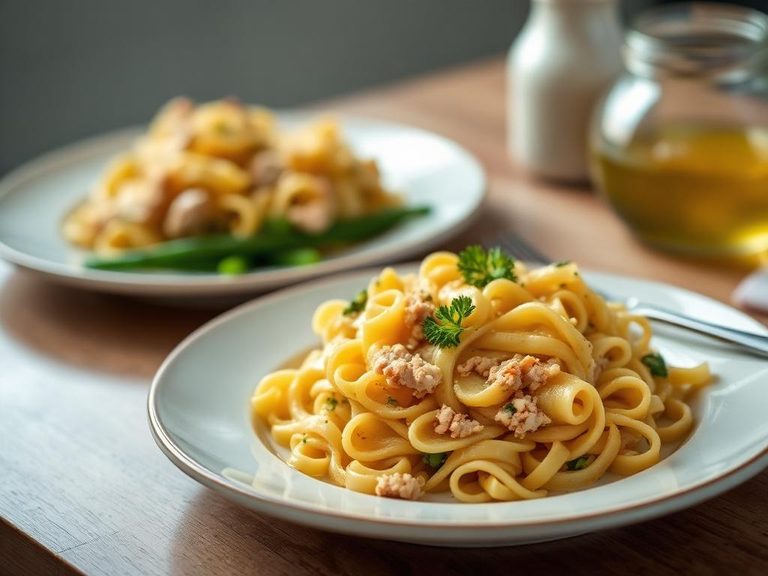
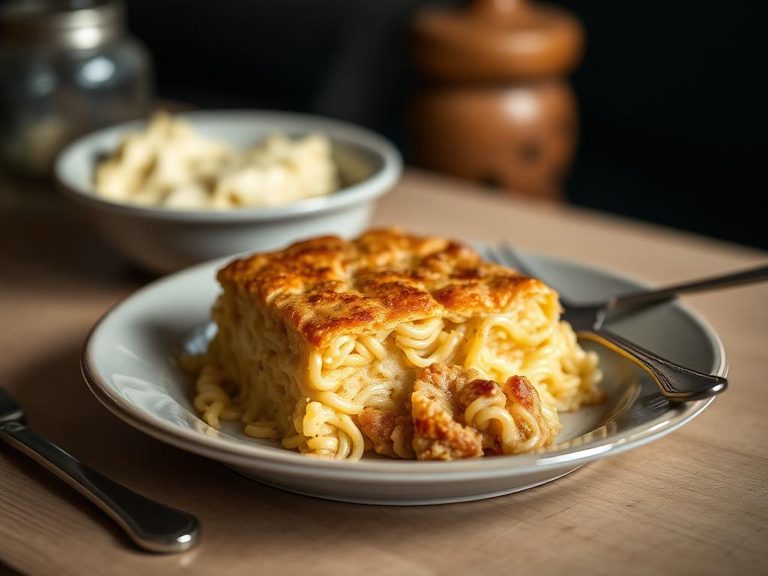
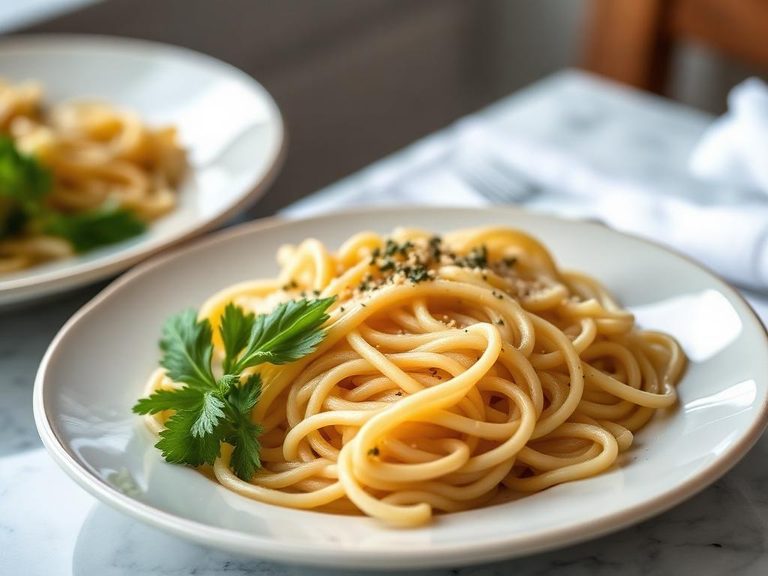
🍽️ Popular dishes
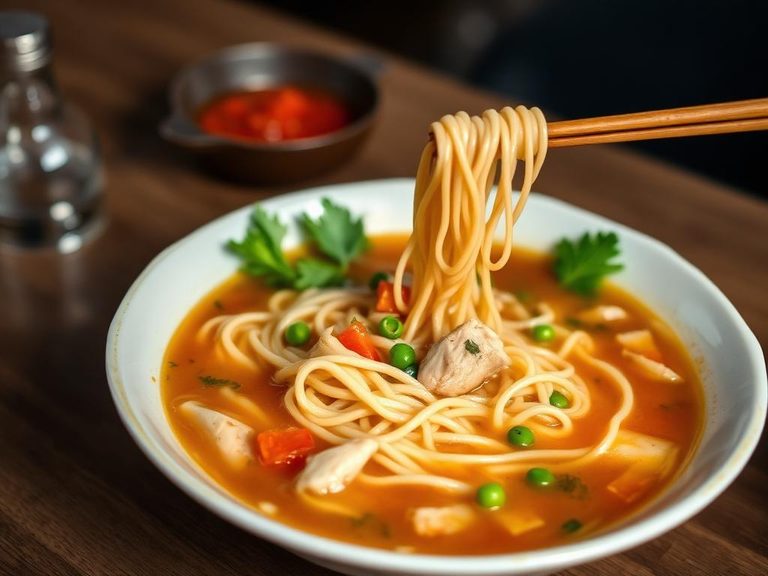
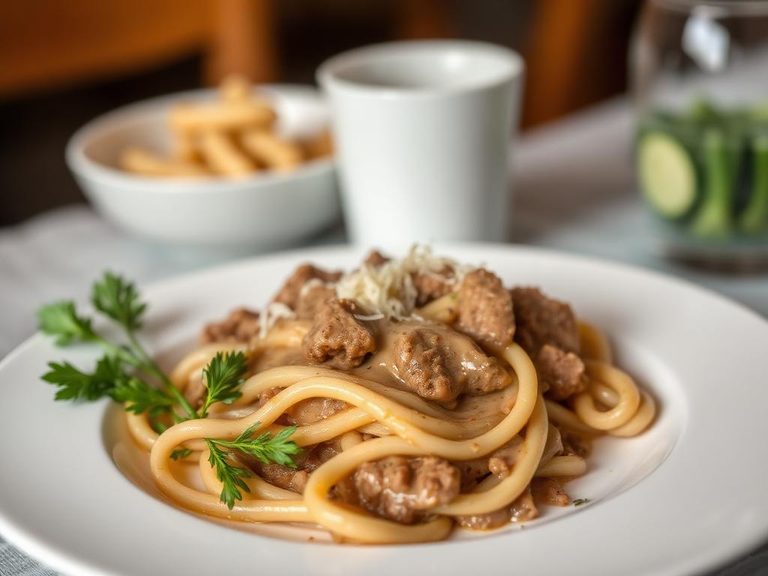
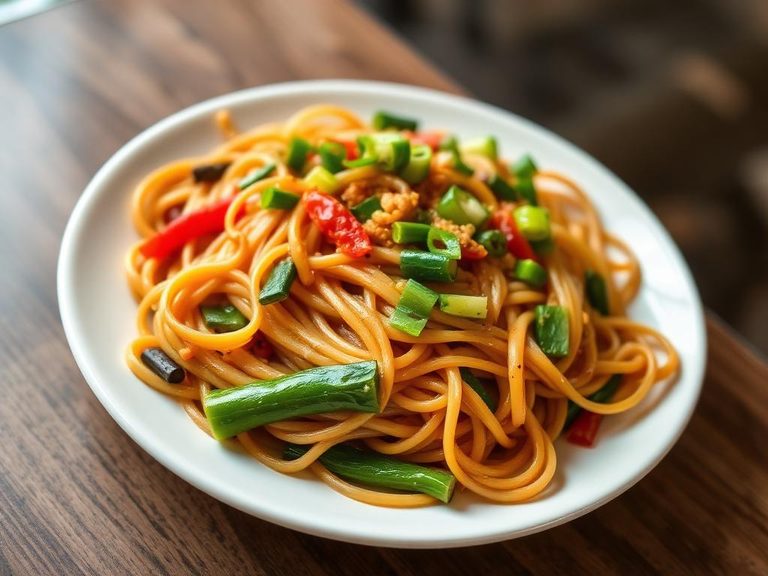
🌍 Where it's eaten
💡 Did you know?
The classic 'noodle' shape in many Western dishes is often a simple ribbon cut, but the Chinese tradition of hand-pulled noodles (la mian) can create a single, unbroken strand over 10 meters long from one piece of dough.
Full nutrition (USDA data · scales with serving)
| Water | 67.7 g |
| Energy | 138 kcal |
| Energy | 578 kj |
| Protein | 4.5 g |
| Total lipid (fat) | 2.1 g |
| Ash | 0.50 g |
| Carbohydrate, by difference | 25.2 g |
| Fiber, total dietary | 1.2 g |
| Total Sugars | 0.40 g |
| Sucrose | 0.04 g |
| Glucose | 0.07 g |
| Fructose | 0.00 g |
| Lactose | 0.00 g |
| Maltose | 0.30 g |
| Galactose | 0.00 g |
| Calcium, Ca | 12.0 mg |
| Iron, Fe | 0.60 mg |
| Magnesium, Mg | 21.0 mg |
| Phosphorus, P | 76.0 mg |
| Potassium, K | 38.0 mg |
| Sodium, Na | 165 mg |
| Zinc, Zn | 0.65 mg |
| Copper, Cu | 0.10 mg |
| Manganese, Mn | 0.32 mg |
| Selenium, Se | 23.9 ug |
| Vitamin C, total ascorbic acid | 0.00 mg |
| Thiamin | 0.03 mg |
| Riboflavin | 0.02 mg |
| Niacin | 0.40 mg |
| Pantothenic acid | 0.26 mg |
| Vitamin B-6 | 0.05 mg |
| Folate, total | 7.0 ug |
| Folic acid | 0.00 ug |
| Folate, food | 7.0 ug |
| Folate, DFE | 7.0 ug |
| Choline, total | 25.7 mg |
| Betaine | 19.2 mg |
| Vitamin B-12 | 0.09 ug |
| Vitamin A, RAE | 6.0 ug |
| Retinol | 6.0 ug |
| Carotene, beta | 1.0 ug |
| Carotene, alpha | 0.00 ug |
| Cryptoxanthin, beta | 0.00 ug |
| Vitamin A, IU | 21.0 iu |
| Lycopene | 0.00 ug |
| Lutein + zeaxanthin | 38.0 ug |
| Vitamin E (alpha-tocopherol) | 0.17 mg |
| Tocopherol, beta | 0.03 mg |
| Tocopherol, gamma | 0.60 mg |
| Tocopherol, delta | 0.00 mg |
| Tocotrienol, alpha | 0.13 mg |
| Tocotrienol, beta | 0.00 mg |
| Tocotrienol, gamma | 0.00 mg |
| Tocotrienol, delta | 0.00 mg |
| Vitamin K (phylloquinone) | 0.00 ug |
| Vitamin K (Dihydrophylloquinone) | 0.00 ug |
Fat & fatty acid profile (per 100g)
| Fatty acids, total saturated | 0.42 g |
| SFA 14:0 | 0.01 g |
| SFA 16:0 | 0.34 g |
| SFA 18:0 | 0.07 g |
| Fatty acids, total monounsaturated | 0.58 g |
| MUFA 16:1 | 0.04 g |
| MUFA 18:1 | 0.54 g |
| Fatty acids, total polyunsaturated | 0.55 g |
| PUFA 18:2 | 0.52 g |
| PUFA 18:3 | 0.03 g |
| PUFA 20:4 | 0.00 g |
| Fatty acids, total trans | 0.03 g |
| Cholesterol | 29.0 mg |
Amino acid profile (per 100g)
| Tryptophan | 0.04 g |
| Threonine | 0.14 g |
| Isoleucine | 0.19 g |
| Leucine | 0.36 g |
| Lysine | 0.14 g |
| Methionine | 0.09 g |
| Cystine | 0.10 g |
| Phenylalanine | 0.24 g |
| Tyrosine | 0.09 g |
| Valine | 0.22 g |
| Arginine | 0.19 g |
| Histidine | 0.12 g |
| Alanine | 0.17 g |
| Aspartic acid | 0.24 g |
| Glutamic acid | 1.5 g |
| Glycine | 0.16 g |
| Proline | 0.49 g |
| Serine | 0.26 g |
FAQ
What's the difference between egg noodles and regular pasta?
Egg noodles contain a higher proportion of eggs in the dough, which gives them a richer flavor, a more yellow color, and a slightly chewier, more tender texture compared to standard pasta made with just flour and water.
Are egg noodles a good source of protein?
They provide a moderate amount of protein (about 4.5g per 100g cooked), which is more than plain wheat pasta but less than legume-based pastas. They are best considered a carbohydrate source with a protein bonus.
Why are my cooked noodles sticky?
Stickiness is usually caused by starch on the surface. To prevent it, use a large pot of well-salted boiling water, don't overcook them, and rinse briefly with cool water after draining if you're not serving them immediately with sauce.
Nutrient density (calculated · NRF9.3)
Nutrient Rich Foods index: beneficial nutrients (protein, fiber, vitamins, minerals) minus saturated fat, added sugar & sodium, per 100 kcal.
NRF9.3 index — Fulgoni, Keast & Drewnowski, 2009. Computed from USDA nutrients.
Weight-loss friendliness (composite index)
Energy density 1.38 kcal/g · 13% calories from protein · 1.2 g fiber · 0.4 g sugar per 100 g.
Composite of energy density (Rolls et al., 1999), protein & fiber satiety, minus sugar. A calculated heuristic — ranks satiety-per-calorie, not a clinical measure.
Dietary load (calculated from USDA values)
Potential renal acid load. Positive = acid-forming, negative = alkaline-forming.
Sodium-to-potassium ratio: 4.34 (lower is better — aim for ≤ 1)
Sodium:potassium per WHO potassium guidance. Computed from USDA nutrients.