

Mung beans, mature seeds, raw
Whole food · Legumes and Legume Products

Photo: Wikipedia
Mung beans are small, olive-green legumes with a firm, slightly starchy texture and a mild, earthy, subtly sweet flavor when raw. Nutritionally, they are a powerhouse, offering an impressive 23.86g of protein and 16.3g of fiber per 100g, alongside a complex carbohydrate profile. Their high fiber content is particularly notable, making them a very satiating and gut-friendly food.
Calorie split: 27% protein · 70% carbs · 3% fat
↓ Full nutrition💚 Why it's loved
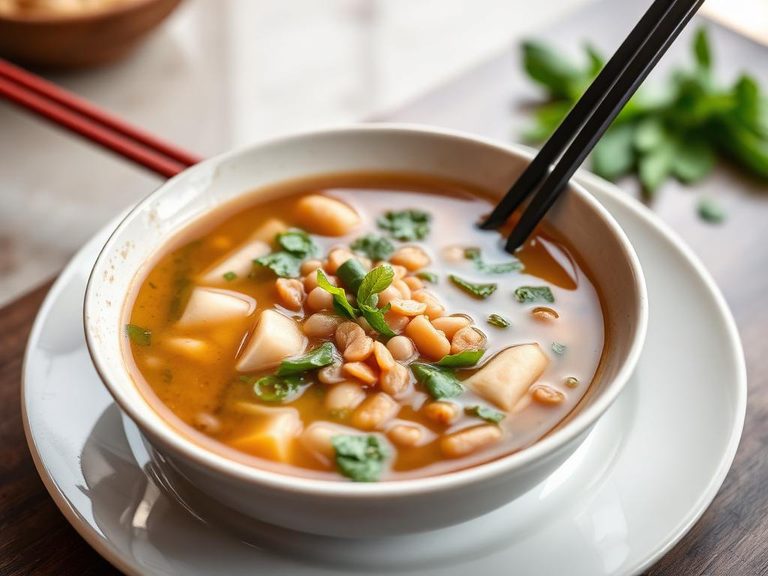
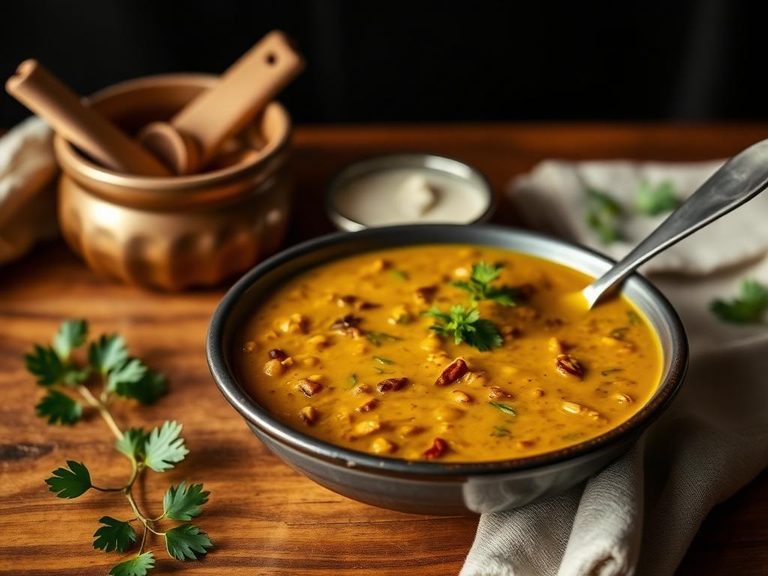
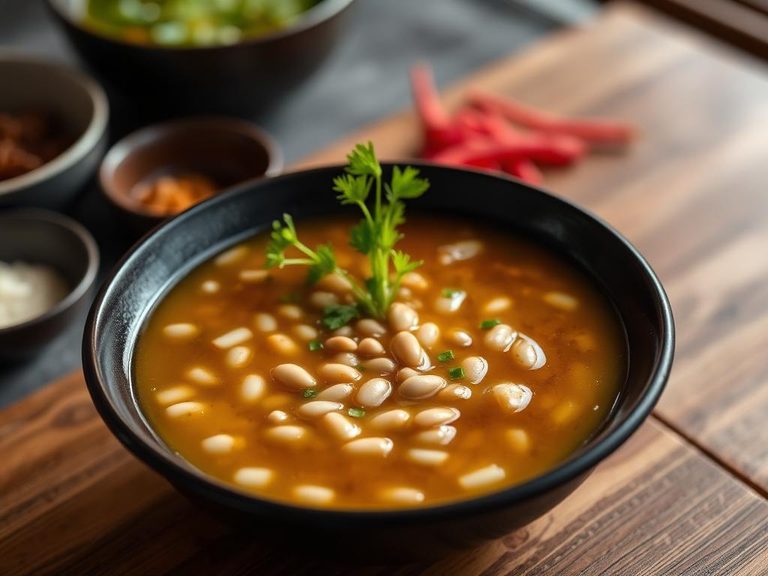
People love mung beans for their incredible versatility and neutral, pleasant taste that easily absorbs spices and flavors. They are a staple in many cultures, valued for being a nutritious, affordable, and quick-cooking legume that forms the base of comforting soups, sprouted salads, and hearty dals.
⚠️ Watch-outs & how to enjoy it better
Raw mung beans contain antinutrients like phytic acid and trypsin inhibitors that can impair mineral absorption and digestion. To counteract this, they must be soaked for several hours and then thoroughly cooked (boiled, pressure-cooked, or sprouted) to neutralize these compounds and make the nutrients bioavailable. Individuals with sensitive digestion may also experience gas, so starting with smaller portions is advisable.
Key benefits
- Excellent plant-based protein source for muscle maintenance.
- Very high in dietary fiber, promoting digestive health and satiety.
- Rich in essential minerals like iron, magnesium, and potassium.
- Low in fat, with only 1.15g per 100g.
- Provides a steady release of energy due to complex carbohydrates.
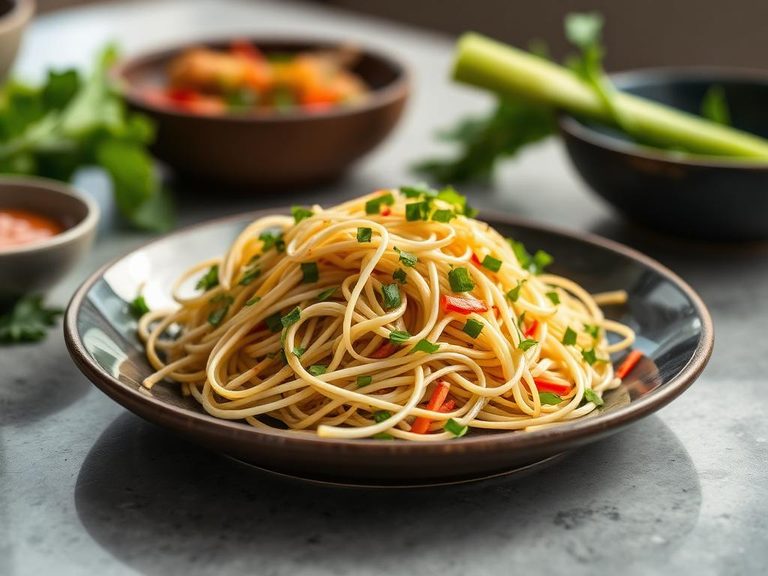
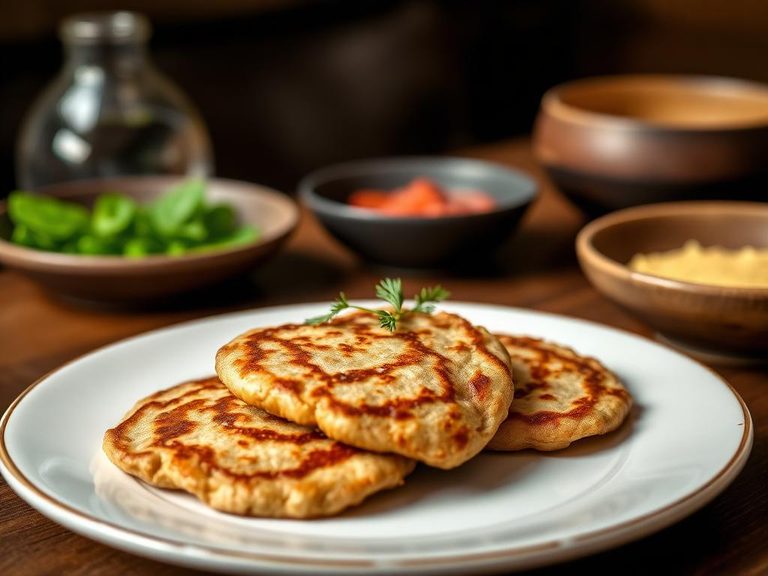
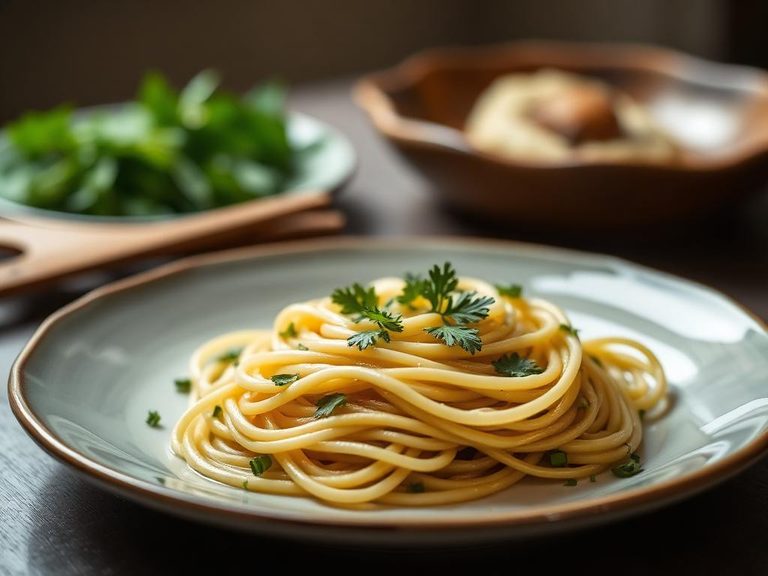
🍽️ Popular dishes
🌍 Where it's eaten
💡 Did you know?
Mung beans are one of the few legumes that can be easily sprouted at home in just a few days, and their sprouts are a completely different culinary ingredient, often used in stir-fries and salads.
Full nutrition (USDA data · scales with serving)
| Water | 9.1 g |
| Energy | 347 kcal |
| Energy | 1452 kj |
| Protein | 23.9 g |
| Total lipid (fat) | 1.1 g |
| Ash | 3.3 g |
| Carbohydrate, by difference | 62.6 g |
| Fiber, total dietary | 16.3 g |
| Total Sugars | 6.6 g |
| Calcium, Ca | 132 mg |
| Iron, Fe | 6.7 mg |
| Magnesium, Mg | 189 mg |
| Phosphorus, P | 367 mg |
| Potassium, K | 1246 mg |
| Sodium, Na | 15.0 mg |
| Zinc, Zn | 2.7 mg |
| Copper, Cu | 0.94 mg |
| Manganese, Mn | 1.0 mg |
| Selenium, Se | 8.2 ug |
| Vitamin C, total ascorbic acid | 4.8 mg |
| Thiamin | 0.62 mg |
| Riboflavin | 0.23 mg |
| Niacin | 2.3 mg |
| Pantothenic acid | 1.9 mg |
| Vitamin B-6 | 0.38 mg |
| Folate, total | 625 ug |
| Folic acid | 0.00 ug |
| Folate, food | 625 ug |
| Folate, DFE | 625 ug |
| Choline, total | 97.9 mg |
| Vitamin B-12 | 0.00 ug |
| Vitamin B-12, added | 0.00 ug |
| Vitamin A, RAE | 6.0 ug |
| Retinol | 0.00 ug |
| Carotene, beta | 68.0 ug |
| Carotene, alpha | 0.00 ug |
| Cryptoxanthin, beta | 0.00 ug |
| Vitamin A, IU | 114 iu |
| Lycopene | 0.00 ug |
| Lutein + zeaxanthin | 0.00 ug |
| Vitamin E (alpha-tocopherol) | 0.51 mg |
| Vitamin E, added | 0.00 mg |
| Vitamin D (D2 + D3), International Units | 0.00 iu |
| Vitamin D (D2 + D3) | 0.00 ug |
| Vitamin K (phylloquinone) | 9.0 ug |
| Alcohol, ethyl | 0.00 g |
| Caffeine | 0.00 mg |
| Theobromine | 0.00 mg |
Fat & fatty acid profile (per 100g)
| Fatty acids, total saturated | 0.35 g |
| SFA 4:0 | 0.00 g |
| SFA 6:0 | 0.00 g |
| SFA 8:0 | 0.00 g |
| SFA 10:0 | 0.00 g |
| SFA 12:0 | 0.00 g |
| SFA 14:0 | 0.00 g |
| SFA 16:0 | 0.25 g |
| SFA 18:0 | 0.07 g |
| Fatty acids, total monounsaturated | 0.16 g |
| MUFA 16:1 | 0.00 g |
| MUFA 18:1 | 0.16 g |
| MUFA 20:1 | 0.00 g |
| MUFA 22:1 | 0.00 g |
| Fatty acids, total polyunsaturated | 0.38 g |
| PUFA 18:2 | 0.36 g |
| PUFA 18:3 | 0.03 g |
| PUFA 18:4 | 0.00 g |
| PUFA 20:4 | 0.00 g |
| PUFA 20:5 n-3 (EPA) | 0.00 g |
| PUFA 22:5 n-3 (DPA) | 0.00 g |
| PUFA 22:6 n-3 (DHA) | 0.00 g |
| Fatty acids, total trans | 0.00 g |
| Cholesterol | 0.00 mg |
| Phytosterols | 23.0 mg |
Amino acid profile (per 100g)
| Tryptophan | 0.26 g |
| Threonine | 0.78 g |
| Isoleucine | 1.0 g |
| Leucine | 1.8 g |
| Lysine | 1.7 g |
| Methionine | 0.29 g |
| Cystine | 0.21 g |
| Phenylalanine | 1.4 g |
| Tyrosine | 0.71 g |
| Valine | 1.2 g |
| Arginine | 1.7 g |
| Histidine | 0.69 g |
| Alanine | 1.1 g |
| Aspartic acid | 2.8 g |
| Glutamic acid | 4.3 g |
| Glycine | 0.95 g |
| Proline | 1.1 g |
| Serine | 1.2 g |
FAQ
Do I need to soak mung beans before cooking?
Yes, soaking is recommended. It reduces cooking time, helps break down antinutrients like phytic acid for better mineral absorption, and can make them easier to digest.
How are mung beans different from lentils or chickpeas?
Mung beans are smaller, cook faster, and have a milder flavor. They are also nutritionally distinct, often higher in fiber and with a different amino acid profile compared to other legumes.
Can I eat mung beans raw?
While raw sprouts are common in salads, mature, dry mung beans are very hard and must be cooked. Eating them raw can be difficult to digest and may expose you to antinutrients.
Nutrient density (calculated · NRF9.3)
Nutrient Rich Foods index: beneficial nutrients (protein, fiber, vitamins, minerals) minus saturated fat, added sugar & sodium, per 100 kcal.
NRF9.3 index — Fulgoni, Keast & Drewnowski, 2009. Computed from USDA nutrients.
Weight-loss friendliness (composite index)
Energy density 3.47 kcal/g · 28% calories from protein · 16.3 g fiber · 6.6 g sugar per 100 g.
Composite of energy density (Rolls et al., 1999), protein & fiber satiety, minus sugar. A calculated heuristic — ranks satiety-per-calorie, not a clinical measure.
Dietary load (calculated from USDA values)
Potential renal acid load. Positive = acid-forming, negative = alkaline-forming.
Sodium-to-potassium ratio: 0.01 (lower is better — aim for ≤ 1)
Sodium:potassium per WHO potassium guidance. Computed from USDA nutrients.