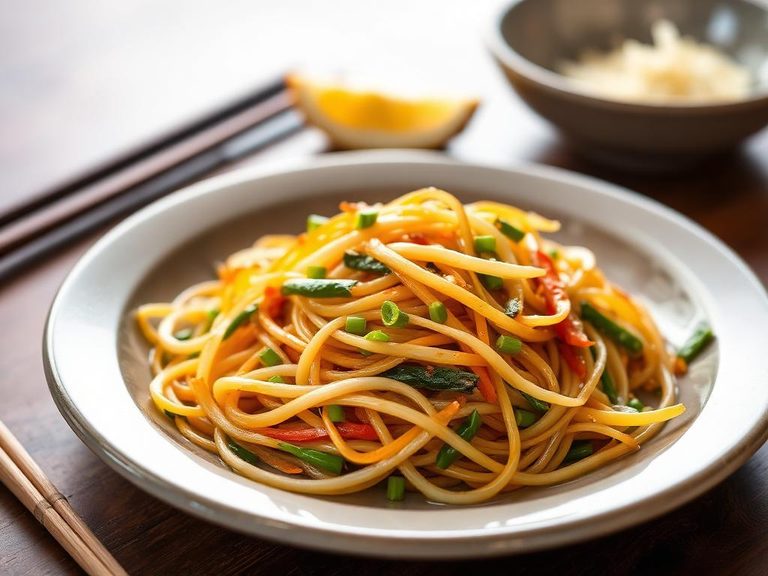
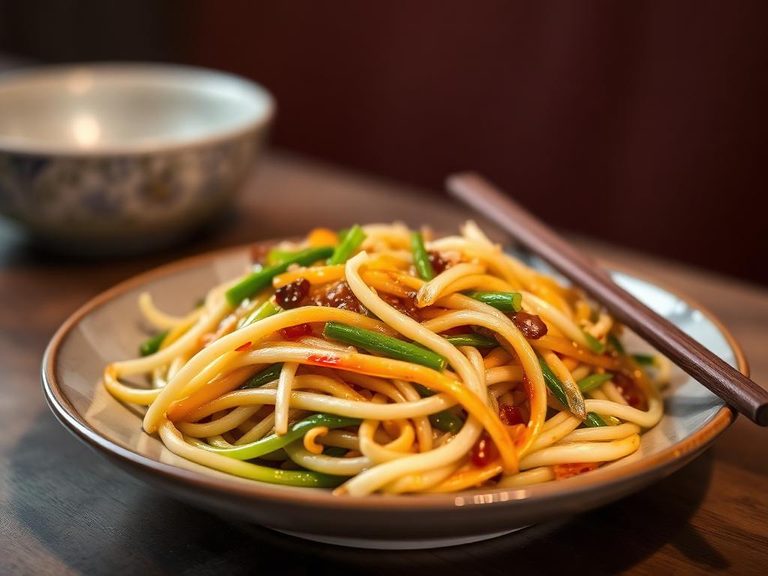
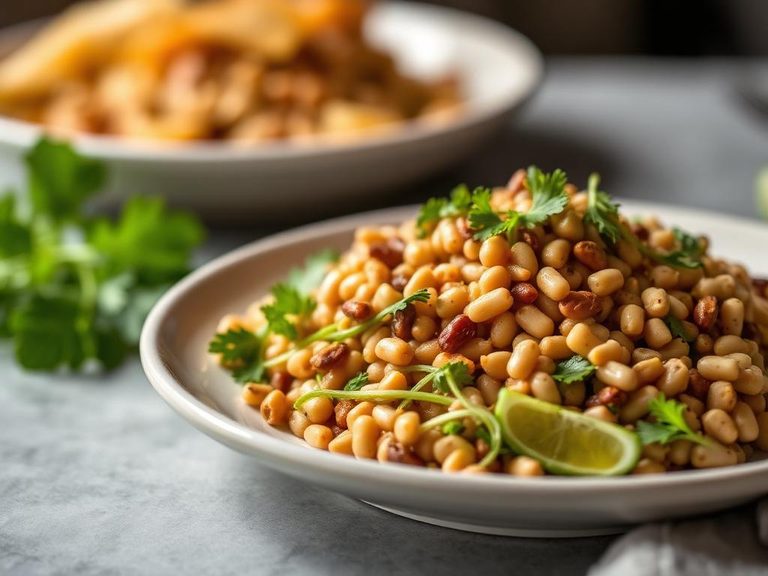
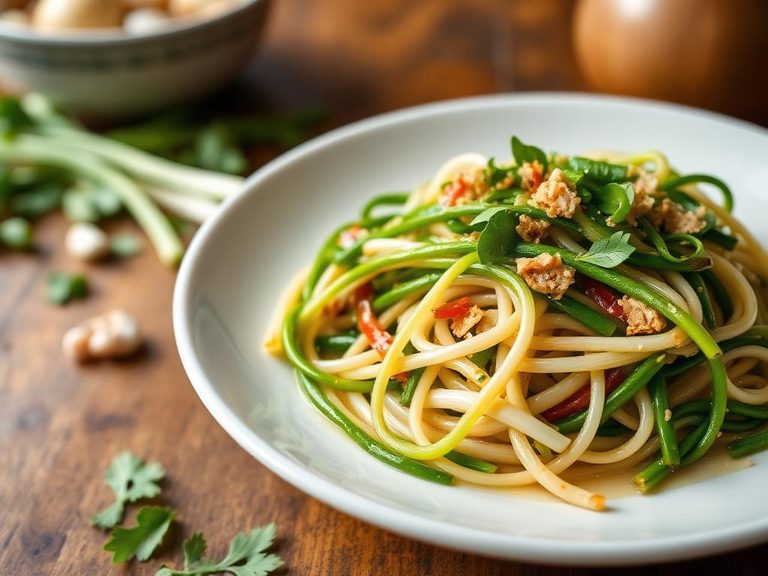
Mung bean sprout salad
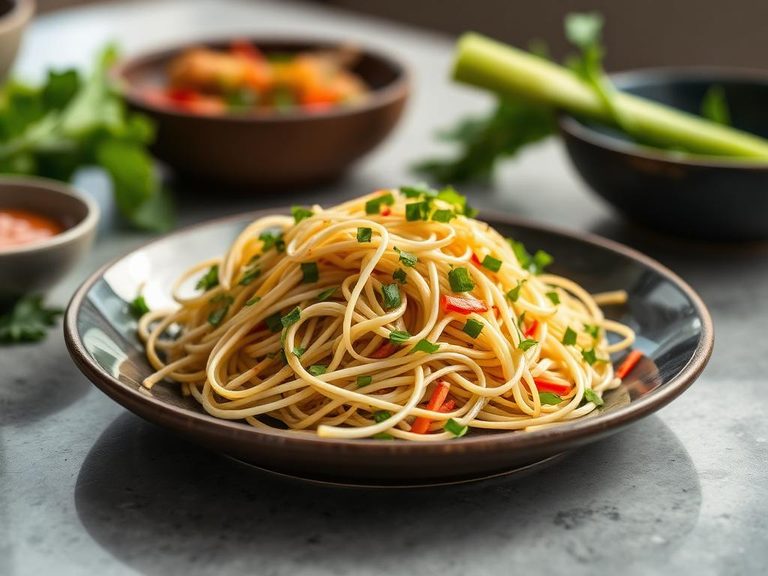
Mung bean sprout salad is a crisp, refreshing dish found across many Asian cuisines, from Chinese liangban douya to Korean sukju namul and Japanese moyashi salad. It typically features blanched or raw mung bean sprouts tossed with ingredients like sesame oil, soy sauce, garlic, vinegar, and sometimes chili, scallions, or cilantro.
🍽️ Nutrition at a glance
This salad is low in calories (roughly 50-80 per serving) and carbohydrates, while providing a good source of plant-based protein, vitamin C, and folate. It's also high in fiber and contains minerals like manganese, making it a light yet nutrient-dense side dish.
Nutrition breakdown
| Calories | 31 kcal |
| Protein | 3 g |
| Carbs | 5.8 g |
| Fat | 0.2 g |
| Fiber | 1.8 g |
| Sugar | 3 g |
| Sodium | 10 mg |
| Vitamin C | 13.5 mg |
| Vitamin K | 33.3 mcg |
| Folate | 64 mcg |
| Potassium | 155 mg |
| Manganese | 0.19 mg |
| Iron | 0.5 mg |
| Copper | 0.1 mg |
| Vitamin B6 | 0.05 mg |
Per 1 cup (104 g) · estimated, varies by recipe
💡 What's interesting
Culturally, it's a staple in many Asian home kitchens for its affordability and versatility, often served as a banchan in Korea or a cold side in China. Nutritionally, sprouting mung beans increases their vitamin content and makes nutrients more bioavailable, transforming a simple legume into a crunchy, enzyme-rich food.