

Mung Bean Pancakes
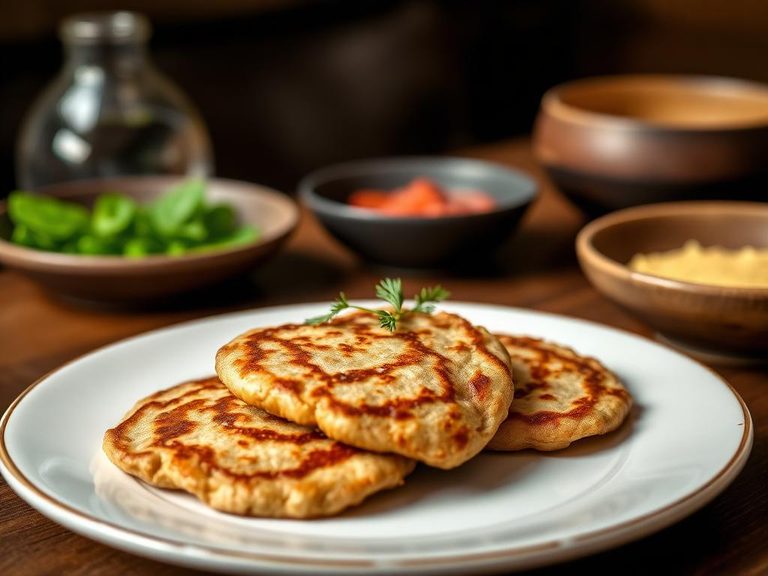
Bindae-tteok is a savory Korean pancake made from a batter of ground mung beans and rice, often mixed with vegetables like kimchi, scallions, and sometimes pork or seafood. It's a popular street food and home-cooked dish, especially enjoyed during holidays or as a crispy, hearty snack. The name literally means 'mung bean pancake,' reflecting its primary ingredient.
🍽️ Nutrition at a glance
Bindae-tteok is relatively high in carbohydrates from the mung beans and rice, with moderate protein from the beans and any added meat or seafood. It provides fiber, B vitamins, and minerals like iron and magnesium, with a typical serving (one medium pancake) containing roughly 200-300 calories.
Nutrition breakdown
| Calories | 210 kcal |
| Protein | 8.5 g |
| Carbs | 25 g |
| Fat | 8 g |
| Fiber | 4.5 g |
| Sugar | 2 g |
| Sodium | 380 mg |
| Iron | 2.1 mg |
| Potassium | 320 mg |
| Magnesium | 55 mg |
| Phosphorus | 130 mg |
| Folate | 75 mcg |
| Vitamin B1 (Thiamine) | 0.2 mg |
| Zinc | 1.1 mg |
| Manganese | 0.8 mg |
Per 1 pancake (approx. 100 g) · estimated, varies by recipe
💡 What's interesting
Culturally, bindae-tteok is a beloved comfort food in Korea, often associated with communal cooking and street food culture, where it's fried fresh and served hot. Nutritionally, mung beans are a good plant-based protein source and are known for their cooling properties in traditional Korean medicine, making this dish both satisfying and balanced.
🍽️ Related dishes
AI estimate may be inaccurate · Terms