

Molasses
Whole food · Sweets

Photo: Wikipedia
Molasses is a thick, dark syrup left over after crystallizing sugar from sugarcane or sugar beets. It has a robust, bittersweet flavor with notes of caramel, smoke, and a slightly bitter finish. Nutritionally, it is a concentrated source of carbohydrates and sugar, but it also provides notable amounts of minerals like iron, calcium, and potassium.
Calorie split: 0% protein · 100% carbs · 0% fat
↓ Full nutrition💚 Why it's loved
People love molasses for its unique, complex sweetness that adds depth to baked goods, sauces, and marinades. It is a cornerstone of traditional baking in many cultures, from American gingerbread to Caribbean jerk seasoning.
⚠️ Watch-outs & how to enjoy it better
Its high sugar content can cause rapid blood-sugar spikes, so it should be used in moderation, especially by those managing diabetes. To counteract this, pair it with protein or fat (like nuts or butter) and use small portions. Its strong, sometimes bitter flavor can be overpowering if not balanced with other ingredients.
Key benefits
- Good source of iron, especially for plant-based diets.
- Provides calcium and potassium for bone and heart health.
- Contains antioxidants like polyphenols.
- Adds deep, complex flavor without artificial additives.
- Traditional remedy for constipation (as a mild laxative).
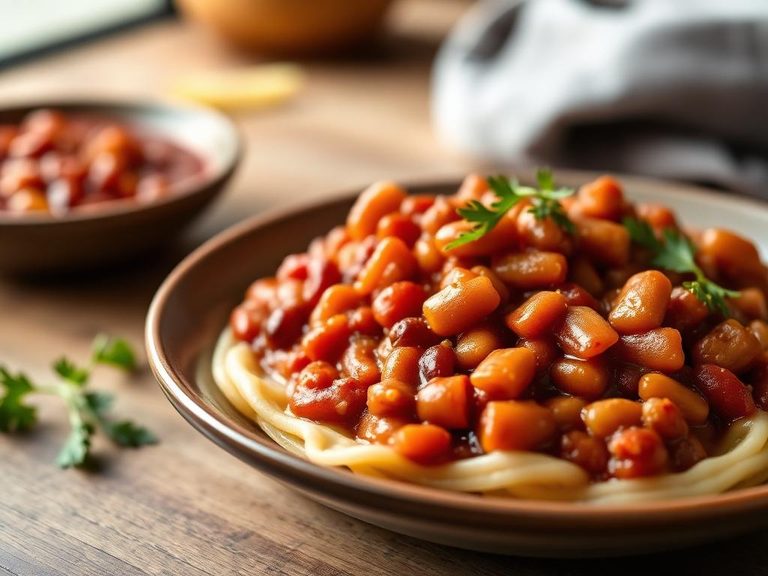
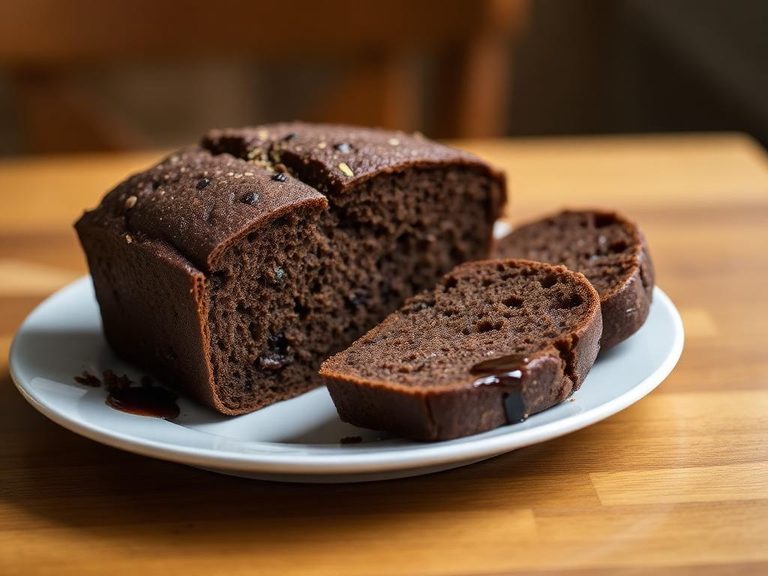
🍽️ Popular dishes


🌍 Where it's eaten
💡 Did you know?
Blackstrap molasses, the darkest and most bitter variety, is a byproduct of the third boiling of sugarcane syrup and is particularly rich in iron and calcium.
Full nutrition (USDA data · scales with serving)
| Water | 21.9 g |
| Energy | 290 kcal |
| Energy | 1213 kj |
| Protein | 0.00 g |
| Total lipid (fat) | 0.10 g |
| Ash | 3.3 g |
| Carbohydrate, by difference | 74.7 g |
| Fiber, total dietary | 0.00 g |
| Total Sugars | 74.7 g |
| Sucrose | 29.4 g |
| Glucose | 11.9 g |
| Fructose | 12.8 g |
| Calcium, Ca | 205 mg |
| Iron, Fe | 4.7 mg |
| Magnesium, Mg | 242 mg |
| Phosphorus, P | 31.0 mg |
| Potassium, K | 1464 mg |
| Sodium, Na | 37.0 mg |
| Zinc, Zn | 0.29 mg |
| Copper, Cu | 0.49 mg |
| Manganese, Mn | 1.5 mg |
| Selenium, Se | 17.8 ug |
| Vitamin C, total ascorbic acid | 0.00 mg |
| Thiamin | 0.04 mg |
| Riboflavin | 0.00 mg |
| Niacin | 0.93 mg |
| Pantothenic acid | 0.80 mg |
| Vitamin B-6 | 0.67 mg |
| Folate, total | 0.00 ug |
| Folic acid | 0.00 ug |
| Folate, food | 0.00 ug |
| Folate, DFE | 0.00 ug |
| Choline, total | 13.3 mg |
| Vitamin B-12 | 0.00 ug |
| Vitamin B-12, added | 0.00 ug |
| Vitamin A, RAE | 0.00 ug |
| Retinol | 0.00 ug |
| Carotene, beta | 0.00 ug |
| Carotene, alpha | 0.00 ug |
| Cryptoxanthin, beta | 0.00 ug |
| Vitamin A, IU | 0.00 iu |
| Lycopene | 0.00 ug |
| Lutein + zeaxanthin | 0.00 ug |
| Vitamin E (alpha-tocopherol) | 0.00 mg |
| Vitamin E, added | 0.00 mg |
| Vitamin D (D2 + D3), International Units | 0.00 iu |
| Vitamin D (D2 + D3) | 0.00 ug |
| Vitamin K (phylloquinone) | 0.00 ug |
| Alcohol, ethyl | 0.00 g |
| Caffeine | 0.00 mg |
| Theobromine | 0.00 mg |
Fat & fatty acid profile (per 100g)
| Fatty acids, total saturated | 0.02 g |
| SFA 4:0 | 0.00 g |
| SFA 6:0 | 0.00 g |
| SFA 8:0 | 0.00 g |
| SFA 10:0 | 0.00 g |
| SFA 12:0 | 0.00 g |
| SFA 14:0 | 0.00 g |
| SFA 16:0 | 0.02 g |
| SFA 18:0 | 0.00 g |
| Fatty acids, total monounsaturated | 0.03 g |
| MUFA 16:1 | 0.00 g |
| MUFA 18:1 | 0.03 g |
| MUFA 20:1 | 0.00 g |
| MUFA 22:1 | 0.00 g |
| Fatty acids, total polyunsaturated | 0.05 g |
| PUFA 18:2 | 0.05 g |
| PUFA 18:3 | 0.00 g |
| PUFA 18:4 | 0.00 g |
| PUFA 20:4 | 0.00 g |
| PUFA 20:5 n-3 (EPA) | 0.00 g |
| PUFA 22:5 n-3 (DPA) | 0.00 g |
| PUFA 22:6 n-3 (DHA) | 0.00 g |
| Cholesterol | 0.00 mg |
Amino acid profile (per 100g)
Estimated from Cookies, molasses — USDA does not publish this profile for Molasses.
| Tryptophan | 0.08 g |
| Threonine | 0.15 g |
| Isoleucine | 0.21 g |
| Leucine | 0.38 g |
| Lysine | 0.19 g |
| Methionine | 0.09 g |
| Cystine | 0.12 g |
| Phenylalanine | 0.26 g |
| Tyrosine | 0.16 g |
| Valine | 0.24 g |
| Arginine | 0.21 g |
| Histidine | 0.11 g |
| Alanine | 0.17 g |
| Aspartic acid | 0.24 g |
| Glutamic acid | 1.8 g |
| Glycine | 0.19 g |
| Proline | 0.61 g |
| Serine | 0.29 g |
FAQ
What is the difference between light, dark, and blackstrap molasses?
Light molasses is from the first boiling and is the sweetest. Dark molasses is from the second boiling and is less sweet with a stronger flavor. Blackstrap molasses is from the third boiling, is the darkest and most bitter, and has the highest mineral content.
Can molasses be used as a substitute for honey or maple syrup?
Yes, but it has a stronger, more bitter flavor. Use it in recipes where its robust taste is desired, like gingerbread or baked beans, and reduce other sweeteners slightly.
Is molasses gluten-free?
Yes, pure molasses is naturally gluten-free. However, always check labels for cross-contamination if you have celiac disease.
How should molasses be stored?
Store it in a cool, dark place like a pantry. It can crystallize over time; if this happens, gently warm the jar in a water bath to re-liquefy it.
Nutrient density (calculated · NRF9.3)
Nutrient Rich Foods index: beneficial nutrients (protein, fiber, vitamins, minerals) minus saturated fat, added sugar & sodium, per 100 kcal.
NRF9.3 index — Fulgoni, Keast & Drewnowski, 2009. Computed from USDA nutrients.
Weight-loss friendliness (composite index)
Energy density 2.90 kcal/g · 0% calories from protein · 0.0 g fiber · 74.7 g sugar per 100 g.
Composite of energy density (Rolls et al., 1999), protein & fiber satiety, minus sugar. A calculated heuristic — ranks satiety-per-calorie, not a clinical measure.
Dietary load (calculated from USDA values)
Potential renal acid load. Positive = acid-forming, negative = alkaline-forming.
Sodium-to-potassium ratio: 0.03 (lower is better — aim for ≤ 1)
Sodium:potassium per WHO potassium guidance. Computed from USDA nutrients.