

Milk, fluid, nonfat, calcium fortified (fat free or skim)
Whole food · Dairy and Egg Products
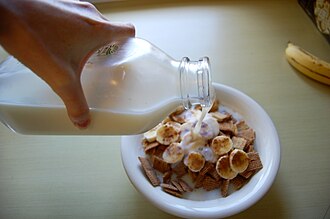
Photo: Wikipedia
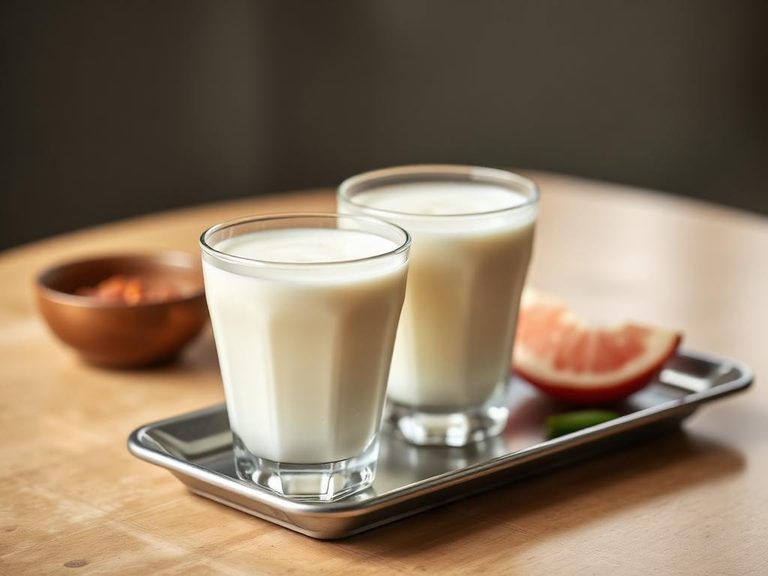
This is the quintessential 'skim milk'—a clear, watery white liquid with a clean, slightly sweet taste and a light, non-coating mouthfeel. Its standout feature is being a low-calorie powerhouse, delivering a full 3.4g of high-quality protein and a significant calcium boost per 100g, all with virtually no fat.
Calorie split: 39% protein · 56% carbs · 5% fat
↓ Full nutrition💚 Why it's loved
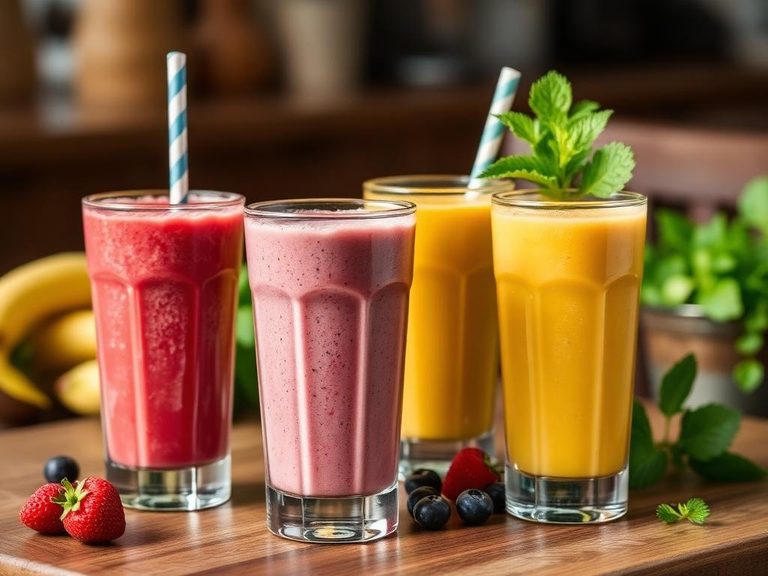
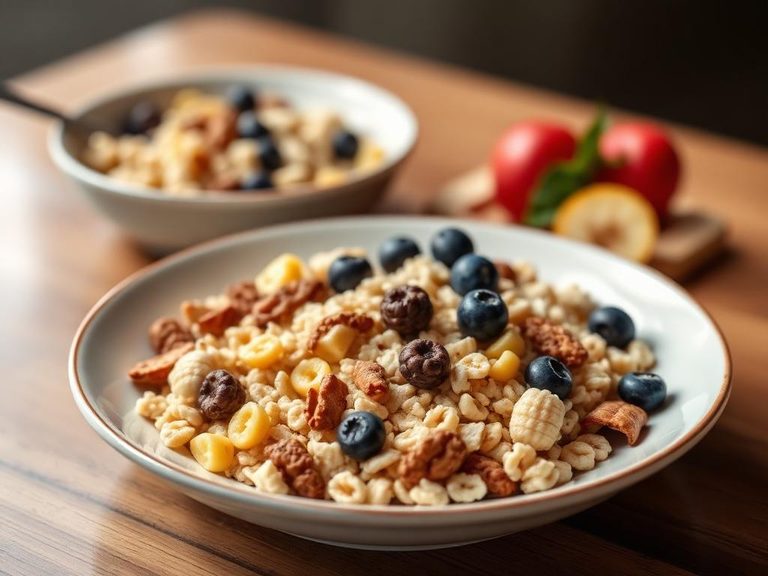
People love it as a pure, protein-rich base for smoothies, coffee, and cereal that doesn't add extra fat or calories. It's a dietary staple in many cultures, valued for its clean taste and nutritional density without heaviness.
⚠️ Watch-outs & how to enjoy it better
Its thin, watery texture can feel unsatisfying or 'skimpy' to those accustomed to whole milk. For individuals with lactose intolerance, it can cause digestive discomfort; a concrete tip is to consume it in smaller portions with a meal or opt for a lactose-free version.
Key benefits
- Excellent source of high-quality, complete protein for muscle maintenance.
- Fortified with calcium, crucial for bone and dental health.
- Very low in calories and fat, making it ideal for weight management.
- Provides essential nutrients like vitamin D and B12 when fortified.
- A hydrating, lactose-containing beverage for those who tolerate it.
🍽️ Popular dishes
🌍 Where it's eaten
💡 Did you know?
The process of 'skimming' milk to remove cream dates back to ancient times, but commercial fat-free milk as we know it became widely available only after the development of efficient centrifugal separators in the late 19th century.
Full nutrition (USDA data · scales with serving)
| Water | 90.8 g |
| Energy | 35.0 kcal |
| Energy | 145 kj |
| Protein | 3.4 g |
| Total lipid (fat) | 0.18 g |
| Ash | 0.77 g |
| Carbohydrate, by difference | 4.8 g |
| Fiber, total dietary | 0.00 g |
| Total Sugars | 4.8 g |
| Calcium, Ca | 204 mg |
| Iron, Fe | 0.04 mg |
| Magnesium, Mg | 11.0 mg |
| Phosphorus, P | 101 mg |
| Potassium, K | 166 mg |
| Sodium, Na | 52.0 mg |
| Zinc, Zn | 0.40 mg |
| Copper, Cu | 0.01 mg |
| Selenium, Se | 2.1 ug |
| Vitamin C, total ascorbic acid | 1.0 mg |
| Thiamin | 0.04 mg |
| Riboflavin | 0.14 mg |
| Niacin | 0.09 mg |
| Vitamin B-6 | 0.04 mg |
| Folate, total | 5.0 ug |
| Folic acid | 0.00 ug |
| Folate, food | 5.0 ug |
| Folate, DFE | 5.0 ug |
| Choline, total | 16.0 mg |
| Vitamin B-12 | 0.38 ug |
| Vitamin B-12, added | 0.00 ug |
| Vitamin A, RAE | 137 ug |
| Retinol | 137 ug |
| Carotene, beta | 0.00 ug |
| Carotene, alpha | 0.00 ug |
| Cryptoxanthin, beta | 0.00 ug |
| Vitamin A, IU | 458 iu |
| Lycopene | 0.00 ug |
| Lutein + zeaxanthin | 0.00 ug |
| Vitamin E (alpha-tocopherol) | 0.01 mg |
| Vitamin E, added | 0.00 mg |
| Vitamin D (D2 + D3), International Units | 47.0 iu |
| Vitamin D (D2 + D3) | 1.2 ug |
| Vitamin D3 (cholecalciferol) | 1.2 ug |
| Vitamin K (phylloquinone) | 0.00 ug |
| Alcohol, ethyl | 0.00 g |
| Caffeine | 0.00 mg |
| Theobromine | 0.00 mg |
Fat & fatty acid profile (per 100g)
| Fatty acids, total saturated | 0.12 g |
| SFA 4:0 | 0.01 g |
| SFA 6:0 | 0.00 g |
| SFA 8:0 | 0.00 g |
| SFA 10:0 | 0.00 g |
| SFA 12:0 | 0.00 g |
| SFA 14:0 | 0.02 g |
| SFA 16:0 | 0.05 g |
| SFA 18:0 | 0.02 g |
| Fatty acids, total monounsaturated | 0.05 g |
| MUFA 16:1 | 0.01 g |
| MUFA 18:1 | 0.04 g |
| MUFA 20:1 | 0.00 g |
| MUFA 22:1 | 0.00 g |
| Fatty acids, total polyunsaturated | 0.01 g |
| PUFA 18:2 | 0.01 g |
| PUFA 18:3 | 0.00 g |
| PUFA 18:4 | 0.00 g |
| PUFA 20:4 | 0.00 g |
| PUFA 20:5 n-3 (EPA) | 0.00 g |
| PUFA 22:5 n-3 (DPA) | 0.00 g |
| PUFA 22:6 n-3 (DHA) | 0.00 g |
| Cholesterol | 2.0 mg |
Amino acid profile (per 100g)
Estimated from Milk, reduced fat, fluid, 2% milkfat, with added nonfat milk solids and vitamin A and vitamin D — USDA does not publish this profile for Milk.
| Tryptophan | 0.05 g |
| Threonine | 0.16 g |
| Isoleucine | 0.21 g |
| Leucine | 0.34 g |
| Lysine | 0.28 g |
| Methionine | 0.09 g |
| Cystine | 0.03 g |
| Phenylalanine | 0.17 g |
| Tyrosine | 0.17 g |
| Valine | 0.23 g |
| Arginine | 0.13 g |
| Histidine | 0.09 g |
| Alanine | 0.12 g |
| Aspartic acid | 0.26 g |
| Glutamic acid | 0.73 g |
| Glycine | 0.07 g |
| Proline | 0.34 g |
| Serine | 0.19 g |
FAQ
Is fat-free milk less nutritious than whole milk?
Not in terms of protein, calcium, or most vitamins. The primary difference is the removal of fat, which also removes fat-soluble vitamins (A, D, E, K). Most commercial fat-free milk is fortified with vitamins A and D to compensate.
Why does it taste 'thinner' than whole milk?
Milk fat contributes significantly to the creamy mouthfeel and perceived richness. Removing it leaves the liquid proteins, carbohydrates (lactose), and minerals, resulting in a lighter, more watery texture and a cleaner, slightly sweeter taste profile.
Can I use it as a 1:1 substitute for whole milk in recipes?
For most baking (cakes, muffins) and savory sauces, yes. However, in recipes where fat is key for tenderness or flavor (like custards or some creamy soups), the final product may be less rich. It works perfectly in pancakes, breads, and thinning sauces.
Nutrient density (calculated · NRF9.3)
Nutrient Rich Foods index: beneficial nutrients (protein, fiber, vitamins, minerals) minus saturated fat, added sugar & sodium, per 100 kcal.
NRF9.3 index — Fulgoni, Keast & Drewnowski, 2009. Computed from USDA nutrients.
Weight-loss friendliness (composite index)
Energy density 0.35 kcal/g · 39% calories from protein · 0.0 g fiber · 4.8 g sugar per 100 g.
Composite of energy density (Rolls et al., 1999), protein & fiber satiety, minus sugar. A calculated heuristic — ranks satiety-per-calorie, not a clinical measure.
Dietary load (calculated from USDA values)
Potential renal acid load. Positive = acid-forming, negative = alkaline-forming.
Sodium-to-potassium ratio: 0.31 (lower is better — aim for ≤ 1)
Sodium:potassium per WHO potassium guidance. Computed from USDA nutrients.