

Melon, banana (Navajo)
Whole food · American Indian/Alaska Native Foods

Photo: Wikipedia
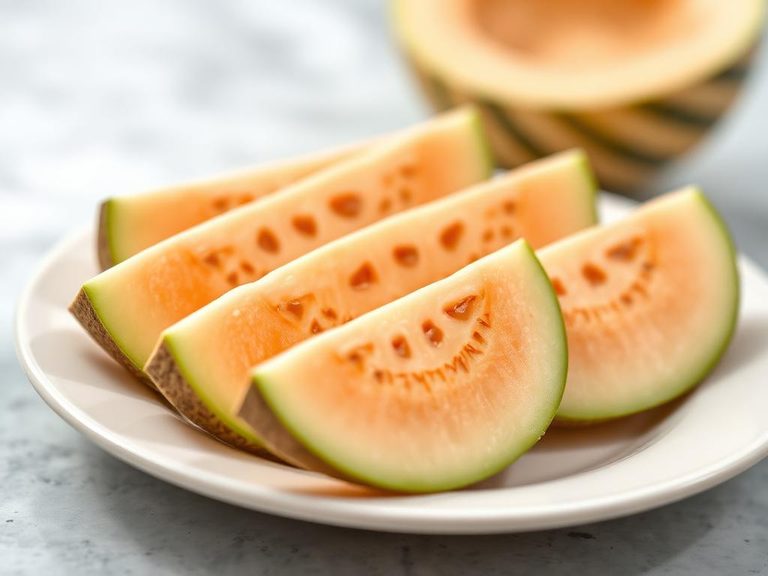
The Navajo melon, often called a 'Navajo melon' or 'Navajo watermelon,' is a small, sweet, and crisp heirloom fruit from the Cucurbita pepo family, prized by the Diné (Navajo) people. Its flesh is typically orange or yellow with a refreshing, juicy texture and a sweet, mildly honeyed flavor. Nutritionally, it's a low-calorie, hydrating snack with a notable amount of natural sugars for quick energy.
Calorie split: 16% protein · 76% carbs · 8% fat
↓ Full nutrition💚 Why it's loved
People cherish the Navajo melon for its intense, authentic sweetness and crisp, juicy texture that makes it a perfect refreshing treat. It's also valued as a symbol of cultural heritage and resilience, representing traditional agricultural knowledge.
⚠️ Watch-outs & how to enjoy it better
Its high natural sugar content (3.36g per 100g) can cause blood-sugar spikes if consumed in large quantities by individuals managing diabetes. To counteract this, pair a serving with a source of protein or healthy fat (like a handful of nuts) and practice portion control. The seeds and rind are typically not eaten.
Key benefits
- Extremely low in calories (21 kcal per 100g)
- Good source of hydration due to high water content
- Provides quick, natural energy from its sugars
- Contains vitamin A precursors (beta-carotene) from its orange flesh
- A culturally significant heirloom crop preserving biodiversity
🍽️ Popular dishes
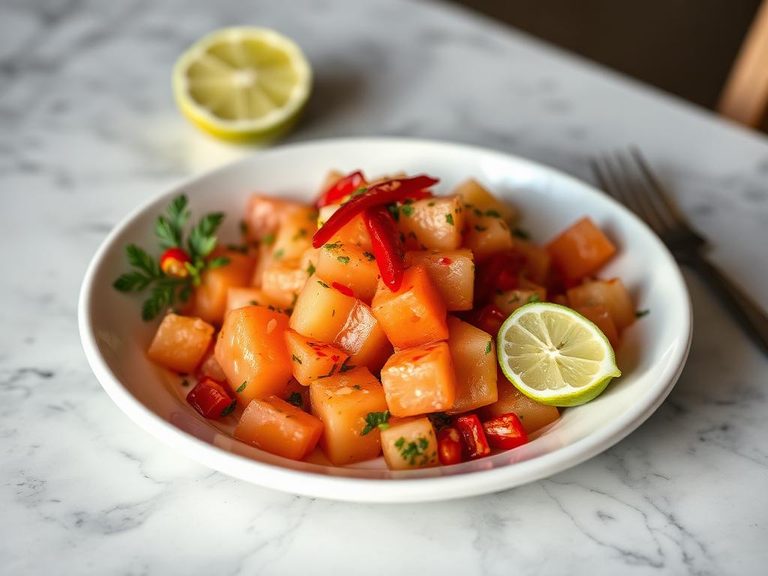
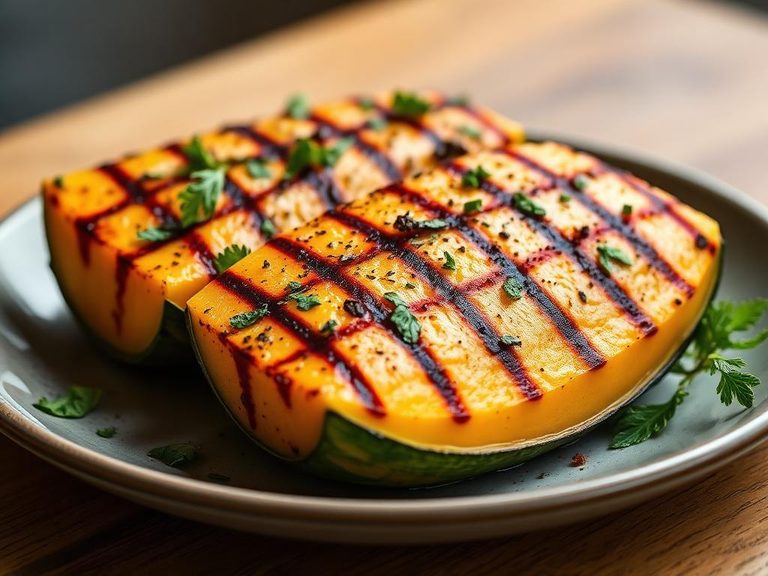
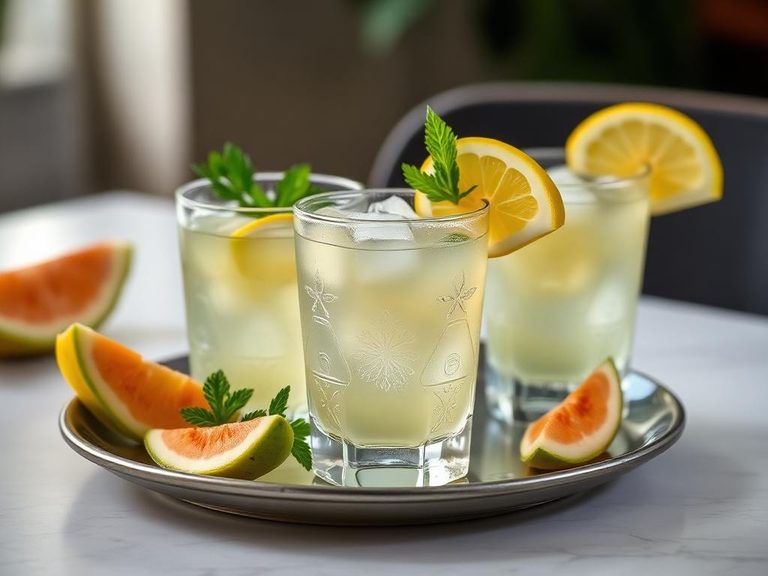
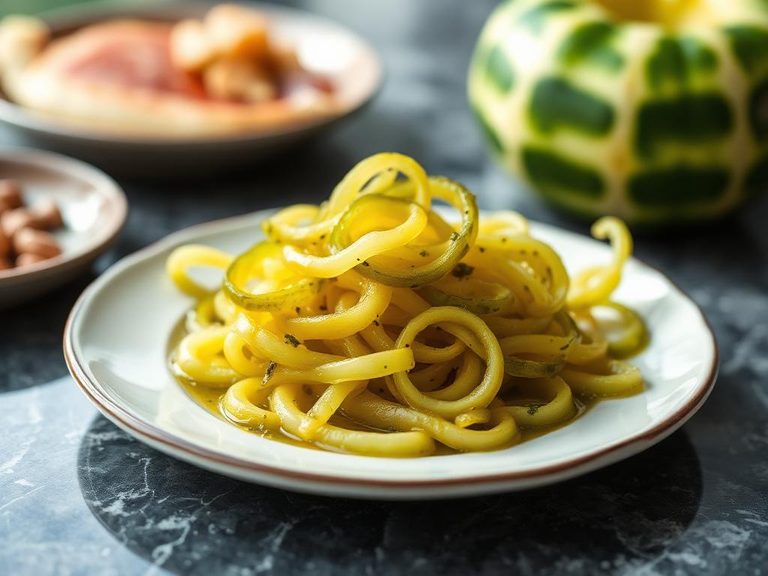
🌍 Where it's eaten
💡 Did you know?
The Navajo melon is a key part of the 'Three Sisters' agricultural tradition, where it is grown alongside corn and beans in a symbiotic planting system that sustains soil health and provides a balanced diet.
Full nutrition (USDA data · scales with serving)
| Water | 94.7 g |
| Energy | 21.0 kcal |
| Energy | 90.0 kj |
| Protein | 0.84 g |
| Total lipid (fat) | 0.20 g |
| Ash | 0.24 g |
| Carbohydrate, by difference | 4.1 g |
| Fiber, total dietary | 0.30 g |
| Total Sugars | 3.4 g |
| Sucrose | 0.00 g |
| Glucose | 1.3 g |
| Fructose | 2.1 g |
| Lactose | 0.00 g |
| Maltose | 0.00 g |
| Galactose | 0.00 g |
| Starch | 0.00 g |
| Calcium, Ca | 13.0 mg |
| Iron, Fe | 0.21 mg |
| Magnesium, Mg | 10.0 mg |
| Phosphorus, P | 9.0 mg |
| Potassium, K | 140 mg |
| Sodium, Na | 11.0 mg |
| Zinc, Zn | 0.14 mg |
| Copper, Cu | 0.04 mg |
| Manganese, Mn | 0.04 mg |
| Selenium, Se | 0.40 ug |
| Vitamin C, total ascorbic acid | 8.1 mg |
| Thiamin | 0.02 mg |
| Riboflavin | 0.02 mg |
| Niacin | 0.46 mg |
| Pantothenic acid | 0.07 mg |
| Vitamin B-6 | 0.05 mg |
| Folate, total | 20.0 ug |
| Folate, food | 20.0 ug |
| Vitamin E (alpha-tocopherol) | 0.00 mg |
| Tocopherol, beta | 0.00 mg |
| Tocopherol, gamma | 0.00 mg |
| Tocopherol, delta | 0.00 mg |
| Tocotrienol, alpha | 0.00 mg |
| Tocotrienol, beta | 0.00 mg |
| Tocotrienol, gamma | 0.00 mg |
| Tocotrienol, delta | 0.00 mg |
| Vitamin K (phylloquinone) | 4.9 ug |
| Vitamin K (Dihydrophylloquinone) | 0.00 ug |
Fat & fatty acid profile (per 100g)
Estimated from Melons, honeydew, raw — USDA does not publish this profile for Melon.
| Fatty acids, total saturated | 0.04 g |
| SFA 4:0 | 0.00 g |
| SFA 6:0 | 0.00 g |
| SFA 8:0 | 0.00 g |
| SFA 10:0 | 0.00 g |
| SFA 12:0 | 0.00 g |
| SFA 14:0 | 0.00 g |
| SFA 16:0 | 0.03 g |
| SFA 18:0 | 0.00 g |
| Fatty acids, total monounsaturated | 0.00 g |
| MUFA 16:1 | 0.00 g |
| MUFA 18:1 | 0.00 g |
| MUFA 20:1 | 0.00 g |
| MUFA 22:1 | 0.00 g |
| Fatty acids, total polyunsaturated | 0.06 g |
| PUFA 18:2 | 0.03 g |
| PUFA 18:3 | 0.03 g |
| PUFA 18:4 | 0.00 g |
| PUFA 20:4 | 0.00 g |
| PUFA 20:5 n-3 (EPA) | 0.00 g |
| PUFA 22:5 n-3 (DPA) | 0.00 g |
| PUFA 22:6 n-3 (DHA) | 0.00 g |
| Fatty acids, total trans | 0.00 g |
| Cholesterol | 0.00 mg |
Amino acid profile (per 100g)
Estimated from Melons, honeydew, raw — USDA does not publish this profile for Melon.
| Tryptophan | 0.01 g |
| Threonine | 0.01 g |
| Isoleucine | 0.01 g |
| Leucine | 0.02 g |
| Lysine | 0.02 g |
| Methionine | 0.01 g |
| Cystine | 0.01 g |
| Phenylalanine | 0.01 g |
| Tyrosine | 0.01 g |
| Valine | 0.02 g |
| Arginine | 0.01 g |
| Histidine | 0.01 g |
| Alanine | 0.04 g |
| Aspartic acid | 0.09 g |
| Glutamic acid | 0.15 g |
| Glycine | 0.02 g |
| Proline | 0.01 g |
| Serine | 0.02 g |
FAQ
How is a Navajo melon different from a regular watermelon?
Navajo melons are typically smaller, with orange or yellow flesh, and belong to the Cucurbita pepo species (like squash), whereas common watermelons are Cucurbita lanatus with red or pink flesh. They have a distinct, sweeter flavor profile.
Can I eat the seeds and rind?
Traditionally, the flesh is the primary part consumed. The seeds are often discarded, and the rind is not typically eaten raw but may be pickled or cooked in some preparations.
Is it suitable for a low-sugar diet?
While low in calories, it contains natural sugars. For strict low-sugar diets, it should be consumed in moderation, ideally paired with protein or fat to help stabilize blood sugar response.
Nutrient density (calculated · NRF9.3)
Nutrient Rich Foods index: beneficial nutrients (protein, fiber, vitamins, minerals) minus saturated fat, added sugar & sodium, per 100 kcal.
NRF9.3 index — Fulgoni, Keast & Drewnowski, 2009. Computed from USDA nutrients.
Weight-loss friendliness (composite index)
Energy density 0.21 kcal/g · 16% calories from protein · 0.3 g fiber · 3.4 g sugar per 100 g.
Composite of energy density (Rolls et al., 1999), protein & fiber satiety, minus sugar. A calculated heuristic — ranks satiety-per-calorie, not a clinical measure.
Dietary load (calculated from USDA values)
Potential renal acid load. Positive = acid-forming, negative = alkaline-forming.
Sodium-to-potassium ratio: 0.08 (lower is better — aim for ≤ 1)
Sodium:potassium per WHO potassium guidance. Computed from USDA nutrients.