

Pickled melon rind
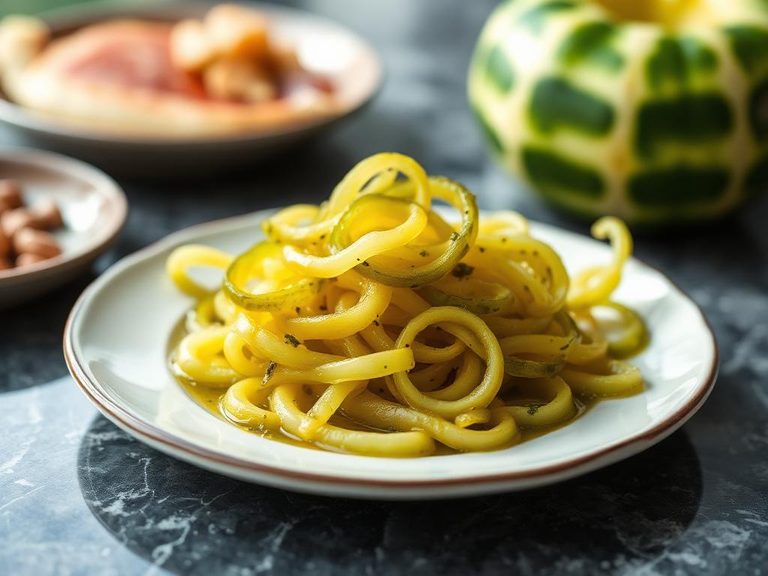
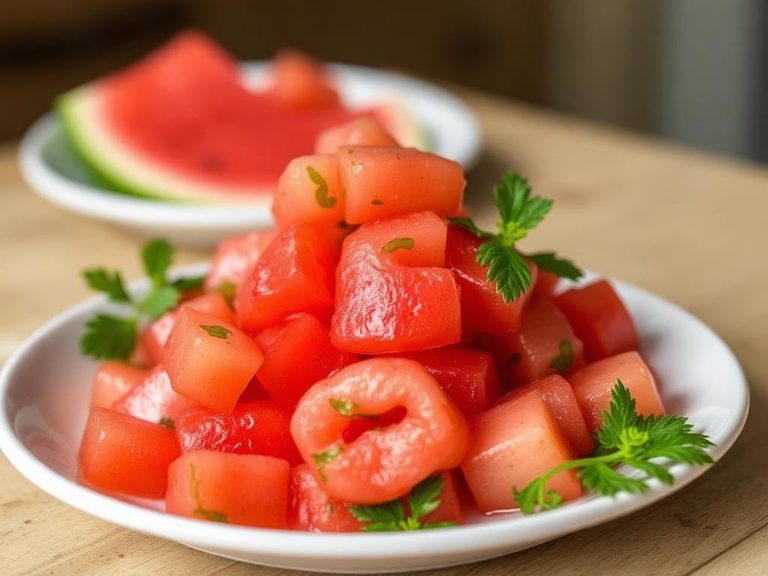
Pickled melon rind is a traditional Chinese condiment or side dish made by preserving the outer green skin of winter melon or other melons in a brine of salt, sugar, and sometimes vinegar. It transforms a typically discarded part of the vegetable into a crunchy, savory, and tangy treat. This practice is common in many regions of China, particularly in home-style cooking and as a way to reduce food waste.
🍽️ Nutrition at a glance
This dish is very low in calories, fat, and protein, with most of its energy coming from small amounts of carbohydrates, primarily from added sugar. It is a good source of dietary fiber and provides some essential minerals like potassium, though its high sodium content is a key nutritional consideration.
Nutrition breakdown
| Calories | 25 kcal |
| Protein | 0.5 g |
| Carbs | 5 g |
| Fat | 0 g |
| Fiber | 1.5 g |
| Sugar | 3 g |
| Sodium | 350 mg |
| Potassium | 80 mg |
| Vitamin C | 2 mg |
| Vitamin K | 1 mcg |
| Calcium | 10 mg |
| Iron | 0.3 mg |
| Magnesium | 5 mg |
| Phosphorus | 8 mg |
| Manganese | 0.1 mg |
Per 1/2 cup (about 80 g) · estimated, varies by recipe
💡 What's interesting
Culturally, pickled melon rind is a classic example of Chinese culinary frugality and the art of preservation, turning humble scraps into a flavorful dish. Nutritionally, it retains the fiber and some minerals from the melon rind while the fermentation or pickling process can create beneficial probiotics if naturally fermented.
🍽️ Related dishes
AI estimate may be inaccurate · Terms