

Lambsquarters, cooked, boiled, drained, without salt
Whole food · Vegetables and Vegetable Products

Photo: Wikipedia
Lambsquarters, also known as wild spinach, is a nutrient-dense leafy green with a delicate, slightly earthy flavor reminiscent of spinach but with a subtle nutty finish. When boiled and drained, its texture becomes tender yet retains a pleasant, non-slimy bite. It's a nutritional powerhouse, packing over 3g of protein and more than 2g of fiber per 100g for just 32 calories.
Calorie split: 33% protein · 51% carbs · 16% fat
↓ Full nutrition💚 Why it's loved
People love it for its wild, foraged appeal and its ability to add a deep, savory green flavor to dishes without overpowering them. It's cherished in traditional cuisines as a free, abundant, and incredibly nutritious spring green.
⚠️ Watch-outs & how to enjoy it better
Its high oxalate content can be a concern for those prone to kidney stones or for mineral absorption. To mitigate this, always boil it in plenty of water and drain thoroughly, which can reduce oxalates by up to 50%. Pairing it with a source of fat (like olive oil) or protein can also aid nutrient absorption.
Key benefits
- Excellent source of vitamin K for bone health.
- High in vitamin A and antioxidants like beta-carotene.
- Provides a good amount of plant-based protein.
- Rich in dietary fiber for digestive health.
- Contains minerals like calcium, iron, and manganese.
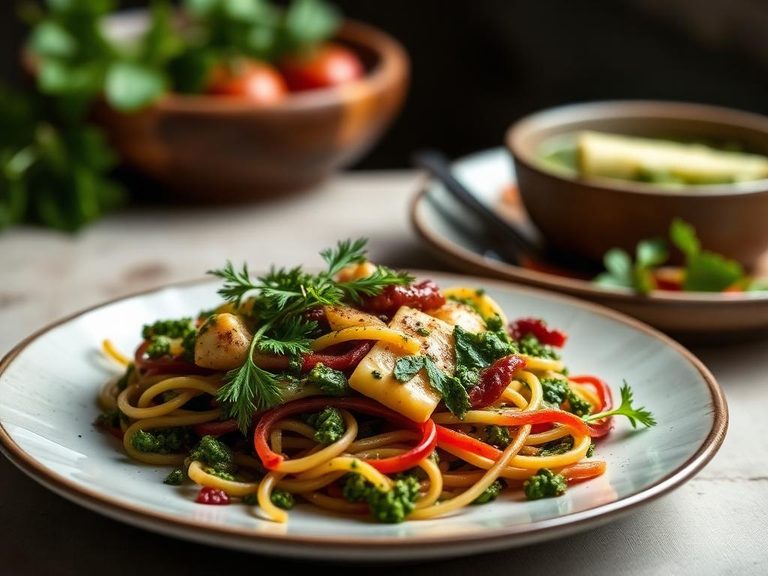
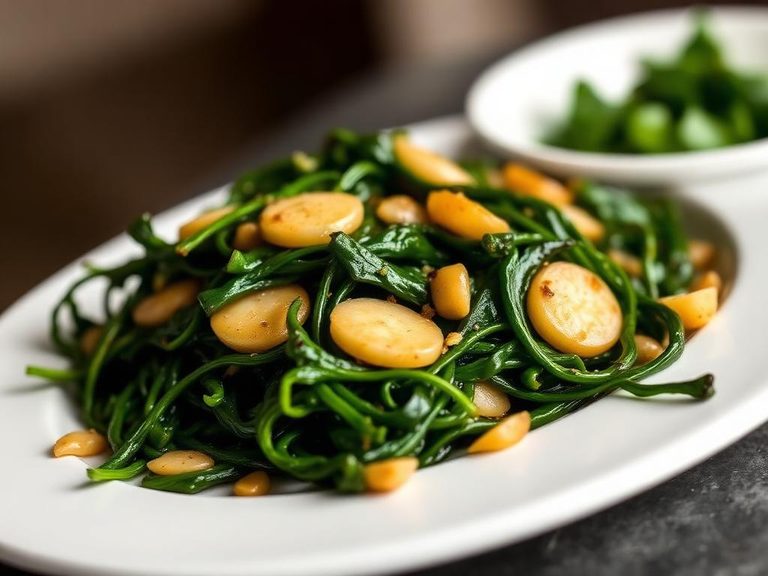
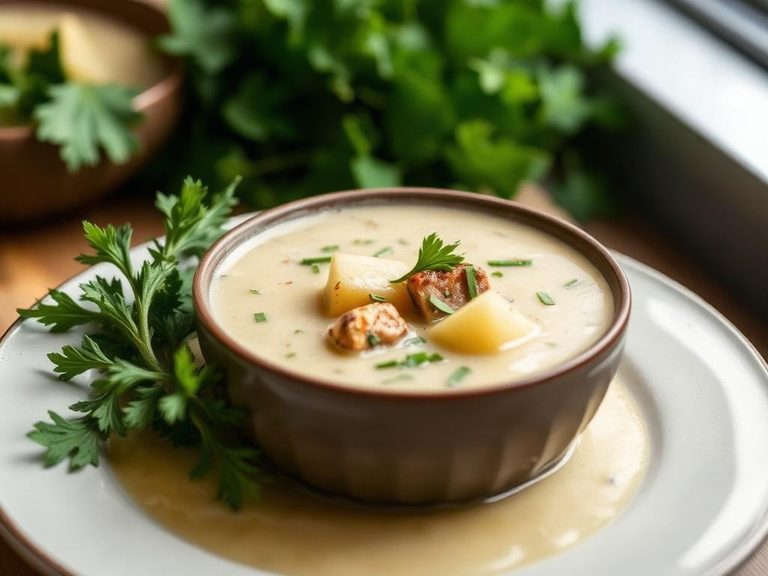
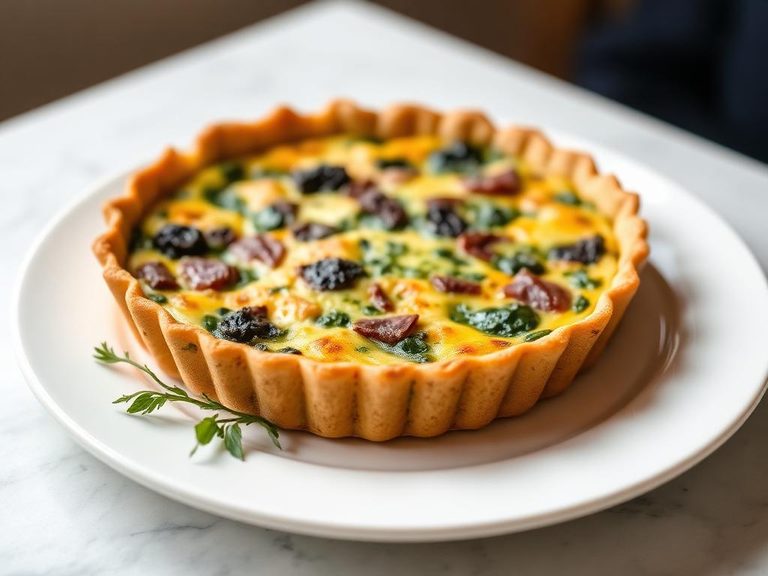
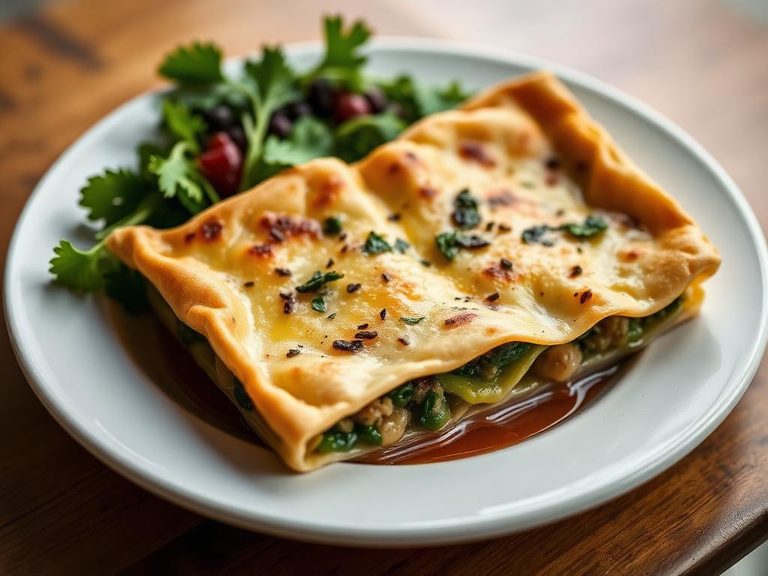
🍽️ Popular dishes
🌍 Where it's eaten
💡 Did you know?
Lambsquarters seeds are a complete protein and were a staple grain for many Native American tribes, who would parch and grind them into flour.
Full nutrition (USDA data · scales with serving)
| Water | 88.9 g |
| Energy | 32.0 kcal |
| Energy | 134 kj |
| Protein | 3.2 g |
| Total lipid (fat) | 0.70 g |
| Ash | 2.2 g |
| Carbohydrate, by difference | 5.0 g |
| Fiber, total dietary | 2.1 g |
| Total Sugars | 0.62 g |
| Calcium, Ca | 258 mg |
| Iron, Fe | 0.70 mg |
| Magnesium, Mg | 23.0 mg |
| Phosphorus, P | 45.0 mg |
| Potassium, K | 288 mg |
| Sodium, Na | 29.0 mg |
| Zinc, Zn | 0.30 mg |
| Copper, Cu | 0.20 mg |
| Manganese, Mn | 0.53 mg |
| Selenium, Se | 0.90 ug |
| Vitamin C, total ascorbic acid | 37.0 mg |
| Thiamin | 0.10 mg |
| Riboflavin | 0.26 mg |
| Niacin | 0.90 mg |
| Pantothenic acid | 0.06 mg |
| Vitamin B-6 | 0.17 mg |
| Folate, total | 14.0 ug |
| Folic acid | 0.00 ug |
| Folate, food | 14.0 ug |
| Folate, DFE | 14.0 ug |
| Choline, total | 0.50 mg |
| Betaine | 0.30 mg |
| Vitamin B-12 | 0.00 ug |
| Vitamin B-12, added | 0.00 ug |
| Vitamin A, RAE | 391 ug |
| Retinol | 0.00 ug |
| Carotene, beta | 4688 ug |
| Carotene, alpha | 4.0 ug |
| Cryptoxanthin, beta | 0.00 ug |
| Vitamin A, IU | 7816 iu |
| Lycopene | 0.00 ug |
| Lutein + zeaxanthin | 1857 ug |
| Vitamin E (alpha-tocopherol) | 1.9 mg |
| Vitamin E, added | 0.00 mg |
| Vitamin D (D2 + D3), International Units | 0.00 iu |
| Vitamin D (D2 + D3) | 0.00 ug |
| Vitamin K (phylloquinone) | 494 ug |
| Alcohol, ethyl | 0.00 g |
| Caffeine | 0.00 mg |
| Theobromine | 0.00 mg |
Fat & fatty acid profile (per 100g)
| Fatty acids, total saturated | 0.05 g |
| SFA 4:0 | 0.00 g |
| SFA 6:0 | 0.00 g |
| SFA 8:0 | 0.00 g |
| SFA 10:0 | 0.00 g |
| SFA 12:0 | 0.00 g |
| SFA 14:0 | 0.00 g |
| SFA 16:0 | 0.04 g |
| SFA 18:0 | 0.00 g |
| Fatty acids, total monounsaturated | 0.13 g |
| MUFA 16:1 | 0.00 g |
| MUFA 18:1 | 0.10 g |
| MUFA 20:1 | 0.01 g |
| MUFA 22:1 | 0.02 g |
| Fatty acids, total polyunsaturated | 0.31 g |
| PUFA 18:2 | 0.27 g |
| PUFA 18:3 | 0.03 g |
| PUFA 18:4 | 0.00 g |
| PUFA 20:4 | 0.00 g |
| PUFA 20:5 n-3 (EPA) | 0.00 g |
| PUFA 22:5 n-3 (DPA) | 0.00 g |
| PUFA 22:6 n-3 (DHA) | 0.00 g |
| Fatty acids, total trans | 0.00 g |
| Cholesterol | 0.00 mg |
Amino acid profile (per 100g)
| Tryptophan | 0.03 g |
| Threonine | 0.12 g |
| Isoleucine | 0.19 g |
| Leucine | 0.27 g |
| Lysine | 0.27 g |
| Methionine | 0.04 g |
| Cystine | 0.07 g |
| Phenylalanine | 0.13 g |
| Tyrosine | 0.13 g |
| Valine | 0.17 g |
| Arginine | 0.19 g |
| Histidine | 0.09 g |
| Alanine | 0.24 g |
| Aspartic acid | 0.33 g |
| Glutamic acid | 0.40 g |
| Glycine | 0.19 g |
| Proline | 0.17 g |
| Serine | 0.15 g |
FAQ
Is lambsquarters the same as spinach?
No, though they are related (both in the Amaranthaceae family) and taste similar. Lambsquarters is a wild plant, often foraged, with a slightly more robust, earthy flavor.
How do I prepare it for cooking?
Wash thoroughly to remove dirt. For boiled preparations, use a large pot of salted water, cook until tender (3-5 minutes), and drain well. This also helps reduce oxalate levels.
Can I eat it raw?
Young, tender leaves can be used in salads, but cooking is recommended for mature leaves to improve digestibility and reduce oxalates. Always wash well if eating raw.
Nutrient density (calculated · NRF9.3)
Nutrient Rich Foods index: beneficial nutrients (protein, fiber, vitamins, minerals) minus saturated fat, added sugar & sodium, per 100 kcal.
NRF9.3 index — Fulgoni, Keast & Drewnowski, 2009. Computed from USDA nutrients.
Weight-loss friendliness (composite index)
Energy density 0.32 kcal/g · 40% calories from protein · 2.1 g fiber · 0.6 g sugar per 100 g.
Composite of energy density (Rolls et al., 1999), protein & fiber satiety, minus sugar. A calculated heuristic — ranks satiety-per-calorie, not a clinical measure.
Dietary load (calculated from USDA values)
Potential renal acid load. Positive = acid-forming, negative = alkaline-forming.
Sodium-to-potassium ratio: 0.10 (lower is better — aim for ≤ 1)
Sodium:potassium per WHO potassium guidance. Computed from USDA nutrients.