

Lamb, composite of trimmed retail cuts, separable fat, trimmed to 1/4" fat, choice, cooked
Whole food · Lamb, Veal, and Game Products

Photo: Wikipedia
This is lamb fat, meticulously trimmed to a quarter-inch layer from choice-grade cuts and cooked until rendered. It possesses a rich, buttery, and intensely savory flavor with a smooth, melt-in-the-mouth texture when warm. Nutritionally, it is almost pure energy, providing a dense 586 calories and 59 grams of fat per 100g with negligible protein or carbohydrates.
Calorie split: 8% protein · 0% carbs · 92% fat
↓ Full nutrition💚 Why it's loved
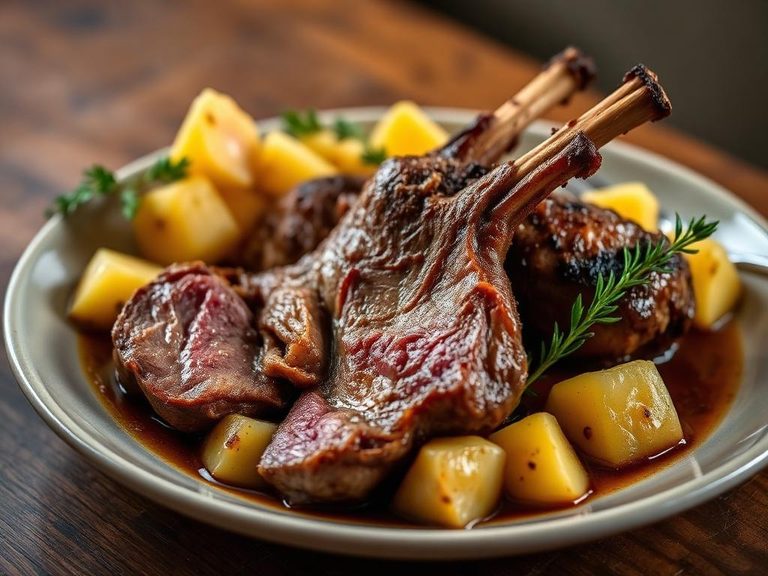
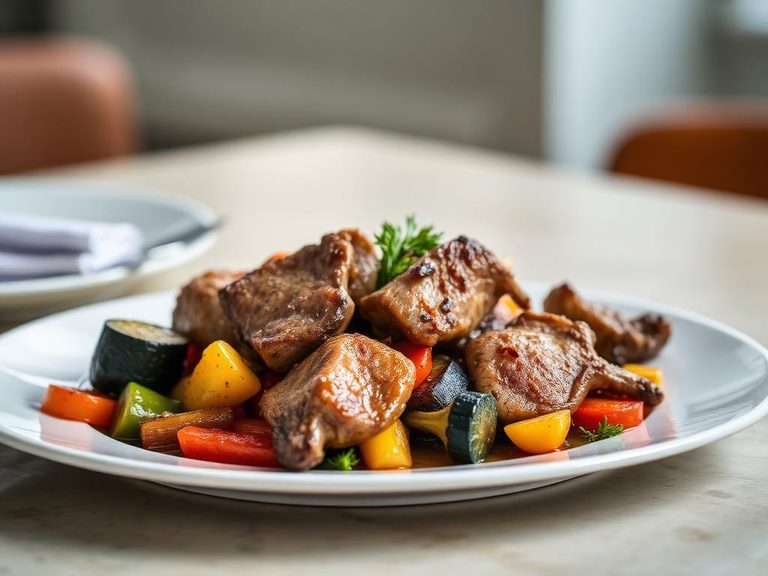
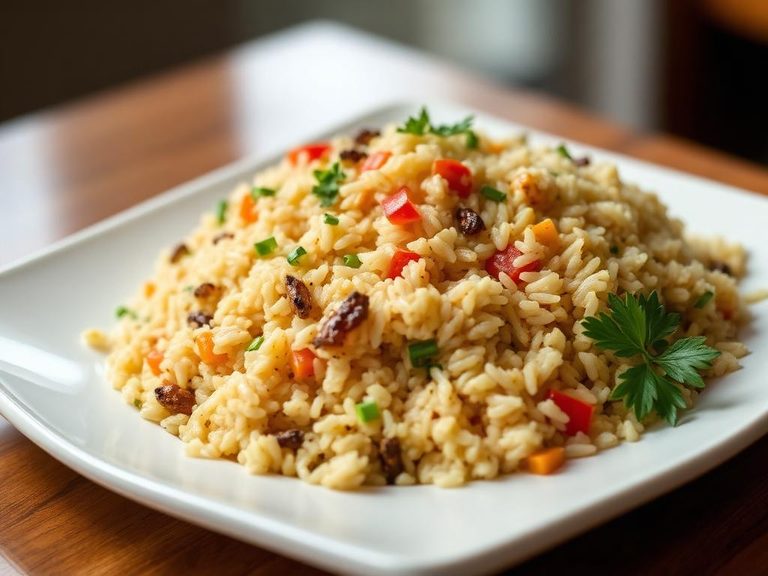
People cherish it for its unparalleled depth of flavor, which forms the savory backbone of countless traditional dishes, from British roast dinners to Middle Eastern rice pilafs. Its ability to impart a luxurious, succulent mouthfeel and crispiness to foods makes it a prized culinary ingredient.
⚠️ Watch-outs & how to enjoy it better
Its extremely high saturated fat and calorie content make it a food to consume sparingly, especially for those managing heart health or weight. To enjoy it wisely, use it as a potent flavoring agent rather than a primary component, and balance meals with abundant vegetables and lean proteins. Rendering it slowly and discarding excess liquid can also reduce overall fat intake in a dish.
Key benefits
- Excellent source of fat-soluble vitamins A, D, E, and K.
- Provides conjugated linoleic acid (CLA), a naturally occurring fatty acid.
- High in monounsaturated fats, similar to those found in olive oil.
- A traditional, calorie-dense fuel for cold climates and high-energy needs.
- Can be used as a high-heat cooking medium with a high smoke point.
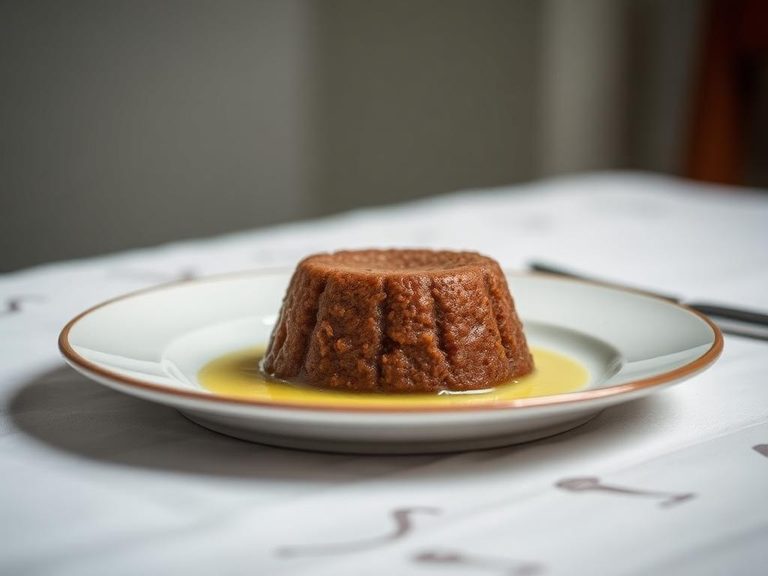
🍽️ Popular dishes
🌍 Where it's eaten
💡 Did you know?
Lamb tallow (rendered lamb fat) was historically used not just for cooking, but also to make soap, candles, and even leather waterproofing.
Full nutrition (USDA data · scales with serving)
| Water | 26.1 g |
| Energy | 586 kcal |
| Energy | 2452 kj |
| Protein | 12.2 g |
| Total lipid (fat) | 59.2 g |
| Ash | 0.68 g |
| Carbohydrate, by difference | 0.00 g |
| Fiber, total dietary | 0.00 g |
| Total Sugars | 0.00 g |
| Calcium, Ca | 23.0 mg |
| Iron, Fe | 1.3 mg |
| Magnesium, Mg | 13.0 mg |
| Phosphorus, P | 114 mg |
| Potassium, K | 194 mg |
| Sodium, Na | 58.0 mg |
| Zinc, Zn | 1.7 mg |
| Copper, Cu | 0.09 mg |
| Manganese, Mn | 0.00 mg |
| Selenium, Se | 18.8 ug |
| Vitamin C, total ascorbic acid | 0.00 mg |
| Thiamin | 0.07 mg |
| Riboflavin | 0.17 mg |
| Niacin | 7.8 mg |
| Pantothenic acid | 0.58 mg |
| Vitamin B-6 | 0.04 mg |
| Folate, total | 3.0 ug |
| Folic acid | 0.00 ug |
| Folate, food | 3.0 ug |
| Folate, DFE | 3.0 ug |
| Choline, total | 54.3 mg |
| Betaine | 7.1 mg |
| Vitamin B-12 | 2.4 ug |
| Vitamin B-12, added | 0.00 ug |
| Vitamin A, RAE | 0.00 ug |
| Retinol | 0.00 ug |
| Carotene, beta | 0.00 ug |
| Carotene, alpha | 0.00 ug |
| Cryptoxanthin, beta | 0.00 ug |
| Vitamin A, IU | 0.00 iu |
| Lycopene | 0.00 ug |
| Lutein + zeaxanthin | 0.00 ug |
| Vitamin E (alpha-tocopherol) | 0.04 mg |
| Vitamin E, added | 0.00 mg |
| Vitamin D (D2 + D3), International Units | 2.0 iu |
| Vitamin D (D2 + D3) | 0.10 ug |
| Vitamin D3 (cholecalciferol) | 0.10 ug |
| Vitamin K (phylloquinone) | 4.6 ug |
| Vitamin K (Dihydrophylloquinone) | 0.00 ug |
| Alcohol, ethyl | 0.00 g |
| Caffeine | 0.00 mg |
| Theobromine | 0.00 mg |
Fat & fatty acid profile (per 100g)
| Fatty acids, total saturated | 27.0 g |
| SFA 4:0 | 0.00 g |
| SFA 6:0 | 0.00 g |
| SFA 8:0 | 0.00 g |
| SFA 10:0 | 0.17 g |
| SFA 12:0 | 0.29 g |
| SFA 14:0 | 2.6 g |
| SFA 16:0 | 13.4 g |
| SFA 18:0 | 8.4 g |
| Fatty acids, total monounsaturated | 24.4 g |
| MUFA 16:1 | 1.7 g |
| MUFA 18:1 | 21.9 g |
| MUFA 20:1 | 0.00 g |
| MUFA 22:1 | 0.00 g |
| Fatty acids, total polyunsaturated | 4.5 g |
| PUFA 18:2 | 3.3 g |
| PUFA 18:3 | 1.1 g |
| PUFA 18:4 | 0.00 g |
| PUFA 20:4 | 0.10 g |
| PUFA 20:5 n-3 (EPA) | 0.00 g |
| PUFA 22:5 n-3 (DPA) | 0.00 g |
| PUFA 22:6 n-3 (DHA) | 0.00 g |
| Cholesterol | 114 mg |
Amino acid profile (per 100g)
| Tryptophan | 0.14 g |
| Threonine | 0.52 g |
| Isoleucine | 0.59 g |
| Leucine | 0.94 g |
| Lysine | 1.1 g |
| Methionine | 0.31 g |
| Cystine | 0.14 g |
| Phenylalanine | 0.49 g |
| Tyrosine | 0.41 g |
| Valine | 0.66 g |
| Arginine | 0.72 g |
| Histidine | 0.39 g |
| Alanine | 0.73 g |
| Aspartic acid | 1.1 g |
| Glutamic acid | 1.8 g |
| Glycine | 0.59 g |
| Proline | 0.51 g |
| Serine | 0.45 g |
FAQ
Is lamb fat the same as tallow?
Yes, when lamb fat is rendered (melted and strained), the resulting pure fat is called tallow. The nutritional profile is essentially the same.
How does it differ from beef fat?
Lamb fat has a distinctive, slightly gamy flavor that is more pronounced than beef fat. It also has a slightly different fatty acid profile, with marginally higher levels of certain saturated fats.
Can I use it for high-heat cooking like searing?
Yes, rendered lamb tallow has a high smoke point (around 250°C/480°F), making it excellent for searing, roasting, and frying, imparting a rich flavor.
Nutrient density (calculated · NRF9.3)
Nutrient Rich Foods index: beneficial nutrients (protein, fiber, vitamins, minerals) minus saturated fat, added sugar & sodium, per 100 kcal.
NRF9.3 index — Fulgoni, Keast & Drewnowski, 2009. Computed from USDA nutrients.
Weight-loss friendliness (composite index)
Energy density 5.86 kcal/g · 8% calories from protein · 0.0 g fiber · 0.0 g sugar per 100 g.
Composite of energy density (Rolls et al., 1999), protein & fiber satiety, minus sugar. A calculated heuristic — ranks satiety-per-calorie, not a clinical measure.
Dietary load (calculated from USDA values)
Potential renal acid load. Positive = acid-forming, negative = alkaline-forming.
Sodium-to-potassium ratio: 0.30 (lower is better — aim for ≤ 1)
Sodium:potassium per WHO potassium guidance. Computed from USDA nutrients.