

Kale, frozen, unprepared
Whole food · Vegetables and Vegetable Products

Photo: Wikipedia
Frozen kale is flash-frozen at peak freshness, locking in a deep, earthy flavor and a texture that becomes tender yet pleasantly hearty when cooked. It's a nutritional powerhouse, offering an impressive amount of protein and fiber for a vegetable with minimal calories and fat.
Calorie split: 31% protein · 57% carbs · 12% fat
↓ Full nutrition💚 Why it's loved
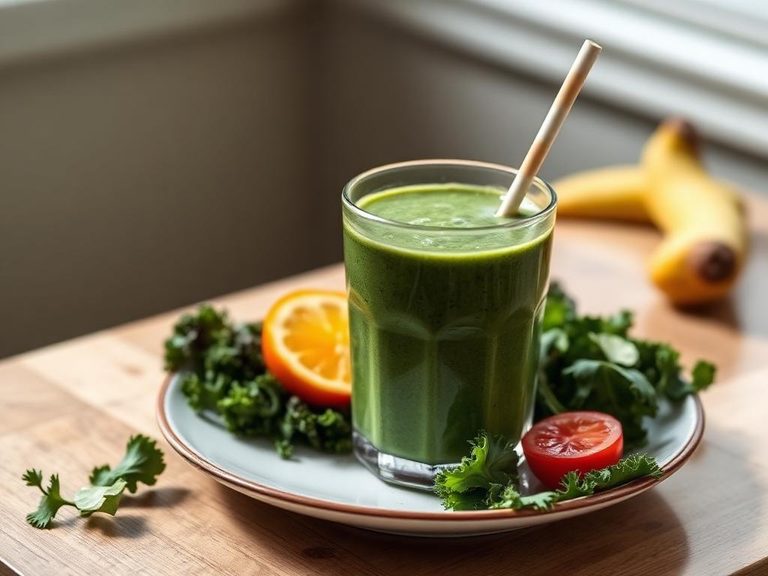
People love it for its convenience and year-round availability, delivering the robust, slightly peppery taste of fresh kale without the prep work. It's a versatile staple that can be seamlessly blended into smoothies, stirred into soups, or wilted into pasta dishes.
⚠️ Watch-outs & how to enjoy it better
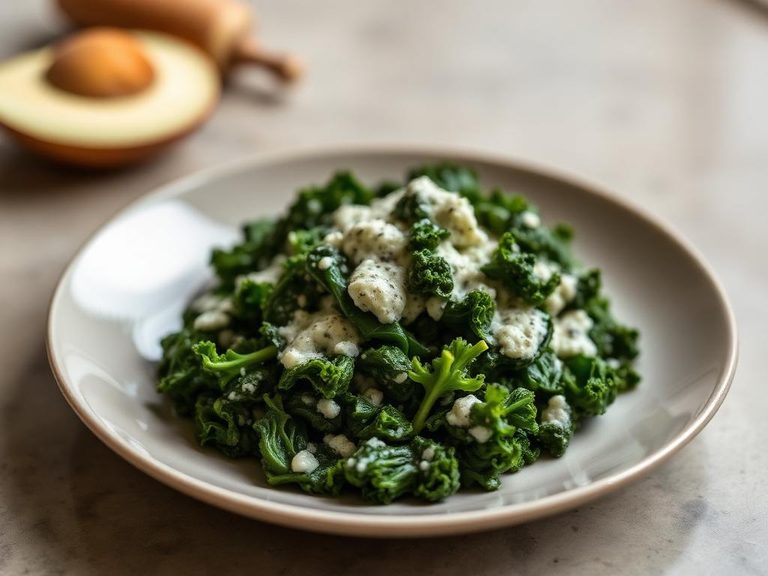
Some find its texture can become mushy if overcooked, and its strong flavor may be off-putting to those new to leafy greens. It contains oxalates, which can interfere with mineral absorption and may be a concern for individuals prone to kidney stones; pairing it with a calcium-rich food like cheese or yogurt can help mitigate this.
Key benefits
- Excellent source of vitamins K, A, and C
- High in fiber for digestive health
- Contains antioxidants like lutein and zeaxanthin
- Low in calories and naturally fat-free
- Provides plant-based protein
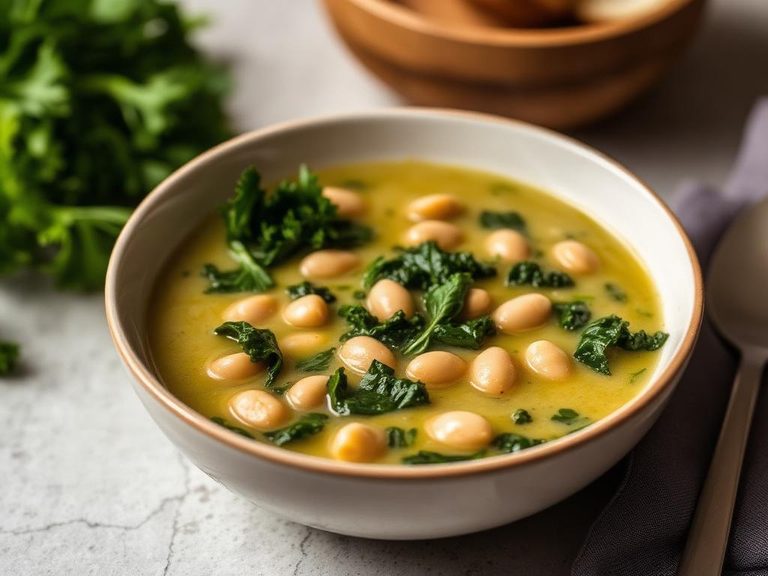
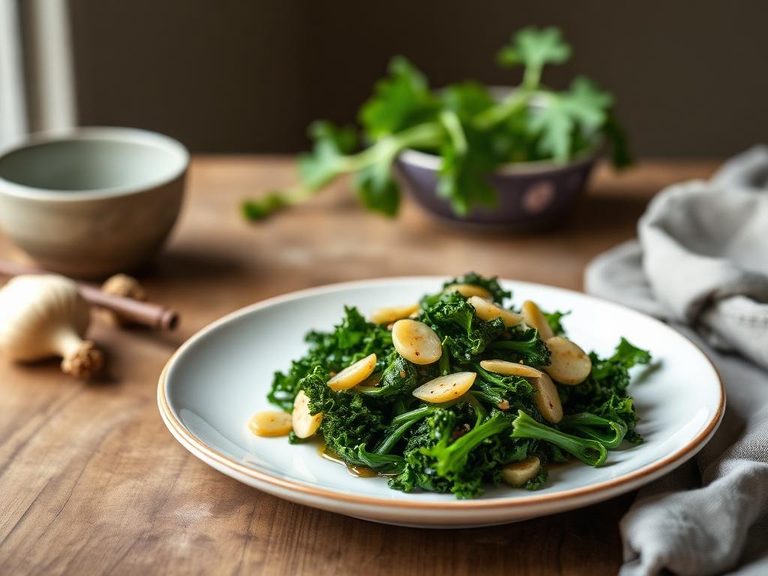
🍽️ Popular dishes
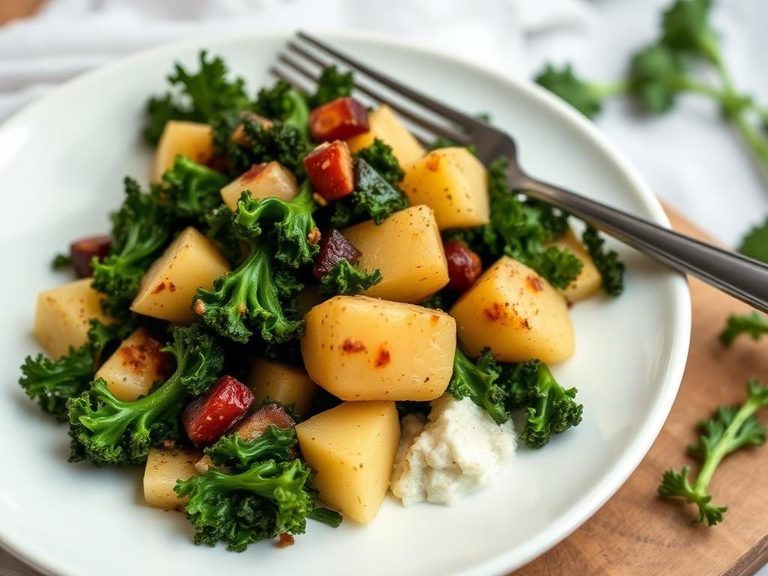
🌍 Where it's eaten
💡 Did you know?
Kale is a member of the cabbage family (Brassica oleracea) and is considered a 'superfood' because one cup of cooked kale provides over 100% of your daily recommended intake of vitamins K and A.
Full nutrition (USDA data · scales with serving)
| Water | 91.1 g |
| Energy | 28.0 kcal |
| Energy | 116 kj |
| Protein | 2.7 g |
| Total lipid (fat) | 0.46 g |
| Ash | 0.88 g |
| Carbohydrate, by difference | 4.9 g |
| Fiber, total dietary | 2.0 g |
| Total Sugars | 0.85 g |
| Calcium, Ca | 136 mg |
| Iron, Fe | 0.93 mg |
| Magnesium, Mg | 18.0 mg |
| Phosphorus, P | 29.0 mg |
| Potassium, K | 333 mg |
| Sodium, Na | 15.0 mg |
| Zinc, Zn | 0.18 mg |
| Copper, Cu | 0.05 mg |
| Manganese, Mn | 0.44 mg |
| Selenium, Se | 0.90 ug |
| Vitamin C, total ascorbic acid | 39.3 mg |
| Thiamin | 0.06 mg |
| Riboflavin | 0.11 mg |
| Niacin | 0.70 mg |
| Pantothenic acid | 0.05 mg |
| Vitamin B-6 | 0.09 mg |
| Folate, total | 17.0 ug |
| Folic acid | 0.00 ug |
| Folate, food | 17.0 ug |
| Folate, DFE | 17.0 ug |
| Choline, total | 0.40 mg |
| Vitamin B-12 | 0.00 ug |
| Vitamin B-12, added | 0.00 ug |
| Vitamin A, RAE | 206 ug |
| Retinol | 0.00 ug |
| Carotene, beta | 2460 ug |
| Carotene, alpha | 0.00 ug |
| Cryptoxanthin, beta | 23.0 ug |
| Vitamin A, IU | 4120 iu |
| Lycopene | 0.00 ug |
| Lutein + zeaxanthin | 5360 ug |
| Vitamin E (alpha-tocopherol) | 0.57 mg |
| Vitamin E, added | 0.00 mg |
| Vitamin D (D2 + D3), International Units | 0.00 iu |
| Vitamin D (D2 + D3) | 0.00 ug |
| Vitamin K (phylloquinone) | 334 ug |
| Alcohol, ethyl | 0.00 g |
| Caffeine | 0.00 mg |
| Theobromine | 0.00 mg |
Fat & fatty acid profile (per 100g)
| Fatty acids, total saturated | 0.06 g |
| SFA 4:0 | 0.00 g |
| SFA 6:0 | 0.00 g |
| SFA 8:0 | 0.00 g |
| SFA 10:0 | 0.00 g |
| SFA 12:0 | 0.00 g |
| SFA 14:0 | 0.00 g |
| SFA 16:0 | 0.05 g |
| SFA 18:0 | 0.00 g |
| Fatty acids, total monounsaturated | 0.03 g |
| MUFA 16:1 | 0.00 g |
| MUFA 18:1 | 0.03 g |
| MUFA 20:1 | 0.00 g |
| MUFA 22:1 | 0.00 g |
| Fatty acids, total polyunsaturated | 0.22 g |
| PUFA 18:2 | 0.09 g |
| PUFA 18:3 | 0.12 g |
| PUFA 18:4 | 0.00 g |
| PUFA 20:4 | 0.00 g |
| PUFA 20:5 n-3 (EPA) | 0.00 g |
| PUFA 22:5 n-3 (DPA) | 0.00 g |
| PUFA 22:6 n-3 (DHA) | 0.00 g |
| Fatty acids, total trans | 0.00 g |
| Cholesterol | 0.00 mg |
Amino acid profile (per 100g)
| Tryptophan | 0.03 g |
| Threonine | 0.12 g |
| Isoleucine | 0.16 g |
| Leucine | 0.19 g |
| Lysine | 0.16 g |
| Methionine | 0.03 g |
| Cystine | 0.04 g |
| Phenylalanine | 0.14 g |
| Tyrosine | 0.09 g |
| Valine | 0.14 g |
| Arginine | 0.15 g |
| Histidine | 0.06 g |
| Alanine | 0.13 g |
| Aspartic acid | 0.24 g |
| Glutamic acid | 0.30 g |
| Glycine | 0.13 g |
| Proline | 0.16 g |
| Serine | 0.11 g |
FAQ
How is frozen kale different from fresh?
Frozen kale is typically blanched before freezing, which softens its texture and mutes its raw, peppery bite. It's often more tender and convenient for cooking, while fresh kale retains a crispier, more robust texture when raw.
Do I need to thaw frozen kale before cooking?
Not necessarily. You can add frozen kale directly to soups, stews, or sautés. If you want to use it in a dish where excess moisture is a concern (like a quiche), you may want to thaw and squeeze out the water first.
Is frozen kale as nutritious as fresh?
Yes, and sometimes even more so. Flash-freezing preserves nutrients at their peak. While some heat-sensitive vitamins like C may be slightly reduced by blanching, the overall nutrient density remains very high, and the process can make certain antioxidants more bioavailable.
Nutrient density (calculated · NRF9.3)
Nutrient Rich Foods index: beneficial nutrients (protein, fiber, vitamins, minerals) minus saturated fat, added sugar & sodium, per 100 kcal.
NRF9.3 index — Fulgoni, Keast & Drewnowski, 2009. Computed from USDA nutrients.
Weight-loss friendliness (composite index)
Energy density 0.28 kcal/g · 38% calories from protein · 2.0 g fiber · 0.8 g sugar per 100 g.
Composite of energy density (Rolls et al., 1999), protein & fiber satiety, minus sugar. A calculated heuristic — ranks satiety-per-calorie, not a clinical measure.
Dietary load (calculated from USDA values)
Potential renal acid load. Positive = acid-forming, negative = alkaline-forming.
Sodium-to-potassium ratio: 0.05 (lower is better — aim for ≤ 1)
Sodium:potassium per WHO potassium guidance. Computed from USDA nutrients.