

Ice creams, vanilla, rich
Whole food · Sweets
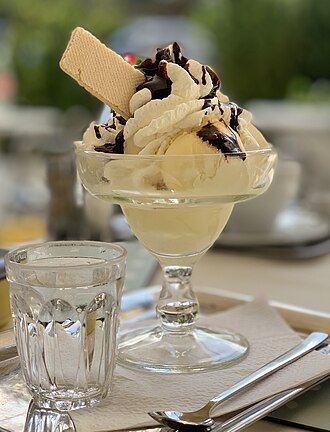
Photo: Wikipedia
This is the quintessential, luxurious vanilla ice cream—a dense, velvety custard base that coats the tongue with a rich, creamy mouthfeel. Its flavor is a deep, aromatic vanilla sweetness, not just sugary but complex, with a smooth, slow-melting texture that speaks to a high butterfat content. Nutritionally, it's a decadent energy source, packing over 16 grams of fat per 100g, which contributes to its signature richness.
Calorie split: 6% protein · 36% carbs · 59% fat
↓ Full nutrition💚 Why it's loved
People adore it for its pure, nostalgic comfort—the perfect balance of creamy fat and sweet vanilla that feels like a treat. It's incredibly versatile, serving as a blank canvas for toppings or a classic partner to warm pies and cobblers.
⚠️ Watch-outs & how to enjoy it better
Its high sugar and saturated fat content can cause rapid blood-sugar spikes and is a concern for those managing calorie intake or heart health. To mitigate, practice strict portion control (a single scoop) and pair it with a source of protein or fiber, like nuts or a piece of fruit, to slow sugar absorption.
Key benefits
- Provides a quick source of energy from carbohydrates and fats.
- Contains calcium and phosphorus from dairy for bone health.
- Offers a small amount of high-quality protein from milk and eggs.
- Can be a source of enjoyment and psychological comfort.
- The fat content aids in the absorption of fat-soluble vitamins.
🍽️ Popular dishes
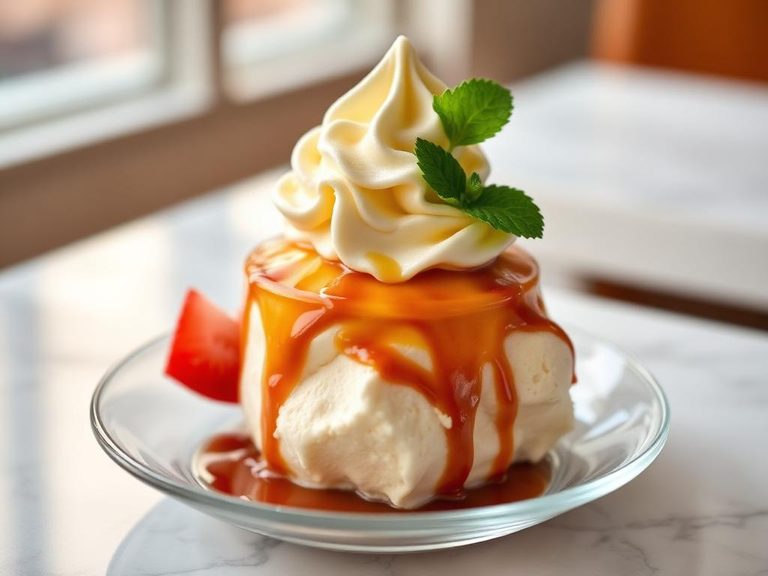
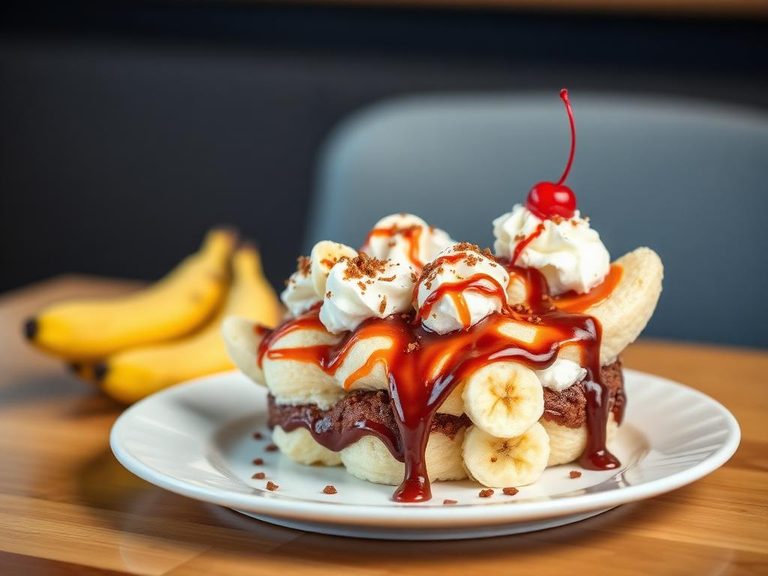
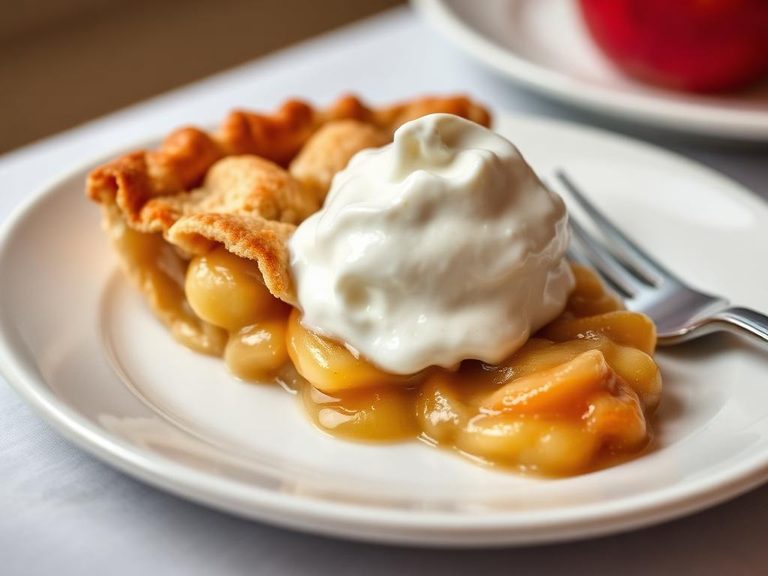
🌍 Where it's eaten
💡 Did you know?
The vanilla bean used for flavoring is actually the seed pod of a tropical orchid, and hand-pollination is required for most commercial vanilla production, making it the second most expensive spice after saffron.
Full nutrition (USDA data · scales with serving)
| Water | 57.2 g |
| Energy | 249 kcal |
| Energy | 1042 kj |
| Protein | 3.5 g |
| Total lipid (fat) | 16.2 g |
| Ash | 0.81 g |
| Carbohydrate, by difference | 22.3 g |
| Fiber, total dietary | 0.00 g |
| Total Sugars | 20.6 g |
| Calcium, Ca | 117 mg |
| Iron, Fe | 0.34 mg |
| Magnesium, Mg | 11.0 mg |
| Phosphorus, P | 105 mg |
| Potassium, K | 157 mg |
| Sodium, Na | 61.0 mg |
| Zinc, Zn | 0.47 mg |
| Copper, Cu | 0.01 mg |
| Manganese, Mn | 0.00 mg |
| Selenium, Se | 3.5 ug |
| Vitamin C, total ascorbic acid | 0.00 mg |
| Thiamin | 0.04 mg |
| Riboflavin | 0.17 mg |
| Niacin | 0.08 mg |
| Pantothenic acid | 0.46 mg |
| Vitamin B-6 | 0.04 mg |
| Folate, total | 8.0 ug |
| Folic acid | 0.00 ug |
| Folate, food | 8.0 ug |
| Folate, DFE | 9.0 ug |
| Choline, total | 26.0 mg |
| Vitamin B-12 | 0.39 ug |
| Vitamin B-12, added | 0.00 ug |
| Vitamin A, RAE | 182 ug |
| Retinol | 179 ug |
| Carotene, beta | 32.0 ug |
| Carotene, alpha | 1.0 ug |
| Cryptoxanthin, beta | 1.0 ug |
| Vitamin A, IU | 653 iu |
| Lycopene | 0.00 ug |
| Lutein + zeaxanthin | 34.0 ug |
| Vitamin E (alpha-tocopherol) | 0.51 mg |
| Vitamin E, added | 0.00 mg |
| Vitamin D (D2 + D3), International Units | 12.0 iu |
| Vitamin D (D2 + D3) | 0.30 ug |
| Vitamin D3 (cholecalciferol) | 0.30 ug |
| Vitamin K (phylloquinone) | 1.3 ug |
| Alcohol, ethyl | 0.00 g |
| Caffeine | 0.00 mg |
| Theobromine | 0.00 mg |
Fat & fatty acid profile (per 100g)
| Fatty acids, total saturated | 10.3 g |
| SFA 4:0 | 0.49 g |
| SFA 6:0 | 0.29 g |
| SFA 8:0 | 0.17 g |
| SFA 10:0 | 0.38 g |
| SFA 12:0 | 0.42 g |
| SFA 14:0 | 1.5 g |
| SFA 15:0 | 0.00 g |
| SFA 16:0 | 4.2 g |
| SFA 17:0 | 0.00 g |
| SFA 18:0 | 1.9 g |
| SFA 20:0 | 0.00 g |
| SFA 22:0 | 0.00 g |
| SFA 24:0 | 0.00 g |
| Fatty acids, total monounsaturated | 4.5 g |
| MUFA 14:1 | 0.00 g |
| MUFA 16:1 | 0.36 g |
| MUFA 18:1 | 4.1 g |
| MUFA 20:1 | 0.00 g |
| MUFA 22:1 | 0.00 g |
| Fatty acids, total polyunsaturated | 0.68 g |
| PUFA 18:2 | 0.44 g |
| PUFA 18:3 | 0.22 g |
| PUFA 18:4 | 0.00 g |
| PUFA 20:4 | 0.01 g |
| PUFA 20:5 n-3 (EPA) | 0.00 g |
| PUFA 22:5 n-3 (DPA) | 0.00 g |
| PUFA 22:6 n-3 (DHA) | 0.00 g |
| Cholesterol | 92.0 mg |
Amino acid profile (per 100g)
| Tryptophan | 0.04 g |
| Threonine | 0.14 g |
| Isoleucine | 0.18 g |
| Leucine | 0.30 g |
| Lysine | 0.25 g |
| Methionine | 0.08 g |
| Cystine | 0.03 g |
| Phenylalanine | 0.15 g |
| Tyrosine | 0.14 g |
| Valine | 0.20 g |
| Arginine | 0.14 g |
| Histidine | 0.08 g |
| Alanine | 0.14 g |
| Glutamic acid | 0.65 g |
| Glycine | 0.15 g |
| Proline | 0.34 g |
| Serine | 0.17 g |
FAQ
What makes 'rich' ice cream different from regular ice cream?
Rich ice cream has a higher milkfat content (typically 14-16% or more) and a lower 'overrun' (less air whipped in), resulting in a denser, creamier, and more intensely flavored product compared to standard ice cream.
Why is the fat content so high in vanilla ice cream?
The fat, primarily from cream and milk, is essential for the smooth, creamy texture and slow melt. It carries flavor and provides the satisfying mouthfeel that defines a premium product.
Is there any protein in vanilla ice cream?
Yes, a modest amount. The milk and eggs used in the custard base contribute about 3.5 grams of protein per 100g, which is less than a glass of milk but still a component of its nutritional profile.
Nutrient density (calculated · NRF9.3)
Nutrient Rich Foods index: beneficial nutrients (protein, fiber, vitamins, minerals) minus saturated fat, added sugar & sodium, per 100 kcal.
NRF9.3 index — Fulgoni, Keast & Drewnowski, 2009. Computed from USDA nutrients.
Weight-loss friendliness (composite index)
Energy density 2.49 kcal/g · 6% calories from protein · 0.0 g fiber · 20.6 g sugar per 100 g.
Composite of energy density (Rolls et al., 1999), protein & fiber satiety, minus sugar. A calculated heuristic — ranks satiety-per-calorie, not a clinical measure.
Dietary load (calculated from USDA values)
Potential renal acid load. Positive = acid-forming, negative = alkaline-forming.
Sodium-to-potassium ratio: 0.39 (lower is better — aim for ≤ 1)
Sodium:potassium per WHO potassium guidance. Computed from USDA nutrients.