

Grapes, canned, thompson seedless, heavy syrup pack, solids and liquids
Whole food · Fruits and Fruit Juices

Photo: Wikipedia
These are plump, seedless Thompson grapes, preserved in a sweet, heavy syrup that gives them a glossy sheen and a uniquely tender, almost melt-in-your-mouth texture. The syrup infuses them with a concentrated, honeyed sweetness that's distinct from fresh fruit. Nutritionally, they are a quick source of carbohydrates and sugar, offering a fast energy boost.
Calorie split: 2% protein · 97% carbs · 1% fat
↓ Full nutrition💚 Why it's loved
People love them for their intense, candy-like sweetness and the nostalgic comfort of their syrupy juiciness, often enjoyed straight from the can. They are a versatile ingredient that adds a sweet, fruity component to both desserts and savory dishes.
⚠️ Watch-outs & how to enjoy it better
The heavy syrup pack significantly increases the sugar content, making it a poor choice for those monitoring blood sugar or calorie intake. To enjoy them more healthily, consider draining and rinsing the grapes to remove excess syrup, or opt for versions packed in water or light syrup. Pairing them with a source of protein or fat (like cottage cheese or nuts) can help moderate the blood sugar response.
Key benefits
- Provides quick energy from natural and added sugars
- Contains small amounts of vitamin K and antioxidants like resveratrol
- Convenient, ready-to-eat fruit with a long shelf life
- The soft texture is easy for children and older adults to eat
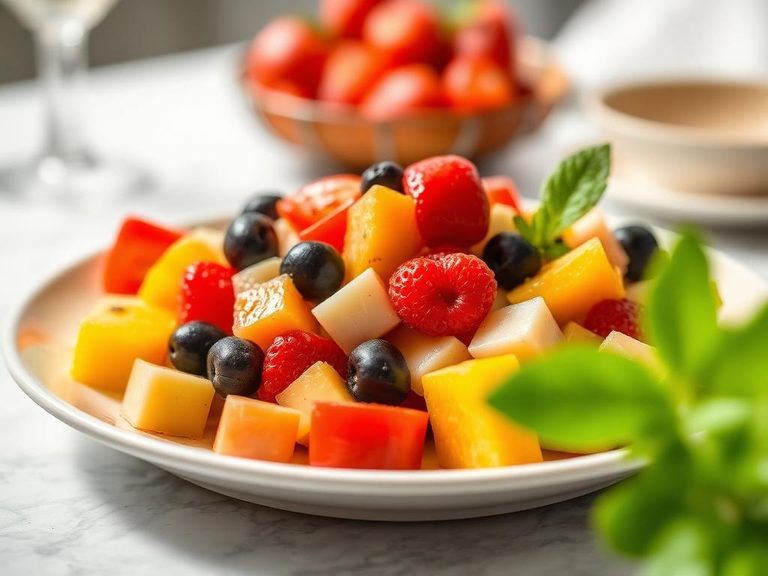
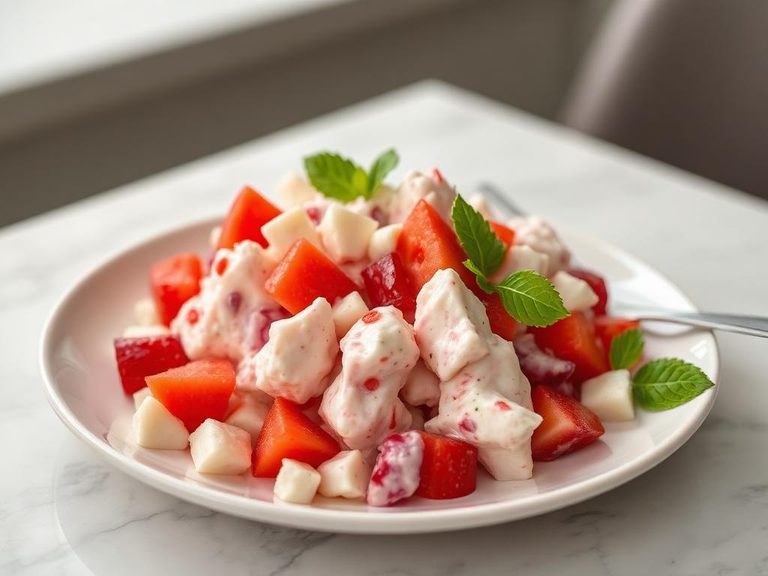
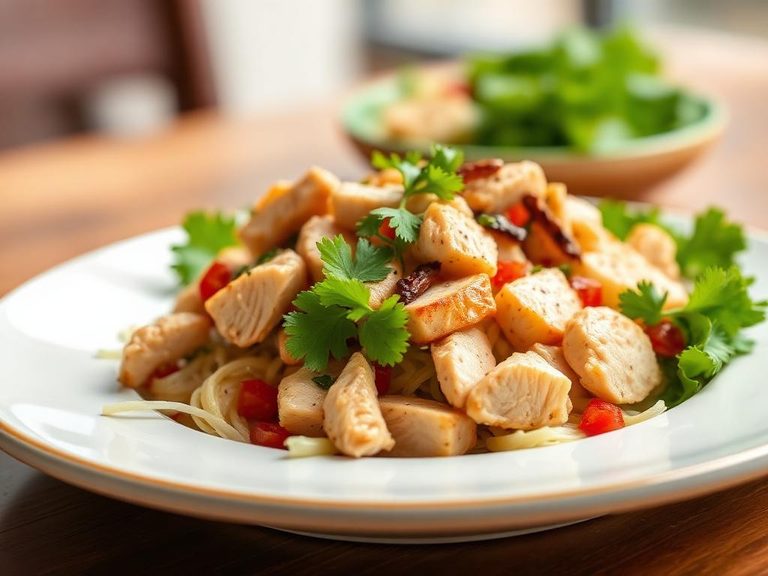
🍽️ Popular dishes


🌍 Where it's eaten
💡 Did you know?
The Thompson Seedless grape, the most common green table grape in the U.S., was actually discovered as a chance seedling in an Iranian vineyard in the 1870s.
Full nutrition (USDA data · scales with serving)
| Water | 79.5 g |
| Energy | 76.0 kcal |
| Energy | 319 kj |
| Protein | 0.48 g |
| Total lipid (fat) | 0.10 g |
| Ash | 0.24 g |
| Carbohydrate, by difference | 19.6 g |
| Fiber, total dietary | 0.60 g |
| Total Sugars | 19.1 g |
| Calcium, Ca | 10.0 mg |
| Iron, Fe | 0.94 mg |
| Magnesium, Mg | 6.0 mg |
| Phosphorus, P | 17.0 mg |
| Potassium, K | 103 mg |
| Sodium, Na | 5.0 mg |
| Zinc, Zn | 0.05 mg |
| Copper, Cu | 0.05 mg |
| Manganese, Mn | 0.04 mg |
| Selenium, Se | 0.10 ug |
| Vitamin C, total ascorbic acid | 1.0 mg |
| Thiamin | 0.03 mg |
| Riboflavin | 0.02 mg |
| Niacin | 0.13 mg |
| Pantothenic acid | 0.04 mg |
| Vitamin B-6 | 0.07 mg |
| Folate, total | 3.0 ug |
| Folic acid | 0.00 ug |
| Folate, food | 3.0 ug |
| Folate, DFE | 3.0 ug |
| Choline, total | 3.8 mg |
| Vitamin B-12 | 0.00 ug |
| Vitamin B-12, added | 0.00 ug |
| Vitamin A, RAE | 3.0 ug |
| Retinol | 0.00 ug |
| Carotene, beta | 38.0 ug |
| Carotene, alpha | 1.0 ug |
| Cryptoxanthin, beta | 0.00 ug |
| Vitamin A, IU | 64.0 iu |
| Lycopene | 0.00 ug |
| Lutein + zeaxanthin | 48.0 ug |
| Vitamin E (alpha-tocopherol) | 0.13 mg |
| Vitamin E, added | 0.00 mg |
| Vitamin D (D2 + D3), International Units | 0.00 iu |
| Vitamin D (D2 + D3) | 0.00 ug |
| Vitamin K (phylloquinone) | 9.8 ug |
| Alcohol, ethyl | 0.00 g |
| Caffeine | 0.00 mg |
| Theobromine | 0.00 mg |
Fat & fatty acid profile (per 100g)
| Fatty acids, total saturated | 0.03 g |
| SFA 4:0 | 0.00 g |
| SFA 6:0 | 0.00 g |
| SFA 8:0 | 0.00 g |
| SFA 10:0 | 0.00 g |
| SFA 12:0 | 0.00 g |
| SFA 14:0 | 0.00 g |
| SFA 16:0 | 0.03 g |
| SFA 18:0 | 0.00 g |
| Fatty acids, total monounsaturated | 0.00 g |
| MUFA 16:1 | 0.00 g |
| MUFA 18:1 | 0.00 g |
| MUFA 20:1 | 0.00 g |
| MUFA 22:1 | 0.00 g |
| Fatty acids, total polyunsaturated | 0.03 g |
| PUFA 18:2 | 0.02 g |
| PUFA 18:3 | 0.01 g |
| PUFA 18:4 | 0.00 g |
| PUFA 20:4 | 0.00 g |
| PUFA 20:5 n-3 (EPA) | 0.00 g |
| PUFA 22:5 n-3 (DPA) | 0.00 g |
| PUFA 22:6 n-3 (DHA) | 0.00 g |
| Fatty acids, total trans | 0.00 g |
| Cholesterol | 0.00 mg |
Amino acid profile (per 100g)
| Tryptophan | 0.00 g |
| Threonine | 0.01 g |
| Isoleucine | 0.00 g |
| Leucine | 0.01 g |
| Lysine | 0.01 g |
| Methionine | 0.02 g |
| Cystine | 0.01 g |
| Phenylalanine | 0.01 g |
| Tyrosine | 0.01 g |
| Valine | 0.01 g |
| Arginine | 0.04 g |
| Histidine | 0.02 g |
| Alanine | 0.02 g |
| Aspartic acid | 0.06 g |
| Glutamic acid | 0.10 g |
| Glycine | 0.01 g |
| Proline | 0.02 g |
| Serine | 0.02 g |
FAQ
How do canned grapes differ from fresh ones?
Canned grapes have a much softer, more uniform texture from the cooking and preservation process. Their flavor is sweeter and less complex due to the heavy syrup, and they lack the crisp 'pop' of fresh grapes.
Are the solids and liquids both meant to be consumed?
Yes, the nutrition facts are for the solids and liquids together. The syrup is a significant source of the calories and sugar. For a lighter option, you can drain the liquid.
Can I use the syrup for other recipes?
Absolutely. The grape-infused syrup can be used as a sweetener in drinks, as a glaze for meats, or reduced into a sauce for desserts.
Nutrient density (calculated · NRF9.3)
Nutrient Rich Foods index: beneficial nutrients (protein, fiber, vitamins, minerals) minus saturated fat, added sugar & sodium, per 100 kcal.
NRF9.3 index — Fulgoni, Keast & Drewnowski, 2009. Computed from USDA nutrients.
Weight-loss friendliness (composite index)
Energy density 0.76 kcal/g · 3% calories from protein · 0.6 g fiber · 19.1 g sugar per 100 g.
Composite of energy density (Rolls et al., 1999), protein & fiber satiety, minus sugar. A calculated heuristic — ranks satiety-per-calorie, not a clinical measure.
Dietary load (calculated from USDA values)
Potential renal acid load. Positive = acid-forming, negative = alkaline-forming.
Sodium-to-potassium ratio: 0.05 (lower is better — aim for ≤ 1)
Sodium:potassium per WHO potassium guidance. Computed from USDA nutrients.