

Game meat, rabbit, wild, cooked, stewed
Whole food · Lamb, Veal, and Game Products

Photo: Wikipedia
Wild rabbit stewed to tender perfection is a lean, deeply savory protein with a subtle, slightly sweet flavor and a texture that falls apart at the touch of a fork. Its nutritional profile is exceptionally high in protein and virtually free of carbohydrates, making it a powerhouse for muscle maintenance. The slow-cooking method transforms this game meat into a rich, comforting dish with a clean, earthy finish.
Calorie split: 81% protein · 0% carbs · 19% fat
↓ Full nutrition💚 Why it's loved
People love stewed wild rabbit for its delicate, nuanced flavor that is more complex than chicken but milder than other game meats. It's prized for its versatility, absorbing herbs and braising liquids beautifully, and holds a special place in rustic European and Mediterranean culinary traditions.
⚠️ Watch-outs & how to enjoy it better
The primary caution is its very low fat content, which can make it dry if overcooked; always braise or stew it in liquid. Those on blood-thinning medication should note it's a source of vitamin K, and its lean nature means it doesn't provide the satiety of fattier meats. Counteract dryness by cooking it slowly in a flavorful broth or wine, and pair it with a healthy fat source like olive oil or butter in the sauce for a more balanced meal.
Key benefits
- Excellent source of high-quality, complete protein
- Very low in fat, especially saturated fat
- Zero carbohydrates, suitable for ketogenic and low-carb diets
- Rich in essential minerals like selenium and phosphorus
🍽️ Popular dishes
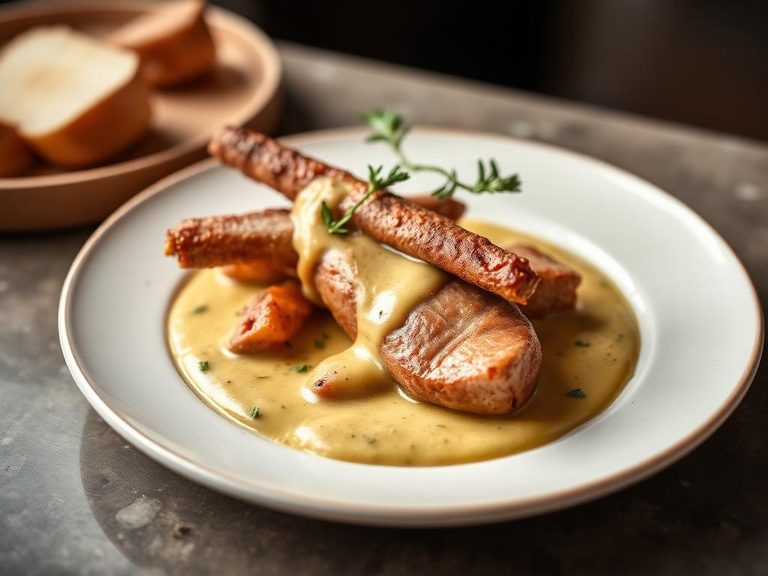
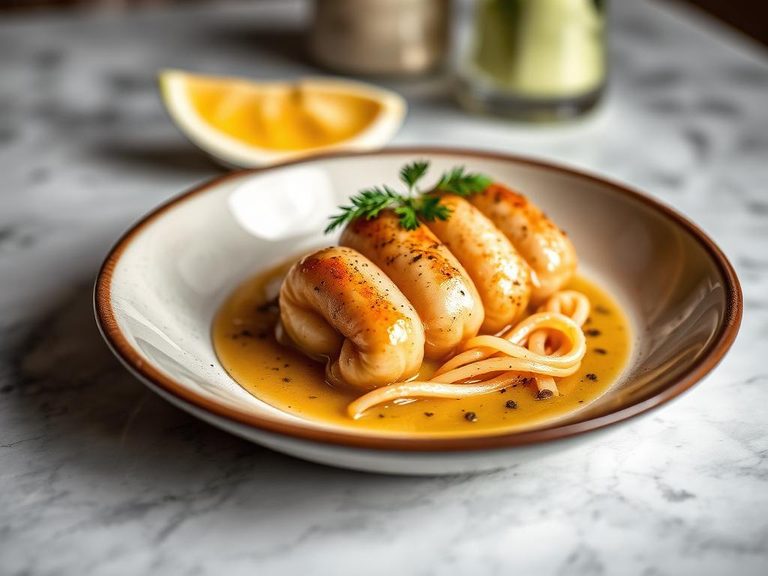
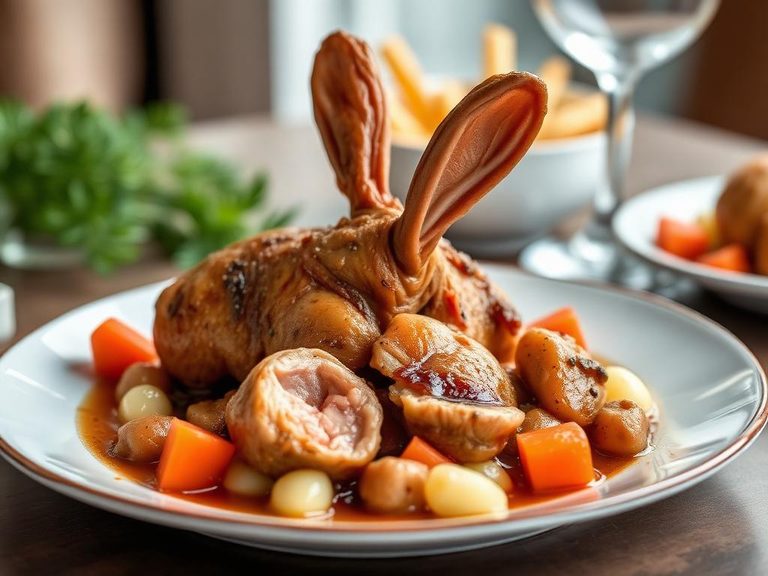
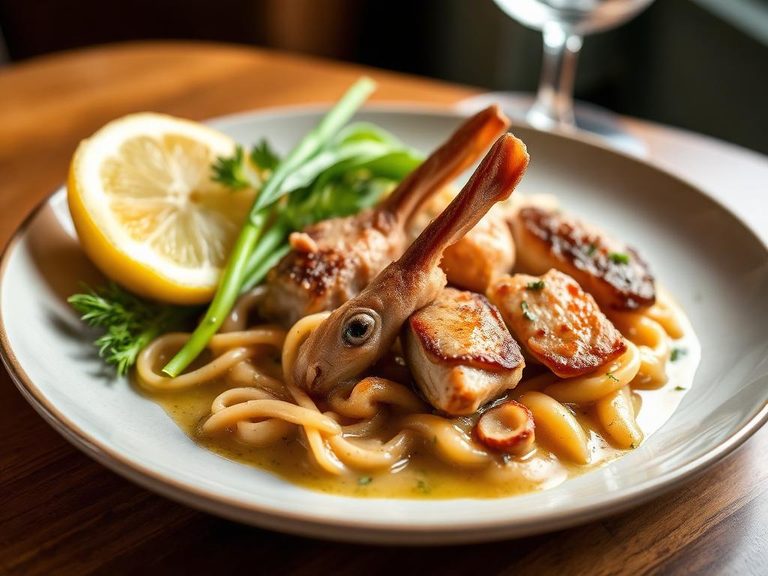
🌍 Where it's eaten
💡 Did you know?
A single wild rabbit can yield more usable meat per pound of body weight than a deer, making it one of the most efficient wild game animals for foragers and hunters.
Full nutrition (USDA data · scales with serving)
| Water | 61.4 g |
| Energy | 173 kcal |
| Energy | 724 kj |
| Protein | 33.0 g |
| Total lipid (fat) | 3.5 g |
| Ash | 1.7 g |
| Carbohydrate, by difference | 0.00 g |
| Fiber, total dietary | 0.00 g |
| Total Sugars | 0.00 g |
| Calcium, Ca | 18.0 mg |
| Iron, Fe | 4.8 mg |
| Magnesium, Mg | 31.0 mg |
| Phosphorus, P | 240 mg |
| Potassium, K | 343 mg |
| Sodium, Na | 45.0 mg |
| Zinc, Zn | 2.4 mg |
| Copper, Cu | 0.18 mg |
| Selenium, Se | 15.2 ug |
| Vitamin C, total ascorbic acid | 0.00 mg |
| Thiamin | 0.02 mg |
| Riboflavin | 0.07 mg |
| Niacin | 6.4 mg |
| Vitamin B-6 | 0.34 mg |
| Folate, total | 8.0 ug |
| Folic acid | 0.00 ug |
| Folate, food | 8.0 ug |
| Folate, DFE | 8.0 ug |
| Choline, total | 130 mg |
| Betaine | 17.1 mg |
| Vitamin B-12 | 6.5 ug |
| Vitamin B-12, added | 0.00 ug |
| Vitamin A, RAE | 0.00 ug |
| Retinol | 0.00 ug |
| Carotene, beta | 0.00 ug |
| Carotene, alpha | 0.00 ug |
| Cryptoxanthin, beta | 0.00 ug |
| Vitamin A, IU | 0.00 iu |
| Lycopene | 0.00 ug |
| Lutein + zeaxanthin | 0.00 ug |
| Vitamin E (alpha-tocopherol) | 0.41 mg |
| Vitamin E, added | 0.00 mg |
| Vitamin D (D2 + D3), International Units | 0.00 iu |
| Vitamin D (D2 + D3) | 0.00 ug |
| Vitamin D3 (cholecalciferol) | 0.00 ug |
| Vitamin K (phylloquinone) | 1.5 ug |
| Vitamin K (Dihydrophylloquinone) | 0.00 ug |
| Alcohol, ethyl | 0.00 g |
| Caffeine | 0.00 mg |
| Theobromine | 0.00 mg |
Fat & fatty acid profile (per 100g)
| Fatty acids, total saturated | 1.1 g |
| SFA 4:0 | 0.00 g |
| SFA 6:0 | 0.00 g |
| SFA 8:0 | 0.00 g |
| SFA 10:0 | 0.00 g |
| SFA 12:0 | 0.00 g |
| SFA 14:0 | 0.09 g |
| SFA 16:0 | 0.79 g |
| SFA 18:0 | 0.16 g |
| Fatty acids, total monounsaturated | 0.95 g |
| MUFA 16:1 | 0.12 g |
| MUFA 18:1 | 0.81 g |
| MUFA 20:1 | 0.00 g |
| MUFA 22:1 | 0.00 g |
| Fatty acids, total polyunsaturated | 0.68 g |
| PUFA 18:2 | 0.54 g |
| PUFA 18:3 | 0.14 g |
| PUFA 18:4 | 0.00 g |
| PUFA 20:4 | 0.00 g |
| PUFA 20:5 n-3 (EPA) | 0.00 g |
| PUFA 22:5 n-3 (DPA) | 0.00 g |
| PUFA 22:6 n-3 (DHA) | 0.00 g |
| Cholesterol | 123 mg |
Amino acid profile (per 100g)
| Tryptophan | 0.44 g |
| Threonine | 1.5 g |
| Isoleucine | 1.6 g |
| Leucine | 2.6 g |
| Lysine | 2.9 g |
| Methionine | 0.83 g |
| Cystine | 0.41 g |
| Phenylalanine | 1.4 g |
| Tyrosine | 1.2 g |
| Valine | 1.7 g |
| Arginine | 2.0 g |
| Histidine | 0.93 g |
| Alanine | 2.0 g |
| Aspartic acid | 3.2 g |
| Glutamic acid | 5.3 g |
| Glycine | 1.8 g |
| Proline | 1.6 g |
| Serine | 1.5 g |
FAQ
How does wild rabbit taste different from farmed rabbit?
Wild rabbit has a more pronounced, slightly gamier and earthy flavor due to its natural diet and active lifestyle. Farmed rabbit is milder, more tender, and has a cleaner, almost chicken-like taste.
Why must wild rabbit be cooked slowly?
Wild rabbit is extremely lean with very little intramuscular fat. Quick, high-heat cooking will make it tough and dry. Slow, moist cooking methods like stewing or braising break down connective tissue and keep the meat succulent.
Is it safe to eat wild rabbit?
Yes, when properly handled and cooked to a safe internal temperature (160°F or 71°C). It's important to source from reputable hunters or suppliers to ensure the animal was healthy and processed hygienically.
Nutrient density (calculated · NRF9.3)
Nutrient Rich Foods index: beneficial nutrients (protein, fiber, vitamins, minerals) minus saturated fat, added sugar & sodium, per 100 kcal.
NRF9.3 index — Fulgoni, Keast & Drewnowski, 2009. Computed from USDA nutrients.
Weight-loss friendliness (composite index)
Energy density 1.73 kcal/g · 76% calories from protein · 0.0 g fiber · 0.0 g sugar per 100 g.
Composite of energy density (Rolls et al., 1999), protein & fiber satiety, minus sugar. A calculated heuristic — ranks satiety-per-calorie, not a clinical measure.
Dietary load (calculated from USDA values)
Potential renal acid load. Positive = acid-forming, negative = alkaline-forming.
Sodium-to-potassium ratio: 0.13 (lower is better — aim for ≤ 1)
Sodium:potassium per WHO potassium guidance. Computed from USDA nutrients.