

Hasenpfeffer
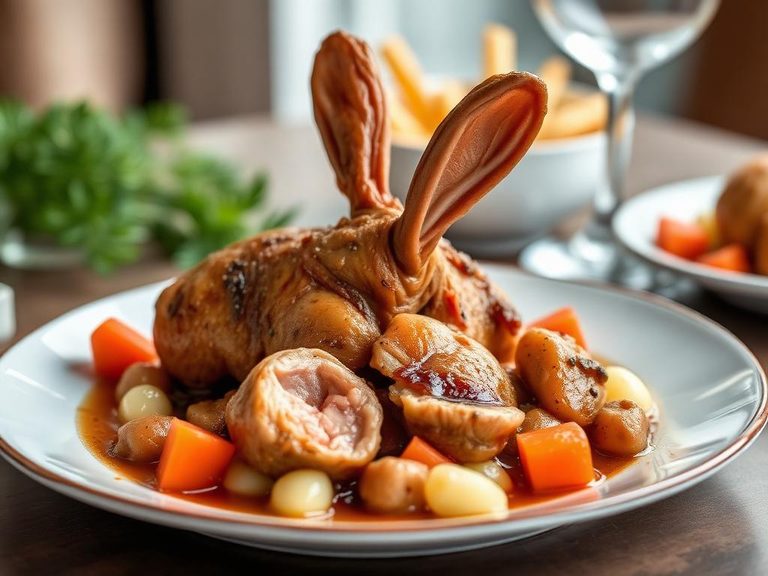
Hasenpfeffer is a traditional German stew of braised rabbit, slow-cooked in a rich, tangy sauce of vinegar, wine, and aromatic spices. The dish typically features rabbit pieces marinated and then simmered with onions, juniper berries, bay leaves, and sometimes mustard or cream for a hearty, flavorful meal. It originates from Germany and is a classic example of rustic, seasonal cuisine.
🍽️ Nutrition at a glance
This dish is high in protein and moderate in fat, with very few carbohydrates, making it a nutrient-dense option. A typical serving provides a good source of B vitamins, iron, and selenium, with a calorie range of approximately 300-400 kcal depending on the recipe and portion size.
Nutrition breakdown
| Calories | 350 kcal |
| Protein | 35 g |
| Carbs | 5 g |
| Fat | 18 g |
| Fiber | 1 g |
| Sugar | 2 g |
| Sodium | 600 mg |
| Vitamin B12 | 2.5 µg |
| Niacin (B3) | 8 mg |
| Iron | 2.5 mg |
| Selenium | 22 µg |
| Phosphorus | 280 mg |
| Potassium | 400 mg |
| Zinc | 3 mg |
| Vitamin B6 | 0.5 mg |
Per 1 serving (about 250 g, including meat and sauce) · estimated, varies by recipe
💡 What's interesting
Culturally, Hasenpfeffer reflects historical European hunting traditions, where rabbit was a common and accessible game meat. Nutritionally, rabbit meat is lean and high in protein, often considered a healthier alternative to red meats.
AI estimate may be inaccurate · Terms