

Fish, sea bass, mixed species, raw
Whole food · Finfish and Shellfish Products

Photo: Wikipedia
Sea bass is a prized white fish celebrated for its delicate, sweet flavor and a moist, flaky texture that holds up beautifully to various cooking methods. Nutritionally, it's a powerhouse of lean protein with virtually no carbohydrates, making it an excellent choice for low-carb and high-protein diets. Its clean, mild taste allows it to be a versatile canvas for a wide range of seasonings and preparations.
Calorie split: 80% protein · 0% carbs · 20% fat
↓ Full nutrition💚 Why it's loved
People love sea bass for its refined, mild sweetness and a satisfying flakiness that feels luxurious without being overly rich. Its versatility makes it a star in both simple pan-seared preparations and more complex, sauce-driven dishes from around the world.
⚠️ Watch-outs & how to enjoy it better
As a fish, it is a common allergen for those with seafood sensitivities. To counteract this, individuals with known allergies must avoid it entirely. For those watching sodium intake, be mindful of salty marinades or sauces like soy or miso; opt for herbs, citrus, or a light salt sprinkle instead. Its mild flavor can be overpowered by very strong seasonings, so a balanced approach is key.
Key benefits
- Excellent source of high-quality, lean protein
- Naturally carbohydrate-free, ideal for low-carb diets
- Contains heart-healthy omega-3 fatty acids
- Low in saturated fat
- Rich in essential minerals like selenium and phosphorus
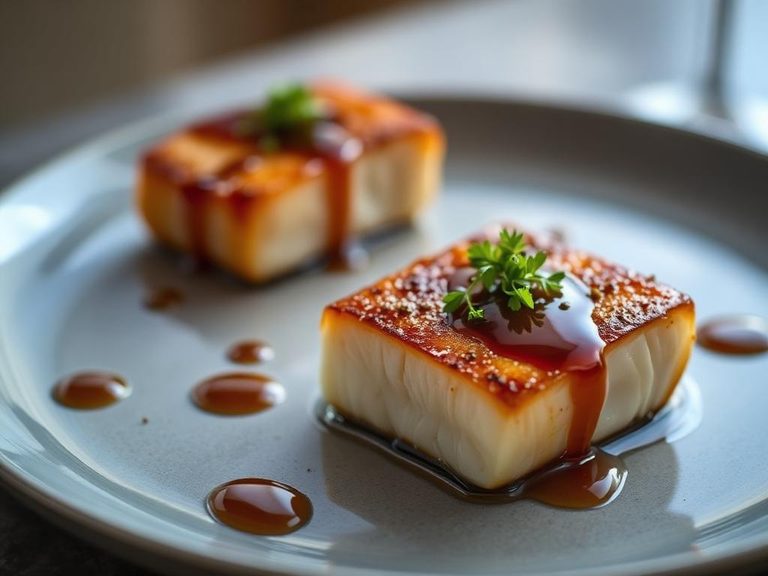
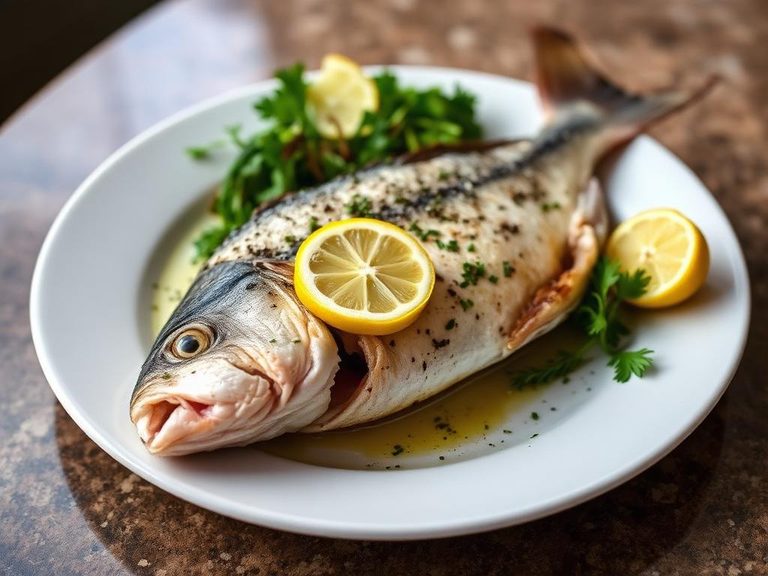
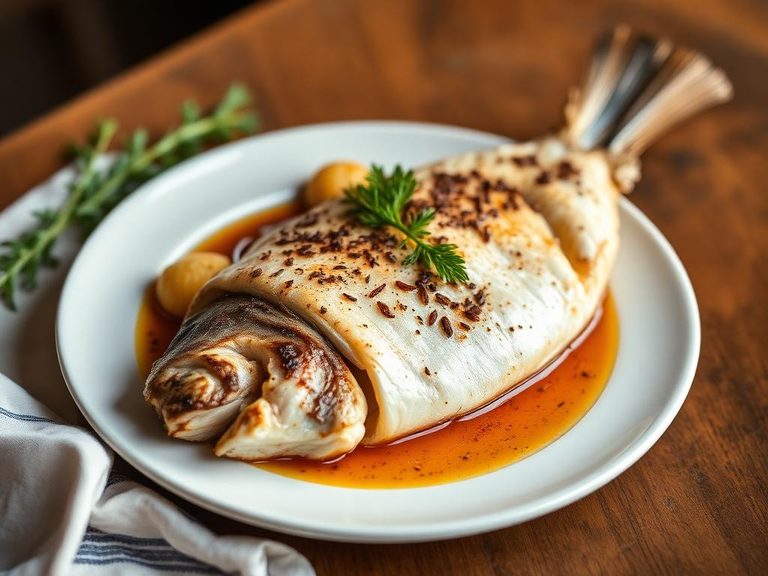
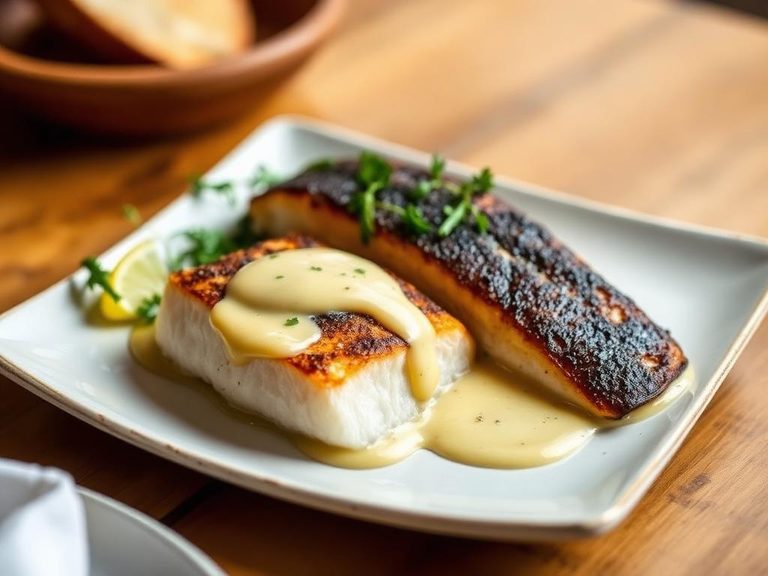
🍽️ Popular dishes
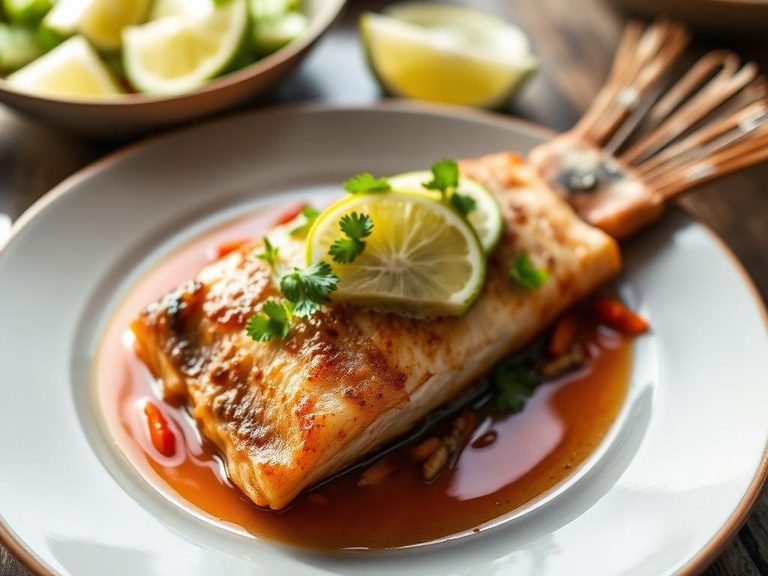
🌍 Where it's eaten
💡 Did you know?
The term 'Chilean sea bass' is a marketing name invented in 1977 by a fish merchant to rebrand the Patagonian toothfish, making it more appealing to American consumers.
Full nutrition (USDA data · scales with serving)
| Water | 78.3 g |
| Energy | 97.0 kcal |
| Energy | 406 kj |
| Protein | 18.4 g |
| Total lipid (fat) | 2.0 g |
| Ash | 1.1 g |
| Carbohydrate, by difference | 0.00 g |
| Fiber, total dietary | 0.00 g |
| Total Sugars | 0.00 g |
| Calcium, Ca | 10.0 mg |
| Iron, Fe | 0.29 mg |
| Magnesium, Mg | 41.0 mg |
| Phosphorus, P | 194 mg |
| Potassium, K | 256 mg |
| Sodium, Na | 68.0 mg |
| Zinc, Zn | 0.40 mg |
| Copper, Cu | 0.02 mg |
| Manganese, Mn | 0.01 mg |
| Selenium, Se | 36.5 ug |
| Vitamin C, total ascorbic acid | 0.00 mg |
| Thiamin | 0.11 mg |
| Riboflavin | 0.12 mg |
| Niacin | 1.6 mg |
| Pantothenic acid | 0.75 mg |
| Vitamin B-6 | 0.40 mg |
| Folate, total | 5.0 ug |
| Folic acid | 0.00 ug |
| Folate, food | 5.0 ug |
| Folate, DFE | 5.0 ug |
| Choline, total | 60.8 mg |
| Vitamin B-12 | 0.30 ug |
| Vitamin B-12, added | 0.00 ug |
| Vitamin A, RAE | 46.0 ug |
| Retinol | 46.0 ug |
| Carotene, beta | 0.00 ug |
| Carotene, alpha | 0.00 ug |
| Cryptoxanthin, beta | 0.00 ug |
| Vitamin A, IU | 154 iu |
| Lycopene | 0.00 ug |
| Lutein + zeaxanthin | 0.00 ug |
| Vitamin E (alpha-tocopherol) | 0.84 mg |
| Vitamin E, added | 0.00 mg |
| Vitamin D (D2 + D3), International Units | 226 iu |
| Vitamin D (D2 + D3) | 5.6 ug |
| Vitamin D3 (cholecalciferol) | 5.6 ug |
| Vitamin K (phylloquinone) | 0.10 ug |
| Alcohol, ethyl | 0.00 g |
| Caffeine | 0.00 mg |
| Theobromine | 0.00 mg |
Fat & fatty acid profile (per 100g)
| Fatty acids, total saturated | 0.51 g |
| SFA 4:0 | 0.00 g |
| SFA 6:0 | 0.00 g |
| SFA 8:0 | 0.00 g |
| SFA 10:0 | 0.00 g |
| SFA 12:0 | 0.00 g |
| SFA 14:0 | 0.05 g |
| SFA 16:0 | 0.32 g |
| SFA 18:0 | 0.14 g |
| Fatty acids, total monounsaturated | 0.42 g |
| MUFA 16:1 | 0.13 g |
| MUFA 18:1 | 0.29 g |
| MUFA 20:1 | 0.00 g |
| MUFA 22:1 | 0.00 g |
| Fatty acids, total polyunsaturated | 0.74 g |
| PUFA 18:2 | 0.02 g |
| PUFA 18:3 | 0.00 g |
| PUFA 18:4 | 0.05 g |
| PUFA 20:4 | 0.00 g |
| PUFA 20:5 n-3 (EPA) | 0.16 g |
| PUFA 22:5 n-3 (DPA) | 0.08 g |
| PUFA 22:6 n-3 (DHA) | 0.43 g |
| Cholesterol | 41.0 mg |
Amino acid profile (per 100g)
| Tryptophan | 0.21 g |
| Threonine | 0.81 g |
| Isoleucine | 0.85 g |
| Leucine | 1.5 g |
| Lysine | 1.7 g |
| Methionine | 0.55 g |
| Cystine | 0.20 g |
| Phenylalanine | 0.72 g |
| Tyrosine | 0.62 g |
| Valine | 0.95 g |
| Arginine | 1.1 g |
| Histidine | 0.54 g |
| Alanine | 1.1 g |
| Aspartic acid | 1.9 g |
| Glutamic acid | 2.8 g |
| Glycine | 0.89 g |
| Proline | 0.65 g |
| Serine | 0.75 g |
FAQ
What is the difference between sea bass and Chilean sea bass?
They are different fish. 'Sea bass' typically refers to European or Mediterranean sea bass (branzino), a leaner, milder fish. 'Chilean sea bass' is the Patagonian toothfish, a deep-water fish with a much higher fat content and a richer, buttery texture.
Is sea bass a sustainable choice?
Sustainability varies greatly by species and fishing method. European sea bass from well-managed farms or fisheries can be a good choice. For wild-caught options, look for certifications like the Marine Stewardship Council (MSC) or consult guides from organizations like the Monterey Bay Aquarium Seafood Watch.
How can I tell when sea bass is cooked perfectly?
Sea bass is done when it is opaque throughout and flakes easily when tested with a fork. The internal temperature should reach 145°F (63°C). Be careful not to overcook it, as it can dry out quickly.
Nutrient density (calculated · NRF9.3)
Nutrient Rich Foods index: beneficial nutrients (protein, fiber, vitamins, minerals) minus saturated fat, added sugar & sodium, per 100 kcal.
NRF9.3 index — Fulgoni, Keast & Drewnowski, 2009. Computed from USDA nutrients.
Weight-loss friendliness (composite index)
Energy density 0.97 kcal/g · 76% calories from protein · 0.0 g fiber · 0.0 g sugar per 100 g.
Composite of energy density (Rolls et al., 1999), protein & fiber satiety, minus sugar. A calculated heuristic — ranks satiety-per-calorie, not a clinical measure.
Dietary load (calculated from USDA values)
Potential renal acid load. Positive = acid-forming, negative = alkaline-forming.
Sodium-to-potassium ratio: 0.27 (lower is better — aim for ≤ 1)
Sodium:potassium per WHO potassium guidance. Computed from USDA nutrients.