

Fish, herring, Atlantic, pickled
Whole food · Finfish and Shellfish Products

Photo: Wikipedia
Pickled Atlantic herring is a culinary staple, offering a firm, succulent texture and a distinctively tangy, salty, and slightly sweet flavor profile from its brine or marinade. It is a rich source of high-quality protein and healthy fats, including omega-3 fatty acids, making it a nutrient-dense food. The preparation often involves a vinegar-based brine, which gives it its signature zesty kick and preserves its freshness.
Calorie split: 22% protein · 15% carbs · 63% fat
↓ Full nutrition💚 Why it's loved
People love pickled herring for its bold, complex flavor that balances briny, sour, and sweet notes, making it a standout appetizer or snack. It is deeply embedded in the culinary traditions of Northern and Eastern Europe, often enjoyed during festive occasions and as a versatile ingredient in various dishes.
⚠️ Watch-outs & how to enjoy it better
The high sodium content from the brine can be a concern for individuals with hypertension or those monitoring salt intake, and the pickling process may reduce some heat-sensitive nutrients. To mitigate sodium, opt for low-sodium varieties or rinse the herring briefly before eating, and pair it with potassium-rich foods like vegetables to help balance electrolytes.
Key benefits
- Excellent source of complete protein for muscle maintenance.
- Rich in heart-healthy omega-3 fatty acids (EPA and DHA).
- Provides essential vitamins like B12 and D.
- Low in carbohydrates and sugar, suitable for low-carb diets.
- Naturally preserved, offering a long shelf life without refrigeration.
🍽️ Popular dishes
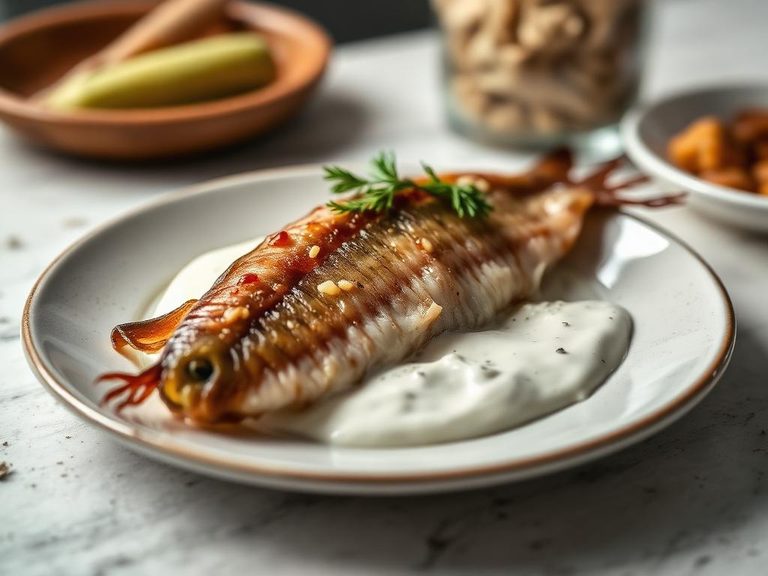
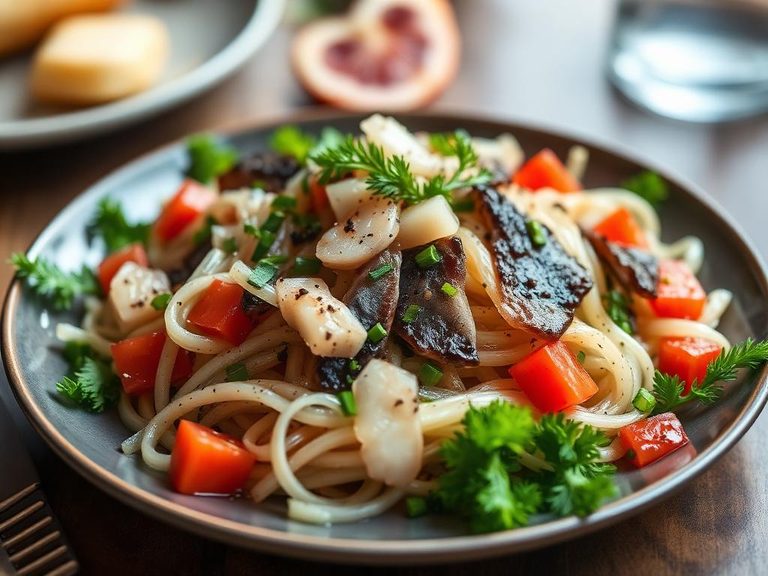

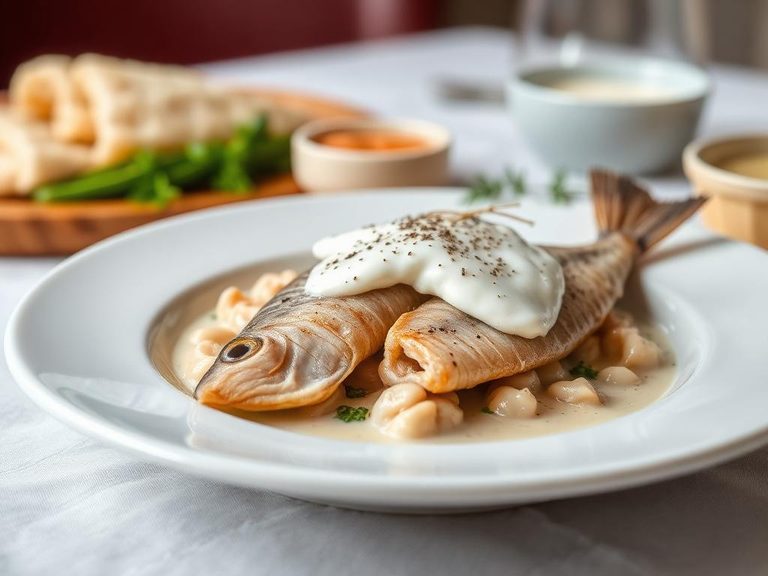
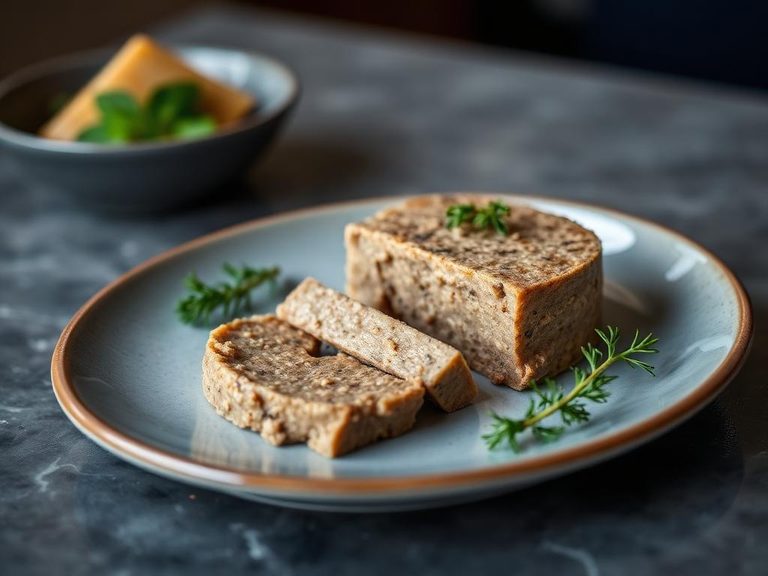
🌍 Where it's eaten
💡 Did you know?
Pickled herring was historically a crucial food for sailors and explorers during long voyages, as its high vitamin C content (from the brine) helped prevent scurvy.
Full nutrition (USDA data · scales with serving)
| Water | 55.2 g |
| Energy | 262 kcal |
| Energy | 1096 kj |
| Protein | 14.2 g |
| Total lipid (fat) | 18.0 g |
| Ash | 3.0 g |
| Carbohydrate, by difference | 9.6 g |
| Fiber, total dietary | 0.00 g |
| Total Sugars | 7.7 g |
| Calcium, Ca | 77.0 mg |
| Iron, Fe | 1.2 mg |
| Magnesium, Mg | 8.0 mg |
| Phosphorus, P | 89.0 mg |
| Potassium, K | 69.0 mg |
| Sodium, Na | 870 mg |
| Zinc, Zn | 0.53 mg |
| Copper, Cu | 0.10 mg |
| Manganese, Mn | 0.04 mg |
| Selenium, Se | 58.5 ug |
| Vitamin C, total ascorbic acid | 0.00 mg |
| Thiamin | 0.04 mg |
| Riboflavin | 0.14 mg |
| Niacin | 3.3 mg |
| Pantothenic acid | 0.08 mg |
| Vitamin B-6 | 0.17 mg |
| Folate, total | 2.0 ug |
| Folic acid | 0.00 ug |
| Folate, food | 2.0 ug |
| Folate, DFE | 2.0 ug |
| Choline, total | 104 mg |
| Vitamin B-12 | 4.3 ug |
| Vitamin B-12, added | 0.00 ug |
| Vitamin A, RAE | 258 ug |
| Retinol | 258 ug |
| Carotene, beta | 0.00 ug |
| Carotene, alpha | 0.00 ug |
| Cryptoxanthin, beta | 0.00 ug |
| Vitamin A, IU | 860 iu |
| Lycopene | 0.00 ug |
| Lutein + zeaxanthin | 0.00 ug |
| Vitamin E (alpha-tocopherol) | 1.7 mg |
| Vitamin E, added | 0.00 mg |
| Vitamin D (D2 + D3), International Units | 113 iu |
| Vitamin D (D2 + D3) | 2.8 ug |
| Vitamin D3 (cholecalciferol) | 2.8 ug |
| Vitamin K (phylloquinone) | 0.20 ug |
| Alcohol, ethyl | 0.00 g |
| Caffeine | 0.00 mg |
| Theobromine | 0.00 mg |
Fat & fatty acid profile (per 100g)
| Fatty acids, total saturated | 2.4 g |
| SFA 4:0 | 0.00 g |
| SFA 6:0 | 0.00 g |
| SFA 8:0 | 0.00 g |
| SFA 10:0 | 0.00 g |
| SFA 12:0 | 0.00 g |
| SFA 14:0 | 0.72 g |
| SFA 16:0 | 1.6 g |
| SFA 18:0 | 0.10 g |
| Fatty acids, total monounsaturated | 11.9 g |
| MUFA 16:1 | 1.4 g |
| MUFA 18:1 | 1.8 g |
| MUFA 20:1 | 3.6 g |
| MUFA 22:1 | 5.2 g |
| Fatty acids, total polyunsaturated | 1.7 g |
| PUFA 18:2 | 0.21 g |
| PUFA 18:3 | 0.00 g |
| PUFA 18:4 | 0.00 g |
| PUFA 20:4 | 0.00 g |
| PUFA 20:5 n-3 (EPA) | 0.84 g |
| PUFA 22:5 n-3 (DPA) | 0.08 g |
| PUFA 22:6 n-3 (DHA) | 0.55 g |
| Cholesterol | 13.0 mg |
Amino acid profile (per 100g)
| Tryptophan | 0.16 g |
| Threonine | 0.62 g |
| Isoleucine | 0.65 g |
| Leucine | 1.2 g |
| Lysine | 1.3 g |
| Methionine | 0.42 g |
| Cystine | 0.15 g |
| Phenylalanine | 0.55 g |
| Tyrosine | 0.48 g |
| Valine | 0.73 g |
| Arginine | 0.85 g |
| Histidine | 0.42 g |
| Alanine | 0.86 g |
| Aspartic acid | 1.5 g |
| Glutamic acid | 2.1 g |
| Glycine | 0.68 g |
| Proline | 0.50 g |
| Serine | 0.58 g |
FAQ
Is pickled herring high in calories?
At 262 kcal per 100g, it is moderately calorie-dense due to its fat content, but it provides substantial protein and healthy fats that promote satiety.
Can pickled herring be eaten by people with diabetes?
Yes, it is low in carbohydrates and sugar (9.64g carbs, 7.71g sugar per 100g), making it a suitable option for blood sugar management when consumed in moderation.
What is the best way to store pickled herring?
Keep it refrigerated in its original brine or a sealed container, and consume it within a few weeks of opening to maintain freshness and flavor.
Nutrient density (calculated · NRF9.3)
Nutrient Rich Foods index: beneficial nutrients (protein, fiber, vitamins, minerals) minus saturated fat, added sugar & sodium, per 100 kcal.
NRF9.3 index — Fulgoni, Keast & Drewnowski, 2009. Computed from USDA nutrients.
Weight-loss friendliness (composite index)
Energy density 2.62 kcal/g · 22% calories from protein · 0.0 g fiber · 7.7 g sugar per 100 g.
Composite of energy density (Rolls et al., 1999), protein & fiber satiety, minus sugar. A calculated heuristic — ranks satiety-per-calorie, not a clinical measure.
Dietary load (calculated from USDA values)
Potential renal acid load. Positive = acid-forming, negative = alkaline-forming.
Sodium-to-potassium ratio: 12.61 (lower is better — aim for ≤ 1)
Sodium:potassium per WHO potassium guidance. Computed from USDA nutrients.