

Egg substitute, liquid or frozen, fat free
Whole food · Dairy and Egg Products

Photo: Wikipedia
A smooth, pourable or thawable liquid designed to mimic whole eggs in cooking and baking. It has a neutral, slightly sulfurous taste and a lighter, less viscous texture than real eggs. Nutritionally, it's a lean protein source with virtually no fat or cholesterol.
Calorie split: 83% protein · 17% carbs · 0% fat
↓ Full nutrition💚 Why it's loved
It's loved for its remarkable versatility, seamlessly replacing eggs in everything from fluffy omelets to moist cakes and meatloaf binders. It offers a familiar, egg-like function without the dietary fat, making it a staple for health-conscious cooking.
⚠️ Watch-outs & how to enjoy it better
Some find the taste slightly artificial or lacking the rich, fatty mouthfeel of whole eggs, and the texture can be less custard-like in custards or quiches. To counteract this, pair it with a small amount of healthy fat (like avocado or cheese) in savory dishes, or use it in recipes with strong flavors like vanilla or spices where its neutrality is an asset.
Key benefits
- Fat-free and cholesterol-free alternative to whole eggs
- High in protein per calorie (10g per 100g)
- Provides a consistent texture for baking and scrambling
- Reduces recipe cost and extends shelf life
- Safe for those with egg yolk allergies or cholesterol concerns
🍽️ Popular dishes
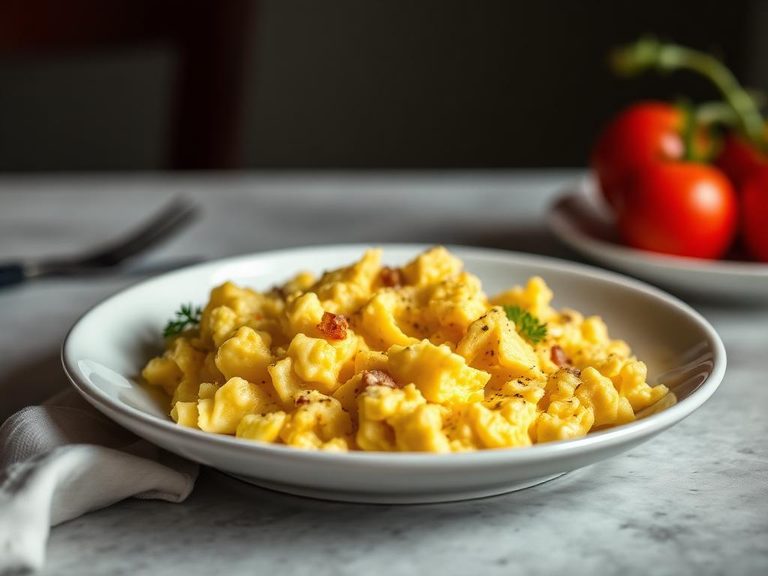
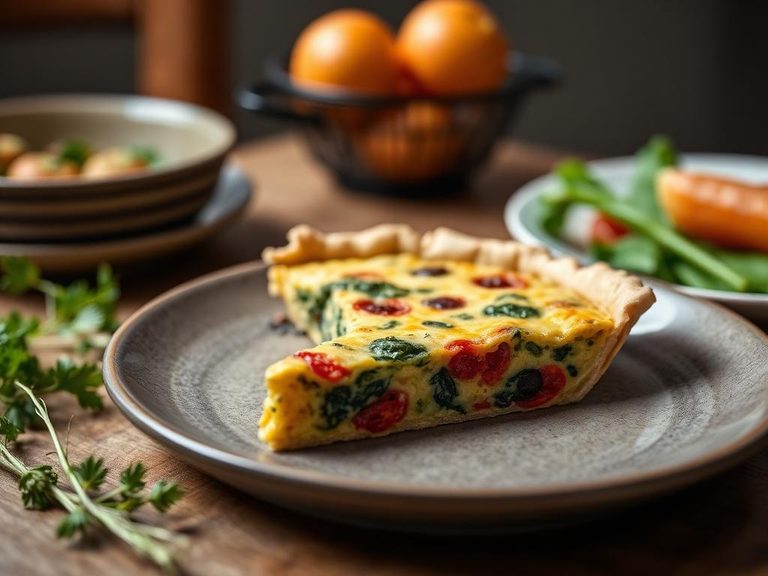
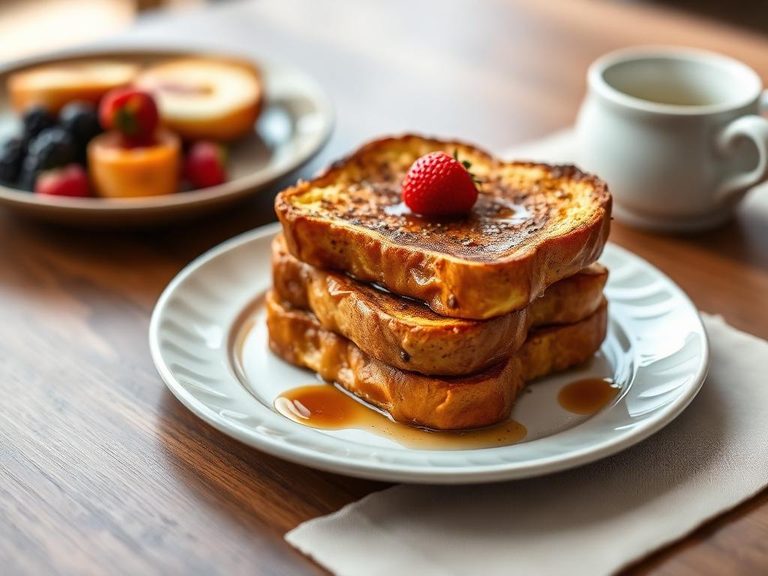

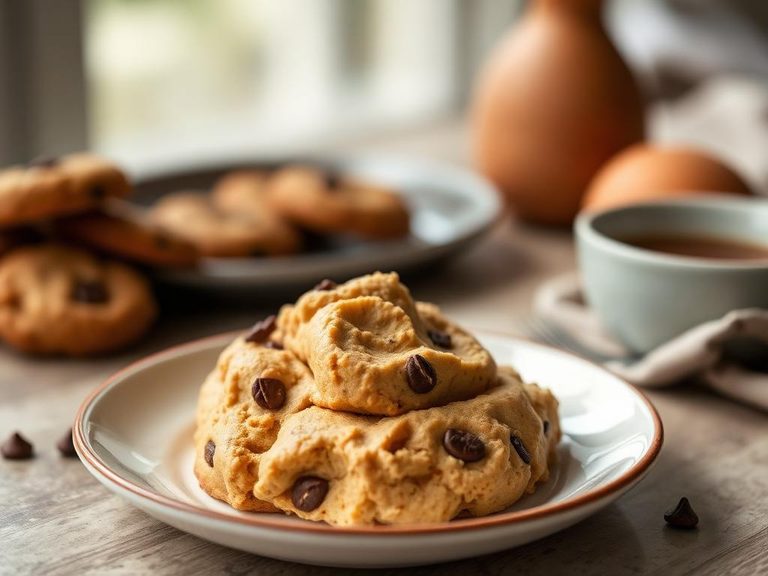
🌍 Where it's eaten
💡 Did you know?
Many commercial liquid egg substitutes are primarily made from egg whites, with added vitamins, minerals, and a trace of oil for texture, and are pasteurized to be shelf-stable.
Full nutrition (USDA data · scales with serving)
| Water | 87.0 g |
| Energy | 48.0 kcal |
| Energy | 201 kj |
| Protein | 10.0 g |
| Total lipid (fat) | 0.00 g |
| Ash | 1.3 g |
| Carbohydrate, by difference | 2.0 g |
| Fiber, total dietary | 0.00 g |
| Total Sugars | 2.0 g |
| Calcium, Ca | 73.0 mg |
| Iron, Fe | 2.0 mg |
| Magnesium, Mg | 15.0 mg |
| Phosphorus, P | 72.0 mg |
| Potassium, K | 213 mg |
| Sodium, Na | 199 mg |
| Zinc, Zn | 0.98 mg |
| Copper, Cu | 0.02 mg |
| Manganese, Mn | 0.01 mg |
| Selenium, Se | 41.3 ug |
| Vitamin C, total ascorbic acid | 0.50 mg |
| Thiamin | 0.12 mg |
| Riboflavin | 0.39 mg |
| Niacin | 0.14 mg |
| Pantothenic acid | 1.7 mg |
| Vitamin B-6 | 0.13 mg |
| Folate, total | 16.0 ug |
| Folic acid | 0.00 ug |
| Folate, food | 16.0 ug |
| Folate, DFE | 16.0 ug |
| Choline, total | 2.5 mg |
| Vitamin B-12 | 0.34 ug |
| Vitamin B-12, added | 0.00 ug |
| Vitamin A, RAE | 11.0 ug |
| Retinol | 0.00 ug |
| Carotene, beta | 135 ug |
| Carotene, alpha | 0.00 ug |
| Cryptoxanthin, beta | 0.00 ug |
| Vitamin A, IU | 225 iu |
| Lycopene | 0.00 ug |
| Lutein + zeaxanthin | 0.00 ug |
| Vitamin E (alpha-tocopherol) | 1.6 mg |
| Vitamin E, added | 0.00 mg |
| Vitamin D (D2 + D3), International Units | 66.0 iu |
| Vitamin D (D2 + D3) | 1.6 ug |
| Vitamin D3 (cholecalciferol) | 1.6 ug |
| Vitamin K (phylloquinone) | 0.20 ug |
| Alcohol, ethyl | 0.00 g |
| Caffeine | 0.00 mg |
| Theobromine | 0.00 mg |
Fat & fatty acid profile (per 100g)
| Fatty acids, total saturated | 0.00 g |
| SFA 4:0 | 0.00 g |
| SFA 6:0 | 0.00 g |
| SFA 8:0 | 0.00 g |
| SFA 10:0 | 0.00 g |
| SFA 12:0 | 0.00 g |
| SFA 14:0 | 0.00 g |
| SFA 16:0 | 0.00 g |
| SFA 18:0 | 0.00 g |
| Fatty acids, total monounsaturated | 0.00 g |
| MUFA 16:1 | 0.00 g |
| MUFA 18:1 | 0.00 g |
| MUFA 20:1 | 0.00 g |
| MUFA 22:1 | 0.00 g |
| Fatty acids, total polyunsaturated | 0.00 g |
| PUFA 18:2 | 0.00 g |
| PUFA 18:3 | 0.00 g |
| PUFA 18:4 | 0.00 g |
| PUFA 20:4 | 0.00 g |
| PUFA 20:5 n-3 (EPA) | 0.00 g |
| PUFA 22:5 n-3 (DPA) | 0.00 g |
| PUFA 22:6 n-3 (DHA) | 0.00 g |
| Cholesterol | 0.00 mg |
| Phytosterols | 95.0 mg |
Amino acid profile (per 100g)
| Tryptophan | 0.16 g |
| Threonine | 0.48 g |
| Isoleucine | 0.66 g |
| Leucine | 0.97 g |
| Lysine | 0.71 g |
| Methionine | 0.39 g |
| Cystine | 0.23 g |
| Phenylalanine | 0.65 g |
| Tyrosine | 0.46 g |
| Valine | 0.79 g |
| Arginine | 0.58 g |
| Histidine | 0.26 g |
| Alanine | 0.62 g |
| Aspartic acid | 0.93 g |
| Glutamic acid | 1.7 g |
| Glycine | 0.36 g |
| Proline | 0.56 g |
| Serine | 0.75 g |
FAQ
Can I use it for baking cakes?
Yes, it's excellent for baking. Use about 1/4 cup (60g) of liquid substitute for each whole egg called for in a recipe. It provides moisture and binding but less fat, so cakes may be slightly less rich.
Is it the same as egg beaters?
They are very similar. 'Egg Beaters' is a popular brand name for a liquid egg substitute, but many other brands offer comparable fat-free, cholesterol-free products.
How do I store it after opening?
Once opened, pour any unused liquid into a sealed container and refrigerate. Use it within 3-4 days, just as you would with raw eggs.
Nutrient density (calculated · NRF9.3)
Nutrient Rich Foods index: beneficial nutrients (protein, fiber, vitamins, minerals) minus saturated fat, added sugar & sodium, per 100 kcal.
NRF9.3 index — Fulgoni, Keast & Drewnowski, 2009. Computed from USDA nutrients.
Weight-loss friendliness (composite index)
Energy density 0.48 kcal/g · 83% calories from protein · 0.0 g fiber · 2.0 g sugar per 100 g.
Composite of energy density (Rolls et al., 1999), protein & fiber satiety, minus sugar. A calculated heuristic — ranks satiety-per-calorie, not a clinical measure.
Dietary load (calculated from USDA values)
Potential renal acid load. Positive = acid-forming, negative = alkaline-forming.
Sodium-to-potassium ratio: 0.93 (lower is better — aim for ≤ 1)
Sodium:potassium per WHO potassium guidance. Computed from USDA nutrients.