

Scrambled Eggs
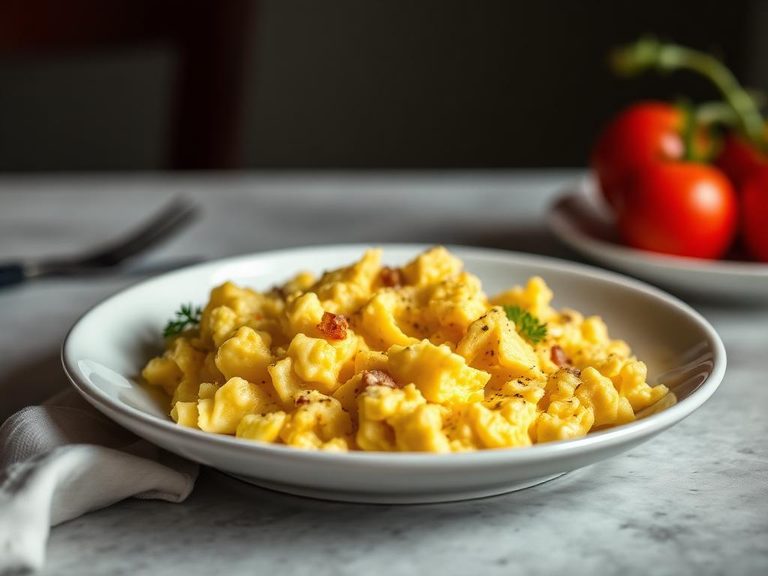
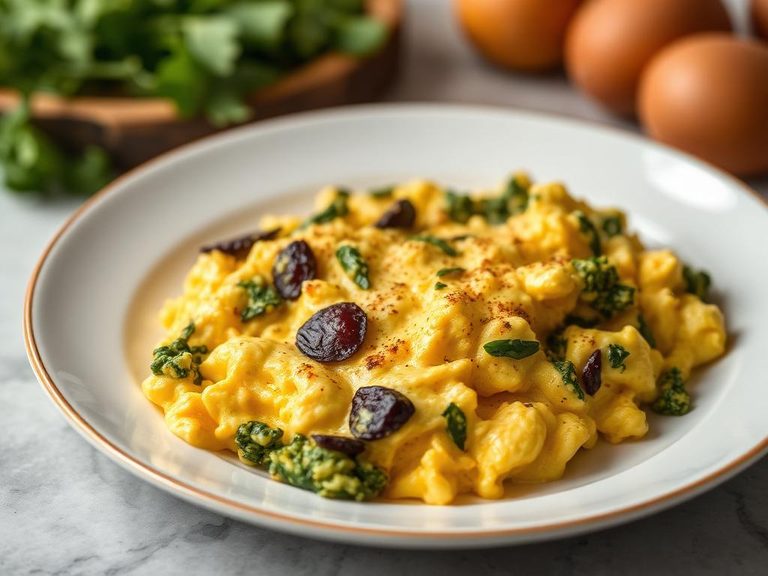
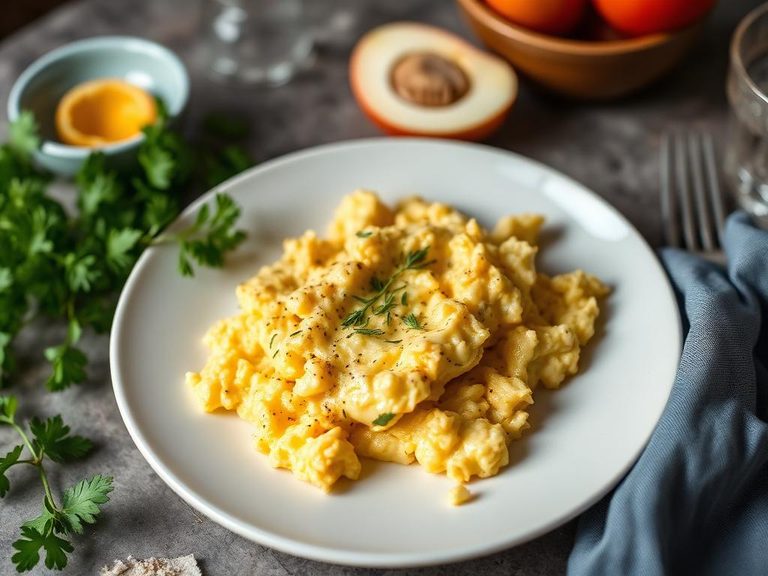
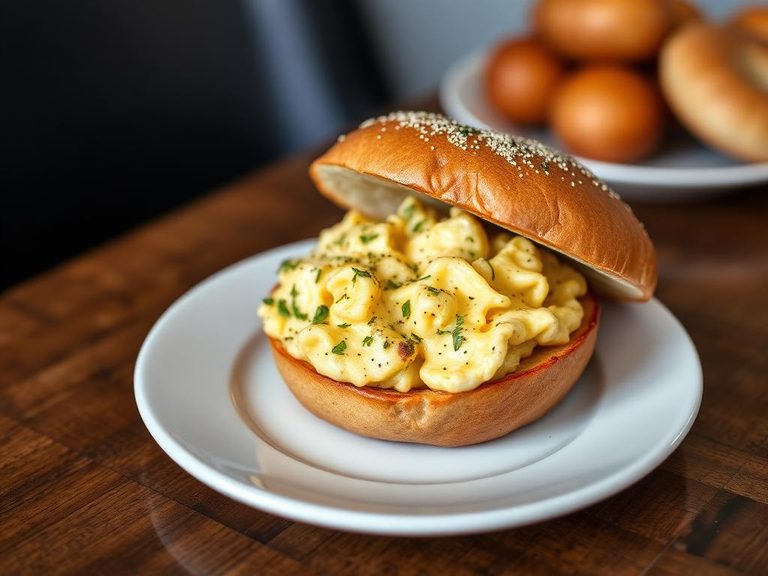
Scrambled eggs are a simple, beloved dish made by beating eggs and cooking them gently in a pan, often with butter or oil, until soft curds form. While the basic version is just eggs, it's commonly seasoned with salt and pepper and can include additions like cheese, herbs, or vegetables. This preparation method is found in cuisines worldwide, from American diners to French bistros.
🍳 View the full Scrambled Eggs recipe →
🍽️ Nutrition at a glance
Scrambled eggs are a high-protein, low-carbohydrate food, providing a good source of healthy fats, vitamins like B12 and D, and minerals such as selenium. A typical serving of two large eggs, cooked with a small amount of butter, contains roughly 180-200 calories.
Nutrition breakdown
| Calories | 143 kcal |
| Protein | 12.6 g |
| Carbs | 0.7 g |
| Fat | 9.5 g |
| Fiber | 0 g |
| Sugar | 0.4 g |
| Sodium | 142 mg |
| Choline | 294 mg |
| Vitamin B12 | 0.9 mcg |
| Riboflavin (B2) | 0.5 mg |
| Vitamin D | 1.1 mcg |
| Selenium | 30 mcg |
| Phosphorus | 198 mg |
| Vitamin A | 270 mcg RAE |
| Iron | 1.8 mg |
Per 2 large eggs (100 g) · estimated, varies by recipe
💡 What's interesting
Culturally, scrambled eggs are a universal comfort food, but their preparation varies widely—French-style scrambled eggs are famously creamy and custard-like, cooked low and slow with constant stirring, while American diner-style eggs are often firmer and fluffier. Nutritionally, the cooking method can significantly alter the dish; scrambling preserves most of the egg's nutrients compared to boiling, where some vitamins may leach into the water.
🍽️ Related dishes
AI estimate may be inaccurate · Terms