

Duck, domesticated, meat only, cooked, roasted
Whole food · Poultry Products

Photo: Wikipedia
Roasted domestic duck is a rich, savory poultry with crisp, rendered skin and tender, deeply flavored meat. It's a protein-packed food with virtually no carbs, making it a staple in many celebratory cuisines. The cooking process concentrates its distinct, slightly gamey flavor while melting the subcutaneous fat for a luxurious texture.
Calorie split: 48% protein · 0% carbs · 52% fat
↓ Full nutrition💚 Why it's loved
People love it for its rich, savory flavor that's more complex than chicken, and the prized contrast between the crispy skin and succulent meat. It's a centerpiece of festive meals across cultures, symbolizing abundance and tradition.
⚠️ Watch-outs & how to enjoy it better
The high fat content (especially in the skin) can make it a heavy, calorie-dense choice. Those monitoring saturated fat intake or with certain digestive conditions may need to limit portions. To enjoy it mindfully, consider removing the skin before eating and pairing it with a generous serving of fiber-rich vegetables like roasted Brussels sprouts or a tangy fruit compote to balance the richness.
Key benefits
- Excellent source of complete protein (23.5g per 100g).
- Rich in B vitamins, especially niacin (B3) and B12.
- Contains iron and zinc in a highly bioavailable form.
- Provides healthy monounsaturated fats from the skin.
- Zero carbohydrates, suitable for low-carb and ketogenic diets.
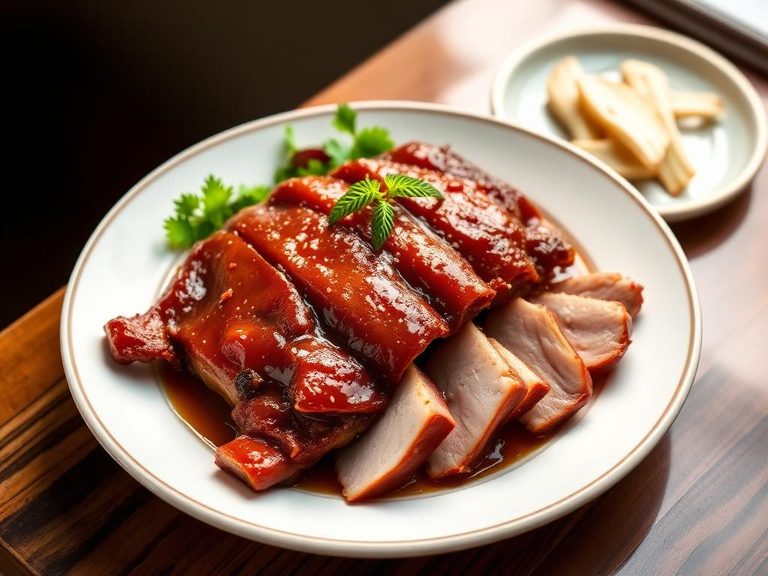
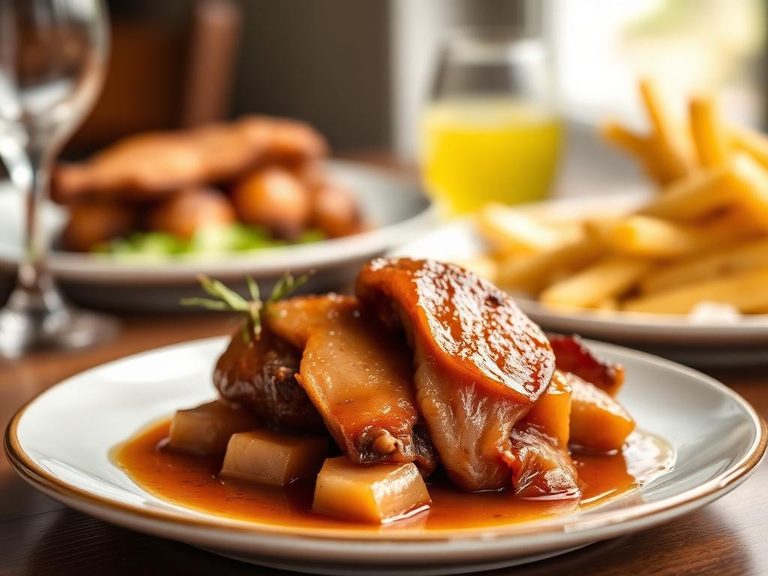
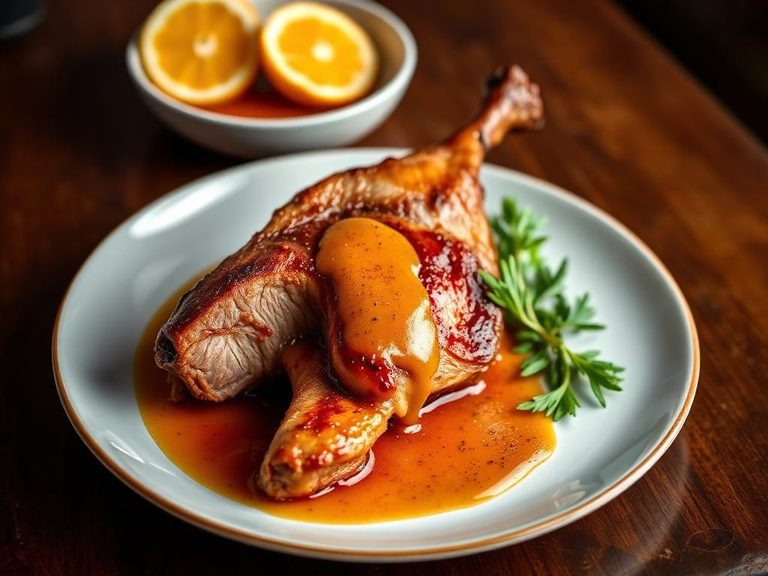
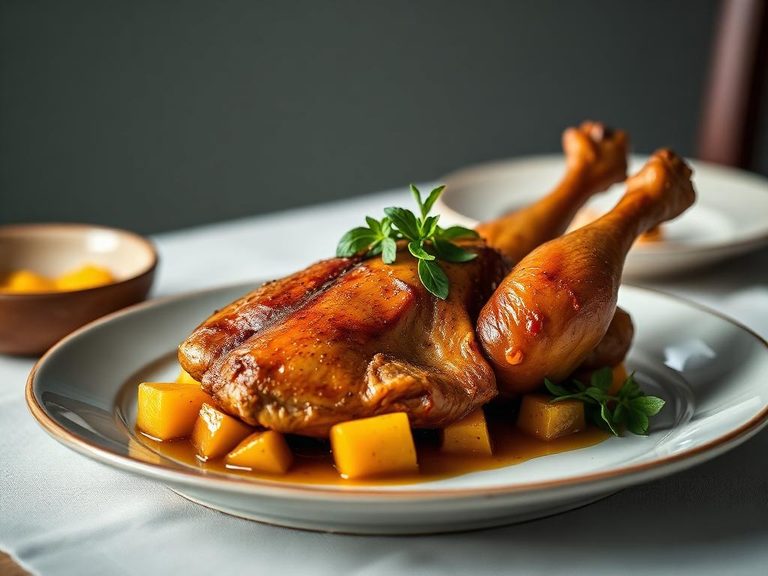
🍽️ Popular dishes
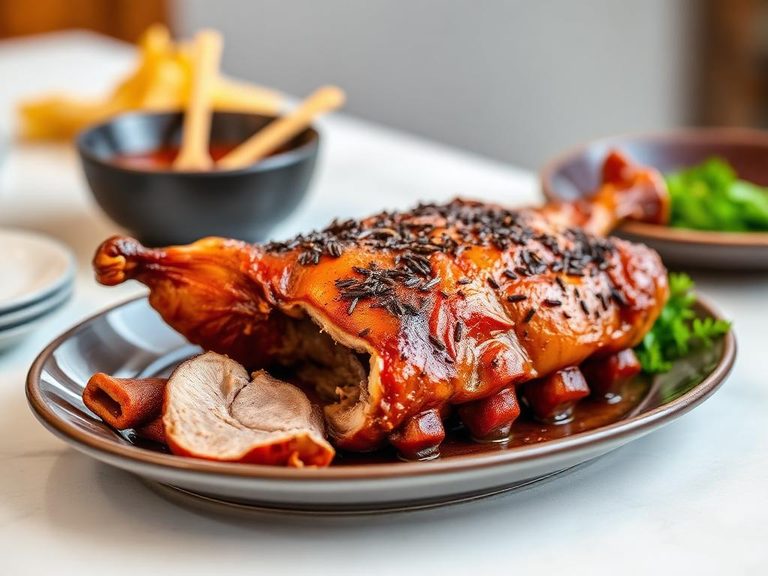
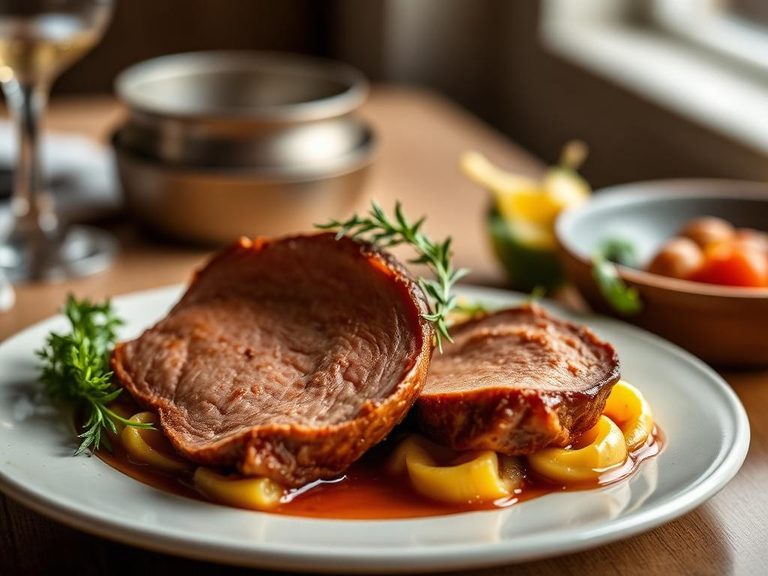
🌍 Where it's eaten
💡 Did you know?
The classic technique for Peking Duck involves inflating the carcass with air to separate the skin from the fat, allowing the skin to become extraordinarily crisp when roasted.
Full nutrition (USDA data · scales with serving)
| Water | 64.2 g |
| Energy | 201 kcal |
| Energy | 841 kj |
| Protein | 23.5 g |
| Total lipid (fat) | 11.2 g |
| Ash | 1.1 g |
| Carbohydrate, by difference | 0.00 g |
| Fiber, total dietary | 0.00 g |
| Total Sugars | 0.00 g |
| Calcium, Ca | 12.0 mg |
| Iron, Fe | 2.7 mg |
| Magnesium, Mg | 20.0 mg |
| Phosphorus, P | 203 mg |
| Potassium, K | 252 mg |
| Sodium, Na | 65.0 mg |
| Zinc, Zn | 2.6 mg |
| Copper, Cu | 0.23 mg |
| Manganese, Mn | 0.02 mg |
| Selenium, Se | 22.4 ug |
| Vitamin C, total ascorbic acid | 0.00 mg |
| Thiamin | 0.26 mg |
| Riboflavin | 0.47 mg |
| Niacin | 5.1 mg |
| Pantothenic acid | 1.5 mg |
| Vitamin B-6 | 0.25 mg |
| Folate, total | 10.0 ug |
| Folic acid | 0.00 ug |
| Folate, food | 10.0 ug |
| Folate, DFE | 10.0 ug |
| Choline, total | 65.0 mg |
| Betaine | 8.4 mg |
| Vitamin B-12 | 0.40 ug |
| Vitamin B-12, added | 0.00 ug |
| Vitamin A, RAE | 23.0 ug |
| Retinol | 23.0 ug |
| Carotene, beta | 0.00 ug |
| Carotene, alpha | 0.00 ug |
| Cryptoxanthin, beta | 0.00 ug |
| Vitamin A, IU | 77.0 iu |
| Lycopene | 0.00 ug |
| Lutein + zeaxanthin | 0.00 ug |
| Vitamin E (alpha-tocopherol) | 0.70 mg |
| Vitamin E, added | 0.00 mg |
| Vitamin D (D2 + D3), International Units | 4.0 iu |
| Vitamin D (D2 + D3) | 0.10 ug |
| Vitamin D3 (cholecalciferol) | 0.10 ug |
| Vitamin K (phylloquinone) | 3.8 ug |
| Vitamin K (Dihydrophylloquinone) | 0.00 ug |
| Alcohol, ethyl | 0.00 g |
| Caffeine | 0.00 mg |
| Theobromine | 0.00 mg |
Fat & fatty acid profile (per 100g)
| Fatty acids, total saturated | 4.0 g |
| SFA 4:0 | 0.00 g |
| SFA 6:0 | 0.00 g |
| SFA 8:0 | 0.00 g |
| SFA 10:0 | 0.00 g |
| SFA 12:0 | 0.04 g |
| SFA 14:0 | 0.05 g |
| SFA 16:0 | 2.5 g |
| SFA 18:0 | 1.3 g |
| Fatty acids, total monounsaturated | 3.9 g |
| MUFA 16:1 | 0.45 g |
| MUFA 18:1 | 3.4 g |
| MUFA 20:1 | 0.04 g |
| MUFA 22:1 | 0.00 g |
| Fatty acids, total polyunsaturated | 1.5 g |
| PUFA 18:2 | 1.3 g |
| PUFA 18:3 | 0.15 g |
| PUFA 18:4 | 0.00 g |
| PUFA 20:4 | 0.00 g |
| PUFA 20:5 n-3 (EPA) | 0.00 g |
| PUFA 22:5 n-3 (DPA) | 0.00 g |
| PUFA 22:6 n-3 (DHA) | 0.00 g |
| Cholesterol | 89.0 mg |
Amino acid profile (per 100g)
| Tryptophan | 0.33 g |
| Threonine | 1.0 g |
| Isoleucine | 1.2 g |
| Leucine | 2.0 g |
| Lysine | 2.0 g |
| Methionine | 0.64 g |
| Cystine | 0.36 g |
| Phenylalanine | 0.98 g |
| Tyrosine | 0.89 g |
| Valine | 1.2 g |
| Arginine | 1.5 g |
| Histidine | 0.62 g |
| Alanine | 1.5 g |
| Aspartic acid | 2.3 g |
| Glutamic acid | 3.7 g |
| Glycine | 1.3 g |
| Proline | 1.2 g |
| Serine | 1.0 g |
FAQ
Is duck meat red or white meat?
Duck is considered red meat. Its muscles contain more myoglobin than typical white poultry like chicken or turkey, giving it a darker color and richer flavor.
How do I render the fat for cooking?
To render duck fat, slowly cook chopped duck skin and fat in a pot over low heat until the fat melts out. Strain and store the liquid gold for roasting potatoes or sautéing vegetables.
What's the best way to get crispy skin?
For crispy skin, ensure the duck is very dry before cooking. Prick the skin all over (but not into the meat), and start roasting at a high temperature (around 400°F/200°C) before reducing the heat.
Nutrient density (calculated · NRF9.3)
Nutrient Rich Foods index: beneficial nutrients (protein, fiber, vitamins, minerals) minus saturated fat, added sugar & sodium, per 100 kcal.
NRF9.3 index — Fulgoni, Keast & Drewnowski, 2009. Computed from USDA nutrients.
Weight-loss friendliness (composite index)
Energy density 2.01 kcal/g · 47% calories from protein · 0.0 g fiber · 0.0 g sugar per 100 g.
Composite of energy density (Rolls et al., 1999), protein & fiber satiety, minus sugar. A calculated heuristic — ranks satiety-per-calorie, not a clinical measure.
Dietary load (calculated from USDA values)
Potential renal acid load. Positive = acid-forming, negative = alkaline-forming.
Sodium-to-potassium ratio: 0.26 (lower is better — aim for ≤ 1)
Sodium:potassium per WHO potassium guidance. Computed from USDA nutrients.