

Cornmeal, blue (Navajo)
Whole food · American Indian/Alaska Native Foods

Photo: Wikipedia
Blue cornmeal is a stone-ground flour made from dried blue corn, prized for its striking purple-blue hue and a distinctly earthy, slightly nutty flavor. It has a coarser, heartier texture than yellow cornmeal, often lending a pleasant, rustic graininess to dishes. Nutritionally, it stands out for its high fiber content and a richer antioxidant profile, thanks to the anthocyanins that give it its color.
Calorie split: 10% protein · 77% carbs · 12% fat
↓ Full nutrition💚 Why it's loved
People love it for its unique, deep corn flavor that is more complex than standard yellow cornmeal, and for the beautiful, natural color it imparts to foods. It's a cornerstone of Southwestern U.S. and Mexican cuisine, deeply tied to cultural heritage and traditional dishes.
⚠️ Watch-outs & how to enjoy it better
Its high carbohydrate content (76.93g per 100g) can cause rapid blood sugar spikes if consumed in large, unbalanced portions. To counteract this, pair it with protein (like eggs or beans) and healthy fats (like avocado or cheese), and practice portion control. Its coarse texture can also be gritty if not cooked properly; ensure adequate liquid and cooking time.
Key benefits
- High in dietary fiber (8.7g per 100g) for digestive health.
- Contains anthocyanin antioxidants from its natural blue pigmentation.
- A good source of plant-based protein (10.4g per 100g).
- Provides complex carbohydrates for sustained energy.
- Naturally gluten-free, making it suitable for gluten-sensitive diets.
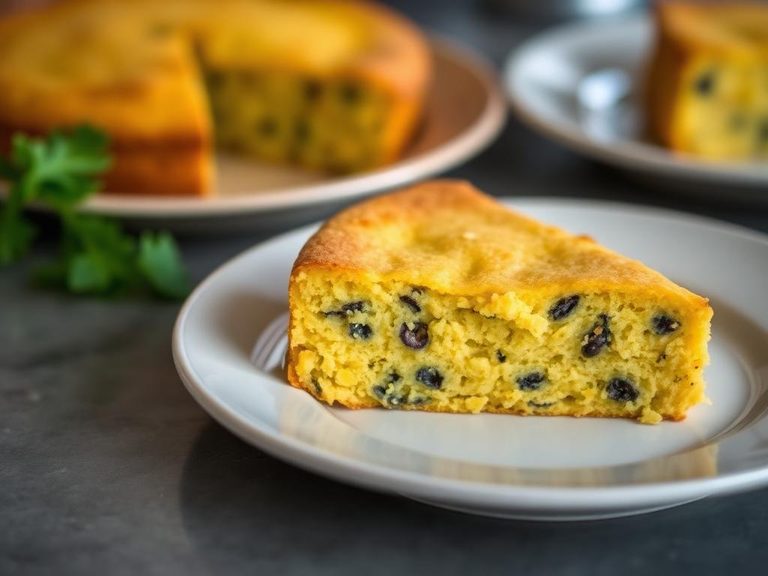
🍽️ Popular dishes
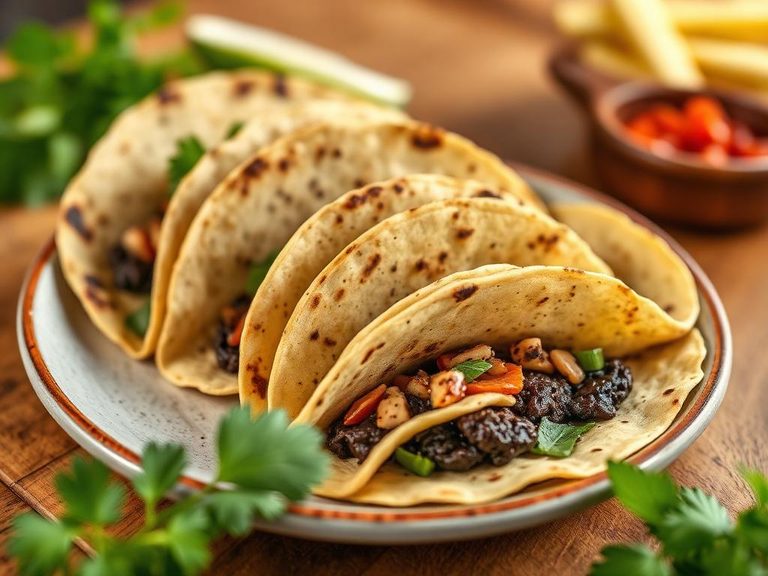
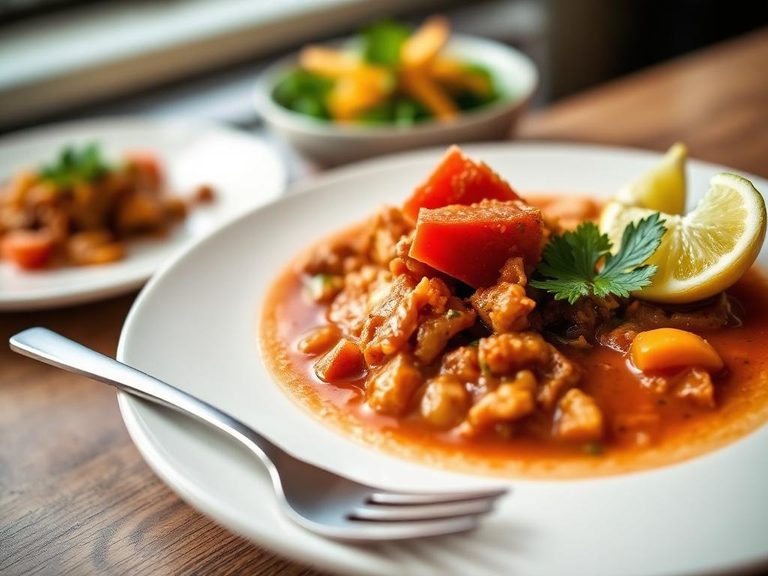
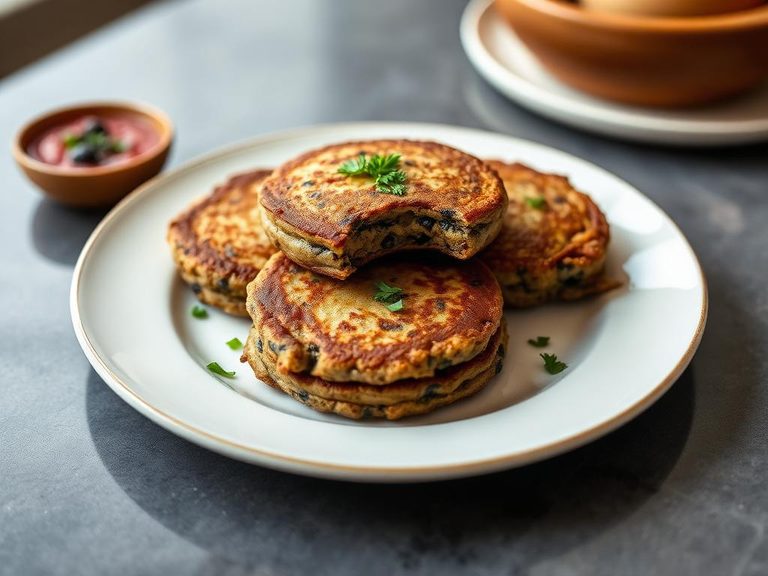
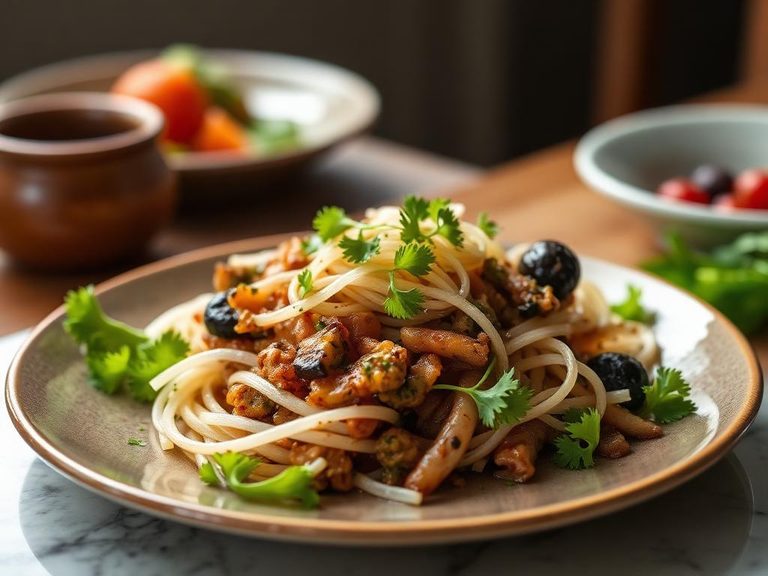

🌍 Where it's eaten
💡 Did you know?
The blue color in blue corn comes from anthocyanins, the same powerful antioxidants found in blueberries and red cabbage.
Full nutrition (USDA data · scales with serving)
| Water | 5.7 g |
| Energy | 398 kcal |
| Energy | 1666 kj |
| Protein | 10.4 g |
| Total lipid (fat) | 5.4 g |
| Ash | 1.5 g |
| Carbohydrate, by difference | 76.9 g |
| Fiber, total dietary | 8.7 g |
| Total Sugars | 1.8 g |
| Sucrose | 1.5 g |
| Glucose | 0.16 g |
| Fructose | 0.12 g |
| Lactose | 0.00 g |
| Maltose | 0.00 g |
| Galactose | 0.00 g |
| Starch | 63.6 g |
| Calcium, Ca | 5.0 mg |
| Iron, Fe | 2.9 mg |
| Magnesium, Mg | 133 mg |
| Phosphorus, P | 354 mg |
| Potassium, K | 393 mg |
| Sodium, Na | 7.0 mg |
| Zinc, Zn | 2.9 mg |
| Copper, Cu | 0.22 mg |
| Manganese, Mn | 0.76 mg |
| Selenium, Se | 11.8 ug |
| Vitamin C, total ascorbic acid | 0.00 mg |
| Thiamin | 0.28 mg |
| Riboflavin | 0.11 mg |
| Niacin | 2.0 mg |
| Pantothenic acid | 0.35 mg |
| Vitamin B-6 | 0.59 mg |
| Folate, total | 58.0 ug |
| Folate, food | 58.0 ug |
| Vitamin E (alpha-tocopherol) | 0.73 mg |
| Tocopherol, beta | 0.00 mg |
| Tocopherol, gamma | 3.2 mg |
| Tocopherol, delta | 0.37 mg |
| Tocotrienol, alpha | 0.37 mg |
| Tocotrienol, beta | 0.00 mg |
| Tocotrienol, gamma | 0.55 mg |
| Tocotrienol, delta | 0.00 mg |
| Vitamin K (phylloquinone) | 0.00 ug |
| Vitamin K (Dihydrophylloquinone) | 0.00 ug |
Fat & fatty acid profile (per 100g)
| Fatty acids, total saturated | 0.89 g |
| SFA 8:0 | 0.00 g |
| SFA 10:0 | 0.00 g |
| SFA 12:0 | 0.00 g |
| SFA 14:0 | 0.00 g |
| SFA 15:0 | 0.00 g |
| SFA 16:0 | 0.71 g |
| SFA 17:0 | 0.00 g |
| SFA 18:0 | 0.13 g |
| SFA 20:0 | 0.03 g |
| SFA 22:0 | 0.02 g |
| Fatty acids, total monounsaturated | 1.7 g |
| MUFA 14:1 | 0.00 g |
| MUFA 15:1 | 0.00 g |
| MUFA 16:1 | 0.00 g |
| MUFA 17:1 | 0.00 g |
| MUFA 18:1 | 1.7 g |
| MUFA 20:1 | 0.01 g |
| Fatty acids, total polyunsaturated | 2.5 g |
| PUFA 18:2 | 2.4 g |
| PUFA 18:3 | 0.00 g |
| PUFA 18:3 n-3 c,c,c (ALA) | 0.06 g |
| PUFA 18:3 n-6 c,c,c | 0.00 g |
| PUFA 20:2 n-6 c,c | 0.00 g |
| PUFA 20:3 | 0.00 g |
| PUFA 20:4 | 0.00 g |
Amino acid profile (per 100g)
Estimated from Cornmeal, yellow (Navajo) — USDA does not publish this profile for Cornmeal.
| Tryptophan | 0.05 g |
| Threonine | 0.31 g |
| Isoleucine | 0.37 g |
| Leucine | 1.3 g |
| Lysine | 0.30 g |
| Methionine | 0.23 g |
| Cystine | 0.18 g |
| Phenylalanine | 0.50 g |
| Tyrosine | 0.29 g |
| Valine | 0.49 g |
| Arginine | 0.42 g |
| Histidine | 0.27 g |
| Alanine | 0.77 g |
| Aspartic acid | 0.66 g |
| Glutamic acid | 1.9 g |
| Glycine | 0.36 g |
| Proline | 0.85 g |
| Serine | 0.47 g |
FAQ
Is blue cornmeal the same as regular cornmeal?
No. Blue cornmeal is made from a specific variety of corn (blue corn) and has a different color, a nuttier flavor, and a slightly higher protein and antioxidant content than standard yellow or white cornmeal.
Can I substitute blue cornmeal for yellow cornmeal in any recipe?
Yes, in most recipes like cornbread or polenta, you can substitute it 1:1. The flavor will be earthier and the color will change dramatically, but the texture may be slightly coarser.
Is blue cornmeal gluten-free?
Yes, pure blue cornmeal is naturally gluten-free. However, always check the packaging to ensure it was processed in a facility that avoids cross-contamination if you have celiac disease or severe sensitivity.
Nutrient density (calculated · NRF9.3)
Nutrient Rich Foods index: beneficial nutrients (protein, fiber, vitamins, minerals) minus saturated fat, added sugar & sodium, per 100 kcal.
NRF9.3 index — Fulgoni, Keast & Drewnowski, 2009. Computed from USDA nutrients.
Weight-loss friendliness (composite index)
Energy density 3.98 kcal/g · 10% calories from protein · 8.7 g fiber · 1.8 g sugar per 100 g.
Composite of energy density (Rolls et al., 1999), protein & fiber satiety, minus sugar. A calculated heuristic — ranks satiety-per-calorie, not a clinical measure.
Dietary load (calculated from USDA values)
Potential renal acid load. Positive = acid-forming, negative = alkaline-forming.
Sodium-to-potassium ratio: 0.02 (lower is better — aim for ≤ 1)
Sodium:potassium per WHO potassium guidance. Computed from USDA nutrients.