

Cocoa, dry powder, unsweetened, processed with alkali
Whole food · Sweets

Photo: Wikipedia
This is the intensely dark, rich powder created by treating cocoa beans with an alkaline solution, a process known as Dutching. It has a deep, almost black color, a fine, dusty texture, and a robust, mellow chocolate flavor with significantly reduced bitterness and acidity compared to natural cocoa. Nutritionally, it's a powerhouse of plant-based protein and an exceptional source of dietary fiber.
Calorie split: 17% protein · 55% carbs · 28% fat
↓ Full nutrition💚 Why it's loved
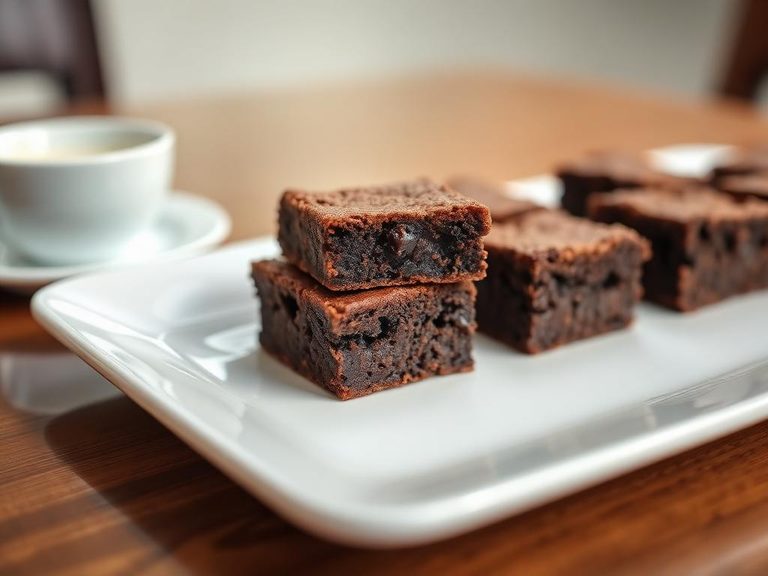
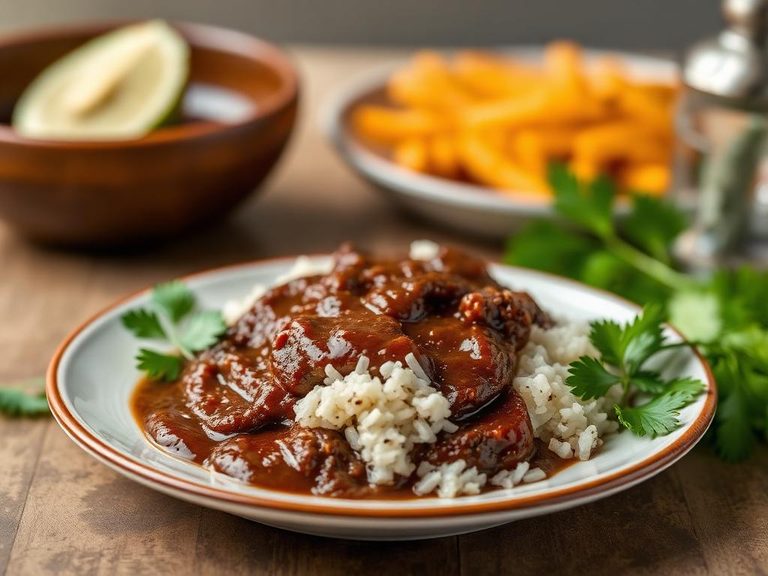
People love it for its profound, complex chocolate flavor that forms the backbone of countless desserts and beverages. Its versatility allows it to deepen the taste of everything from hot cocoa and brownies to savory mole sauces.
⚠️ Watch-outs & how to enjoy it better
Its intense bitterness can be overwhelming if used improperly, and it's often paired with large amounts of sugar in recipes. For those monitoring sodium intake, be aware that the alkali processing can increase sodium content. To counteract bitterness without excess sugar, pair it with a fat like coconut oil or a pinch of salt, or use it in small amounts within a recipe.
Key benefits
- Exceptionally high in dietary fiber (nearly 30g per 100g)
- Rich source of plant-based protein (over 18g per 100g)
- Very low in sugar (under 2g per 100g)
- Contains minerals like magnesium, iron, and potassium
- The alkaline process creates a smoother, less acidic flavor profile
🍽️ Popular dishes




🌍 Where it's eaten
💡 Did you know?
The 'Dutching' process, invented in 1828 by Coenraad van Houten, not only mellows the flavor but also makes the powder more soluble in liquids, which is why it's preferred for making smooth drinks.
Full nutrition (USDA data · scales with serving)
| Water | 2.7 g |
| Energy | 220 kcal |
| Energy | 922 kj |
| Protein | 18.1 g |
| Total lipid (fat) | 13.1 g |
| Ash | 7.8 g |
| Carbohydrate, by difference | 58.3 g |
| Fiber, total dietary | 29.8 g |
| Total Sugars | 1.8 g |
| Calcium, Ca | 111 mg |
| Iron, Fe | 15.5 mg |
| Magnesium, Mg | 476 mg |
| Phosphorus, P | 728 mg |
| Potassium, K | 2509 mg |
| Sodium, Na | 19.0 mg |
| Zinc, Zn | 6.4 mg |
| Copper, Cu | 3.6 mg |
| Manganese, Mn | 3.7 mg |
| Selenium, Se | 13.2 ug |
| Vitamin C, total ascorbic acid | 0.00 mg |
| Thiamin | 0.11 mg |
| Riboflavin | 0.46 mg |
| Niacin | 2.4 mg |
| Pantothenic acid | 0.25 mg |
| Vitamin B-6 | 0.12 mg |
| Folate, total | 32.0 ug |
| Folic acid | 0.00 ug |
| Folate, food | 32.0 ug |
| Folate, DFE | 32.0 ug |
| Choline, total | 11.4 mg |
| Vitamin B-12 | 0.00 ug |
| Vitamin B-12, added | 0.00 ug |
| Vitamin A, RAE | 0.00 ug |
| Retinol | 0.00 ug |
| Carotene, beta | 0.00 ug |
| Carotene, alpha | 0.00 ug |
| Cryptoxanthin, beta | 0.00 ug |
| Vitamin A, IU | 0.00 iu |
| Lycopene | 0.00 ug |
| Lutein + zeaxanthin | 38.0 ug |
| Vitamin E (alpha-tocopherol) | 0.10 mg |
| Vitamin E, added | 0.00 mg |
| Vitamin D (D2 + D3), International Units | 0.00 iu |
| Vitamin D (D2 + D3) | 0.00 ug |
| Vitamin K (phylloquinone) | 2.4 ug |
| Alcohol, ethyl | 0.00 g |
| Caffeine | 78.0 mg |
| Theobromine | 2634 mg |
Fat & fatty acid profile (per 100g)
| Fatty acids, total saturated | 7.8 g |
| SFA 4:0 | 0.00 g |
| SFA 6:0 | 0.00 g |
| SFA 8:0 | 0.00 g |
| SFA 10:0 | 0.00 g |
| SFA 12:0 | 0.00 g |
| SFA 14:0 | 0.02 g |
| SFA 16:0 | 3.5 g |
| SFA 18:0 | 4.1 g |
| Fatty acids, total monounsaturated | 4.4 g |
| MUFA 16:1 | 0.00 g |
| MUFA 18:1 | 4.4 g |
| MUFA 20:1 | 0.00 g |
| MUFA 22:1 | 0.00 g |
| Fatty acids, total polyunsaturated | 0.42 g |
| PUFA 18:2 | 0.42 g |
| PUFA 18:3 | 0.00 g |
| PUFA 18:4 | 0.00 g |
| PUFA 20:4 | 0.00 g |
| PUFA 20:5 n-3 (EPA) | 0.00 g |
| PUFA 22:5 n-3 (DPA) | 0.00 g |
| PUFA 22:6 n-3 (DHA) | 0.00 g |
| Cholesterol | 0.00 mg |
Amino acid profile (per 100g)
| Tryptophan | 0.27 g |
| Threonine | 0.72 g |
| Isoleucine | 0.70 g |
| Leucine | 1.1 g |
| Lysine | 0.91 g |
| Methionine | 0.19 g |
| Cystine | 0.22 g |
| Phenylalanine | 0.87 g |
| Tyrosine | 0.68 g |
| Valine | 1.1 g |
| Arginine | 1.0 g |
| Histidine | 0.31 g |
| Alanine | 0.83 g |
| Aspartic acid | 1.8 g |
| Glutamic acid | 2.7 g |
| Glycine | 0.81 g |
| Proline | 0.77 g |
| Serine | 0.78 g |
FAQ
What's the difference between this and natural cocoa powder?
Natural cocoa is untreated, more acidic, and has a sharper, more fruity flavor. Alkalized (Dutch-process) cocoa is treated to neutralize acidity, resulting in a darker color, mellower taste, and better solubility in liquids.
Can I substitute one for the other in recipes?
It's tricky. Dutch-process cocoa won't react with baking soda (which needs acid to leaven), so a recipe using it typically relies on baking powder. Swapping them can affect both flavor and the rise of baked goods.
Is it healthy to eat straight from the container?
While nutritious, its intense bitterness makes it unpalatable to most. It's best used as an ingredient. The high fiber content can also cause digestive discomfort if consumed in large, undiluted amounts.
Nutrient density (calculated · NRF9.3)
Nutrient Rich Foods index: beneficial nutrients (protein, fiber, vitamins, minerals) minus saturated fat, added sugar & sodium, per 100 kcal.
NRF9.3 index — Fulgoni, Keast & Drewnowski, 2009. Computed from USDA nutrients.
Weight-loss friendliness (composite index)
Energy density 2.20 kcal/g · 33% calories from protein · 29.8 g fiber · 1.8 g sugar per 100 g.
Composite of energy density (Rolls et al., 1999), protein & fiber satiety, minus sugar. A calculated heuristic — ranks satiety-per-calorie, not a clinical measure.
Dietary load (calculated from USDA values)
Potential renal acid load. Positive = acid-forming, negative = alkaline-forming.
Sodium-to-potassium ratio: 0.01 (lower is better — aim for ≤ 1)
Sodium:potassium per WHO potassium guidance. Computed from USDA nutrients.