

Cheesefurter, cheese smokie, pork, beef
Whole food · Sausages and Luncheon Meats
A Cheesefurter, or cheese smokie, is a pre-cooked sausage, typically a blend of pork and beef, with pockets of melted cheddar cheese fused into the meat. It offers a juicy, snappy casing with a rich, savory, and salty flavor, punctuated by bursts of creamy, sharp cheese. Nutritionally, it's a high-protein, high-fat food with virtually no carbohydrates, making it a dense source of energy.
Calorie split: 17% protein · 2% carbs · 81% fat
↓ Full nutrition💚 Why it's loved
People love the Cheesefurter for its ultimate comfort-food appeal—the satisfying combination of juicy, smoky sausage and gooey, melted cheese in every bite. It's a nostalgic favorite, often associated with backyard barbecues, campfire cooking, and casual, hearty meals.
⚠️ Watch-outs & how to enjoy it better
The high fat and sodium content can be a concern for those monitoring heart health or blood pressure. The processed meat and cheese combination is also high in saturated fat. To enjoy it mindfully, practice strict portion control (one link is a serving), pair it with a large, fiber-rich side like a vinegar-based coleslaw or roasted vegetables, and balance your meals throughout the day with leaner proteins.
Key benefits
- Excellent source of complete protein for muscle maintenance.
- Very low in carbohydrates, suitable for low-carb diets.
- Provides dietary fats for satiety and energy.
- A convenient, ready-to-eat or quick-cook protein source.
- Contains calcium from the incorporated cheese.
🍽️ Popular dishes
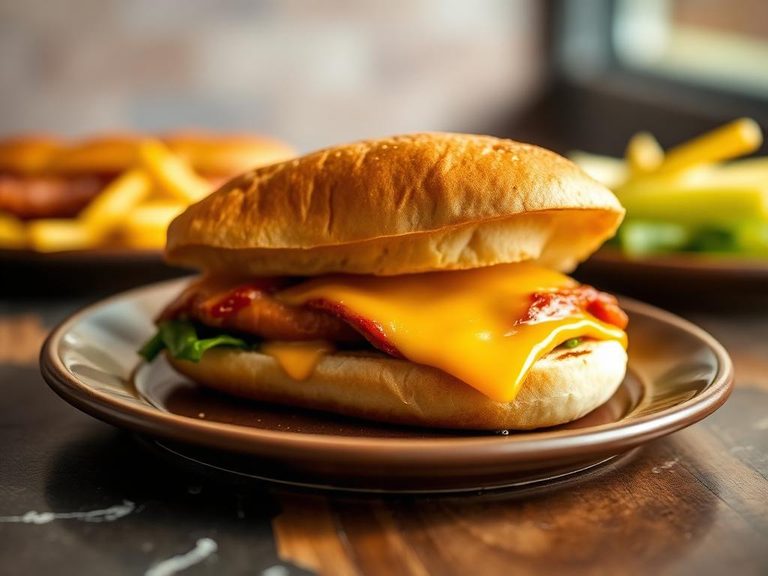
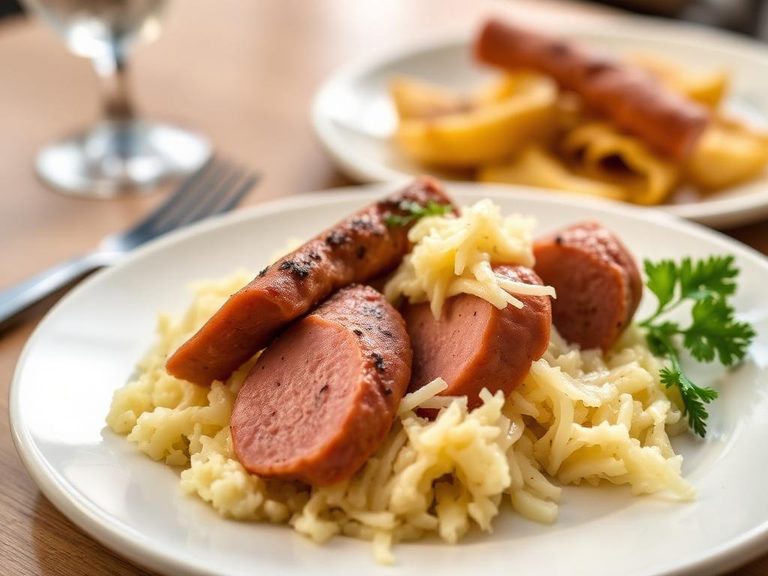
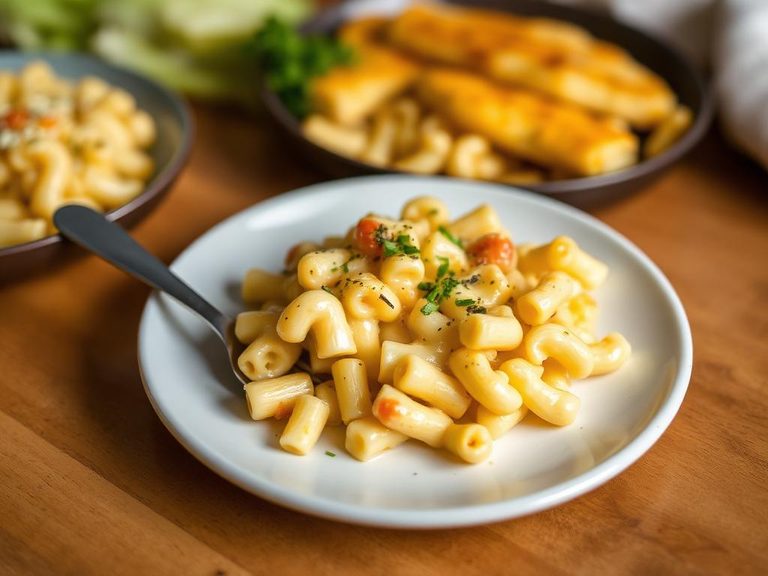
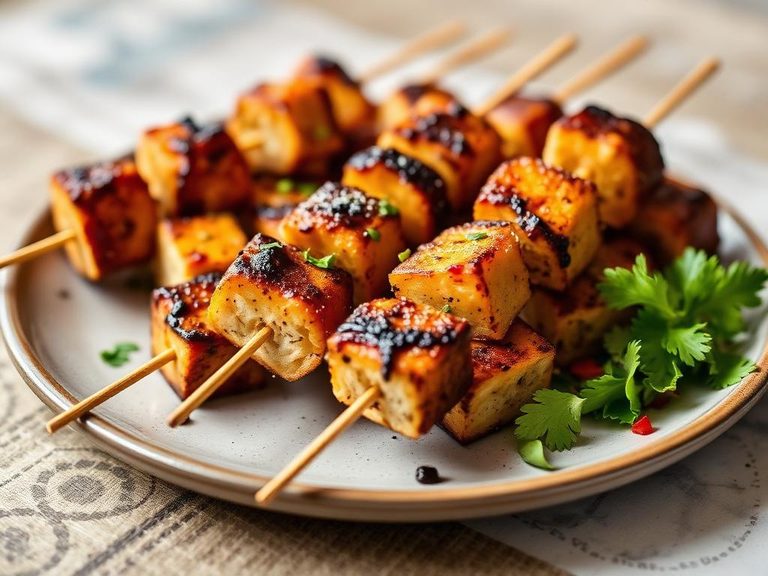
🌍 Where it's eaten
💡 Did you know?
The 'smokie' in its name refers to the traditional smoking process used for the sausage, which imparts a distinct, campfire-like flavor even before it's grilled.
Full nutrition (USDA data · scales with serving)
| Water | 52.5 g |
| Energy | 328 kcal |
| Energy | 1371 kj |
| Protein | 14.1 g |
| Total lipid (fat) | 29.0 g |
| Ash | 3.0 g |
| Carbohydrate, by difference | 1.5 g |
| Fiber, total dietary | 0.00 g |
| Total Sugars | 1.5 g |
| Calcium, Ca | 58.0 mg |
| Iron, Fe | 1.1 mg |
| Magnesium, Mg | 13.0 mg |
| Phosphorus, P | 178 mg |
| Potassium, K | 206 mg |
| Sodium, Na | 1082 mg |
| Zinc, Zn | 2.3 mg |
| Copper, Cu | 0.07 mg |
| Manganese, Mn | 0.03 mg |
| Selenium, Se | 15.7 ug |
| Fluoride, F | 11.2 ug |
| Vitamin C, total ascorbic acid | 0.00 mg |
| Thiamin | 0.25 mg |
| Riboflavin | 0.16 mg |
| Niacin | 2.9 mg |
| Pantothenic acid | 0.76 mg |
| Vitamin B-6 | 0.13 mg |
| Folate, total | 3.0 ug |
| Folic acid | 0.00 ug |
| Folate, food | 3.0 ug |
| Folate, DFE | 3.0 ug |
| Choline, total | 63.1 mg |
| Betaine | 6.5 mg |
| Vitamin B-12 | 1.7 ug |
| Vitamin B-12, added | 0.00 ug |
| Vitamin A, RAE | 6.0 ug |
| Retinol | 6.0 ug |
| Carotene, beta | 0.00 ug |
| Carotene, alpha | 0.00 ug |
| Cryptoxanthin, beta | 0.00 ug |
| Vitamin A, IU | 19.0 iu |
| Lycopene | 0.00 ug |
| Lutein + zeaxanthin | 0.00 ug |
| Vitamin E (alpha-tocopherol) | 0.24 mg |
| Vitamin E, added | 0.00 mg |
| Vitamin D (D2 + D3), International Units | 12.0 iu |
| Vitamin D (D2 + D3) | 0.30 ug |
| Vitamin K (phylloquinone) | 1.6 ug |
| Vitamin K (Dihydrophylloquinone) | 0.00 ug |
| Alcohol, ethyl | 0.00 g |
| Caffeine | 0.00 mg |
| Theobromine | 0.00 mg |
Fat & fatty acid profile (per 100g)
| Fatty acids, total saturated | 10.5 g |
| SFA 4:0 | 0.00 g |
| SFA 6:0 | 0.00 g |
| SFA 8:0 | 0.00 g |
| SFA 10:0 | 0.09 g |
| SFA 12:0 | 0.10 g |
| SFA 14:0 | 0.56 g |
| SFA 16:0 | 6.4 g |
| SFA 18:0 | 3.3 g |
| Fatty acids, total monounsaturated | 13.6 g |
| MUFA 16:1 | 1.1 g |
| MUFA 18:1 | 12.5 g |
| MUFA 20:1 | 0.00 g |
| MUFA 22:1 | 0.00 g |
| Fatty acids, total polyunsaturated | 3.0 g |
| PUFA 18:2 | 2.6 g |
| PUFA 18:3 | 0.40 g |
| PUFA 18:4 | 0.00 g |
| PUFA 20:4 | 0.00 g |
| PUFA 20:5 n-3 (EPA) | 0.00 g |
| PUFA 22:5 n-3 (DPA) | 0.00 g |
| PUFA 22:6 n-3 (DHA) | 0.00 g |
| Cholesterol | 68.0 mg |
| Phytosterols | 3.0 mg |
Amino acid profile (per 100g)
| Tryptophan | 0.15 g |
| Threonine | 0.54 g |
| Isoleucine | 0.62 g |
| Leucine | 1.1 g |
| Lysine | 1.2 g |
| Methionine | 0.36 g |
| Cystine | 0.15 g |
| Phenylalanine | 0.56 g |
| Tyrosine | 0.52 g |
| Valine | 0.69 g |
| Arginine | 0.84 g |
| Histidine | 0.47 g |
| Alanine | 0.83 g |
| Aspartic acid | 1.2 g |
| Glutamic acid | 2.4 g |
| Glycine | 0.91 g |
| Proline | 0.97 g |
| Serine | 0.60 g |
FAQ
How is a Cheesefurter different from a regular hot dog?
A Cheesefurter is typically thicker, made from a coarser grind of pork and beef (versus the emulsified meat of a hot dog), and has cheese integrated directly into the sausage mixture. It's also usually pre-smoked.
What's the best way to cook a frozen Cheesefurter?
For best results, thaw it in the refrigerator overnight. You can then grill, pan-fry, or bake it until heated through and the casing is crisp. If cooking from frozen, simmer gently in water first to heat the center, then finish on a grill or in a pan for color and texture.
Can I use Cheesefurters in recipes that call for regular sausages?
Yes, but be aware the added cheese will melt and can change the dish's texture and flavor profile. It works best in hearty, rustic dishes like casseroles, pastas, or on pizzas where a bold, cheesy, smoky flavor is desired.
Nutrient density (calculated · NRF9.3)
Nutrient Rich Foods index: beneficial nutrients (protein, fiber, vitamins, minerals) minus saturated fat, added sugar & sodium, per 100 kcal.
NRF9.3 index — Fulgoni, Keast & Drewnowski, 2009. Computed from USDA nutrients.
Weight-loss friendliness (composite index)
Energy density 3.28 kcal/g · 17% calories from protein · 0.0 g fiber · 1.5 g sugar per 100 g.
Composite of energy density (Rolls et al., 1999), protein & fiber satiety, minus sugar. A calculated heuristic — ranks satiety-per-calorie, not a clinical measure.
Dietary load (calculated from USDA values)
Potential renal acid load. Positive = acid-forming, negative = alkaline-forming.
Sodium-to-potassium ratio: 5.25 (lower is better — aim for ≤ 1)
Sodium:potassium per WHO potassium guidance. Computed from USDA nutrients.