

Cheese, camembert
Whole food · Dairy and Egg Products

Photo: Wikipedia
Camembert is a soft, surface-ripened cheese with a distinctive edible white rind and a creamy, oozy interior that intensifies as it ages. Its flavor profile is rich, buttery, and earthy with a subtle mushroomy tang, offering a luxurious mouthfeel. Nutritionally, it is a dense source of protein and fat, providing substantial energy with virtually no carbohydrates.
Calorie split: 26% protein · 1% carbs · 73% fat
↓ Full nutrition💚 Why it's loved
People adore Camembert for its decadent, melting texture and complex, earthy flavor that pairs beautifully with wine and crusty bread. It is a cornerstone of French culinary culture, celebrated for its versatility from baked appetizers to rustic cheese boards.
⚠️ Watch-outs & how to enjoy it better
Its high saturated fat and sodium content can be a concern for those monitoring heart health or blood pressure. To mitigate, practice strict portion control (e.g., 30-50g servings) and pair with fiber-rich foods like whole-grain crackers or fresh fruit to slow digestion and balance the meal.
Key benefits
- High in protein for muscle maintenance
- Rich in calcium for bone health
- Contains vitamin A for eye and skin health
- Provides vitamin B12 for nerve function
- Good source of phosphorus
🍽️ Popular dishes
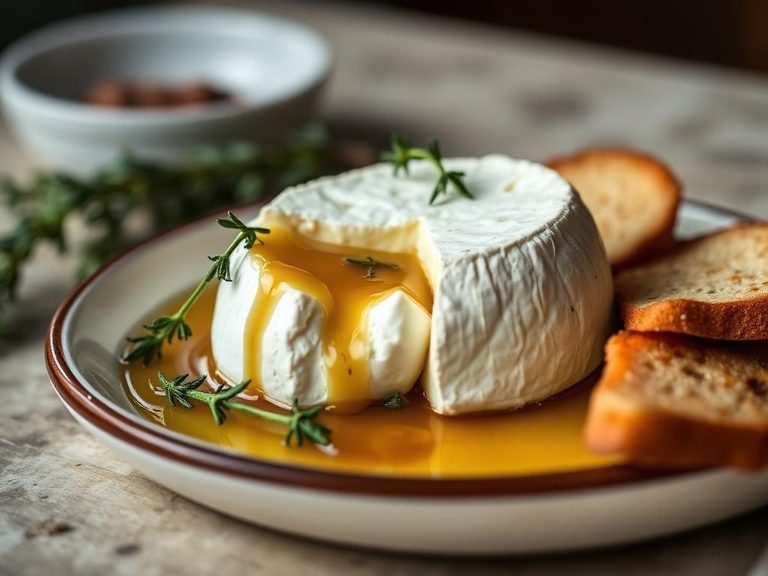

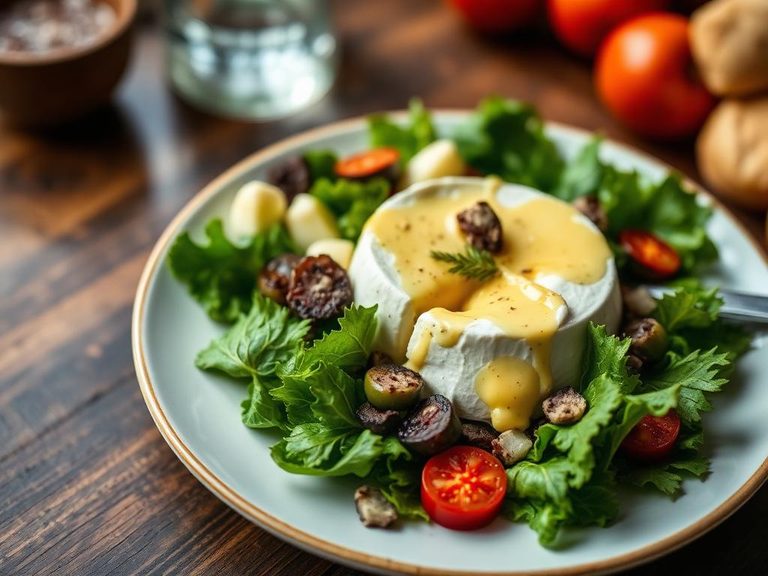

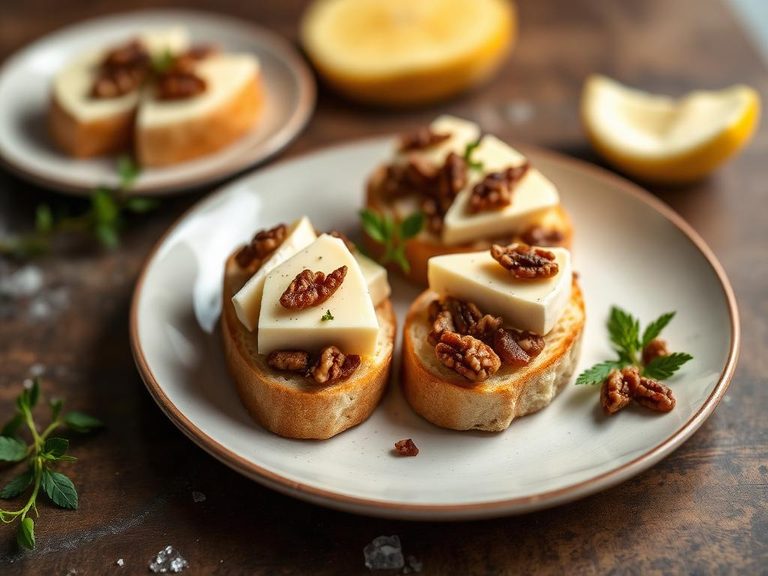
🌍 Where it's eaten
💡 Did you know?
Camembert was first made in 1791 by Marie Harel, a farmer from Normandy, and it became a symbol of French resistance during World War II because it was a staple food that could be easily transported and shared.
Full nutrition (USDA data · scales with serving)
| Water | 51.8 g |
| Energy | 300 kcal |
| Energy | 1253 kj |
| Protein | 19.8 g |
| Total lipid (fat) | 24.3 g |
| Ash | 3.7 g |
| Carbohydrate, by difference | 0.46 g |
| Fiber, total dietary | 0.00 g |
| Total Sugars | 0.46 g |
| Calcium, Ca | 388 mg |
| Iron, Fe | 0.33 mg |
| Magnesium, Mg | 20.0 mg |
| Phosphorus, P | 347 mg |
| Potassium, K | 187 mg |
| Sodium, Na | 842 mg |
| Zinc, Zn | 2.4 mg |
| Copper, Cu | 0.02 mg |
| Manganese, Mn | 0.04 mg |
| Selenium, Se | 14.5 ug |
| Vitamin C, total ascorbic acid | 0.00 mg |
| Thiamin | 0.03 mg |
| Riboflavin | 0.49 mg |
| Niacin | 0.63 mg |
| Pantothenic acid | 1.4 mg |
| Vitamin B-6 | 0.23 mg |
| Folate, total | 62.0 ug |
| Folic acid | 0.00 ug |
| Folate, food | 62.0 ug |
| Folate, DFE | 62.0 ug |
| Choline, total | 15.4 mg |
| Vitamin B-12 | 1.3 ug |
| Vitamin B-12, added | 0.00 ug |
| Vitamin A, RAE | 241 ug |
| Retinol | 240 ug |
| Carotene, beta | 12.0 ug |
| Carotene, alpha | 0.00 ug |
| Cryptoxanthin, beta | 0.00 ug |
| Vitamin A, IU | 820 iu |
| Lycopene | 0.00 ug |
| Lutein + zeaxanthin | 0.00 ug |
| Vitamin E (alpha-tocopherol) | 0.21 mg |
| Vitamin E, added | 0.00 mg |
| Vitamin D (D2 + D3), International Units | 18.0 iu |
| Vitamin D (D2 + D3) | 0.40 ug |
| Vitamin D3 (cholecalciferol) | 0.40 ug |
| Vitamin K (phylloquinone) | 2.0 ug |
| Alcohol, ethyl | 0.00 g |
| Caffeine | 0.00 mg |
| Theobromine | 0.00 mg |
Fat & fatty acid profile (per 100g)
| Fatty acids, total saturated | 15.3 g |
| SFA 4:0 | 0.49 g |
| SFA 6:0 | 0.28 g |
| SFA 8:0 | 0.26 g |
| SFA 10:0 | 0.59 g |
| SFA 12:0 | 0.44 g |
| SFA 14:0 | 2.7 g |
| SFA 16:0 | 7.2 g |
| SFA 18:0 | 2.5 g |
| Fatty acids, total monounsaturated | 7.0 g |
| MUFA 16:1 | 0.88 g |
| MUFA 18:1 | 5.8 g |
| MUFA 20:1 | 0.00 g |
| MUFA 22:1 | 0.00 g |
| Fatty acids, total polyunsaturated | 0.72 g |
| PUFA 18:2 | 0.45 g |
| PUFA 18:3 | 0.27 g |
| PUFA 18:4 | 0.00 g |
| PUFA 20:4 | 0.00 g |
| PUFA 20:5 n-3 (EPA) | 0.00 g |
| PUFA 22:5 n-3 (DPA) | 0.00 g |
| PUFA 22:6 n-3 (DHA) | 0.00 g |
| Cholesterol | 72.0 mg |
Amino acid profile (per 100g)
| Tryptophan | 0.31 g |
| Threonine | 0.72 g |
| Isoleucine | 0.97 g |
| Leucine | 1.8 g |
| Lysine | 1.8 g |
| Methionine | 0.56 g |
| Cystine | 0.11 g |
| Phenylalanine | 1.1 g |
| Tyrosine | 1.1 g |
| Valine | 1.3 g |
| Arginine | 0.70 g |
| Histidine | 0.68 g |
| Alanine | 0.82 g |
| Aspartic acid | 1.3 g |
| Glutamic acid | 4.2 g |
| Glycine | 0.38 g |
| Proline | 2.3 g |
| Serine | 1.1 g |
FAQ
Is Camembert safe to eat if the rind is white?
Yes, the white rind on Camembert is edible and is part of the cheese's character. It is a mold (Penicillium camemberti) that is safe and contributes to the flavor.
How should Camembert be stored?
Store Camembert in its original wrapper in the refrigerator. For best flavor, let it come to room temperature for about 30 minutes before serving.
Can Camembert be frozen?
Freezing is not recommended as it can alter the texture and flavor. It's best enjoyed fresh.
Nutrient density (calculated · NRF9.3)
Nutrient Rich Foods index: beneficial nutrients (protein, fiber, vitamins, minerals) minus saturated fat, added sugar & sodium, per 100 kcal.
NRF9.3 index — Fulgoni, Keast & Drewnowski, 2009. Computed from USDA nutrients.
Weight-loss friendliness (composite index)
Energy density 3.00 kcal/g · 26% calories from protein · 0.0 g fiber · 0.5 g sugar per 100 g.
Composite of energy density (Rolls et al., 1999), protein & fiber satiety, minus sugar. A calculated heuristic — ranks satiety-per-calorie, not a clinical measure.
Dietary load (calculated from USDA values)
Potential renal acid load. Positive = acid-forming, negative = alkaline-forming.
Sodium-to-potassium ratio: 4.50 (lower is better — aim for ≤ 1)
Sodium:potassium per WHO potassium guidance. Computed from USDA nutrients.