

Carrots, canned, regular pack, drained solids
Whole food · Vegetables and Vegetable Products

Photo: Wikipedia
These are carrot slices or chunks that have been cooked, sealed in a can, and then drained before use. They offer a soft, tender texture and a mellow, sweet flavor that's less earthy than fresh carrots. Nutritionally, they are a very low-calorie, high-fiber food that provides a good amount of natural sugars for quick energy.
Calorie split: 10% protein · 84% carbs · 6% fat
↓ Full nutrition💚 Why it's loved
People love them for their consistent, ready-to-eat convenience and their soft texture, which makes them perfect for quick soups, stews, and casseroles. Their mild sweetness also makes them a kid-friendly vegetable that can be easily incorporated into meals.
⚠️ Watch-outs & how to enjoy it better
The canning process can lead to a higher sodium content and a softer texture that some find less appealing than fresh carrots. To counteract sodium, look for 'no salt added' versions or rinse them thoroughly under water. To improve texture, briefly sauté them in a pan after draining to add a slight caramelization.
Key benefits
- Excellent source of dietary fiber for digestive health.
- Very low in calories and fat, aiding weight management.
- Provides natural sugars for a quick energy boost.
- Contains beta-carotene, which the body converts to vitamin A.
🍽️ Popular dishes
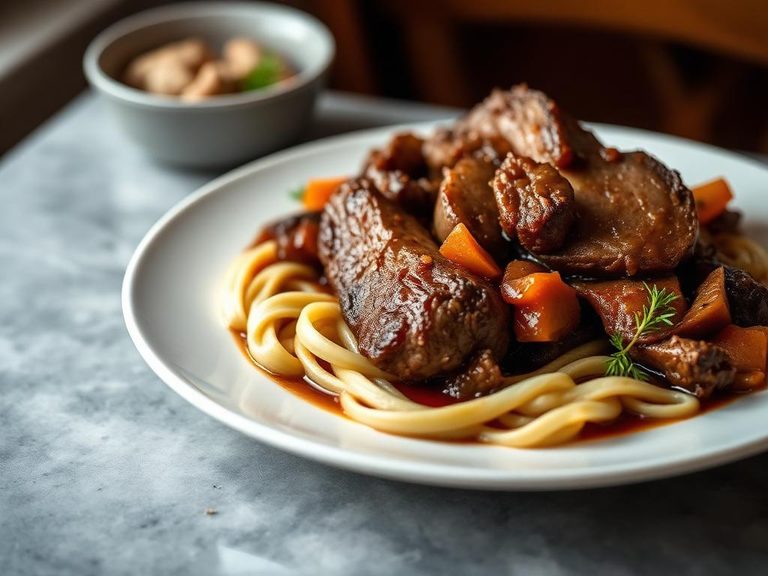



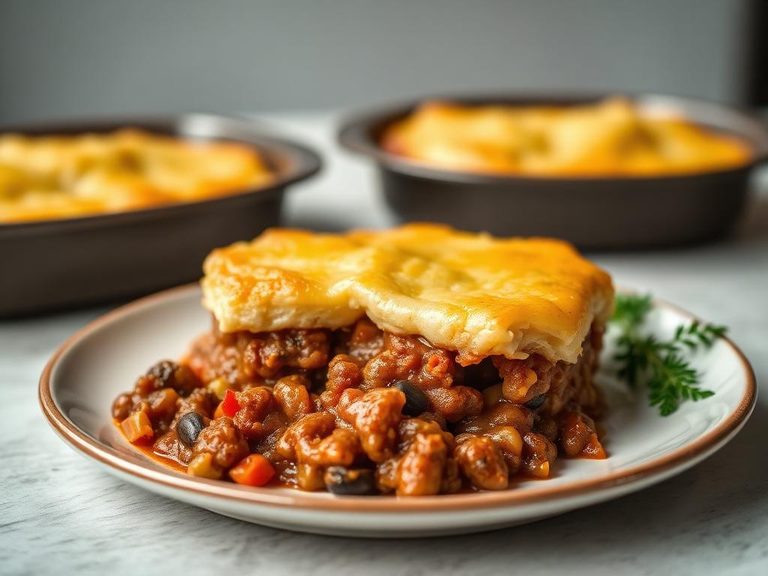
🌍 Where it's eaten
💡 Did you know?
The beta-carotene in carrots is more readily absorbed by your body when they are cooked and paired with a small amount of fat, making canned carrots in a stew a nutritionally smart choice.
Full nutrition (USDA data · scales with serving)
| Water | 93.0 g |
| Energy | 25.0 kcal |
| Energy | 105 kj |
| Protein | 0.64 g |
| Total lipid (fat) | 0.19 g |
| Ash | 0.68 g |
| Carbohydrate, by difference | 5.5 g |
| Fiber, total dietary | 1.5 g |
| Total Sugars | 2.5 g |
| Calcium, Ca | 25.0 mg |
| Iron, Fe | 0.64 mg |
| Magnesium, Mg | 8.0 mg |
| Phosphorus, P | 24.0 mg |
| Potassium, K | 179 mg |
| Sodium, Na | 242 mg |
| Zinc, Zn | 0.26 mg |
| Copper, Cu | 0.10 mg |
| Manganese, Mn | 0.45 mg |
| Selenium, Se | 0.40 ug |
| Vitamin C, total ascorbic acid | 2.7 mg |
| Thiamin | 0.02 mg |
| Riboflavin | 0.03 mg |
| Niacin | 0.55 mg |
| Pantothenic acid | 0.14 mg |
| Vitamin B-6 | 0.11 mg |
| Folate, total | 9.0 ug |
| Folic acid | 0.00 ug |
| Folate, food | 9.0 ug |
| Folate, DFE | 9.0 ug |
| Choline, total | 6.3 mg |
| Betaine | 0.10 mg |
| Vitamin B-12 | 0.00 ug |
| Vitamin B-12, added | 0.00 ug |
| Vitamin A, RAE | 558 ug |
| Retinol | 0.00 ug |
| Carotene, beta | 5331 ug |
| Carotene, alpha | 2743 ug |
| Cryptoxanthin, beta | 0.00 ug |
| Vitamin A, IU | 11170 iu |
| Lycopene | 0.00 ug |
| Lutein + zeaxanthin | 0.00 ug |
| Vitamin E (alpha-tocopherol) | 0.74 mg |
| Vitamin E, added | 0.00 mg |
| Vitamin D (D2 + D3), International Units | 0.00 iu |
| Vitamin D (D2 + D3) | 0.00 ug |
| Vitamin K (phylloquinone) | 9.8 ug |
| Alcohol, ethyl | 0.00 g |
| Caffeine | 0.00 mg |
| Theobromine | 0.00 mg |
Fat & fatty acid profile (per 100g)
| Fatty acids, total saturated | 0.04 g |
| SFA 4:0 | 0.00 g |
| SFA 6:0 | 0.00 g |
| SFA 8:0 | 0.00 g |
| SFA 10:0 | 0.00 g |
| SFA 12:0 | 0.00 g |
| SFA 14:0 | 0.00 g |
| SFA 16:0 | 0.03 g |
| SFA 18:0 | 0.00 g |
| Fatty acids, total monounsaturated | 0.01 g |
| MUFA 16:1 | 0.00 g |
| MUFA 18:1 | 0.01 g |
| MUFA 20:1 | 0.00 g |
| MUFA 22:1 | 0.00 g |
| Fatty acids, total polyunsaturated | 0.09 g |
| PUFA 18:2 | 0.08 g |
| PUFA 18:3 | 0.01 g |
| PUFA 18:4 | 0.00 g |
| PUFA 20:4 | 0.00 g |
| PUFA 20:5 n-3 (EPA) | 0.00 g |
| PUFA 22:5 n-3 (DPA) | 0.00 g |
| PUFA 22:6 n-3 (DHA) | 0.00 g |
| Fatty acids, total trans | 0.00 g |
| Cholesterol | 0.00 mg |
Amino acid profile (per 100g)
| Tryptophan | 0.01 g |
| Threonine | 0.13 g |
| Isoleucine | 0.05 g |
| Leucine | 0.07 g |
| Lysine | 0.07 g |
| Methionine | 0.01 g |
| Cystine | 0.06 g |
| Phenylalanine | 0.04 g |
| Tyrosine | 0.03 g |
| Valine | 0.05 g |
| Arginine | 0.06 g |
| Histidine | 0.03 g |
| Alanine | 0.08 g |
| Aspartic acid | 0.13 g |
| Glutamic acid | 0.25 g |
| Glycine | 0.03 g |
| Proline | 0.04 g |
| Serine | 0.04 g |
FAQ
Are canned carrots as nutritious as fresh?
Yes, they are very nutritious. The canning process preserves most vitamins and minerals, especially beta-carotene. They can sometimes have slightly less vitamin C but are often comparable or even higher in some antioxidants.
Why are canned carrots so sweet?
The cooking process during canning breaks down the carrot's starches into simpler sugars, enhancing their natural sweetness. No sugar is typically added to plain canned carrots.
How can I reduce the sodium in canned carrots?
Choose cans labeled 'No Salt Added' or 'Low Sodium.' For regular cans, simply place the drained carrots in a colander and rinse them under cool running water for about a minute.
Nutrient density (calculated · NRF9.3)
Nutrient Rich Foods index: beneficial nutrients (protein, fiber, vitamins, minerals) minus saturated fat, added sugar & sodium, per 100 kcal.
NRF9.3 index — Fulgoni, Keast & Drewnowski, 2009. Computed from USDA nutrients.
Weight-loss friendliness (composite index)
Energy density 0.25 kcal/g · 10% calories from protein · 1.5 g fiber · 2.5 g sugar per 100 g.
Composite of energy density (Rolls et al., 1999), protein & fiber satiety, minus sugar. A calculated heuristic — ranks satiety-per-calorie, not a clinical measure.
Dietary load (calculated from USDA values)
Potential renal acid load. Positive = acid-forming, negative = alkaline-forming.
Sodium-to-potassium ratio: 1.35 (lower is better — aim for ≤ 1)
Sodium:potassium per WHO potassium guidance. Computed from USDA nutrients.