

Candies, praline, prepared-from-recipe
Whole food · Sweets
Praline is a confection of caramelized sugar and nuts, traditionally pecans, creating a rich, buttery, and deeply sweet treat with a characteristic brittle or slightly chewy texture. It delivers a high-energy burst, with nearly 60 grams of carbohydrates and 26 grams of fat per 100 grams, making it a decadent indulgence. The flavor profile is dominated by the toasty, nutty notes of pecans balanced by the deep, complex sweetness of cooked sugar.
Calorie split: 3% protein · 49% carbs · 48% fat
↓ Full nutrition💚 Why it's loved
People adore pralines for their irresistible combination of buttery, caramelized sweetness and the satisfying crunch of pecans, a flavor deeply tied to Southern U.S. hospitality and holiday traditions. Their versatility allows them to be enjoyed as a standalone candy, a crumbled topping, or a luxurious ingredient in other desserts.
⚠️ Watch-outs & how to enjoy it better
The very high sugar and calorie content can lead to blood-sugar spikes and is a concern for those managing diabetes or calorie intake. To counteract this, practice strict portion control (one small piece) and pair it with a source of protein or fiber, like a handful of almonds or a piece of cheese, to slow sugar absorption. Those with tree nut allergies must avoid it entirely.
Key benefits
- Provides quick energy from carbohydrates and fats
- Contains pecans, which offer monounsaturated fats and antioxidants
- Source of dietary fiber, primarily from the nut content
- Can serve as a morale-boosting comfort food in small portions
🍽️ Popular dishes
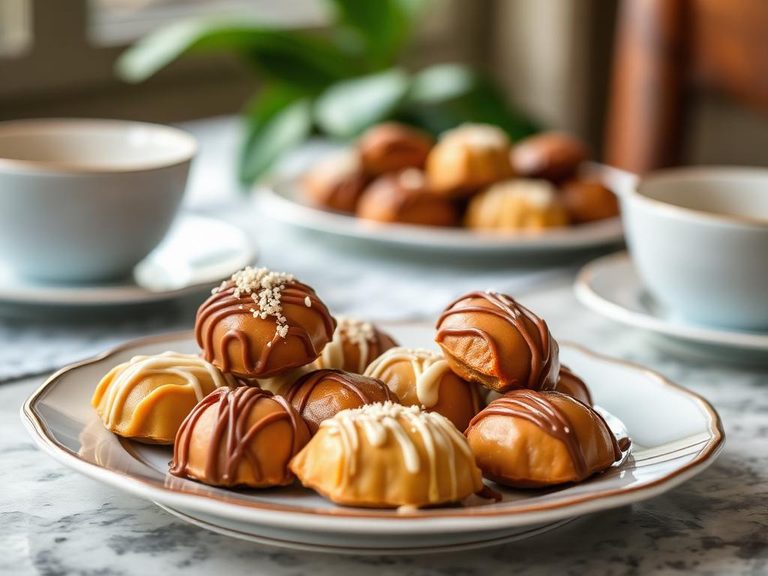
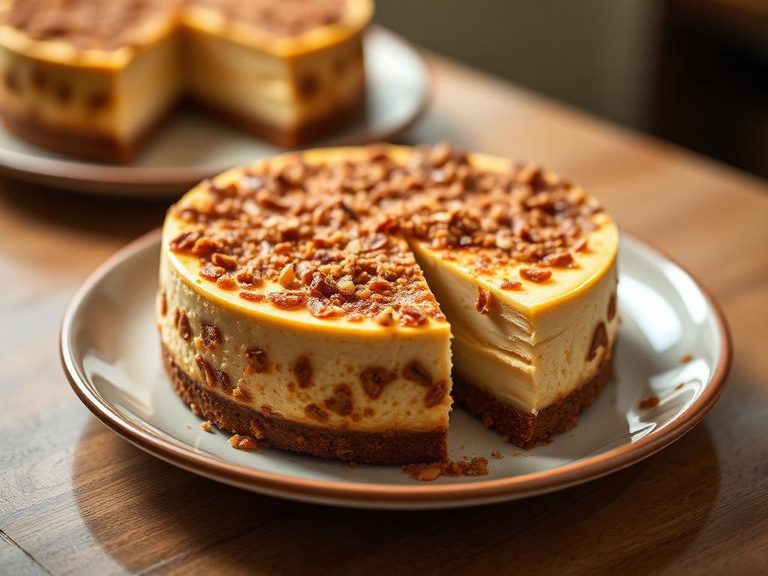
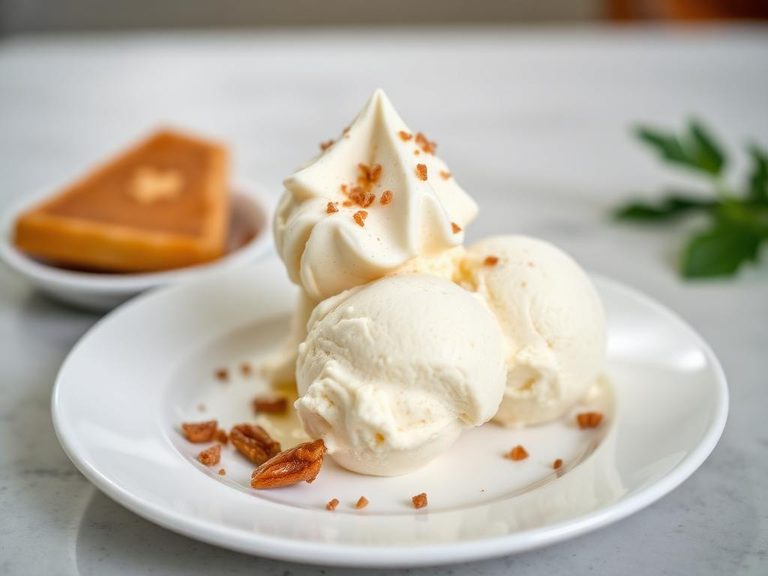
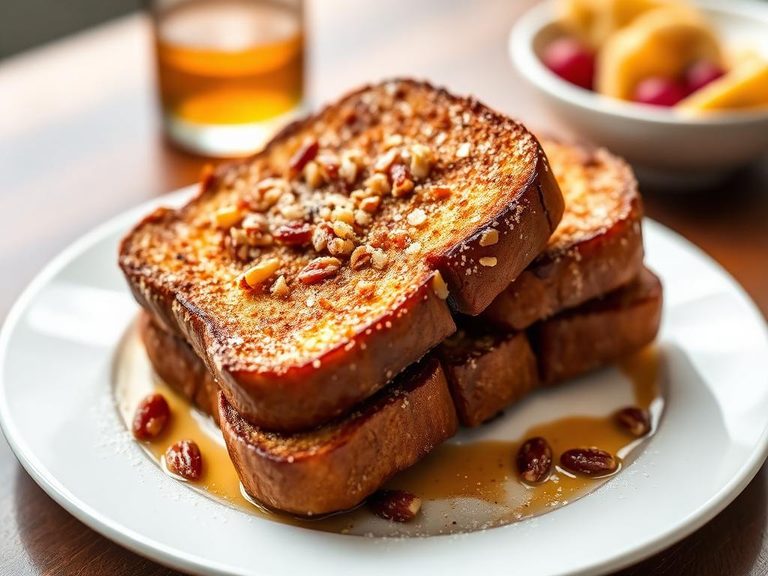
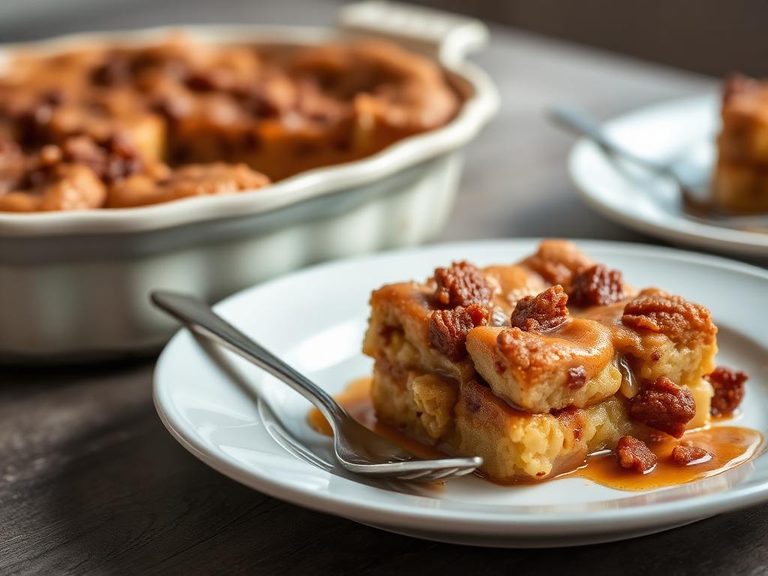
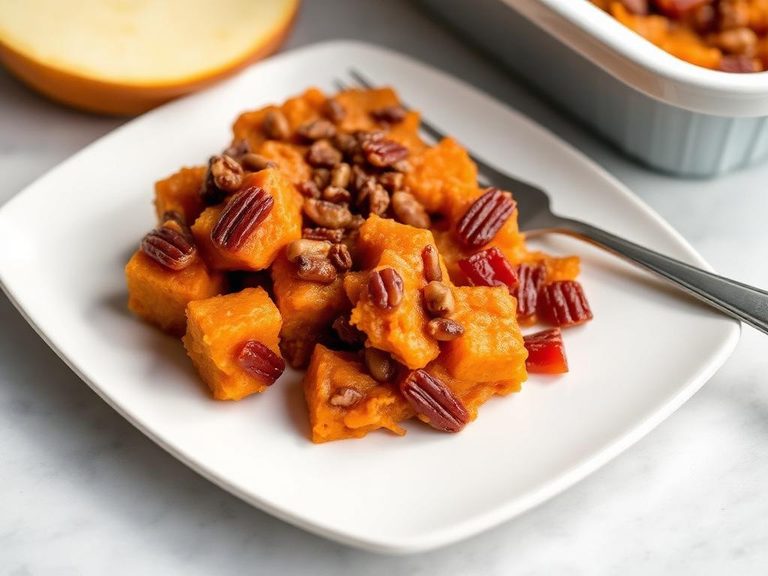
🌍 Where it's eaten
💡 Did you know?
The original French praline was made with almonds and was named after the 17th-century French diplomat César, duc de Praslin, whose chef created the confection.
Full nutrition (USDA data · scales with serving)
| Water | 10.4 g |
| Energy | 485 kcal |
| Energy | 2028 kj |
| Protein | 3.3 g |
| Total lipid (fat) | 25.9 g |
| Ash | 0.85 g |
| Carbohydrate, by difference | 59.6 g |
| Fiber, total dietary | 3.5 g |
| Total Sugars | 55.8 g |
| Calcium, Ca | 43.0 mg |
| Iron, Fe | 1.3 mg |
| Magnesium, Mg | 49.0 mg |
| Phosphorus, P | 104 mg |
| Potassium, K | 217 mg |
| Sodium, Na | 48.0 mg |
| Zinc, Zn | 1.7 mg |
| Copper, Cu | 0.49 mg |
| Manganese, Mn | 1.7 mg |
| Selenium, Se | 1.8 ug |
| Vitamin C, total ascorbic acid | 0.30 mg |
| Thiamin | 0.20 mg |
| Riboflavin | 0.05 mg |
| Niacin | 0.41 mg |
| Pantothenic acid | 0.33 mg |
| Vitamin B-6 | 0.08 mg |
| Folate, total | 6.0 ug |
| Folic acid | 0.00 ug |
| Folate, food | 6.0 ug |
| Folate, DFE | 6.0 ug |
| Vitamin B-12 | 0.00 ug |
| Vitamin B-12, added | 0.00 ug |
| Vitamin A, RAE | 1.0 ug |
| Retinol | 0.00 ug |
| Carotene, beta | 10.0 ug |
| Carotene, alpha | 0.00 ug |
| Cryptoxanthin, beta | 3.0 ug |
| Vitamin A, IU | 19.0 iu |
| Lycopene | 0.00 ug |
| Lutein + zeaxanthin | 6.0 ug |
| Vitamin E (alpha-tocopherol) | 0.50 mg |
| Vitamin E, added | 0.00 mg |
| Vitamin K (phylloquinone) | 1.3 ug |
| Alcohol, ethyl | 0.00 g |
| Caffeine | 0.00 mg |
| Theobromine | 0.00 mg |
Fat & fatty acid profile (per 100g)
| Fatty acids, total saturated | 2.2 g |
| SFA 4:0 | 0.00 g |
| SFA 6:0 | 0.00 g |
| SFA 8:0 | 0.00 g |
| SFA 10:0 | 0.00 g |
| SFA 12:0 | 0.00 g |
| SFA 13:0 | 0.00 g |
| SFA 14:0 | 0.00 g |
| SFA 15:0 | 0.00 g |
| SFA 16:0 | 1.6 g |
| SFA 17:0 | 0.00 g |
| SFA 18:0 | 0.63 g |
| SFA 20:0 | 0.03 g |
| SFA 22:0 | 0.00 g |
| SFA 24:0 | 0.00 g |
| Fatty acids, total monounsaturated | 14.7 g |
| MUFA 14:1 | 0.00 g |
| MUFA 16:1 | 0.00 g |
| MUFA 18:1 | 14.6 g |
| MUFA 20:1 | 0.07 g |
| MUFA 22:1 | 0.00 g |
| MUFA 24:1 c | 0.00 g |
| Fatty acids, total polyunsaturated | 7.8 g |
| PUFA 18:2 | 7.4 g |
| PUFA 18:3 | 0.35 g |
| PUFA 18:4 | 0.00 g |
| PUFA 20:2 n-6 c,c | 0.00 g |
| PUFA 20:3 | 0.00 g |
| PUFA 20:4 | 0.00 g |
| PUFA 20:5 n-3 (EPA) | 0.00 g |
| PUFA 22:5 n-3 (DPA) | 0.00 g |
| PUFA 22:6 n-3 (DHA) | 0.00 g |
| Cholesterol | 0.00 mg |
Amino acid profile (per 100g)
Estimated from Candies, honey-combed, with peanut butter — USDA does not publish this profile for Candies.
| Tryptophan | 0.09 g |
| Threonine | 0.21 g |
| Isoleucine | 0.24 g |
| Leucine | 0.61 g |
| Lysine | 0.27 g |
| Methionine | 0.10 g |
| Cystine | 0.09 g |
| Phenylalanine | 0.47 g |
| Tyrosine | 0.33 g |
| Valine | 0.31 g |
| Arginine | 1.1 g |
| Histidine | 0.22 g |
| Alanine | 0.36 g |
| Aspartic acid | 1.2 g |
| Glutamic acid | 2.0 g |
| Glycine | 0.56 g |
| Proline | 0.55 g |
| Serine | 0.58 g |
FAQ
What's the difference between a French and a Southern U.S. praline?
A French praline is typically a whole almond coated in caramelized sugar. The Southern U.S. version, born in New Orleans, is a creamy, fudge-like confection made with pecans, sugar, butter, and cream.
Why does my homemade praline sometimes turn grainy instead of smooth?
Graininess is often caused by sugar crystallization. This can be prevented by carefully washing down the sides of the pot with a wet pastry brush during cooking to dissolve any stray sugar crystals and avoiding stirring once the sugar mixture boils.
How should I store homemade pralines to keep them fresh?
Store them in a single layer in an airtight container at room temperature, separating layers with parchment paper. They can become sticky in humid conditions, so adding a silica gel packet to the container can help. They are best consumed within 1-2 weeks.
Nutrient density (calculated · NRF9.3)
Nutrient Rich Foods index: beneficial nutrients (protein, fiber, vitamins, minerals) minus saturated fat, added sugar & sodium, per 100 kcal.
NRF9.3 index — Fulgoni, Keast & Drewnowski, 2009. Computed from USDA nutrients.
Weight-loss friendliness (composite index)
Energy density 4.85 kcal/g · 3% calories from protein · 3.5 g fiber · 55.8 g sugar per 100 g.
Composite of energy density (Rolls et al., 1999), protein & fiber satiety, minus sugar. A calculated heuristic — ranks satiety-per-calorie, not a clinical measure.
Dietary load (calculated from USDA values)
Potential renal acid load. Positive = acid-forming, negative = alkaline-forming.
Sodium-to-potassium ratio: 0.22 (lower is better — aim for ≤ 1)
Sodium:potassium per WHO potassium guidance. Computed from USDA nutrients.