

Candies, confectioner's coating, butterscotch
Whole food · Sweets

Photo: Wikipedia
Confectioner's coating, butterscotch, is a smooth, melt-in-your-mouth candy base made primarily from sugar, vegetable fat, and butterscotch flavoring. It offers a rich, buttery, and caramelized sweetness with a firm, snappy texture that softens as it warms. Nutritionally, it is a dense source of energy, providing 539 kcal per 100g, almost entirely from carbohydrates (67.1g) and fat (29.05g).
Calorie split: 2% protein · 50% carbs · 49% fat
↓ Full nutrition💚 Why it's loved
People adore it for its intensely sweet, buttery flavor and satisfying snap, which makes it a beloved ingredient for coating treats like pretzels, cookies, and fruits. Its versatility in both home baking and commercial confections, from candy bars to gourmet truffles, cements its status as a nostalgic favorite.
⚠️ Watch-outs & how to enjoy it better
Its extremely high sugar and fat content can lead to rapid blood sugar spikes and contributes empty calories, making it unsuitable for those managing diabetes or watching calorie intake. To counteract this, enjoy it sparingly as part of a balanced meal that includes protein or fiber, and be mindful of portion sizes.
Key benefits
- Quick source of energy
- Contains no protein or fiber
- Provides a concentrated, sweet flavor
- Versatile for baking and candy-making
- Long shelf life when stored properly
🍽️ Popular dishes
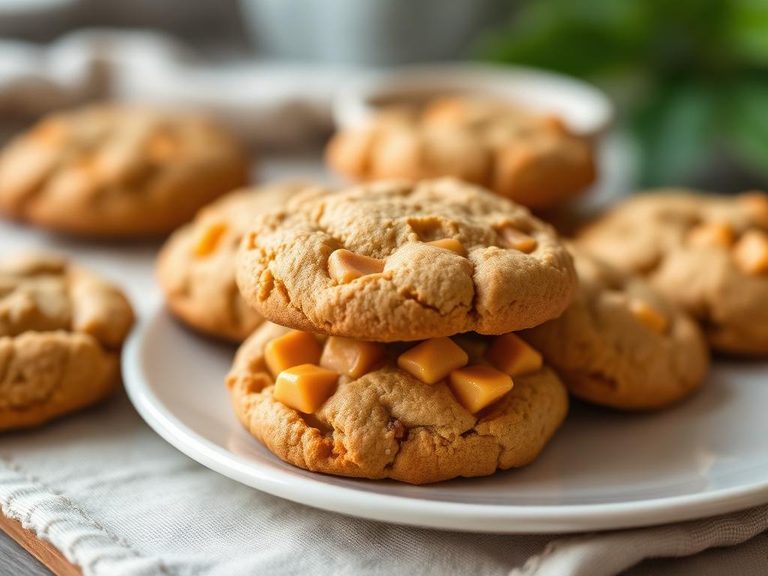
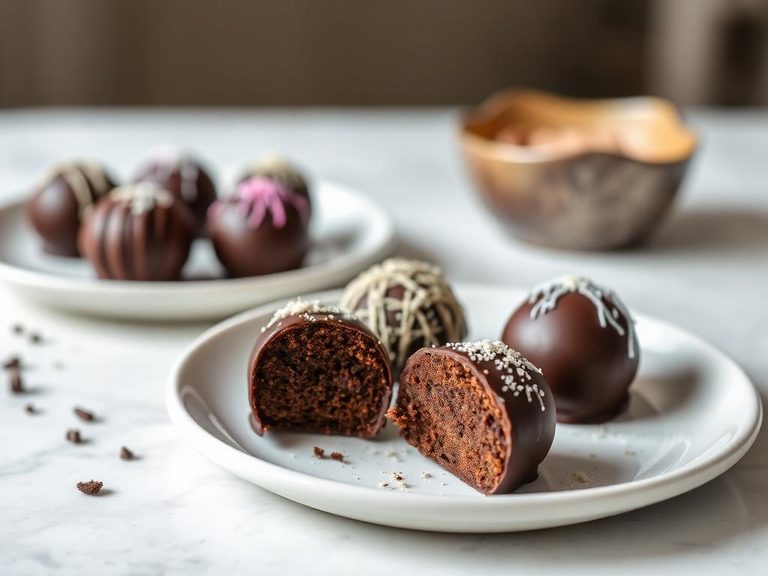
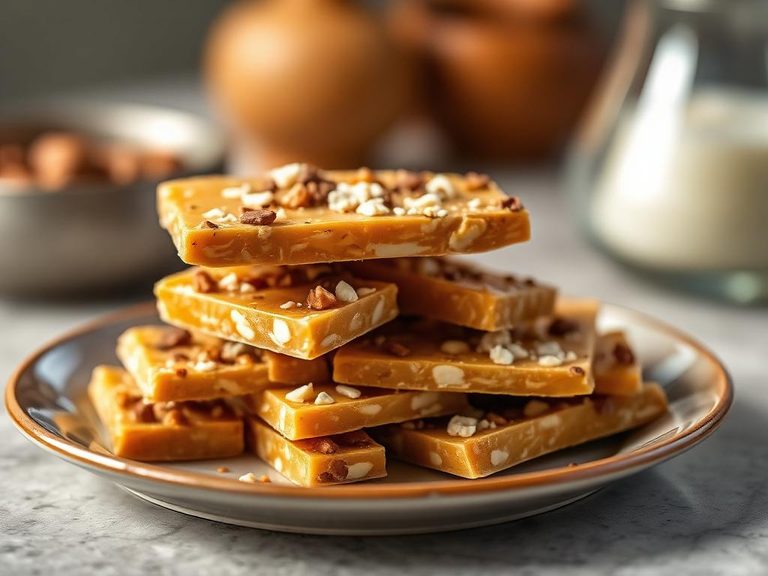
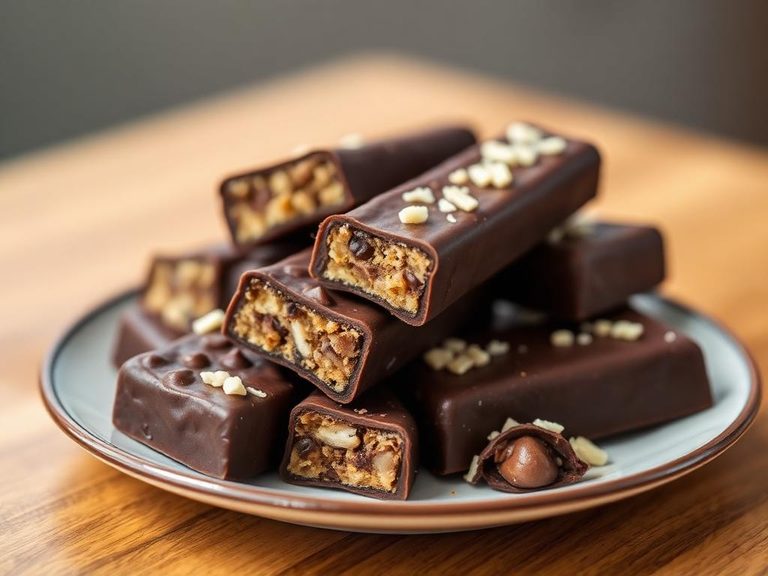
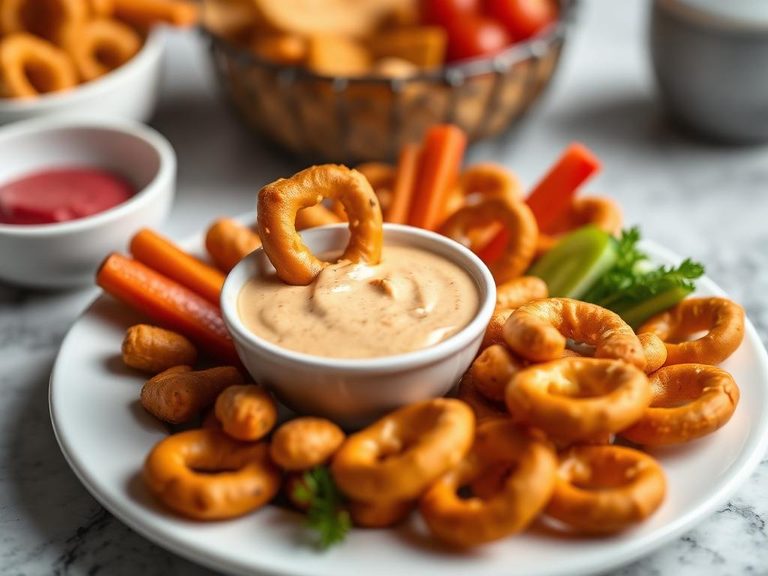
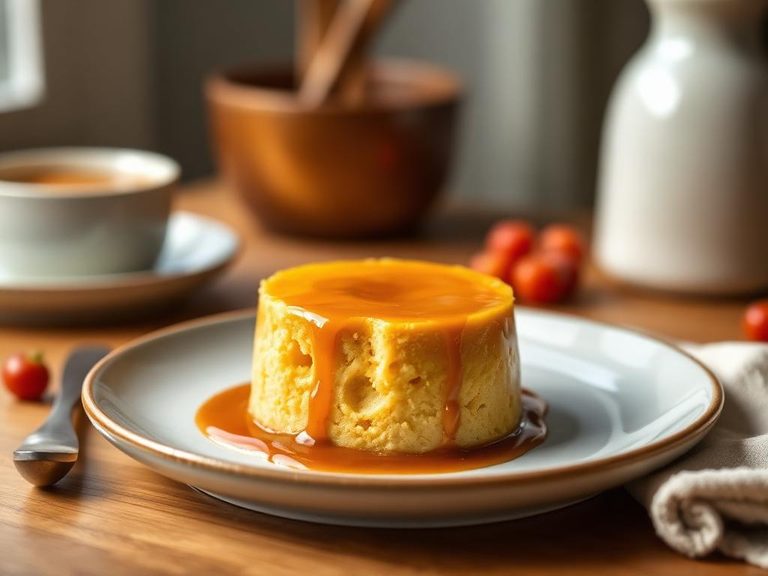
🌍 Where it's eaten
💡 Did you know?
Despite its name, butterscotch confectioner's coating often contains no actual butter or dairy, relying on vegetable fats and artificial flavoring to mimic the classic taste.
Full nutrition (USDA data · scales with serving)
| Water | 0.75 g |
| Energy | 539 kcal |
| Energy | 2254 kj |
| Protein | 2.2 g |
| Total lipid (fat) | 29.1 g |
| Ash | 0.90 g |
| Carbohydrate, by difference | 67.1 g |
| Fiber, total dietary | 0.00 g |
| Total Sugars | 67.1 g |
| Calcium, Ca | 34.0 mg |
| Iron, Fe | 0.08 mg |
| Magnesium, Mg | 5.0 mg |
| Phosphorus, P | 31.0 mg |
| Potassium, K | 64.0 mg |
| Sodium, Na | 89.0 mg |
| Zinc, Zn | 0.11 mg |
| Copper, Cu | 0.00 mg |
| Manganese, Mn | 0.00 mg |
| Selenium, Se | 1.3 ug |
| Vitamin C, total ascorbic acid | 0.10 mg |
| Thiamin | 0.01 mg |
| Riboflavin | 0.07 mg |
| Niacin | 0.05 mg |
| Pantothenic acid | 0.15 mg |
| Vitamin B-6 | 0.02 mg |
| Folate, total | 1.0 ug |
| Folic acid | 0.00 ug |
| Folate, food | 1.0 ug |
| Folate, DFE | 1.0 ug |
| Choline, total | 10.9 mg |
| Vitamin B-12 | 0.10 ug |
| Vitamin B-12, added | 0.00 ug |
| Vitamin A, RAE | 0.00 ug |
| Retinol | 0.00 ug |
| Carotene, beta | 0.00 ug |
| Carotene, alpha | 0.00 ug |
| Cryptoxanthin, beta | 0.00 ug |
| Vitamin A, IU | 1.0 iu |
| Lycopene | 0.00 ug |
| Lutein + zeaxanthin | 0.00 ug |
| Vitamin E (alpha-tocopherol) | 0.68 mg |
| Vitamin E, added | 0.00 mg |
| Tocopherol, beta | 0.00 mg |
| Tocopherol, gamma | 0.03 mg |
| Vitamin D (D2 + D3), International Units | 0.00 iu |
| Vitamin D (D2 + D3) | 0.00 ug |
| Vitamin K (phylloquinone) | 6.5 ug |
| Alcohol, ethyl | 0.00 g |
| Caffeine | 0.00 mg |
| Theobromine | 0.00 mg |
Fat & fatty acid profile (per 100g)
| Fatty acids, total saturated | 24.1 g |
| SFA 4:0 | 0.00 g |
| SFA 6:0 | 0.06 g |
| SFA 8:0 | 1.1 g |
| SFA 10:0 | 1.1 g |
| SFA 12:0 | 13.8 g |
| SFA 14:0 | 4.7 g |
| SFA 16:0 | 2.3 g |
| SFA 18:0 | 1.7 g |
| SFA 20:0 | 0.01 g |
| Fatty acids, total monounsaturated | 2.3 g |
| MUFA 16:1 | 0.01 g |
| MUFA 18:1 | 2.3 g |
| MUFA 20:1 | 0.01 g |
| MUFA 22:1 | 0.00 g |
| Fatty acids, total polyunsaturated | 1.0 g |
| PUFA 18:2 | 0.97 g |
| PUFA 18:3 | 0.03 g |
| PUFA 18:4 | 0.00 g |
| PUFA 20:4 | 0.03 g |
| PUFA 20:5 n-3 (EPA) | 0.00 g |
| PUFA 22:5 n-3 (DPA) | 0.00 g |
| PUFA 22:6 n-3 (DHA) | 0.00 g |
| Fatty acids, total trans | 0.00 g |
| Cholesterol | 0.00 mg |
Amino acid profile (per 100g)
Estimated from Candies, honey-combed, with peanut butter — USDA does not publish this profile for Candies.
| Tryptophan | 0.09 g |
| Threonine | 0.21 g |
| Isoleucine | 0.24 g |
| Leucine | 0.61 g |
| Lysine | 0.27 g |
| Methionine | 0.10 g |
| Cystine | 0.09 g |
| Phenylalanine | 0.47 g |
| Tyrosine | 0.33 g |
| Valine | 0.31 g |
| Arginine | 1.1 g |
| Histidine | 0.22 g |
| Alanine | 0.36 g |
| Aspartic acid | 1.2 g |
| Glutamic acid | 2.0 g |
| Glycine | 0.56 g |
| Proline | 0.55 g |
| Serine | 0.58 g |
FAQ
Is butterscotch confectioner's coating the same as butterscotch candy?
Not exactly. While both share a buttery, caramelized flavor profile, confectioner's coating is a specific product designed for melting and coating, typically made with vegetable fats instead of dairy butter, giving it different melting and setting properties.
Can I use butterscotch confectioner's coating in baking?
Yes, it's excellent for baking. You can melt it for drizzles, fold chips into cookie dough, or use it as a base for frostings and ganaches. It sets firmly at room temperature, making it ideal for candies and coatings.
How should I store butterscotch confectioner's coating?
Store it in a cool, dry place (around 60-70°F or 15-21°C) in an airtight container. Avoid heat and humidity, which can cause it to melt, bloom, or become grainy. For long-term storage, refrigeration is possible, but let it come to room temperature slowly to prevent condensation.
Nutrient density (calculated · NRF9.3)
Nutrient Rich Foods index: beneficial nutrients (protein, fiber, vitamins, minerals) minus saturated fat, added sugar & sodium, per 100 kcal.
NRF9.3 index — Fulgoni, Keast & Drewnowski, 2009. Computed from USDA nutrients.
Weight-loss friendliness (composite index)
Energy density 5.39 kcal/g · 2% calories from protein · 0.0 g fiber · 67.1 g sugar per 100 g.
Composite of energy density (Rolls et al., 1999), protein & fiber satiety, minus sugar. A calculated heuristic — ranks satiety-per-calorie, not a clinical measure.
Dietary load (calculated from USDA values)
Potential renal acid load. Positive = acid-forming, negative = alkaline-forming.
Sodium-to-potassium ratio: 1.39 (lower is better — aim for ≤ 1)
Sodium:potassium per WHO potassium guidance. Computed from USDA nutrients.