

Buffalo, free range, top round steak, cooked (Shoshone Bannock)
Whole food · American Indian/Alaska Native Foods

Photo: Wikipedia
This is a lean, nutrient-dense cut of free-range buffalo, prepared in the traditional Shoshone-Bannock style, offering a deeply savory, slightly sweet, and robustly meaty flavor. The top round is a muscular, lean cut that, when cooked, has a firm, chewy texture and a rich, gamey taste. With over 32 grams of protein per 100g and virtually no fat, it is an exceptionally high-protein, low-calorie food.
Calorie split: 89% protein · 0% carbs · 11% fat
↓ Full nutrition💚 Why it's loved
People love it for its deep, complex, and slightly sweet gamey flavor that is more nuanced than beef. It's prized in Indigenous cuisines for its cultural significance and as a pure, unadulterated source of protein that can be prepared in a variety of traditional and modern ways.
⚠️ Watch-outs & how to enjoy it better
The top round is a lean, muscular cut that can become tough and chewy if overcooked or not prepared with care. To counteract this, it's best cooked quickly at high heat (like grilling or searing) or braised slowly in liquid to break down the connective tissue. Marinating it beforehand can also help tenderize the meat and enhance its flavor.
Key benefits
- Extremely high in protein (32.5g per 100g) for muscle repair and satiety.
- Very low in fat (1.8g per 100g) and calories (146 kcal per 100g).
- Contains no carbohydrates, sugar, or fiber.
- Free-range sourcing often implies better animal welfare and a more natural diet.
- Rich in iron and B vitamins, supporting energy metabolism.
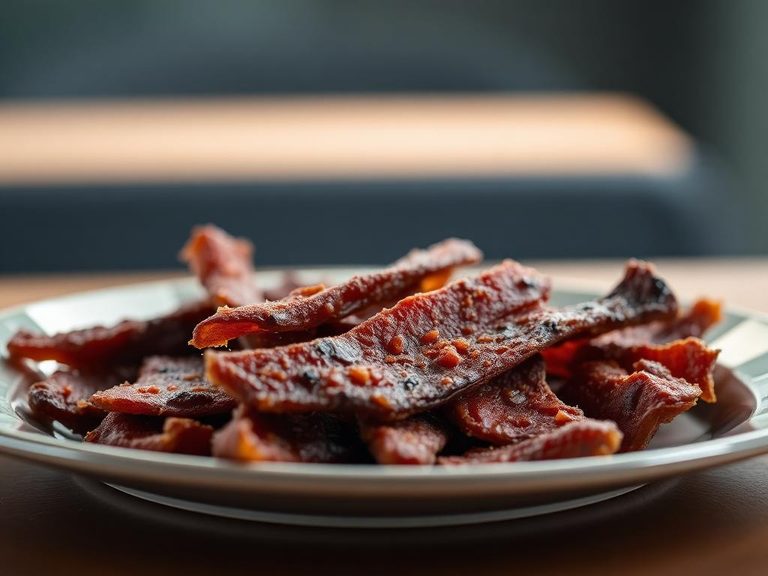
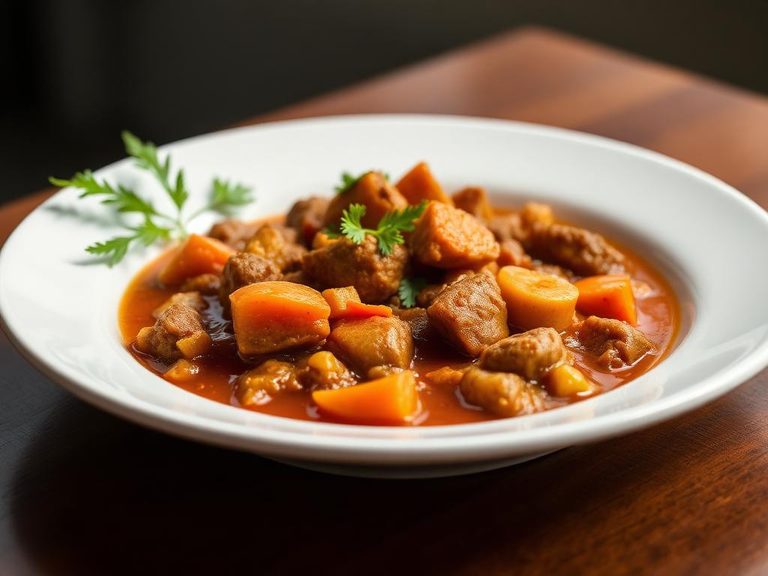
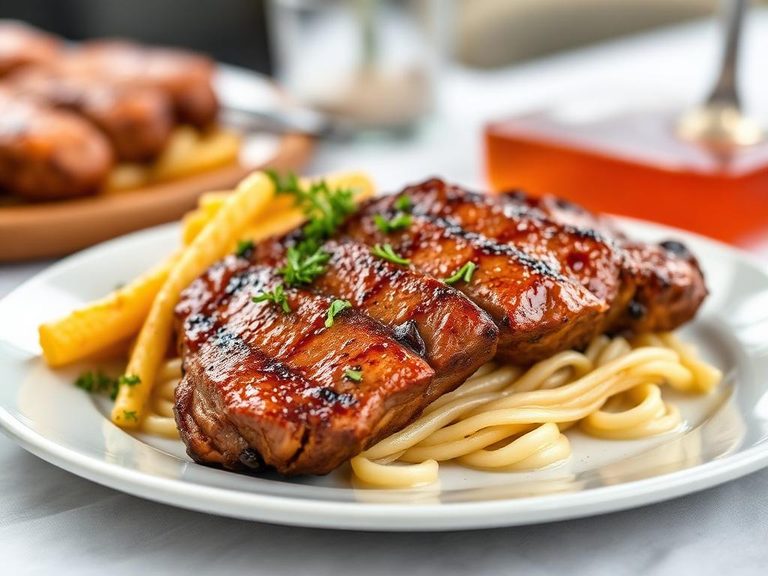
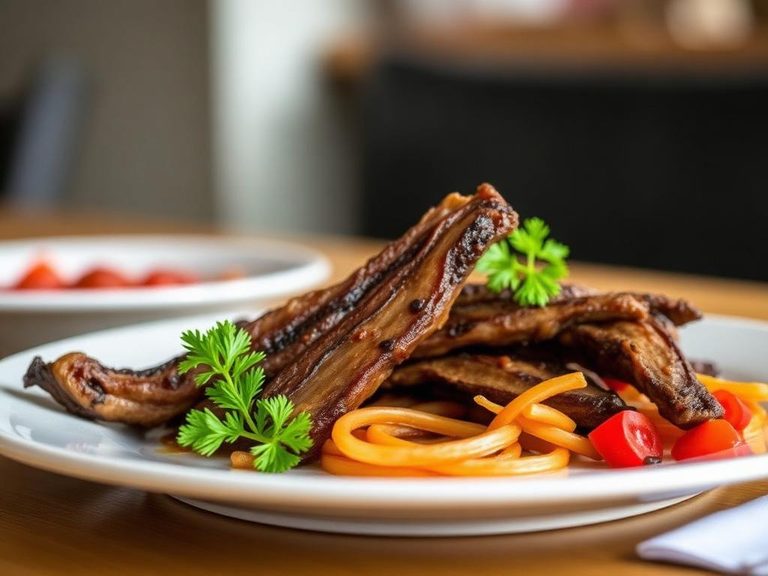
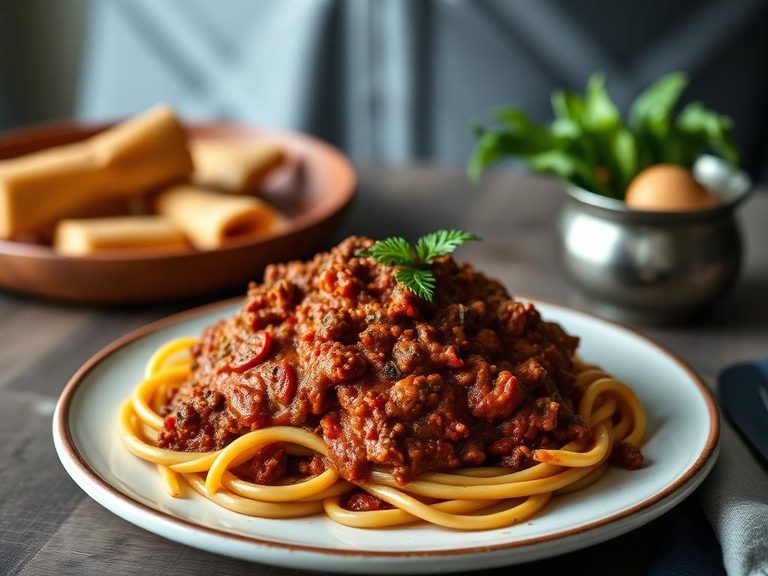
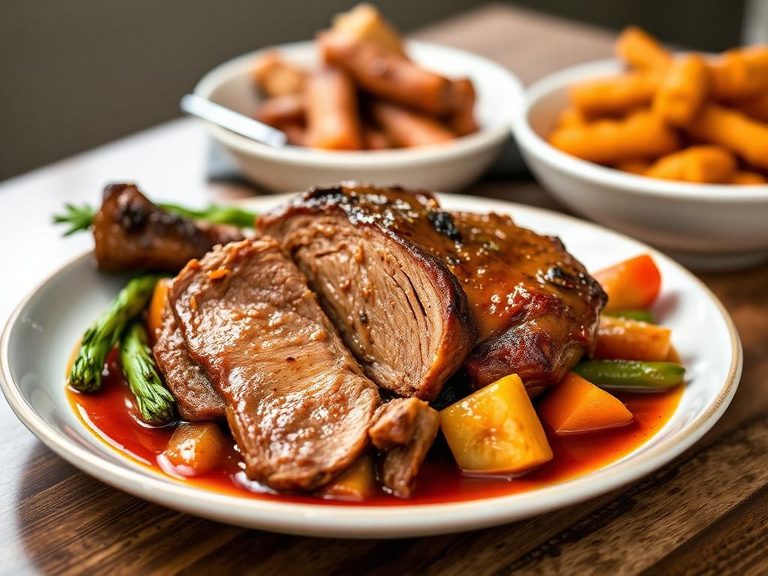
🍽️ Popular dishes
🌍 Where it's eaten
💡 Did you know?
Buffalo (American bison) meat has a significantly lower fat content than beef, and its fat is higher in conjugated linoleic acid (CLA), a fatty acid studied for its potential health benefits.
Full nutrition (USDA data · scales with serving)
| Water | 64.3 g |
| Energy | 146 kcal |
| Energy | 612 kj |
| Protein | 32.5 g |
| Total lipid (fat) | 1.8 g |
| Ash | 1.2 g |
| Carbohydrate, by difference | 0.00 g |
| Calcium, Ca | 4.0 mg |
| Iron, Fe | 3.8 mg |
| Magnesium, Mg | 27.0 mg |
| Phosphorus, P | 246 mg |
| Potassium, K | 376 mg |
| Sodium, Na | 41.0 mg |
| Zinc, Zn | 5.1 mg |
| Copper, Cu | 0.19 mg |
| Manganese, Mn | 0.01 mg |
| Selenium, Se | 10.5 ug |
| Thiamin | 0.17 mg |
| Riboflavin | 0.46 mg |
| Niacin | 7.0 mg |
| Pantothenic acid | 1.0 mg |
| Vitamin B-6 | 0.79 mg |
| Folate, total | 8.0 ug |
| Folic acid | 0.00 ug |
| Folate, food | 8.0 ug |
| Folate, DFE | 8.0 ug |
| Vitamin B-12 | 1.7 ug |
| Vitamin E (alpha-tocopherol) | 0.59 mg |
| Tocopherol, beta | 0.00 mg |
| Tocopherol, gamma | 0.00 mg |
| Tocopherol, delta | 0.00 mg |
| Tocotrienol, alpha | 0.00 mg |
| Tocotrienol, beta | 0.00 mg |
| Tocotrienol, gamma | 0.00 mg |
| Tocotrienol, delta | 0.00 mg |
Fat & fatty acid profile (per 100g)
| Fatty acids, total saturated | 0.59 g |
| SFA 8:0 | 0.00 g |
| SFA 10:0 | 0.00 g |
| SFA 12:0 | 0.00 g |
| SFA 14:0 | 0.02 g |
| SFA 15:0 | 0.01 g |
| SFA 16:0 | 0.26 g |
| SFA 17:0 | 0.02 g |
| SFA 18:0 | 0.28 g |
| SFA 20:0 | 0.00 g |
| SFA 22:0 | 0.00 g |
| Fatty acids, total monounsaturated | 0.61 g |
| MUFA 14:1 | 0.00 g |
| MUFA 15:1 | 0.00 g |
| MUFA 16:1 | 0.03 g |
| MUFA 17:1 | 0.00 g |
| MUFA 18:1 | 0.58 g |
| MUFA 18:1 c | 0.53 g |
| MUFA 20:1 | 0.00 g |
| Fatty acids, total polyunsaturated | 0.17 g |
| PUFA 18:2 | 0.11 g |
| PUFA 18:2 n-6 c,c | 0.08 g |
| PUFA 18:3 | 0.03 g |
| PUFA 18:3 n-3 c,c,c (ALA) | 0.03 g |
| PUFA 18:3 n-6 c,c,c | 0.00 g |
| PUFA 20:2 n-6 c,c | 0.00 g |
| PUFA 20:3 | 0.01 g |
| PUFA 20:4 | 0.02 g |
| Fatty acids, total trans | 0.09 g |
| Fatty acids, total trans-monoenoic | 0.06 g |
| TFA 18:1 t | 0.06 g |
| TFA 18:2 t,t | 0.03 g |
| Fatty acids, total trans-polyenoic | 0.03 g |
| Cholesterol | 82.0 mg |
Amino acid profile (per 100g)
| Tryptophan | 0.34 g |
| Threonine | 1.3 g |
| Isoleucine | 1.4 g |
| Leucine | 2.6 g |
| Lysine | 2.3 g |
| Methionine | 0.91 g |
| Cystine | 0.35 g |
| Phenylalanine | 1.3 g |
| Tyrosine | 1.1 g |
| Valine | 1.5 g |
| Arginine | 1.9 g |
| Histidine | 1.1 g |
| Alanine | 1.8 g |
| Aspartic acid | 2.8 g |
| Glutamic acid | 4.6 g |
| Glycine | 1.4 g |
| Proline | 1.2 g |
| Serine | 1.3 g |
FAQ
What does buffalo top round steak taste like?
It has a rich, slightly sweet, and gamey flavor that is more robust than beef, with a firm, chewy texture due to its lean, muscular nature.
How should I cook buffalo top round to avoid toughness?
Cook it quickly at high heat (like grilling or searing) for a medium-rare finish, or braise it slowly in liquid. Marinating it beforehand can also help tenderize the meat.
Is buffalo meat healthier than beef?
Generally, yes. Buffalo meat is lower in fat and calories, higher in protein, and contains more iron and B vitamins compared to conventional beef.
Nutrient density (calculated · NRF9.3)
Nutrient Rich Foods index: beneficial nutrients (protein, fiber, vitamins, minerals) minus saturated fat, added sugar & sodium, per 100 kcal.
NRF9.3 index — Fulgoni, Keast & Drewnowski, 2009. Computed from USDA nutrients.
Weight-loss friendliness (composite index)
Energy density 1.46 kcal/g · 89% calories from protein · 0.0 g fiber · 0.0 g sugar per 100 g.
Composite of energy density (Rolls et al., 1999), protein & fiber satiety, minus sugar. A calculated heuristic — ranks satiety-per-calorie, not a clinical measure.
Dietary load (calculated from USDA values)
Potential renal acid load. Positive = acid-forming, negative = alkaline-forming.
Sodium-to-potassium ratio: 0.11 (lower is better — aim for ≤ 1)
Sodium:potassium per WHO potassium guidance. Computed from USDA nutrients.