

Beverages, tea, herb, other than chamomile, brewed
Whole food · Beverages

Photo: Wikipedia
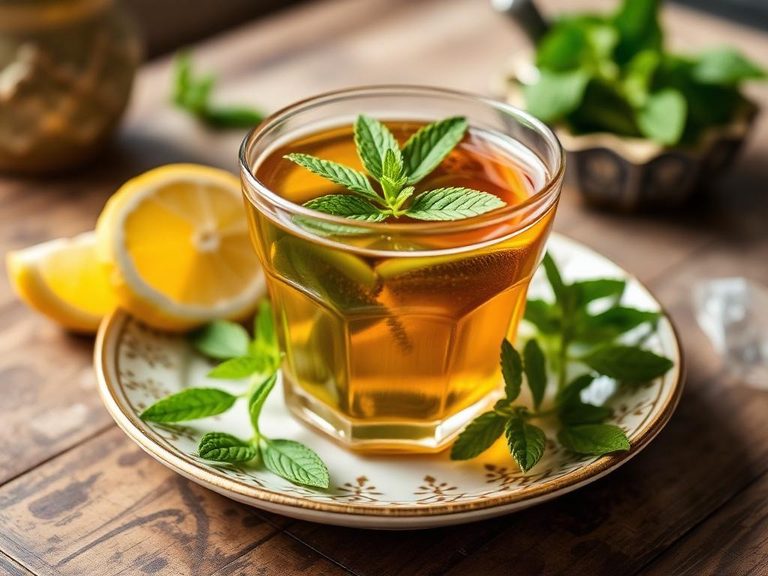
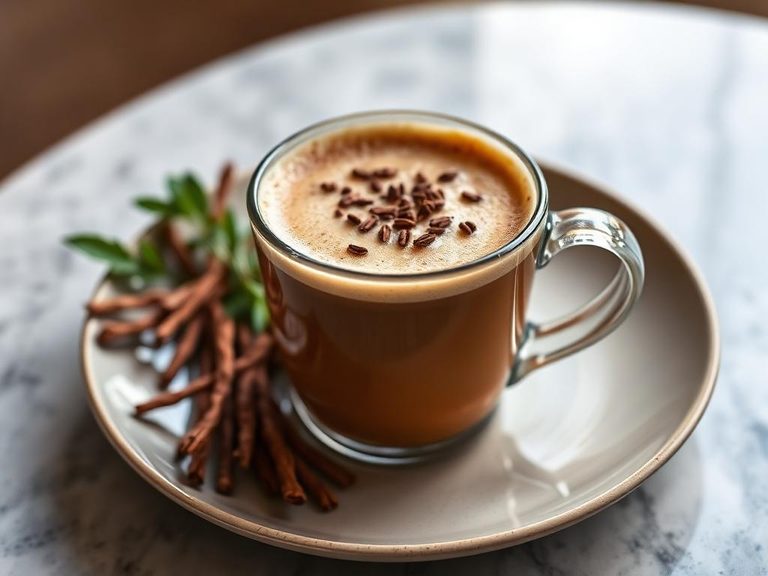
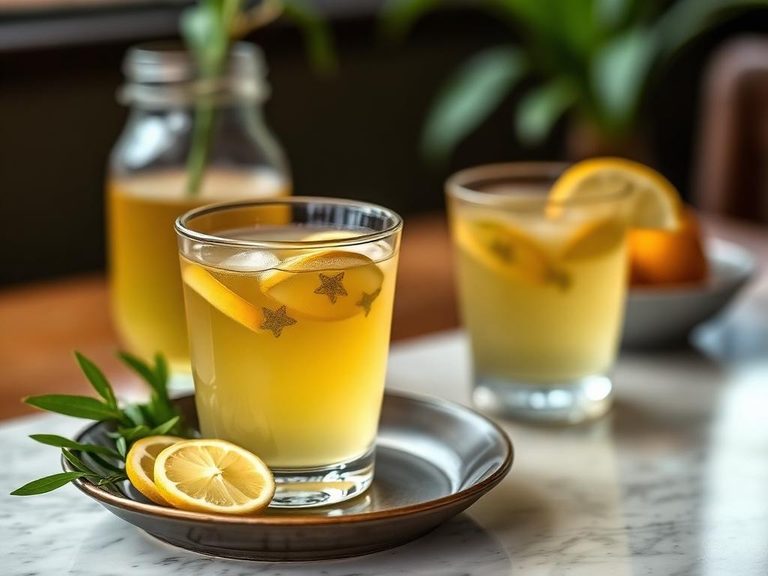
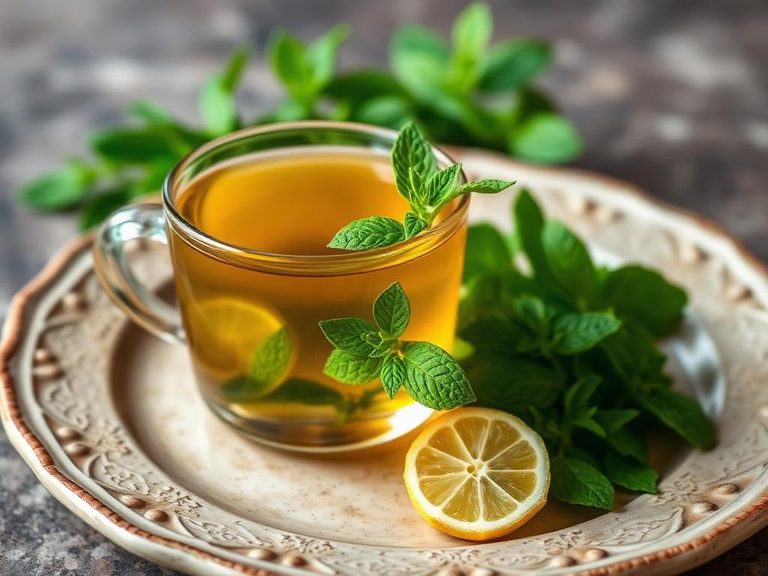
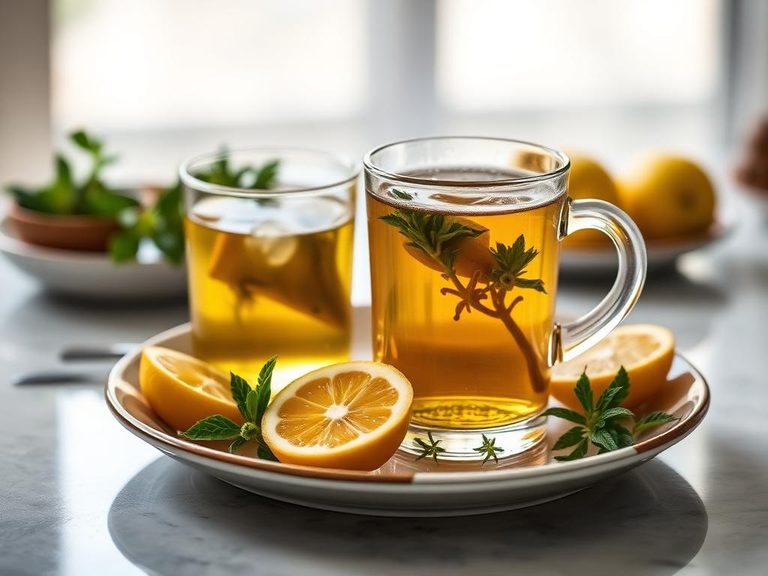
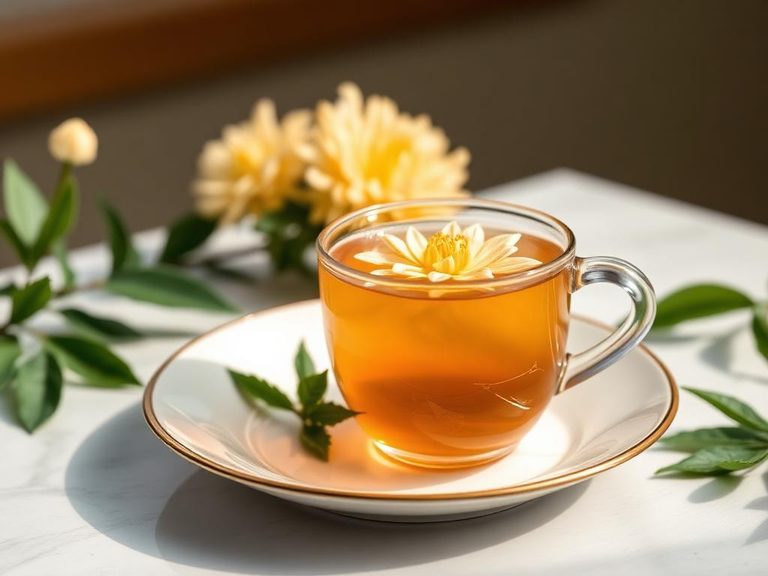
This is a broad category of brewed herbal infusions, known as tisanes, made from a vast array of dried leaves, flowers, roots, or berries excluding chamomile. The taste is incredibly diverse, ranging from the minty and sweet to the earthy, floral, or citrusy, with a texture that is typically light and watery. Nutritionally, it is virtually a zero-calorie beverage, contributing no significant macros, making it an excellent hydrating choice.
Calorie split: 0% protein · 100% carbs · 0% fat
↓ Full nutrition💚 Why it's loved
People love it for its incredible variety and the comforting ritual of a warm, aromatic cup that can be tailored to any mood or time of day. It's a staple in global cultures, from Moroccan mint tea to South African rooibos, offering a flavorful, zero-guilt alternative to water or caffeinated drinks.
⚠️ Watch-outs & how to enjoy it better
Some herbs, like licorice root, can affect blood pressure or potassium levels with excessive consumption, and certain tisanes like nettle or hibiscus can be high in oxalates. To counteract this, limit intake of any single potent herb to a few cups a day, and if concerned about oxalates, ensure adequate hydration and consider pairing with a calcium-rich food like yogurt to help bind them.
Key benefits
- Hydration without added sugars or calories
- Rich in a wide variety of plant-based antioxidants
- Naturally caffeine-free, suitable for any time of day
- Can provide specific phytonutrients depending on the herb used
- Supports a soothing, ritualistic daily routine
🍽️ Popular dishes
🌍 Where it's eaten
💡 Did you know?
The term 'herbal tea' is technically a misnomer; true tea comes only from the Camellia sinensis plant, so these infusions are more accurately called 'tisanes'.
Full nutrition (USDA data · scales with serving)
| Water | 99.7 g |
| Energy | 1.0 kcal |
| Energy | 4.0 kj |
| Protein | 0.00 g |
| Total lipid (fat) | 0.00 g |
| Ash | 0.00 g |
| Carbohydrate, by difference | 0.20 g |
| Fiber, total dietary | 0.00 g |
| Total Sugars | 0.00 g |
| Calcium, Ca | 2.0 mg |
| Iron, Fe | 0.08 mg |
| Magnesium, Mg | 1.0 mg |
| Phosphorus, P | 0.00 mg |
| Potassium, K | 9.0 mg |
| Sodium, Na | 1.0 mg |
| Zinc, Zn | 0.04 mg |
| Copper, Cu | 0.01 mg |
| Manganese, Mn | 0.04 mg |
| Selenium, Se | 0.00 ug |
| Vitamin C, total ascorbic acid | 0.00 mg |
| Thiamin | 0.01 mg |
| Riboflavin | 0.00 mg |
| Niacin | 0.00 mg |
| Pantothenic acid | 0.01 mg |
| Vitamin B-6 | 0.00 mg |
| Folate, total | 1.0 ug |
| Folic acid | 0.00 ug |
| Folate, food | 1.0 ug |
| Folate, DFE | 1.0 ug |
| Choline, total | 0.40 mg |
| Vitamin B-12 | 0.00 ug |
| Vitamin B-12, added | 0.00 ug |
| Vitamin A, RAE | 0.00 ug |
| Retinol | 0.00 ug |
| Carotene, beta | 0.00 ug |
| Carotene, alpha | 0.00 ug |
| Cryptoxanthin, beta | 0.00 ug |
| Vitamin A, IU | 0.00 iu |
| Lycopene | 0.00 ug |
| Lutein + zeaxanthin | 0.00 ug |
| Vitamin E (alpha-tocopherol) | 0.00 mg |
| Vitamin E, added | 0.00 mg |
| Vitamin D (D2 + D3), International Units | 0.00 iu |
| Vitamin D (D2 + D3) | 0.00 ug |
| Vitamin K (phylloquinone) | 0.00 ug |
| Alcohol, ethyl | 0.00 g |
| Caffeine | 0.00 mg |
| Theobromine | 0.00 mg |
Fat & fatty acid profile (per 100g)
| Fatty acids, total saturated | 0.00 g |
| SFA 4:0 | 0.00 g |
| SFA 6:0 | 0.00 g |
| SFA 8:0 | 0.00 g |
| SFA 10:0 | 0.00 g |
| SFA 12:0 | 0.00 g |
| SFA 14:0 | 0.00 g |
| SFA 16:0 | 0.00 g |
| SFA 18:0 | 0.00 g |
| Fatty acids, total monounsaturated | 0.00 g |
| MUFA 16:1 | 0.00 g |
| MUFA 18:1 | 0.00 g |
| MUFA 20:1 | 0.00 g |
| MUFA 22:1 | 0.00 g |
| Fatty acids, total polyunsaturated | 0.01 g |
| PUFA 18:2 | 0.00 g |
| PUFA 18:3 | 0.00 g |
| PUFA 18:4 | 0.00 g |
| PUFA 20:4 | 0.00 g |
| PUFA 20:5 n-3 (EPA) | 0.00 g |
| PUFA 22:5 n-3 (DPA) | 0.00 g |
| PUFA 22:6 n-3 (DHA) | 0.00 g |
| Fatty acids, total trans | 0.00 g |
| Cholesterol | 0.00 mg |
Amino acid profile (per 100g)
Estimated from Beverages, carbonated, tonic water — USDA does not publish this profile for Beverages.
| Tryptophan | 0.00 g |
| Threonine | 0.00 g |
| Isoleucine | 0.00 g |
| Leucine | 0.00 g |
| Lysine | 0.00 g |
| Methionine | 0.00 g |
| Cystine | 0.00 g |
| Phenylalanine | 0.00 g |
| Tyrosine | 0.00 g |
| Valine | 0.00 g |
| Arginine | 0.00 g |
| Histidine | 0.00 g |
| Alanine | 0.00 g |
| Aspartic acid | 0.00 g |
| Glutamic acid | 0.00 g |
| Glycine | 0.00 g |
| Proline | 0.00 g |
| Serine | 0.00 g |
FAQ
Is herbal tea the same as regular tea?
No. Regular tea (black, green, oolong) comes from the Camellia sinensis plant and contains caffeine. Herbal tea, or tisane, is made from a wide variety of other plants and is typically caffeine-free.
Can I drink herbal tea every day?
Yes, most herbal teas are safe for daily consumption. However, it's wise to vary the types you drink and be cautious with herbs known to have medicinal effects, like licorice root, if consumed in very large quantities.
Does brewing time affect the flavor and benefits?
Absolutely. A shorter brew (3-5 minutes) yields a milder flavor, while a longer steep (5-10 minutes) can extract more robust flavors and potentially more beneficial compounds, but may also introduce bitterness in some herbs.
Nutrient density (calculated · NRF9.3)
Nutrient Rich Foods index: beneficial nutrients (protein, fiber, vitamins, minerals) minus saturated fat, added sugar & sodium, per 100 kcal.
NRF9.3 index — Fulgoni, Keast & Drewnowski, 2009. Computed from USDA nutrients.
Weight-loss friendliness (composite index)
Energy density 0.01 kcal/g · 0% calories from protein · 0.0 g fiber · 0.0 g sugar per 100 g.
Composite of energy density (Rolls et al., 1999), protein & fiber satiety, minus sugar. A calculated heuristic — ranks satiety-per-calorie, not a clinical measure.
Dietary load (calculated from USDA values)
Potential renal acid load. Positive = acid-forming, negative = alkaline-forming.
Sodium-to-potassium ratio: 0.11 (lower is better — aim for ≤ 1)
Sodium:potassium per WHO potassium guidance. Computed from USDA nutrients.