

Beverages, tea, black, brewed, prepared with tap water
Whole food · Beverages
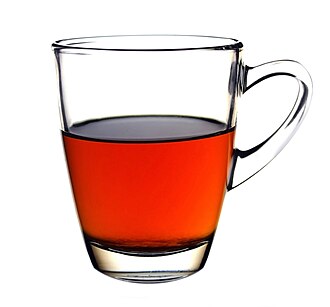
Photo: Wikipedia
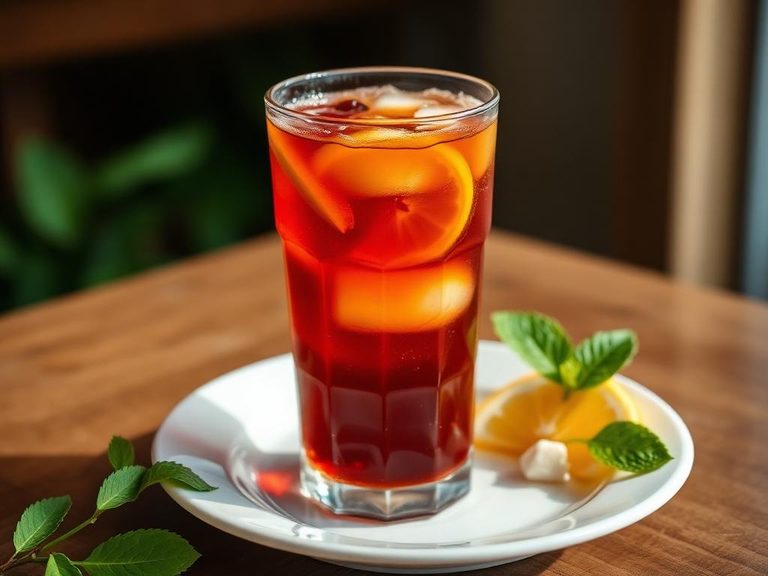
This is the humble, aromatic backbone of countless daily rituals: a clear, dark amber infusion made by steeping fermented black tea leaves in hot tap water. Its flavor is robust, malty, and slightly astringent, with a clean, brisk finish that awakens the senses. Nutritionally, it is a near-zero calorie beverage, providing hydration and antioxidants without any protein, fat, or significant carbohydrates.
Calorie split: 0% protein · 100% carbs · 0% fat
↓ Full nutrition💚 Why it's loved
People adore it for its deep, comforting flavor that serves as a perfect blank canvas—equally satisfying black as it is with milk, sugar, or lemon. Its cultural ubiquity makes it a universal symbol of hospitality and a daily ritual from London to Lahore.
⚠️ Watch-outs & how to enjoy it better
The tannins can inhibit iron absorption from plant-based meals, so those with anemia should avoid drinking it with food. Its caffeine content may disrupt sleep or cause jitters in sensitive individuals. To counteract, enjoy it between meals and opt for a decaffeinated version in the evening.
Key benefits
- Rich in antioxidants like theaflavins and thearubigins from fermentation
- May support heart health and healthy cholesterol levels
- Contains L-theanine, which can promote calm alertness
- Zero calories and sugar-free, aiding in hydration
- The caffeine content provides a gentle energy boost
🍽️ Popular dishes

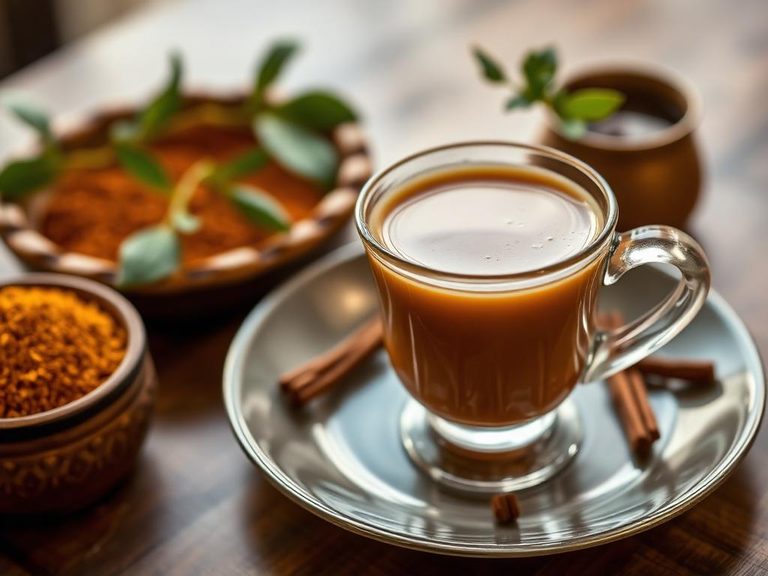

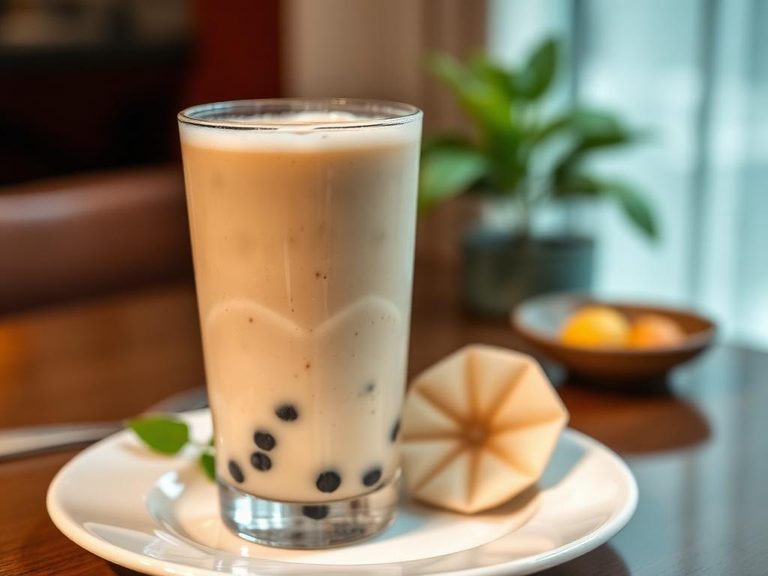
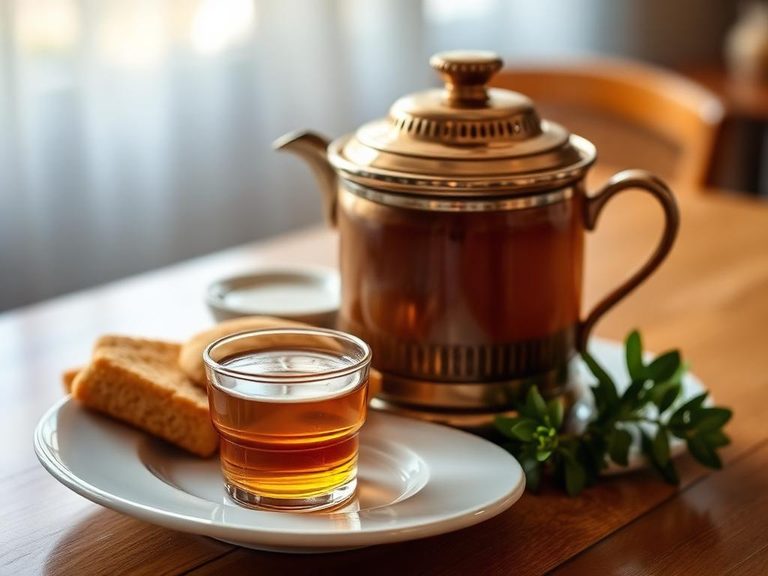
🌍 Where it's eaten
💡 Did you know?
The same plant, Camellia sinensis, produces black, green, white, and oolong teas; black tea is simply the most oxidized, which creates its characteristic dark color and bold flavor.
Full nutrition (USDA data · scales with serving)
| Water | 99.7 g |
| Energy | 1.0 kcal |
| Energy | 4.0 kj |
| Protein | 0.00 g |
| Total lipid (fat) | 0.00 g |
| Ash | 0.04 g |
| Carbohydrate, by difference | 0.30 g |
| Fiber, total dietary | 0.00 g |
| Total Sugars | 0.00 g |
| Calcium, Ca | 0.00 mg |
| Iron, Fe | 0.02 mg |
| Magnesium, Mg | 3.0 mg |
| Phosphorus, P | 1.0 mg |
| Potassium, K | 37.0 mg |
| Sodium, Na | 3.0 mg |
| Zinc, Zn | 0.02 mg |
| Copper, Cu | 0.01 mg |
| Manganese, Mn | 0.22 mg |
| Selenium, Se | 0.00 ug |
| Fluoride, F | 373 ug |
| Vitamin C, total ascorbic acid | 0.00 mg |
| Thiamin | 0.00 mg |
| Riboflavin | 0.01 mg |
| Niacin | 0.00 mg |
| Pantothenic acid | 0.01 mg |
| Vitamin B-6 | 0.00 mg |
| Folate, total | 5.0 ug |
| Folic acid | 0.00 ug |
| Folate, food | 5.0 ug |
| Folate, DFE | 5.0 ug |
| Choline, total | 0.40 mg |
| Vitamin B-12 | 0.00 ug |
| Vitamin B-12, added | 0.00 ug |
| Vitamin A, RAE | 0.00 ug |
| Retinol | 0.00 ug |
| Carotene, beta | 0.00 ug |
| Carotene, alpha | 0.00 ug |
| Cryptoxanthin, beta | 0.00 ug |
| Vitamin A, IU | 0.00 iu |
| Lycopene | 0.00 ug |
| Lutein + zeaxanthin | 0.00 ug |
| Vitamin E (alpha-tocopherol) | 0.00 mg |
| Vitamin E, added | 0.00 mg |
| Tocopherol, gamma | 0.00 mg |
| Tocopherol, delta | 0.00 mg |
| Vitamin D (D2 + D3), International Units | 0.00 iu |
| Vitamin D (D2 + D3) | 0.00 ug |
| Vitamin K (phylloquinone) | 0.00 ug |
| Alcohol, ethyl | 0.00 g |
| Caffeine | 20.0 mg |
| Theobromine | 2.0 mg |
Fat & fatty acid profile (per 100g)
| Fatty acids, total saturated | 0.00 g |
| SFA 4:0 | 0.00 g |
| SFA 6:0 | 0.00 g |
| SFA 8:0 | 0.00 g |
| SFA 10:0 | 0.00 g |
| SFA 12:0 | 0.00 g |
| SFA 14:0 | 0.00 g |
| SFA 16:0 | 0.00 g |
| SFA 18:0 | 0.00 g |
| Fatty acids, total monounsaturated | 0.00 g |
| MUFA 16:1 | 0.00 g |
| MUFA 18:1 | 0.00 g |
| MUFA 20:1 | 0.00 g |
| MUFA 22:1 | 0.00 g |
| Fatty acids, total polyunsaturated | 0.00 g |
| PUFA 18:2 | 0.00 g |
| PUFA 18:3 | 0.00 g |
| PUFA 18:4 | 0.00 g |
| PUFA 20:4 | 0.00 g |
| PUFA 20:5 n-3 (EPA) | 0.00 g |
| PUFA 22:5 n-3 (DPA) | 0.00 g |
| PUFA 22:6 n-3 (DHA) | 0.00 g |
| Fatty acids, total trans | 0.00 g |
| Cholesterol | 0.00 mg |
Amino acid profile (per 100g)
| Tryptophan | 0.00 g |
| Threonine | 0.00 g |
| Isoleucine | 0.00 g |
| Leucine | 0.00 g |
| Lysine | 0.00 g |
| Methionine | 0.00 g |
| Cystine | 0.00 g |
| Phenylalanine | 0.00 g |
| Tyrosine | 0.00 g |
| Valine | 0.00 g |
| Arginine | 0.00 g |
| Histidine | 0.00 g |
| Alanine | 0.00 g |
| Aspartic acid | 0.00 g |
| Glutamic acid | 0.00 g |
| Glycine | 0.00 g |
| Proline | 0.00 g |
| Serine | 0.00 g |
FAQ
Does brewing time significantly change the nutrition?
Brewing longer extracts more antioxidants (like flavonoids) and caffeine, but does not add calories, protein, or carbs. The nutritional profile remains functionally zero-calorie.
Is the tap water important?
Yes, water quality affects taste. Hard water can make tea cloudy and dull, while soft or filtered water yields a clearer, brighter brew. The mineral content interacts with tea compounds.
Why does my black tea taste bitter?
Over-steeping (beyond 3-5 minutes) or using boiling water on delicate leaves can release excessive tannins, causing bitterness. Use water just off the boil and steep for the recommended time.
Nutrient density (calculated · NRF9.3)
Nutrient Rich Foods index: beneficial nutrients (protein, fiber, vitamins, minerals) minus saturated fat, added sugar & sodium, per 100 kcal.
NRF9.3 index — Fulgoni, Keast & Drewnowski, 2009. Computed from USDA nutrients.
Weight-loss friendliness (composite index)
Energy density 0.01 kcal/g · 0% calories from protein · 0.0 g fiber · 0.0 g sugar per 100 g.
Composite of energy density (Rolls et al., 1999), protein & fiber satiety, minus sugar. A calculated heuristic — ranks satiety-per-calorie, not a clinical measure.
Dietary load (calculated from USDA values)
Potential renal acid load. Positive = acid-forming, negative = alkaline-forming.
Sodium-to-potassium ratio: 0.08 (lower is better — aim for ≤ 1)
Sodium:potassium per WHO potassium guidance. Computed from USDA nutrients.