

Beverages, Fruit flavored drink, reduced sugar, greater than 3% fruit juice, high vitamin C, added calcium
Whole food · Beverages

Photo: Wikipedia
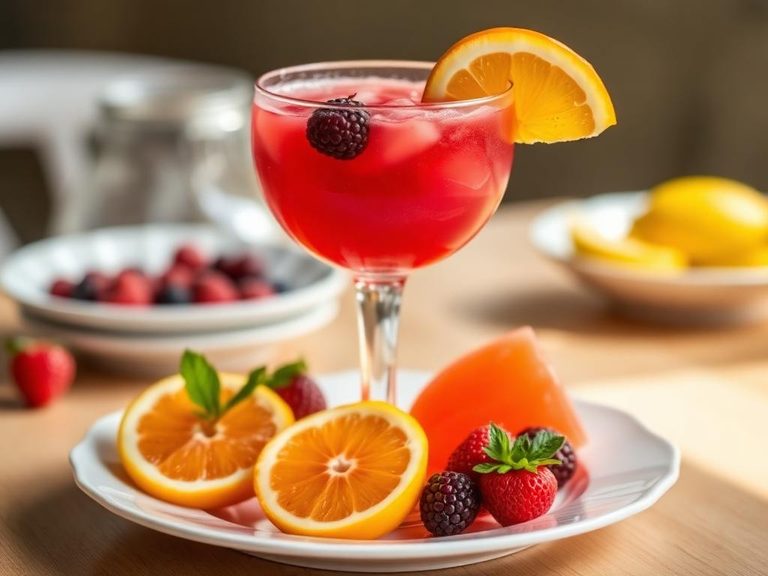
A vibrant, fruit-flavored beverage that delivers a refreshing, sweet-tart taste with a smooth, non-carbonated texture. It's fortified with calcium and vitamin C, making it a light, low-calorie option for hydration. With only 5g of sugar per 100g, it offers a fruity taste without the heavy sugar load of many soft drinks.
Calorie split: 0% protein · 89% carbs · 11% fat
↓ Full nutrition💚 Why it's loved
People love it for its convenient, thirst-quenching taste that feels like a treat without excessive sugar. It's a popular, versatile choice for lunchboxes, post-workout refreshment, or a simple pick-me-up.
⚠️ Watch-outs & how to enjoy it better
The primary concern is the added sugar (5g per 100g), which can contribute to blood sugar spikes if consumed in large quantities, especially for those with insulin sensitivity. To counteract this, practice portion control and consider pairing it with a source of protein or healthy fat (like a handful of nuts) to slow sugar absorption.
Key benefits
- Low in calories (29 kcal per 100g)
- Good source of added calcium for bone health
- High in vitamin C to support immune function
- Reduced sugar content compared to standard fruit drinks
- Provides hydration with a fruity flavor
🍽️ Popular dishes

🌍 Where it's eaten
💡 Did you know?
This type of drink was often marketed in the late 20th century as a 'healthier' soda alternative, capitalizing on the 'high vitamin C' and 'added calcium' claims during the rise of functional beverages.
Full nutrition (USDA data · scales with serving)
| Water | 93.0 g |
| Energy | 29.0 kcal |
| Energy | 122 kj |
| Protein | 0.00 g |
| Total lipid (fat) | 0.37 g |
| Ash | 0.06 g |
| Carbohydrate, by difference | 6.7 g |
| Fiber, total dietary | 0.00 g |
| Total Sugars | 5.0 g |
| Calcium, Ca | 42.0 mg |
| Iron, Fe | 0.00 mg |
| Magnesium, Mg | 1.0 mg |
| Phosphorus, P | 0.00 mg |
| Potassium, K | 31.0 mg |
| Sodium, Na | 25.0 mg |
| Zinc, Zn | 0.04 mg |
| Copper, Cu | 0.00 mg |
| Manganese, Mn | 0.00 mg |
| Selenium, Se | 0.10 ug |
| Vitamin C, total ascorbic acid | 25.0 mg |
| Thiamin | 0.00 mg |
| Riboflavin | 0.00 mg |
| Niacin | 0.00 mg |
| Pantothenic acid | 0.00 mg |
| Vitamin B-6 | 0.00 mg |
| Folate, total | 2.0 ug |
| Folic acid | 0.00 ug |
| Folate, food | 2.0 ug |
| Folate, DFE | 2.0 ug |
| Choline, total | 0.10 mg |
| Vitamin B-12 | 0.00 ug |
| Vitamin B-12, added | 0.00 ug |
| Vitamin A, RAE | 0.00 ug |
| Retinol | 0.00 ug |
| Carotene, beta | 0.00 ug |
| Carotene, alpha | 0.00 ug |
| Cryptoxanthin, beta | 3.0 ug |
| Vitamin A, IU | 3.0 iu |
| Lycopene | 0.00 ug |
| Lutein + zeaxanthin | 2.0 ug |
| Vitamin E (alpha-tocopherol) | 0.00 mg |
| Vitamin E, added | 0.00 mg |
| Vitamin D (D2 + D3), International Units | 10.0 iu |
| Vitamin D (D2 + D3) | 0.30 ug |
| Vitamin K (phylloquinone) | 0.00 ug |
| Alcohol, ethyl | 0.00 g |
| Caffeine | 0.00 mg |
| Theobromine | 0.00 mg |
Fat & fatty acid profile (per 100g)
| Fatty acids, total saturated | 0.00 g |
| SFA 4:0 | 0.00 g |
| SFA 6:0 | 0.00 g |
| SFA 8:0 | 0.00 g |
| SFA 10:0 | 0.00 g |
| SFA 12:0 | 0.00 g |
| SFA 14:0 | 0.00 g |
| SFA 15:0 | 0.00 g |
| SFA 16:0 | 0.00 g |
| SFA 17:0 | 0.00 g |
| SFA 18:0 | 0.00 g |
| SFA 20:0 | 0.00 g |
| SFA 22:0 | 0.00 g |
| Fatty acids, total monounsaturated | 0.00 g |
| MUFA 16:1 | 0.00 g |
| MUFA 18:1 | 0.00 g |
| MUFA 20:1 | 0.00 g |
| MUFA 22:1 | 0.00 g |
| Fatty acids, total polyunsaturated | 0.00 g |
| PUFA 18:2 | 0.00 g |
| PUFA 18:3 | 0.00 g |
| PUFA 18:4 | 0.00 g |
| PUFA 20:4 | 0.00 g |
| PUFA 20:5 n-3 (EPA) | 0.00 g |
| PUFA 22:5 n-3 (DPA) | 0.00 g |
| PUFA 22:6 n-3 (DHA) | 0.00 g |
| Fatty acids, total trans | 0.00 g |
| Cholesterol | 0.00 mg |
Amino acid profile (per 100g)
Estimated from Beverages, carbonated, tonic water — USDA does not publish this profile for Beverages.
| Tryptophan | 0.00 g |
| Threonine | 0.00 g |
| Isoleucine | 0.00 g |
| Leucine | 0.00 g |
| Lysine | 0.00 g |
| Methionine | 0.00 g |
| Cystine | 0.00 g |
| Phenylalanine | 0.00 g |
| Tyrosine | 0.00 g |
| Valine | 0.00 g |
| Arginine | 0.00 g |
| Histidine | 0.00 g |
| Alanine | 0.00 g |
| Aspartic acid | 0.00 g |
| Glutamic acid | 0.00 g |
| Glycine | 0.00 g |
| Proline | 0.00 g |
| Serine | 0.00 g |
FAQ
How does the sugar content compare to regular soda?
It has significantly less sugar. A typical cola has about 10-11g of sugar per 100g, while this drink has 5g, making it a reduced-sugar alternative.
Is the calcium as effective as that from milk?
The calcium is added for fortification and is generally well-absorbed, but it lacks the complete nutrient matrix (like protein and phosphorus) found naturally in dairy sources like milk.
Can I use this in cocktails or mocktails?
Absolutely! Its fruity flavor and lower sugar make it a great base for mixed drinks, adding sweetness and nutrients without overpowering other ingredients.
Nutrient density (calculated · NRF9.3)
Nutrient Rich Foods index: beneficial nutrients (protein, fiber, vitamins, minerals) minus saturated fat, added sugar & sodium, per 100 kcal.
NRF9.3 index — Fulgoni, Keast & Drewnowski, 2009. Computed from USDA nutrients.
Weight-loss friendliness (composite index)
Energy density 0.29 kcal/g · 0% calories from protein · 0.0 g fiber · 5.0 g sugar per 100 g.
Composite of energy density (Rolls et al., 1999), protein & fiber satiety, minus sugar. A calculated heuristic — ranks satiety-per-calorie, not a clinical measure.
Dietary load (calculated from USDA values)
Potential renal acid load. Positive = acid-forming, negative = alkaline-forming.
Sodium-to-potassium ratio: 0.81 (lower is better — aim for ≤ 1)
Sodium:potassium per WHO potassium guidance. Computed from USDA nutrients.