

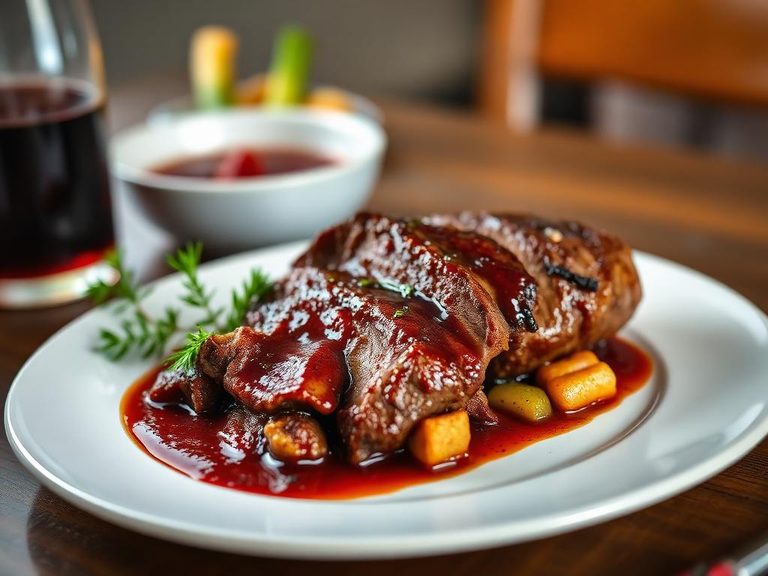
Beef, brisket, flat half, separable lean only, trimmed to 0" fat, choice, cooked, braised
Whole food · Beef Products

Photo: Wikipedia
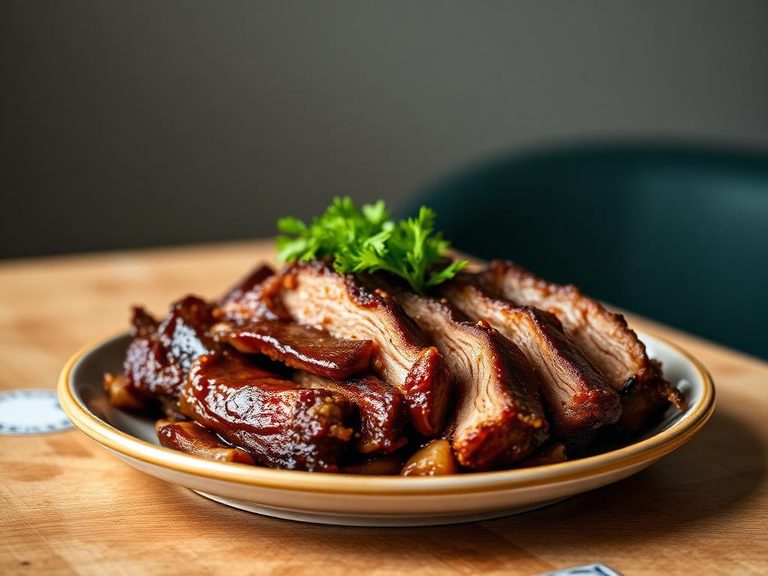
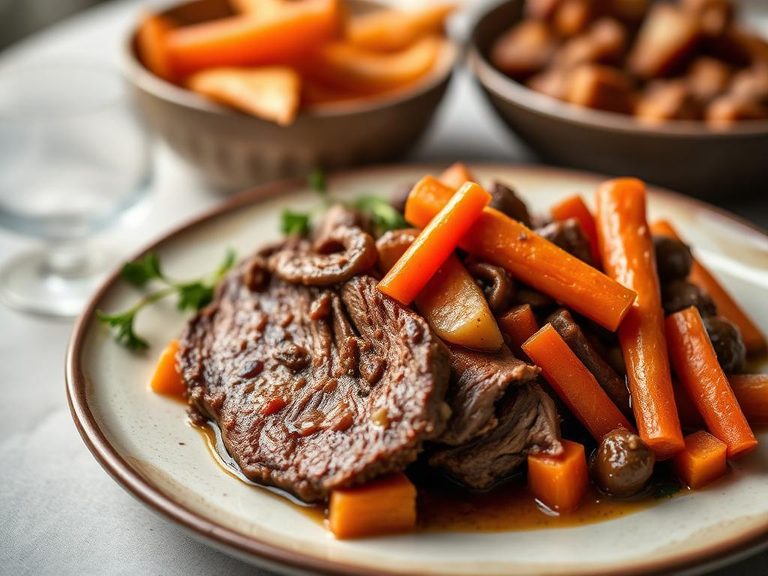
This is a lean, flat cut of beef brisket that has been slow-cooked in liquid until fork-tender, offering a rich, beefy flavor and a firm yet yielding texture. With over 32g of protein per 100g and zero carbohydrates, it is a powerhouse of muscle-building nutrients. The braising process transforms the connective tissue into a succulent, melt-in-your-mouth experience without the need for added sugars or starches.
Calorie split: 64% protein · 0% carbs · 36% fat
↓ Full nutrition💚 Why it's loved
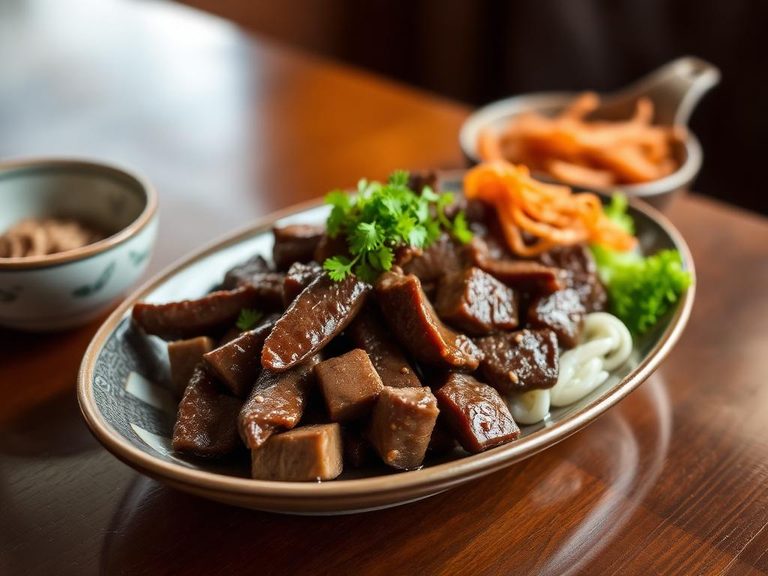
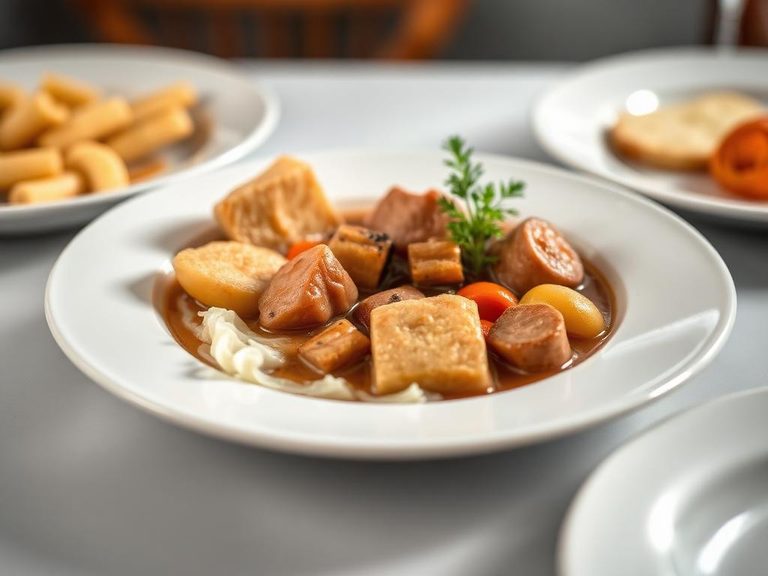
People adore braised brisket for its deep, savory umami flavor and the way it effortlessly shreds or slices after hours of slow cooking. It is a centerpiece of comfort food culture, celebrated for its ability to absorb the flavors of spices, herbs, and sauces while remaining incredibly tender.
⚠️ Watch-outs & how to enjoy it better
While lean, the cut can still be high in saturated fat and cholesterol, which may concern those managing heart health. Additionally, braising often involves high sodium from broths or seasonings; to mitigate this, use low-sodium liquids and pair the dish with potassium-rich vegetables like leafy greens to balance electrolytes.
Key benefits
- Excellent source of high-quality protein for muscle repair
- Zero carbohydrates, making it ideal for ketogenic or low-carb diets
- Rich in essential minerals like zinc and iron
- Provides B vitamins for energy metabolism
- Low in sugar, supporting stable blood glucose levels
🍽️ Popular dishes
🌍 Where it's eaten
💡 Did you know?
The flat half of the brisket is actually the pectoral muscle of the cow, which is heavily exercised and contains a high amount of collagen—this is why slow, moist cooking is essential to break it down into tender, flavorful meat.
Full nutrition (USDA data · scales with serving)
| Water | 59.2 g |
| Energy | 212 kcal |
| Energy | 887 kj |
| Protein | 32.6 g |
| Total lipid (fat) | 8.1 g |
| Ash | 1.1 g |
| Carbohydrate, by difference | 0.00 g |
| Fiber, total dietary | 0.00 g |
| Total Sugars | 0.00 g |
| Calcium, Ca | 14.0 mg |
| Iron, Fe | 2.8 mg |
| Magnesium, Mg | 21.0 mg |
| Phosphorus, P | 198 mg |
| Potassium, K | 256 mg |
| Sodium, Na | 52.0 mg |
| Zinc, Zn | 7.6 mg |
| Copper, Cu | 0.12 mg |
| Manganese, Mn | 0.01 mg |
| Selenium, Se | 32.3 ug |
| Vitamin C, total ascorbic acid | 0.00 mg |
| Thiamin | 0.07 mg |
| Riboflavin | 0.22 mg |
| Niacin | 4.9 mg |
| Pantothenic acid | 0.64 mg |
| Vitamin B-6 | 0.32 mg |
| Folate, total | 11.0 ug |
| Folate, food | 11.0 ug |
| Choline, total | 124 mg |
| Betaine | 16.3 mg |
| Vitamin B-12 | 2.5 ug |
| Vitamin B-12, added | 0.00 ug |
| Vitamin A, RAE | 0.00 ug |
| Retinol | 0.00 ug |
| Carotene, beta | 0.00 ug |
| Carotene, alpha | 0.00 ug |
| Cryptoxanthin, beta | 0.00 ug |
| Vitamin A, IU | 0.00 iu |
| Lycopene | 0.00 ug |
| Lutein + zeaxanthin | 0.00 ug |
| Vitamin E (alpha-tocopherol) | 0.43 mg |
| Vitamin E, added | 0.00 mg |
| Tocopherol, beta | 0.00 mg |
| Tocopherol, gamma | 0.00 mg |
| Tocopherol, delta | 0.00 mg |
| Vitamin K (phylloquinone) | 1.5 ug |
| Alcohol, ethyl | 0.00 g |
| Caffeine | 0.00 mg |
| Theobromine | 0.00 mg |
Fat & fatty acid profile (per 100g)
| Fatty acids, total saturated | 3.1 g |
| SFA 4:0 | 0.00 g |
| SFA 6:0 | 0.00 g |
| SFA 8:0 | 0.00 g |
| SFA 10:0 | 0.00 g |
| SFA 12:0 | 0.01 g |
| SFA 14:0 | 0.23 g |
| SFA 16:0 | 1.8 g |
| SFA 18:0 | 1.0 g |
| Fatty acids, total monounsaturated | 3.4 g |
| MUFA 16:1 | 0.29 g |
| MUFA 18:1 | 3.1 g |
| MUFA 20:1 | 0.00 g |
| MUFA 22:1 | 0.00 g |
| Fatty acids, total polyunsaturated | 0.28 g |
| PUFA 18:2 | 0.23 g |
| PUFA 18:3 | 0.02 g |
| PUFA 18:4 | 0.00 g |
| PUFA 20:4 | 0.03 g |
| PUFA 20:5 n-3 (EPA) | 0.00 g |
| PUFA 22:5 n-3 (DPA) | 0.00 g |
| PUFA 22:6 n-3 (DHA) | 0.00 g |
| Cholesterol | 99.0 mg |
Amino acid profile (per 100g)
| Tryptophan | 0.21 g |
| Threonine | 1.3 g |
| Isoleucine | 1.5 g |
| Leucine | 2.6 g |
| Lysine | 2.8 g |
| Methionine | 0.85 g |
| Cystine | 0.42 g |
| Phenylalanine | 1.3 g |
| Tyrosine | 1.0 g |
| Valine | 1.6 g |
| Arginine | 2.1 g |
| Histidine | 1.0 g |
| Alanine | 2.0 g |
| Aspartic acid | 3.0 g |
| Glutamic acid | 4.9 g |
| Glycine | 2.0 g |
| Proline | 1.6 g |
| Serine | 1.3 g |
| Hydroxyproline | 0.34 g |
FAQ
What is the best way to cook this cut for tenderness?
Braising or slow-cooking at low temperatures (around 300°F or 150°C) for several hours is ideal, as it breaks down the tough connective tissue into gelatin, resulting in a melt-in-your-mouth texture.
Can I freeze braised brisket?
Yes, braised brisket freezes exceptionally well. Allow it to cool completely, then store in airtight containers or freezer bags for up to 3 months. Thaw in the refrigerator overnight before reheating.
How do I reduce the sodium content when cooking?
Use low-sodium broth or water as the braising liquid, and season with herbs, spices, and acidic ingredients like vinegar or lemon juice instead of relying heavily on salt. You can also rinse the meat after cooking to remove excess surface sodium.
Nutrient density (calculated · NRF9.3)
Nutrient Rich Foods index: beneficial nutrients (protein, fiber, vitamins, minerals) minus saturated fat, added sugar & sodium, per 100 kcal.
NRF9.3 index — Fulgoni, Keast & Drewnowski, 2009. Computed from USDA nutrients.
Weight-loss friendliness (composite index)
Energy density 2.12 kcal/g · 62% calories from protein · 0.0 g fiber · 0.0 g sugar per 100 g.
Composite of energy density (Rolls et al., 1999), protein & fiber satiety, minus sugar. A calculated heuristic — ranks satiety-per-calorie, not a clinical measure.
Dietary load (calculated from USDA values)
Potential renal acid load. Positive = acid-forming, negative = alkaline-forming.
Sodium-to-potassium ratio: 0.20 (lower is better — aim for ≤ 1)
Sodium:potassium per WHO potassium guidance. Computed from USDA nutrients.